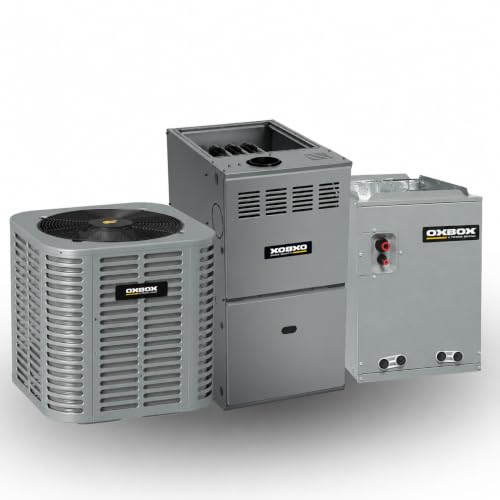
2 Ton Air Conditioner with Gas Furnace: Complete Guide
Discover how a 2 ton air conditioner paired with a gas furnace delivers balanced cooling and heating for mid-sized homes, and learn what to check before you choose one.
START LEARNINGAC Units Guide Philosophy: A 2 ton air conditioner with gas furnace is a split system that combines electric cooling with gas-powered heating. Understanding how the two components work together helps you make a confident, well-informed decision. Learn first, understand your needs, then choose the right product.
What Is a 2 Ton Air Conditioner with Gas Furnace?
A 2 ton air conditioner with gas furnace is a complete HVAC system that pairs an outdoor air conditioning condenser (rated at 2 tons of cooling capacity) with an indoor gas furnace that also houses the evaporator coil. The air conditioner handles warm-weather cooling, while the gas furnace provides heating during colder months. Both components share the same ductwork and blower, which keeps the installation compact and the operation coordinated through a single thermostat.
The "2 ton" rating refers to the cooling capacity of the air conditioner, not the physical weight of the unit. One ton of cooling equals 12,000 BTU per hour, so a 2 ton system delivers roughly 24,000 BTU of cooling. This capacity is generally well matched to homes in the 1,000 to 1,400 square foot range, depending on insulation, window area, ceiling height, and local climate.
How the Two Components Work Together
A split system with a gas furnace separates the cooling and heating functions into two main pieces of equipment that share an air distribution network. Understanding the roles of each part makes it easier to evaluate the system as a whole.
The Air Conditioner Side
The outdoor condenser contains the compressor and condenser coil. It moves refrigerant between the outdoor unit and the indoor evaporator coil, which is mounted above or inside the furnace cabinet. As warm household air passes over the evaporator coil, heat is absorbed and the cooled air is pushed through the ducts. The 2 ton compressor is sized to remove heat at a steady rate that matches the home's cooling load.
The Gas Furnace Side
The gas furnace burns natural gas or propane in a heat exchanger and uses the same blower to distribute warm air through the ducts. Modern furnaces are rated by AFUE (Annual Fuel Utilization Efficiency), which indicates how much of the fuel energy is converted into usable heat. A furnace paired with a 2 ton AC typically ranges from entry-level single-stage models to high-end tier modulating furnaces.
Shared Components
- Blower: Circulates air for both cooling and heating. Variable-speed blowers offer smoother airflow and quieter operation than fixed-speed models.
- Evaporator coil: Mounted in or on the furnace cabinet; responsible for cooling the air in summer.
- Ductwork: Delivers conditioned air to each room. Duct design and sealing affect both cooling and heating performance.
- Thermostat: A single control switches the system between cooling and heating modes. A thermostat that controls heat and cool simplifies operation and scheduling.
Who Is a 2 Ton System Best Suited For?
Sizing is the single most important decision when selecting a 2 ton air conditioner with gas furnace. An undersized system struggles to reach the set temperature on hot days, while an oversized system cools too quickly, cycles frequently, and may leave the home feeling clammy because it does not run long enough to remove humidity.
| Home Profile | Typical Floor Area | Why a 2 Ton System Fits |
|---|---|---|
| Small to mid-sized single-family home | 1,000 – 1,400 sq ft | Balanced cooling capacity for average insulation and window area |
| Well-insulated home in a moderate climate | Up to 1,500 sq ft | Lower heat gain reduces the required capacity |
| Older home with some air sealing improvements | 1,000 – 1,200 sq ft | Moderate capacity compensates for typical envelope losses |
| Two-story home with zoned ductwork | 1,200 – 1,400 sq ft total | Works well when airflow is balanced between floors |
These figures are a starting point, not a rule. A professional load calculation—often called a Manual J calculation—accounts for insulation levels, window orientation, occupant count, appliance heat, and local design temperatures. Before committing to a 2 ton system, ask your contractor to perform this calculation. If the result points to a different capacity, consider related options such as a 3 ton AC unit with gas furnace for larger homes.
Efficiency Ratings to Understand
Because a 2 ton air conditioner with gas furnace uses electricity for cooling and gas for heating, two separate efficiency metrics apply. Reviewing both helps you compare systems fairly.
Cooling Efficiency: SEER and SEER2
SEER (Seasonal Energy Efficiency Ratio) measures cooling efficiency over a typical season. Newer equipment is rated under SEER2, a revised testing standard that better reflects real-world duct conditions. Higher ratings indicate greater efficiency. Understanding energy efficiency ratings such as SEER, EER, and HSPF helps you interpret manufacturer labels and compare systems within the same tier.
Heating Efficiency: AFUE
AFUE (Annual Fuel Utilization Efficiency) applies to the gas furnace. A standard furnace converts most of its fuel into heat, while high-end tier condensing furnaces recover additional heat from exhaust gases. The furnace rating is independent of the AC rating, so evaluate both when comparing complete systems.
Entry-Level Tier
Single-stage furnace and single-speed AC. Solid build and straightforward operation. A good value for its tier in mild climates.
Mid-Range Tier
Two-stage furnace and two-speed AC. Better humidity control and quieter cycling. Feature-rich for its class.
High-End Tier
Modulating furnace and variable-speed AC. Smoothest temperature control and quietest operation. A long-term investment in comfort.
Installation Considerations
Proper installation determines whether a 2 ton air conditioner with gas furnace performs as designed. Several details deserve attention before and during the project.
- Ductwork assessment: Leaky or undersized ducts waste capacity. Sealing and balancing the ducts is often as important as the equipment itself. Review the broader heating, ventilation, and air conditioning system as a whole, not just the two main units.
- Electrical and gas supply: The furnace needs a gas line and proper venting, while the condenser needs a dedicated electrical circuit. Confirm that the existing panel and gas piping can support the new equipment.
- Indoor and outdoor placement: The outdoor condenser needs clearance for airflow, and the furnace location must allow safe venting. A contractor should verify clearances against local codes.
- Permits and inspections: Most jurisdictions require a permit for HVAC replacement. Ask your contractor who handles the permit and inspection process.
- Refrigerant line set: The line set connecting the indoor and outdoor units must be sized and routed correctly. Length and elevation affect performance.
Choosing a qualified installer matters as much as choosing the equipment. Compare quotes carefully, verify licensing and insurance, and ask about warranty terms. Reading about HVAC manufacturers and furnace companies can help you understand brand positioning before you request estimates.
Maintenance for Long-Term Performance
A 2 ton air conditioner with gas furnace has two mechanical systems that both need routine care. A simple maintenance routine protects efficiency and extends equipment life.
Cooling Season Tasks
- Replace or clean the air filter every one to three months, depending on household dust and pets.
- Keep the outdoor condenser clear of debris, leaves, and vegetation.
- Check that condensate drainage is flowing freely to prevent water backups.
- Schedule a professional tune-up before the cooling season begins.
Heating Season Tasks
- Arrange an annual furnace inspection, including heat exchanger and venting checks.
- Test carbon monoxide detectors and confirm they are working.
- Keep return air grilles unobstructed so the blower can move air freely.
- Listen for unusual noises or short cycling, which can indicate a service need.
How a 2 Ton System Compares to Other Capacities
Capacity comparisons help you confirm that a 2 ton system is the right fit. The table below summarizes typical use cases, not exact requirements.
| System Capacity | Typical Home Size | Best For |
|---|---|---|
| 1.5 ton | Up to ~1,000 sq ft | Compact homes, apartments, well-insulated spaces |
| 2 ton | 1,000 – 1,400 sq ft | Mid-sized homes seeking balanced cooling and heating |
| 3 ton | 1,400 – 2,000 sq ft | Larger single-family homes with higher heat gain |
If your home is larger or has significant heat gain, a different capacity may be appropriate. Compare related options such as a 3 ton AC unit with gas furnace or explore the full range of 18,000 – 24,000 BTU AC systems to understand where a 2 ton unit sits in the product landscape.
Frequently Asked Questions
Is a 2 ton air conditioner with gas furnace suitable for a two-story home?
It can be, depending on total floor area and how the ductwork distributes airflow between floors. Two-story homes often benefit from zoning so each level receives the right amount of conditioned air. A load calculation and duct evaluation are essential before deciding.
What does "2 ton" mean in practical terms?
Two tons of cooling equals roughly 24,000 BTU per hour of heat removal. It describes the cooling capacity of the air conditioner, not the size or weight of the equipment.
Can I replace only the air conditioner and keep the existing furnace?
In some cases, yes, but the two components must be compatible in airflow and coil design. A mismatched pairing can reduce efficiency and comfort. Many homeowners choose to replace both at the same time to ensure the system is properly matched.
How often should the furnace be serviced?
An annual professional inspection is the standard recommendation. Regular service checks combustion safety, heat exchanger condition, and venting, which are important for reliable heating and indoor air quality.
Does a higher SEER rating always mean better comfort?
Higher efficiency reduces energy use, but comfort also depends on proper sizing, duct sealing, humidity control, and thermostat setup. A well-installed mid-range tier system can outperform a poorly installed high-end tier system.
Ready to Explore Your Options?
Review the recommended systems below to compare features and find a 2 ton air conditioner with gas furnace that fits your home and comfort goals.
VIEW RECOMMENDATIONS