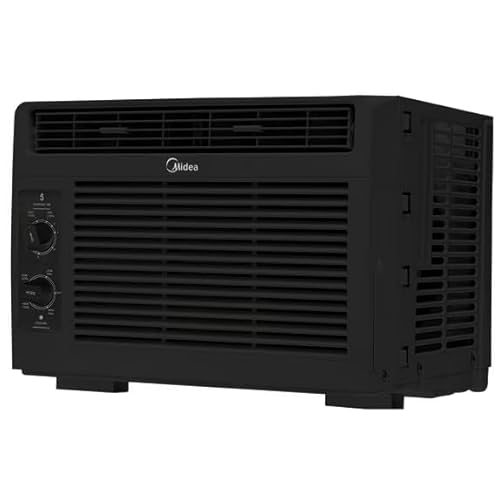
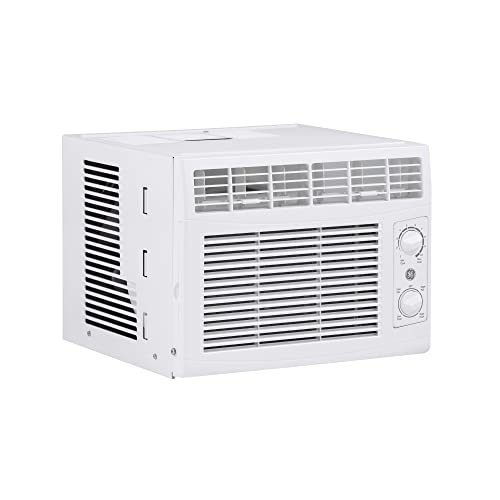
5000 BTU Mechanical Window Air Conditioner: A Complete Guide
Everything you need to know about choosing, installing, and maintaining a mechanical-control 5000 BTU window AC for small rooms
View Recommended ModelsWhy Consider a 5000 BTU Mechanical Window Air Conditioner?
When it comes to cooling a small bedroom, home office, or studio apartment, a 5000 BTU mechanical window air conditioner is often the most straightforward and dependable solution. Unlike units with digital displays and complex programmable features, mechanical-control models rely on simple rotary dials or push buttons to manage fan speed and cooling output. This simplicity translates into fewer components that can fail, making mechanical units a popular choice for budget-conscious buyers and those who value reliability over smart-home extras.
A 5000 BTU capacity is generally suitable for spaces up to about 150 square feet, provided the room has standard ceiling height and average insulation. Mechanical window ACs in this capacity range are particularly well-suited for renters, seasonal users, and anyone who wants a no-fuss cooling appliance that can be installed in a standard double-hung window. If you are exploring the broader category of compact cooling solutions, you may also want to compare this with a 5000 BTU window air conditioner energy efficient model, which can offer lower operating consumption while retaining the same cooling capacity.
In this guide, we will walk through the key features of mechanical 5000 BTU window units, explain how they differ from electronic models, discuss installation considerations, and help you decide whether this type of air conditioner matches your needs. We will also cover maintenance best practices and answer common questions so that you can make a confident, well-informed purchase decision.
What Does "Mechanical" Mean in a Window Air Conditioner?
The term "mechanical" refers to the control interface. A mechanical window air conditioner uses physical dials or rotary knobs to operate the unit. Typically, there are two main controls: one for fan speed (often labeled low, high, or with a number of fan-only settings) and another for temperature or cooling mode. Some models combine these into a single dial with numbered positions. There is no digital thermostat, no remote control, and no programmable timer on a purely mechanical unit.
This design has several practical implications. First, mechanical controls are generally more durable in the sense that there are fewer electronic parts that could be damaged by power surges or humidity. Second, operation is intuitive—anyone can walk up to the unit and turn a dial. Third, mechanical models tend to have a lower entry-level position in the market compared to their electronic counterparts, making them accessible for buyers who prioritize essential cooling over advanced features.
However, mechanical controls also mean less precision. You cannot set an exact temperature; instead, you adjust the dial until the room feels comfortable. There is also no sleep mode or automatic restart after a power outage. For some users, these limitations are perfectly acceptable, while others may prefer the convenience of a digital interface. If you fall into the latter group, you might consider a 5000 BTU air conditioner with remote control, which offers more granular control but typically falls into a slightly higher tier of the market.
Key Features of a 5000 BTU Mechanical Window AC
Understanding the core features helps you evaluate different models and choose the one that best fits your room and usage habits. Below are the most important characteristics to look for.
Cooling Capacity
5000 BTU is the cooling output. It is designed for small rooms up to approximately 150 square feet, depending on factors like sun exposure, ceiling height, and occupant load.
Mechanical Controls
Rotary dials or simple push buttons control fan speed and cooling. No digital display, no remote, no programmable settings—just straightforward operation.
Fan-Only Mode
Most mechanical units include a fan-only setting, allowing you to circulate air without running the compressor. This is useful for ventilation on milder days.
Adjustable Louvers
Horizontal and vertical louvers let you direct airflow across the room. Mechanical models often have manual louver adjustments rather than motorized swing.
Washable Filter
A removable, washable air filter traps dust and debris. Regular cleaning maintains airflow and efficiency. Most filters are accessible by sliding them out from the front panel.
Window Installation Kit
Includes mounting brackets, accordion-style side panels, and a window sash seal. Designed for double-hung windows, though some units can work with other window types using additional support.
It is worth noting that while mechanical units lack digital features, they still deliver the same core cooling function as any other window AC. The compressor, evaporator, and condenser work on the same principles. The difference lies in the user interface and the absence of convenience features. If you are looking for a unit that can be set and left alone with precise temperature control, a mechanical model may feel limiting. But if you value simplicity and durability, it is a solid choice.
For those who need a slightly different form factor, such as a unit that fits a sliding window, there are alternatives like the 5000 BTU air conditioner for sliding window. These models are designed with a different mounting configuration to accommodate horizontal sliding windows, which are common in some apartments and older homes.
Pros and Cons of Mechanical 5000 BTU Window ACs
Every appliance involves trade-offs. Here is an honest breakdown of what you gain and what you give up when choosing a mechanical 5000 BTU window air conditioner.
Advantages
- Simple, intuitive controls that anyone can use
- Fewer electronic components, which can mean greater long-term reliability
- Ideal for small rooms where precise temperature control is not critical
- Lightweight and relatively easy to install in a standard window
- Straightforward maintenance and filter cleaning
- Often a solid entry-level choice for seasonal or occasional use
Limitations
- No precise temperature setting; you adjust by feel
- No remote control or programmable timer
- No sleep mode or auto-restart after power interruption
- Fan speed and cooling are manually selected each time
- May lack energy-saving features found in electronic models
- Not ideal for users who want smart-home integration or app control
These trade-offs are important to weigh against your lifestyle. If you tend to set your AC and forget it, a mechanical unit might require more frequent manual adjustments as room conditions change. On the other hand, if you only use the AC intermittently—say, in a guest room or home office—the simplicity can be an advantage because there is less to configure and maintain.
Mechanical vs. Electronic 5000 BTU Window ACs
To help you see the differences clearly, the table below compares key aspects of mechanical and electronic 5000 BTU window air conditioners. This is not about which is universally better; rather, it is about matching the control style to your preferences and usage patterns.
| Feature | Mechanical Model | Electronic Model |
|---|---|---|
| Control Interface | Rotary dials or push buttons | Digital panel with buttons and display |
| Temperature Precision | Manual adjustment by feel | Set exact temperature in degrees |
| Remote Control | Not included | Often included |
| Programmable Timer | No | Yes, on most models |
| Sleep Mode | No | Common |
| Auto-Restart | No | Yes, on many models |
| Energy-Saving Mode | Rare | Frequently available |
| Typical Market Tier | Entry-level / starter tier | Mid-range to premium |
| Best For | Simple, occasional, or budget-focused cooling | Convenience, precision, and feature-rich operation |
The choice between mechanical and electronic ultimately comes down to how you plan to use the unit. For a rental unit where you want minimal fuss and maximum durability, mechanical is a strong contender. For a primary bedroom where you want to set a schedule and forget it, an electronic model may be more satisfying. There is no single right answer—only the answer that fits your situation.
Installation Considerations for a 5000 BTU Window AC
Installing a 5000 BTU mechanical window air conditioner is generally a straightforward task that most homeowners can complete without professional help. However, a few key considerations will ensure a safe and effective installation.
Window Type and Size
Most 5000 BTU window units are designed for double-hung windows with a minimum width of around 23 to 25 inches and a minimum height of about 13 to 14 inches. Always check the manufacturer's specifications for the exact window size requirements. If you have a sliding window, you will need a specialized unit or a mounting kit designed for horizontal openings. Some users with casement windows may need to explore alternative solutions entirely, as standard window ACs are not compatible with crank-out windows.
Support and Safety
Window air conditioners are heavy and can pose a safety risk if not properly supported. Most units come with a mounting bracket or support bracket that must be installed according to the manual. For upper-floor windows, additional support may be necessary. Never rely solely on the window sash to hold the unit in place. Use the included hardware and, if needed, add a wooden or metal support brace for extra stability.
Electrical Requirements
A 5000 BTU window AC typically runs on a standard 115-volt household circuit and draws around 4 to 5 amps. Most units come with a standard three-prong plug that fits a regular outlet. However, it is important to avoid using extension cords, as they can overheat and cause a fire hazard. Plug the unit directly into a dedicated outlet if possible. If you are unsure about your home's electrical capacity, consult a licensed electrician. For more information on voltage and plug types, you can refer to resources on 110V vs 240V air conditioner configurations.
Sealing the Window
Proper sealing is essential for efficiency. The accordion side panels should be extended to fill the window opening, and the included foam seal should be used to close gaps between the upper and lower window sashes. Any air leaks around the unit will reduce cooling performance and allow warm air to enter the room. Weatherstripping or foam insulation can help close larger gaps if the included materials are insufficient.
Maintenance Tips for Long-Lasting Performance
A mechanical window air conditioner has fewer components than an electronic model, but it still requires regular maintenance to operate efficiently and last for many seasons. Here are the essential tasks.
Clean the Air Filter Regularly
The air filter is the first line of defense against dust and debris. A clogged filter restricts airflow, forcing the unit to work harder and reducing cooling effectiveness. Most mechanical units have a washable filter that slides out from the front. Clean it every two to four weeks during heavy use, or more often if you live in a dusty environment. Rinse with warm water and mild detergent, let it dry completely, and reinstall.
Inspect and Clean the Coils
Over time, dust and grime can accumulate on the evaporator and condenser coils. While deep cleaning is best left to a professional, you can gently vacuum the visible coils with a soft brush attachment when the unit is unplugged. Avoid bending the delicate fins. If you notice reduced cooling despite a clean filter, coil cleaning may be necessary.
Check the Drainage Path
Window ACs produce condensate, which typically drains out through a hole at the back of the unit. Ensure the drain hole is clear and that the unit is tilted slightly downward toward the outside so water can escape. If water pools inside the unit or leaks into the room, check the tilt and clean the drain passage.
Seasonal Storage
If you remove the unit during colder months, clean it thoroughly before storage. Store it in a dry, upright position to prevent compressor oil from migrating. Cover it to keep dust out. Before reinstalling, inspect the power cord and plug for damage, and clean the filter again.
Following these maintenance steps will help your mechanical 5000 BTU window AC deliver reliable cooling for years. For a more comprehensive maintenance checklist, see our seasonal AC checklist.
Is a 5000 BTU Unit Right for Your Room?
Capacity sizing is one of the most important factors in AC satisfaction. A unit that is too small will struggle to cool the space, while a unit that is too large will cycle on and off too frequently, leading to poor dehumidification and uneven temperatures. For a 5000 BTU window air conditioner, the general guideline is a room up to 150 square feet, but several adjustments should be considered.
- Ceiling height: If your ceiling is higher than 8 feet, you may need slightly more capacity.
- Sun exposure: A room with large, unshaded windows facing south or west will require more cooling.
- Occupancy: More people in the room adds heat load. Each additional person adds roughly 400 BTU of heat.
- Kitchen proximity: If the room is adjacent to a kitchen, the added heat from cooking may push you toward a slightly larger unit.
- Insulation: Poorly insulated rooms lose cool air faster and may need more capacity.
If your room is significantly larger than 150 square feet or has multiple heat-generating factors, you may want to explore a higher capacity unit. For example, an 8,000–10,000 BTU AC is often recommended for rooms between 150 and 250 square feet. Conversely, if your room is very small and well-shaded, a 5000 BTU unit may be more than adequate. To calculate more precisely, you can use our guide on BTU calculator by room size.
For those who need cooling in a space with unusual dimensions or installation constraints, there are other form factors to consider. For instance, a 5000 BTU through-the-wall air conditioner might be a better fit if you have a wall sleeve available and prefer not to block a window.
What to Look for When Choosing a Mechanical 5000 BTU Window AC
Not all mechanical window ACs are identical. While the control interface may be simple, other aspects of the design and construction can vary. Here are the key points to evaluate before making a purchase.
Build Quality and Materials
Look for units with durable construction and high-grade materials where it matters. The front panel and cabinet should feel solid, and the louvers should move smoothly without excessive play. Some models feature a rust-proof finish or weather-resistant coating on the exterior components, which is beneficial if you plan to leave the unit installed year-round.
Airflow and Fan Settings
Check how many fan speeds the unit offers. Most mechanical models have at least two fan speeds (low and high) plus a fan-only mode. A wider range of fan settings gives you more control over airflow and noise. Some users prefer a unit with a dedicated fan-only setting that can be used for ventilation without engaging the compressor.
Noise Level
Window ACs produce noise from the compressor and fan. Mechanical units are not inherently louder or quieter than electronic ones, but individual models vary. If noise is a concern, look for descriptions that mention quiet operation or decibel ratings if available. Reading user reviews can also provide insight into real-world noise levels.
Filter Accessibility
A filter that slides out easily from the front or side makes routine maintenance much more convenient. Some units require removing the front grille to access the filter, which is more cumbersome. If you plan to clean the filter frequently, prioritize a model with easy access.
Installation Kit Completeness
A good installation kit includes all necessary hardware: support brackets, accordion panels, foam seals, and screws. Some manufacturers skimp on the quality of the included materials. If the kit feels flimsy, you may need to purchase additional weatherstripping or support braces separately.
Warranty
Warranty terms vary by manufacturer. A typical warranty covers parts and labor for one year, with a longer period for the sealed system (compressor, condenser, evaporator). Check the details before purchasing, and keep your receipt in case you need to make a claim. Our guide on AC warranty explained can help you understand what is typically covered.
Ready to explore models? Browse our curated selection of 5000 BTU mechanical window air conditioners below. Each listing includes key features and availability so you can compare options and find the right fit for your small room.
Frequently Asked Questions
How many square feet will a 5000 BTU air conditioner cool?
A 5000 BTU air conditioner is typically rated for rooms up to 150 square feet under average conditions. If the room has high ceilings, poor insulation, or direct sun exposure, the effective cooling area may be smaller. Conversely, a well-shaded room with standard ceiling height may be adequately cooled even if it slightly exceeds 150 square feet.
Is a mechanical window AC less efficient than an electronic one?
Efficiency depends on the specific model, not solely on the control type. Mechanical units can be just as efficient as electronic ones in terms of cooling output per watt. However, electronic models often include energy-saving features such as timers and sleep modes that can reduce overall energy use in practice. If efficiency is a top priority, compare the EER or CEER ratings of individual models regardless of control type.
Can I install a 5000 BTU mechanical window AC in a sliding window?
Standard window ACs are designed for double-hung windows. Installing one in a sliding window is not recommended without a proper mounting kit or a unit specifically designed for horizontal sliding windows. Using a standard unit in a sliding window can compromise safety and performance. If you have a sliding window, look for a model explicitly designed for that application.
How often should I clean the filter on a mechanical window AC?
During periods of regular use, clean the filter every two to four weeks. If you live in a dusty area or have pets, clean it more frequently—every one to two weeks. A clean filter maintains airflow and helps the unit cool efficiently. Mechanical units are no different from electronic ones in this regard.
Do mechanical window ACs need a special outlet?
Most 5000 BTU window air conditioners run on standard 115-volt household current and plug into a regular three-prong outlet. They typically draw around 4 to 5 amps, which is well within the capacity of a standard 15-amp circuit. Avoid using extension cords or power strips; plug the unit directly into a wall outlet. If the circuit is shared with other high-draw appliances, consider having a dedicated circuit installed by a licensed electrician.
What is the difference between a mechanical and a digital window AC?
The primary difference is the control interface. Mechanical units use physical dials or simple buttons to control fan speed and cooling, without a digital display or precise temperature settings. Digital units have electronic controls, a display, and often include remotes, timers, and programmable settings. Mechanical units are generally simpler and may have a lower entry-level position in the market, while digital units offer more convenience features.
Can a 5000 BTU window AC cool a room with a computer or other heat sources?
Heat-generating equipment adds to the cooling load. A single computer or small appliance may not significantly impact a 5000 BTU unit's performance in a small room, but multiple heat sources or a room near the upper limit of the unit's capacity may cause the AC to struggle. If the room contains a server, multiple monitors, or cooking appliances, consider a higher capacity unit or take steps to reduce heat gain, such as using exhaust fans or shading windows.
Final Thoughts
A 5000 BTU mechanical window air conditioner is a practical, reliable choice for cooling small spaces without unnecessary complexity. Its straightforward dial controls, durable construction, and suitability for rooms up to roughly 150 square feet make it a favorite among renters, seasonal users, and anyone who prefers a no-nonsense appliance. By understanding your room's cooling load, following proper installation procedures, and committing to regular maintenance, you can enjoy consistent comfort for years.
We hope this guide has given you the information you need to make a confident decision. If you are still exploring options, you might also consider a 5000 BTU air conditioner with dehumidifier function, which can be beneficial in humid climates. For those who need a compact unit that fits tighter spaces, a 5000 BTU 115-volt window-mounted mini-compact air conditioner offers a space-saving design without sacrificing cooling capacity.
Whichever model you choose, remember that proper sizing, correct installation, and routine care are the keys to long-term satisfaction. Thank you for reading, and stay cool!