
5000 BTU Through The Wall Air Conditioner: The Complete Buyer's Guide
A 5000 BTU through the wall air conditioner is one of the most practical cooling solutions for small rooms. It frees up window space, seals tightly against the wall, and delivers steady comfort for bedrooms, home offices, dorm rooms, and studio apartments. This guide explains exactly how these units work, when they are the right fit, and what to check before you commit.
What Is a 5000 BTU Through The Wall Air Conditioner?
A 5000 BTU through the wall air conditioner is a compact cooling unit engineered to be mounted inside a permanent sleeve built into an exterior wall. Instead of resting in a window frame, the unit sits flush with the wall, with only the front grille visible indoors and the condenser side venting to the outside. The 5000 BTU rating refers to its cooling capacity, which is the amount of heat energy the unit can remove from a room in one hour.
This form factor is popular in buildings where window mounting is impractical, prohibited by the building code, or simply undesirable. Many apartment complexes, dormitories, hotels, and older homes are pre-built with wall sleeves specifically for this type of unit. If your room already has a sleeve, replacing or upgrading the unit is straightforward.
How the Cooling Cycle Works
Inside the unit, refrigerant circulates through an evaporator coil and a condenser coil. The evaporator absorbs heat and humidity from the indoor air, while the condenser releases that heat outdoors. A fan pushes cooled, dehumidified air back into the room. Because the chassis is anchored in the wall, vibration is reduced compared with window units, and the seal around the unit is usually tighter, which limits drafts and outside noise.
Key takeaway: A 5000 BTU through the wall unit is a permanent, space-saving solution for rooms up to roughly 150 square feet. It is not a portable appliance — it is installed once and stays in place.
Sizing: Does 5000 BTU Fit Your Room?
Cooling capacity must match the room. An undersized unit runs continuously and never reaches the set temperature, while an oversized unit cools too quickly, cycles on and off frequently, and leaves the room feeling clammy because it does not remove enough humidity. For a 5000 BTU unit, the sweet spot is a room of approximately 100 to 150 square feet with standard ceiling height and average insulation.
| Room Type | Typical Size | 5000 BTU Suitability |
|---|---|---|
| Small bedroom | 100 – 150 sq ft | Ideal fit |
| Home office | 100 – 140 sq ft | Ideal fit |
| Dorm room | 90 – 130 sq ft | Ideal fit |
| Studio apartment | 150 – 200 sq ft | Borderline — consider 6000–8000 BTU |
| Living room | 250+ sq ft | Underpowered — upgrade capacity |
Factors That Shift the Calculation
- Sun exposure: A room with large south- or west-facing windows gains more heat and may need a slightly larger unit.
- Occupancy: Each additional person adds a small heat load. A room regularly holding three or more people may need more capacity.
- Kitchen appliances: A studio with a stove or refrigerator generates extra heat during cooking.
- Insulation and sealing: Poorly insulated walls or drafty windows reduce effective cooling and push the unit harder.
- Ceiling height: Rooms with ceilings above eight feet have more air volume to cool.
If your room sits near the upper edge of the range, or has several heat sources, a slightly larger capacity may deliver more consistent comfort. For a deeper walkthrough, see our guide on how to size an air conditioner and the BTU calculator by room size.
Through The Wall vs Window Air Conditioner
Both form factors use the same basic cooling technology, but they differ in installation, security, and long-term convenience. Understanding these differences helps you decide which is the better fit for your space.
| Factor | Through The Wall | Window Unit |
|---|---|---|
| Installation | Requires a wall sleeve; permanent | Fits into a window frame; removable |
| Window space | Keeps windows fully usable | Blocks part of the window |
| Security | Cannot be pushed in from outside; more secure | Requires brackets or locking kits |
| Sealing | Typically tighter fit, fewer drafts | Depends on installation quality |
| Portability | Fixed in place | Can move between rooms |
| Noise | Often quieter due to solid mounting | Vibration can transfer to the frame |
| Best for | Permanent setups, rentals with sleeves, buildings without suitable windows | Renters, temporary setups, rooms without a sleeve |
If your building already has a wall sleeve, a through the wall unit is usually the cleaner long-term choice. If you rent and cannot modify the wall, a window unit such as a 5000 BTU energy efficient window air conditioner or a 5000 BTU window unit may be the more practical route.
Efficiency Ratings: What to Look For
Efficiency determines how much electricity the unit uses to deliver a given amount of cooling. Two ratings matter for this category: EER (Energy Efficiency Ratio) and CEER (Combined Energy Efficiency Ratio), which factors in standby power consumption. Higher numbers mean more cooling per unit of electricity.
EER vs CEER
- EER is calculated at a single test condition and gives a straightforward efficiency snapshot.
- CEER is a newer, more realistic metric that includes standby and off-mode power draw. It is the rating used on modern energy labels.
- For a 5000 BTU unit, a CEER around 11 or higher is generally considered strong for the category. Premium models push higher.
If you want a broader explanation of how these ratings work, read our breakdown of the SEER rating and related efficiency metrics. For this small-capacity category, the practical difference between a mid-tier and a high-efficiency model shows up in long summer usage. A unit running several hours a day for months will benefit more from a higher CEER than one used occasionally.
Rule of thumb: For a 5000 BTU through the wall unit, prioritize a higher CEER if the unit will run daily through the cooling season. If it is used only occasionally, a standard-efficiency model is a reasonable choice.
Installation: What to Expect
Through the wall air conditioners rely on a wall sleeve — a metal or composite frame built into the wall opening. The sleeve supports the unit's weight, keeps the installation weather-tight, and makes future replacement simple. There are two scenarios.
Scenario 1: A Sleeve Already Exists
This is the easy case. Measure the sleeve's interior dimensions and confirm they match the unit's chassis dimensions. Remove the old unit if present, clean the sleeve, check that the exterior grille and drainage path are clear, then slide the new unit in and secure it according to the manufacturer's instructions. One person can usually handle this in under an hour.
Scenario 2: Cutting a New Opening
Cutting an opening in an exterior wall is a structural modification. It involves framing, flashing, insulation, and exterior finishing. This work should be handled by a qualified contractor who can confirm the wall is not load-bearing in that section and that the installation meets local building codes. Improper installation can lead to water intrusion, drafts, and structural problems.
Installation Checklist
- Confirm the sleeve dimensions match the unit's chassis.
- Check that the sleeve is level and securely anchored.
- Inspect the exterior grille and ensure it is not blocked.
- Verify the drainage path so condensate exits properly.
- Seal any gaps around the unit with weather-resistant material.
- Plug into a dedicated circuit rated for the unit's amperage.
- Test cooling and heating (if applicable) before finishing the install.
For a related walkthrough of placement and electrical considerations, see our guide on AC indoor and outdoor placement and checking your home electrical panel.
Key Features to Evaluate
Not all 5000 BTU through the wall units are built the same. These are the features that most affect day-to-day satisfaction.
Mechanical vs Digital Controls
Mechanical dials are simple and durable. Digital controls offer precise temperature settings, timers, and often a remote. Digital models are generally easier to program for consistent comfort.
Remote Control
A remote is convenient when the unit is mounted high or in a tight spot. Look for models with a backlit display if you plan to adjust settings at night.
Programmable Timer
A 24-hour timer lets the unit turn on before you arrive or shut off after you sleep. This is one of the most useful comfort and efficiency features in this category.
Dehumidification Mode
In humid climates, a dedicated dry mode removes moisture without over-cooling. This improves comfort in spaces that feel sticky even at moderate temperatures.
Heat Function
Some models include an electric heat strip or heat pump. This extends usability into cooler months. If year-round use matters, choose a model explicitly rated for heat and cool.
Noise Level
Small units are generally quieter than large ones, but fan design and chassis mounting still matter. Solid wall mounting reduces vibration compared with window units.
If you want to compare related capacities and formats, our pages on the 5000 BTU mechanical window air conditioner and the 5000 BTU air conditioner with remote control cover similar feature sets in the window form factor.
Product Tiers: How to Think About the Market
To compare models without relying on prices, it helps to think in terms of market tiers. The tier describes a unit's relative position in the category — its build quality, feature depth, and efficiency — rather than any specific figure.
| Tier | Typical Characteristics | Best For |
|---|---|---|
| Entry-level | Mechanical or basic digital controls, standard efficiency, straightforward build | Occasional use, budget-conscious setups, backup cooling |
| Mid-range | Digital controls, remote, timer, higher CEER, better fan design | Daily use in bedrooms and home offices |
| Premium | High CEER, heat function, quieter operation, refined controls, durable chassis | Year-round comfort, primary living spaces, long-term use |
The right tier depends on how hard the unit will work. A unit running every night through summer benefits from the efficiency and quieter operation of a mid-range or premium model. A unit used a few weeks per year is well served by an entry-level model. For a related comparison in a different format, see our page on the 5000 BTU portable air conditioner room size guidance.
Maintenance That Keeps the Unit Efficient
Routine maintenance protects cooling performance and extends the unit's service life. Most tasks are simple and require no special tools.
Monthly During Cooling Season
- Remove and rinse the air filter. A clogged filter restricts airflow and reduces cooling capacity.
- Check the indoor grille for dust buildup and wipe it down as needed.
- Confirm the unit is draining properly and no water is pooling in the sleeve.
Seasonal
- Inspect the exterior grille and clear any leaves, debris, or nests.
- Check the seal around the unit and re-seal if gaps have developed.
- Clean the evaporator and condenser coils according to the manufacturer's guidance.
- Before the cooling season, test the unit on both fan and cool modes.
Our guide to cleaning the AC filter and the seasonal AC checklist walk through these tasks in more detail. If you notice reduced cooling, unusual noises, or water leaks, see our troubleshooting pages on AC not cooling and AC leaking water.
Frequently Asked Questions
What size room does a 5000 BTU through the wall air conditioner cool?
A 5000 BTU through the wall air conditioner is designed for rooms up to approximately 150 square feet, such as bedrooms, home offices, dorm rooms, and small studios. Rooms near the upper limit with strong sun exposure or multiple occupants may benefit from a slightly larger capacity.
Does a 5000 BTU through the wall unit require a wall sleeve?
Yes. Through the wall units are designed to slide into a standard wall sleeve that is built into the wall. The sleeve supports the unit, provides a secure weather-tight fit, and makes future replacement much easier. If no sleeve exists, one must be installed professionally.
Can I install a 5000 BTU through the wall air conditioner myself?
If a properly sized wall sleeve already exists, the unit can usually be slid in and secured by one person. Cutting a new opening in an exterior wall is a structural modification that should be handled by a qualified contractor. Always confirm permit and code requirements before starting.
Is a 5000 BTU through the wall AC more efficient than a window unit?
Efficiency depends on the specific model's CEER or EER rating rather than the form factor. However, a through the wall unit often seals more tightly than a window unit, which reduces air leaks and improves real-world performance. Compare CEER ratings directly when choosing between models.
Do 5000 BTU through the wall air conditioners offer heating?
Some models include an electric heat strip or heat pump function. If you want year-round comfort from a single unit, look for a model explicitly labeled as a heat and cool through the wall unit. Models without a heat function are cooling-only.
How does a through the wall unit compare with a mini-split?
A through the wall unit is simpler to install when a sleeve exists and generally occupies a smaller footprint. A mini-split is quieter and often more efficient, but requires refrigerant lines and a professional installation. For a single small room with an existing sleeve, a through the wall unit is usually the more direct solution. See our ductless mini-split AC guide for comparison.
Ready to Compare Models?
Now that you understand sizing, efficiency, installation, and feature tiers, you can evaluate 5000 BTU through the wall units with confidence. The recommended products below are selected for this specific capacity and form factor.
View Recommended UnitsRelated Guides
- 5000 BTU through the wall air conditioner (main reference)
- 5000 BTU energy efficient window air conditioner
- 5000 BTU window air conditioner unit
- 5000 BTU mechanical window air conditioner
- 5000 BTU air conditioner with remote control
- 5000 BTU portable air conditioner room size
- How to size an air conditioner
- BTU calculator by room size
- What is SEER rating
- AC indoor and outdoor placement
- Check home electrical panel
- How to clean AC filter
- Seasonal AC checklist
- AC not cooling solution
- AC leaking water solution
- Ductless mini-split AC guide
Recommended 5000 BTU Through The Wall Air Conditioners
⚠️ AFFILIATE DISCLOSURE: This website contains affiliate links. As an Amazon Associate, we earn from qualifying purchases. If you make a purchase through these links, we may receive a small commission at no additional cost to you. Read our full affiliate policy.

Midea 5,000 BTU EasyCool Small Window Air Conditioner - Cool up to 150 Sq. Ft. with Easy-to-Use Mechanical Controls and Reusable Filter, Perfect for Small Bedroom, Living Room, Home Office
Check price on Amazon
GE Window Air Conditioner 5,000 BTU AC Unit for Small Spaces up to 150 sq ft with Manual Controls & 2 Cooling Modes, Easy Install Kit, White
Check price on Amazon
Frigidaire 5,000 BTU Window-Mounted Air Conditioner, Cools Up to 150 Sq. Ft., Quiet Operation, Effortless Temperature Control, 2 Fan Speeds, Auto Restart, White
Check price on Amazon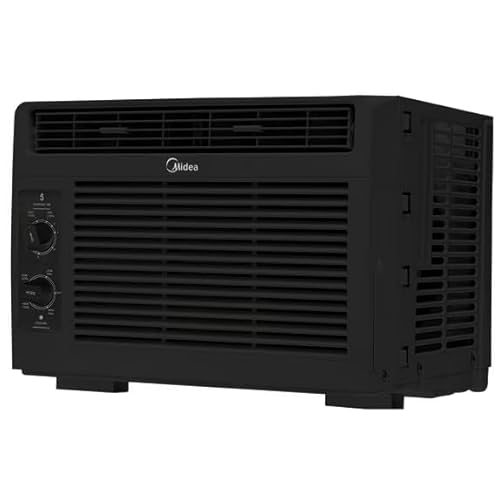
Midea 5,000 BTU 150 Sq ft Mechanical Window Air Conditioner, Black (Renewed)
Check price on Amazon
Midea 5,000 BTU Window Air Conditioner, Cools up to 150 Sq. Ft. with Easy-to-Use Reusable Filter, Remote, Perfect AC for Bedroom, Living Room, Home Office, Electronic Control
Check price on Amazon
Frigidaire 5,000 BTU Window Air Conditioner with Remote Control, Cools Up to 150 Sq. Ft., Quiet Operation, Eco Mode, 3 Fan Speeds, Auto Restart, White
Check price on Amazon
LG 10,000 BTU Through the Wall Air Conditioner, 115V, Cools up to 440 Sq. Ft. for Bedroom, Living Room, Apartment, with Remote, 3 Cool & Fan Speeds, Wall AC Unit, White
Check price on Amazon