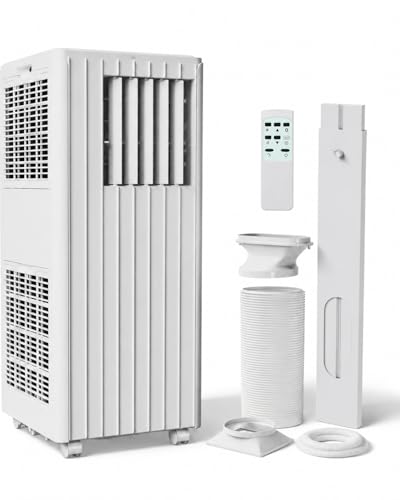
5000 BTU Portable Air Conditioner Room Size Guide
Understand exactly how much space a 5000 BTU portable air conditioner can cool, which rooms suit it best, and how to get the most cooling performance from a compact unit.
See Room Size ChartQuick answer: A 5000 BTU portable air conditioner is typically rated for rooms up to approximately 150 square feet. It is a good match for small bedrooms, home offices, dorm rooms, and studio apartments with standard ceiling height and average insulation. Larger rooms, high ceilings, or heavy heat gain usually require a higher BTU capacity.
Why Room Size Matters for a 5000 BTU Portable AC
Portable air conditioners are rated in British Thermal Units (BTU), which describe how much heat the unit can remove from a room per hour. A 5000 BTU portable unit removes a moderate amount of heat, so pairing it with the right room size is the single most important factor in whether it performs well. If the unit is placed in a room that is too large, it will run continuously without reaching the target temperature, which increases wear on the compressor and reduces comfort. If the unit is oversized for the space, it may cool too quickly and cycle on and off inefficiently, leaving the room feeling clammy.
Matching the unit to the room also affects humidity control. A correctly sized portable AC runs long enough to remove moisture from the air, which is a major part of feeling comfortable in summer. Choosing the right capacity for the room is therefore about more than temperature alone — it is about overall indoor comfort and efficient operation.
5000 BTU Portable AC Room Size Chart
The chart below summarizes typical coverage for a 5000 BTU portable air conditioner under average residential conditions. Use it as a starting reference, then adjust for the factors described in the next section.
| Room Type | Typical Floor Area | Suitability for 5000 BTU | Notes |
|---|---|---|---|
| Small bedroom | Up to 150 sq ft | Excellent match | Standard ceiling height, average insulation |
| Home office | Up to 150 sq ft | Excellent match | Extra heat from computers may require margin |
| Dorm room | Up to 150 sq ft | Excellent match | Compact footprint suits tight layouts |
| Studio apartment (single zone) | Up to 150 sq ft per zone | Good for one zone | Open layouts may need a larger unit |
| Small living room | 150–250 sq ft | Borderline | Higher heat gain from people and windows |
| Standard living room | Over 250 sq ft | Not recommended | Choose a higher BTU portable unit instead |
| Kitchen or open-plan area | Any size | Not recommended | Cooking appliances add significant heat |
Factors That Change Real-World 5000 BTU Coverage
The 150 square foot figure is a baseline, not a fixed rule. Several room characteristics can reduce the effective cooling area of a 5000 BTU portable air conditioner, so it is wise to account for them before deciding on a unit.
Ceiling Height
Standard BTU charts assume ceilings around 8 feet high. Rooms with 10-foot ceilings contain more air volume and may need a higher capacity unit even if the floor area looks small on paper.
Insulation Quality
Well-insulated rooms hold cool air longer. Older homes with single-pane windows and limited wall insulation lose cooling faster, which effectively reduces the coverage of a 5000 BTU unit.
Window Exposure
Rooms with large south- or west-facing windows receive strong solar heat gain in the afternoon. Shade from trees, awnings, or blinds helps a compact unit keep up.
Heat Sources Inside
Computers, televisions, gaming consoles, and kitchen appliances add heat. A home office with multiple monitors may need more capacity than the square footage alone suggests.
Occupancy
Each person adds body heat. A room used by two or three people regularly may exceed the comfortable range of a 5000 BTU portable unit.
Climate and Outdoor Temperature
In very hot, humid climates, a portable AC works harder. In mild climates, a 5000 BTU unit can comfortably cool a space at the upper end of its range.
Where a 5000 BTU Portable Air Conditioner Works Best
Compact portable units are a strong option when permanent installation is not practical. They are a popular choice for renters, students, and homeowners who need targeted cooling in a single room. Typical ideal placements include:
- Small bedrooms — keep the unit near the window vent and direct airflow toward the bed area.
- Home offices — compact units fit beside a desk without taking up much floor space.
- Dorm rooms and small apartments — no permanent installation and easy to move between rooms.
- Guest rooms — a practical option for occasional cooling without a full HVAC upgrade.
- Temporary or rental spaces — portable design allows the unit to move with you.
For very small rooms, a compact 5000 BTU unit can provide targeted comfort without the installation work of a window or mini-split system. If the room is slightly larger or needs heating as well, a 5000 BTU portable air conditioner and heater combination may be worth considering, though the heating function is typically supplementary rather than a primary heat source.
Placement and Setup Tips for Maximum Cooling
How a portable AC is set up has a major effect on how well it cools a room. A few practical adjustments can help a 5000 BTU unit perform closer to its rated capacity.
- Vent through a window or sliding door. The exhaust hose must route hot air outdoors. Keep the hose as short and straight as possible to reduce back pressure.
- Seal the window opening. Use the window kit included with the unit, and add weather stripping or foam around gaps to prevent hot outdoor air from leaking back in.
- Position the unit away from direct sun. Placing the unit near a sun-baked window forces it to work harder. A shaded spot improves efficiency.
- Keep airflow unobstructed. Leave space around the intake and outlet grilles so the unit can draw in and distribute air freely.
- Close doors to the cooled zone. Cooling a single room is far more effective than trying to cool an open floor plan with a compact unit.
- Use blinds and curtains during peak sun. Reducing solar heat gain lowers the cooling load on the unit.
- Drain condensate regularly. Portable units collect water. Most models have a drain option for continuous operation in humid weather.
If the exhaust setup is the weak point, upgrading the hose can help. A 5-inch exhaust hose for portable air conditioner is a common replacement size for compact units and can restore airflow if the original hose is damaged or too short.
How 5000 BTU Compares With Other Cooling Options
Understanding where a 5000 BTU portable unit sits in the broader market helps you decide whether it is the right fit or whether a different format suits the room better.
| Option | Typical Coverage | Best For | Considerations |
|---|---|---|---|
| 5000 BTU portable AC | Up to ~150 sq ft | Small bedrooms, home offices, dorms | No permanent installation; needs window venting |
| 5000 BTU window AC | Up to ~150 sq ft | Small rooms with a suitable window | Permanent window mounting; generally more efficient |
| 8000–10000 BTU portable AC | ~150–250 sq ft | Larger bedrooms, small living rooms | Higher capacity; larger footprint |
| Mini-split system | 250 sq ft and up | Whole-room or multi-zone cooling | Professional installation; long-term investment |
| Central air conditioning | Whole home | Full-house comfort | Ductwork required; higher upfront scope |
If the room is close to the 150 square foot limit or has extra heat sources, it is worth looking at a slightly higher capacity portable model. For rooms that sit comfortably within the range, a 5000 BTU portable unit is a sensible, space-conscious choice. Those who prefer a fixed installation may find that a window format is a better match — the 5000 BTU air conditioner window unit guide covers that option in detail. Renters who want flexibility often lean toward a 3-in-1 portable air conditioner, which combines cooling, fan, and dehumidifying modes in one unit.
Efficiency and Long-Term Use
A 5000 BTU portable air conditioner is a modest-capacity appliance, so its energy profile is generally reasonable for the room size it serves. Efficiency depends heavily on correct sizing and setup. A unit that is matched to the room runs in shorter, more controlled cycles, while an undersized unit runs constantly and wears faster.
To support long-term performance, clean the air filter regularly, keep the exhaust path clear, and check the window seal each season. These simple habits help the unit maintain its rated cooling output and extend its service life. For buyers comparing formats, the 5000 BTU air conditioner with remote control option adds convenience for adjusting settings without getting up, while models with a built-in dehumidifier can help in humid climates.
If the room is on the edge of the coverage range, or if the unit will also be used for heating in shoulder seasons, it is worth reviewing portable air conditioner and heater options before committing to a cooling-only model.
Frequently Asked Questions
What room size does a 5000 BTU portable air conditioner cool?
A 5000 BTU portable air conditioner is generally suited for rooms up to approximately 150 square feet, such as small bedrooms, home offices, dorm rooms, or studio apartments. Actual performance depends on ceiling height, insulation, window exposure, and the number of heat sources in the room.
Is 5000 BTU enough for a bedroom?
Yes, for most standard bedrooms up to about 150 square feet with average ceiling height and insulation, a 5000 BTU portable unit is adequate. Larger bedrooms, rooms with high ceilings, or rooms with many windows may need a higher capacity unit.
Can a 5000 BTU portable AC cool a living room?
A 5000 BTU portable air conditioner is usually too small for a typical living room. Living rooms often exceed 150 square feet and have more heat gain from people, electronics, and windows, so a higher BTU capacity is typically required.
Does ceiling height affect 5000 BTU coverage?
Yes. Standard BTU charts assume ceilings around 8 feet high. For rooms with ceilings of 10 feet or more, the effective cooling area of a 5000 BTU unit is reduced, and a higher capacity model may be needed.
How can I improve cooling performance in a small room?
Seal the window vent kit properly, keep the exhaust hose short and straight, shade the windows during peak sun, close doors to the cooled zone, and clean the air filter regularly. These steps help a compact unit reach and maintain the target temperature more effectively.
Should I choose a portable or window unit for a small room?
Both formats can cool a small room effectively. Portable units offer placement flexibility and no permanent installation, while window units are often more efficient and free up floor space. The right choice depends on your window type, rental situation, and how often you need to move the unit.