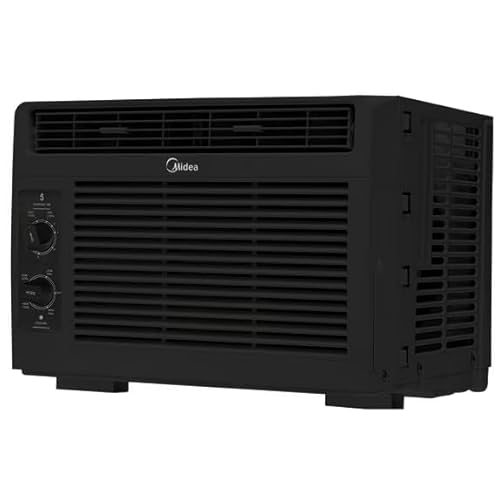
5000 BTU Air Conditioner: The Complete Guide to Small Room Cooling
Everything you need to know about 5000 BTU units — room size coverage, window vs portable types, efficiency ratings, installation tips, and how to choose the right compact AC for bedrooms, offices, and studio apartments.
EXPLORE BUYING FACTORSWhy a 5000 BTU Unit? A 5000 BTU air conditioner is the most common entry point for compact cooling. It is engineered for small, enclosed spaces and delivers a precise balance of cooling capacity and electrical efficiency. If you have a bedroom, home office, dorm room, or studio apartment under 150 square feet, a 5000 BTU unit is typically the correct specification. This guide breaks down every factor you need to evaluate before selecting a model.
What a 5000 BTU Unit Can Actually Cool
BTU (British Thermal Unit) measures how much heat an air conditioner can remove from a space in one hour. A 5000 BTU unit removes 5000 BTUs of heat per hour, which corresponds to a cooling capacity suitable for a small room. The general sizing guideline for residential cooling is approximately 20 BTU per square foot, though this varies with ceiling height, window area, insulation, and occupancy.
For a 5000 BTU air conditioner, the practical coverage is up to 150 square feet. Typical use cases include:
- Bedrooms measuring 100–150 sq ft
- Home offices and study rooms
- Dormitory rooms
- Studio apartments with a single main room
- Small guest rooms or nurseries
- Server closets and small equipment rooms (with ventilation considerations)
If your room exceeds 150 square feet, a 5000 BTU unit will struggle to maintain a comfortable temperature during peak summer heat. In that case, step up to an 8000–10000 BTU model. Conversely, oversizing a unit in a very small room leads to short cycling, which reduces dehumidification and increases wear on the compressor.
Not sure about your room size?
Use our BTU calculator to match cooling capacity to your exact square footage, ceiling height, and sun exposure.
Calculate Your BTU Requirement5000 BTU Window vs Portable Units
The two dominant form factors for 5000 BTU cooling are window air conditioners and portable air conditioners. Each has distinct advantages depending on your installation constraints and lifestyle.
5000 BTU Window Units
Window units are installed directly in a window frame and exhaust heat outdoors through the rear of the chassis. Because the condenser is outside the conditioned space, window units are generally more efficient and cool more effectively than portable units of the same BTU rating. They are also lighter and more compact, making them easier to install and remove seasonally.
Popular configurations include the energy-efficient 5000 BTU window air conditioner, the standard 5000 BTU window unit, and specialized variants like the 5000 BTU air conditioner for sliding windows. For households that prefer a mechanical control interface, the 5000 BTU mechanical window air conditioner offers straightforward operation without digital components.
5000 BTU Portable Units
Portable air conditioners sit on the floor and exhaust hot air through a flexible hose vented to a window. They offer room-to-room mobility, which is useful for renters or households that need cooling in different spaces throughout the day. The trade-off is slightly lower cooling efficiency and a larger physical footprint. A common 5000 BTU portable configuration is the 5000 BTU portable air conditioner and heater, which adds a heating function for year-round use.
✔ Window Unit Advantages
- Higher cooling efficiency (condenser outdoors)
- Lighter and more compact chassis
- Lower amp draw on average
- Better dehumidification performance
- Wide selection of 5000 BTU models
✘ Window Unit Limitations
- Requires a compatible window opening
- Not portable between rooms
- May obstruct window view
- Some lease agreements restrict installation
✔ Portable Unit Advantages
- Room-to-room mobility
- No permanent window installation
- Renter-friendly setup
- Some models include heating
✘ Portable Unit Limitations
- Lower cooling efficiency
- Larger floor footprint
- Hose venting can be cumbersome
- Higher noise level in some models
Electrical Requirements for 5000 BTU Units
One of the practical advantages of a 5000 BTU unit is its low electrical draw. Most models operate on 115 volts and draw between 4.5 and 5.5 amps, which means they can plug into a standard 15-amp household outlet without requiring a dedicated circuit. This makes them suitable for older homes, apartments, and dormitories where electrical infrastructure may be limited.
However, you should still observe basic electrical safety practices:
- Avoid using extension cords with air conditioners
- Do not share the circuit with high-draw appliances like microwaves or space heaters
- Check that the outlet is properly grounded
- Verify the plug type matches your outlet (most 5000 BTU units use a 5-15P plug)
If you are unsure about your home's electrical capacity, consult a licensed electrician before installation. For a broader understanding of voltage and breaker considerations, see our guide on 110V vs 240V air conditioners.
Efficiency Ratings Explained for 5000 BTU Units
Efficiency is a critical selection criterion for compact air conditioners. The two primary metrics are EER (Energy Efficiency Ratio) and CEER (Combined Energy Efficiency Ratio). CEER is the standard used for window units sold in the United States and incorporates standby power consumption and other factors.
Higher CEER values indicate greater efficiency. For 5000 BTU units, look for models with CEER ratings in the higher range for the category. ENERGY STAR certification is a reliable indicator that a unit meets federal efficiency guidelines. Many 5000 BTU models are ENERGY STAR certified because their small compressors are inherently efficient.
| Tier | Efficiency Indicator | Best For |
|---|---|---|
| Essential tier | Standard CEER, no ENERGY STAR | Occasional use, mild climates, secondary rooms |
| Balanced tier | Above-average CEER, some smart features | Daily use in bedrooms and home offices |
| Top-tier | ENERGY STAR certified, highest CEER in class | Continuous seasonal use, households prioritizing efficiency |
Beyond the rating label, real-world efficiency depends on installation quality, window sealing, filter cleanliness, and thermostat settings. A well-installed mid-tier unit often outperforms a poorly installed top-tier unit. For a deeper explanation of efficiency metrics, read our guide on what a SEER rating means and how EER is calculated.
Key Buying Factors for a 5000 BTU Unit
When evaluating 5000 BTU models, focus on these factors rather than marketing claims:
1. Cooling Capacity Match
Confirm that 5000 BTU aligns with your room size. Measure the room's length and width, account for ceiling height, and note sun exposure. A south-facing room with large windows may need slightly more capacity or better shading.
2. Form Factor and Installation
Window units require a compatible window type and sill. Portable units require a window for hose venting and floor space. Measure your window opening before purchasing a window unit. Some 5000 BTU models are designed specifically for narrow or sliding windows.
3. Control Interface
Mechanical controls use dials and are simple and durable. Digital controls offer precise temperature setting, timers, and remote operation. Smart-enabled models add Wi-Fi control through a mobile app. Choose based on your preference for simplicity versus automation.
4. Noise Level
Compact air conditioners produce noise from the compressor and fan. Decibel ratings for 5000 BTU units typically range from the low 50s to the low 60s. If the unit is for a bedroom, prioritize models with lower noise specifications and fan-speed options.
5. Dehumidification Mode
Many 5000 BTU units include a dry mode that prioritizes moisture removal. This is useful in humid climates. The 5000 BTU air conditioner with dehumidifier configuration is a practical choice for damp bedrooms and basements.
6. Remote Control and Programmability
A remote control adds convenience, especially for window units mounted high in the frame. Models such as the 5000 BTU air conditioner with remote control allow you to adjust settings without reaching the unit. Programmable timers help align cooling with your schedule.
7. Build Quality and Warranty
Look for durable construction, sealed components, and a warranty that covers the compressor for multiple years. A solid build reduces vibration noise and extends service life. For small-room cooling in a compact chassis, consider the 5000 BTU 115-volt window-mounted mini compact air conditioner as a reference for compact design.
Need a step-by-step sizing method?
Our full sizing guide walks you through Manual J basics, room measurement, and capacity adjustment factors.
Read the AC Sizing GuideInstallation and Placement Tips
Correct installation is the difference between a 5000 BTU unit that cools effectively and one that underperforms. Follow these guidelines:
- Window units: Ensure the unit slopes slightly downward toward the exterior so condensation drains properly. Seal gaps around the unit with foam insulation to prevent hot air infiltration. Use a support bracket for larger or heavier units, even compact ones.
- Portable units: Position the unit near the window used for hose venting. Keep the hose as short and straight as possible. Seal the window gap around the hose kit to prevent backflow of hot air.
- Clearance: Keep at least 12–20 inches of clearance around the air intake and exhaust. Do not block the front grille with furniture or curtains.
- Sun exposure: If the window receives direct afternoon sun, use blinds or an exterior shade to reduce heat load. This improves effective cooling without changing the unit's capacity.
Maintenance for Long-Term Performance
A 5000 BTU unit requires modest but regular maintenance to sustain efficiency and air quality:
- Filter cleaning: Clean or replace the air filter every two to four weeks during peak season. A clogged filter reduces airflow and strains the compressor. See our guide on how to clean an AC filter.
- Coil cleaning: Inspect the evaporator and condenser coils annually. Dust and debris reduce heat transfer. Follow our instructions on cleaning condenser coils and cleaning evaporator coils.
- Seasonal preparation: Before summer, test the unit, check the cord and plug, and clean the exterior. Before winter, remove window units or cover them to prevent weather damage.
- Drainage: Ensure window units drain properly. For portable units, empty the condensate tank regularly or connect a continuous drain hose if supported.
If the unit stops cooling effectively, consult our troubleshooting guide on AC not cooling before assuming the unit needs replacement.
Common Use Cases and Model Configurations
5000 BTU units are available in several configurations to match specific room and installation scenarios:
- Standard bedroom window unit: A straightforward 5000 BTU air conditioner window unit is the most common choice for bedrooms up to 150 sq ft.
- Sliding window installation: If your home has sliding windows, the 5000 BTU air conditioner for sliding window configuration includes the appropriate mounting hardware.
- Through-the-wall installation: For homes with an existing wall sleeve, the 5000 BTU through-the-wall air conditioner fits into the wall cavity and frees up window space.
- Portable with heating: The 5000 BTU portable air conditioner and heater supports both cooling and supplemental heating for transitional seasons.
- Energy-efficient configuration: The energy-efficient 5000 BTU window air conditioner prioritizes low power draw and ENERGY STAR compliance.
- Compact 115V window-mounted design: The 5000 BTU 115-volt window-mounted mini compact air conditioner is a reference for tight installation spaces.
For a broader look at how 5000 BTU units compare to slightly larger capacities, see our guide on 8,000–10,000 BTU air conditioners.
Frequently Asked Questions
What size room does a 5000 BTU air conditioner cool?
Is a 5000 BTU air conditioner energy efficient?
Can a 5000 BTU air conditioner run on a standard household outlet?
What is the difference between a 5000 BTU window unit and a portable unit?
How many amps does a 5000 BTU air conditioner use?
Final Selection Checklist
Before choosing a 5000 BTU unit, verify the following:
- Room size is 150 sq ft or less, or capacity is adjusted for heat load factors.
- Window type and dimensions are compatible with the chosen form factor.
- Electrical outlet is grounded and on a circuit that can handle the amp draw.
- Noise specification aligns with the room's use (bedroom vs utility space).
- Efficiency rating meets your usage pattern and climate.
- Control interface (mechanical, digital, remote, or smart) matches your preference.
- Warranty and build quality are appropriate for the intended service life.
A well-chosen 5000 BTU unit delivers reliable, efficient cooling for small spaces without overburdening your electrical system or your comfort expectations. Use this guide as a reference, then explore the recommended models below to compare features and availability.