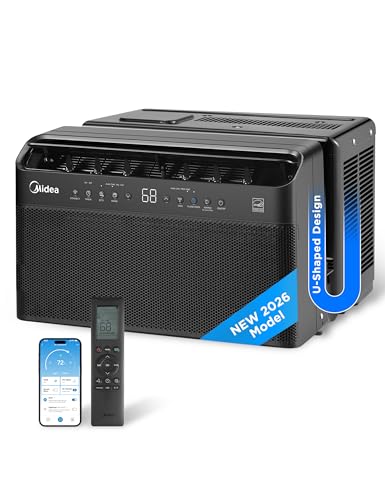
6000 BTU Energy Star Window Air Conditioner
A complete, research-based guide to understanding capacity, efficiency ratings, key features, and how to choose the right 6000 BTU Energy Star window unit for a small room or apartment.
Why this guide matters: If you have already narrowed your search to a 6000 BTU Energy Star window air conditioner, you are in the research phase and want confirmation before purchasing. This page explains what the 6000 BTU capacity actually delivers, what Energy Star certification means in practice, which features are genuinely useful, and how to compare models across quality tiers without relying on any single specification alone.
What a 6000 BTU Window Air Conditioner Really Covers
BTU, or British Thermal Unit, measures cooling capacity. A 6000 BTU window air conditioner is generally intended for rooms up to roughly 250 square feet. That makes it a practical match for a primary bedroom, a guest room, a small living area, a home office, or a studio apartment. The important nuance is that square footage alone is not the whole story. Ceiling height, window area, sun exposure, occupancy, and the presence of heat-generating appliances all influence how well a given unit will perform.
For reference, smaller 5000-6000 BTU AC units are often chosen for compact bedrooms, while larger spaces begin to call for the 8000-10000 BTU class. A 6000 BTU unit sits at the upper end of the small-room category and is a strong fit when a 5000 BTU model would run continuously on hot days.
Sizing correctly matters because an undersized unit will struggle to reach the set temperature, while an oversized unit can cool too quickly and cycle on and off inefficiently. If you are still deciding between capacities, the broader guide on how to size an air conditioner walks through the calculation step by step.
Typical room scenarios for 6000 BTU
- Bedrooms between roughly 150 and 250 square feet
- Home offices with one or two occupants and moderate electronics
- Small living rooms or studio apartments with limited direct sun
- Guest rooms used intermittently during warm months
If the room is heavily sun-exposed, has a large west-facing window, or regularly holds more than two people, consider stepping up slightly in capacity or choosing a model with stronger airflow and better dehumidification.
What Energy Star Certification Means for a Window AC
Energy Star is a voluntary labeling program backed by the U.S. Environmental Protection Agency. For window air conditioners, certification means the unit meets or exceeds efficiency criteria set for its capacity class. In practical terms, an Energy Star certified 6000 BTU window unit is designed to deliver the same cooling output while drawing less electricity than a comparable non-certified model.
Efficiency for room air conditioners is commonly expressed through the Combined Energy Efficiency Ratio, or CEER. A higher CEER indicates more cooling delivered per unit of electricity consumed. The window air conditioner energy efficiency rating guide explains how CEER and related metrics are calculated and compared.
It is worth understanding that Energy Star certification is a baseline, not the ceiling. Within the certified category, models still differ in compressor technology, fan design, and smart features. A unit can be certified and still sit at the entry-level, mid-range, or premium position in the market. The certification tells you it clears an efficiency bar; it does not tell you everything about build quality or convenience features.
Lower Standby Draw
Certified units often include better standby power management, which matters for units left plugged in year-round.
Eco Mode Behavior
Many Energy Star models include an eco or energy-saver mode that cycles the compressor fan independently to reduce consumption.
Verified Efficiency
Certification is based on standardized testing, giving you a consistent reference point when comparing models from different brands.
Long-Term Investment
Efficiency gains compound over multiple cooling seasons, making certification a sensible long-term investment for a primary cooling unit.
Key Features to Compare Across 6000 BTU Energy Star Models
Once capacity and certification are settled, the differences between models come down to features and build quality. The following areas are where buyers typically find meaningful variation.
Compressor and Cooling Technology
Most 6000 BTU window units use a fixed-speed compressor, but some models now offer inverter-driven or variable-speed operation. An inverter compressor modulates its speed rather than switching fully on and off, which can improve temperature stability and efficiency in the long run. If quiet, steady cooling is a priority, an inverter model is worth considering. The overview of inverter AC technology explains how this differs from conventional compressors.
Airflow and Fan Settings
Look for multiple fan speeds and adjustable louvers. Three or more fan speeds give you finer control over cooling intensity and noise. Four-way air direction lets you aim cool air where it is needed rather than relying on a fixed vent angle.
Noise Level
Window units are inherently louder than mini-splits because the compressor and fan sit in the same chassis that intrudes into the room. Noise ratings are usually given in decibels; lower figures are better for bedrooms. If quiet operation is central to your decision, the guide to quiet air conditioners compares approaches across unit types.
Smart Controls and Remote Access
Many current models include Wi-Fi connectivity and app-based control, allowing scheduling and remote adjustment. A remote control is standard, but app integration, voice assistant compatibility, and programmable schedules vary. The AC with Wi-Fi and smart control guide covers what these features realistically add.
Filtration and Air Quality
Most window ACs include a washable mesh filter. Some add supplemental filtration or ionizers. If air quality is a concern, the AC with air purifier overview explains which filtration claims are meaningful and which are mostly marketing.
Installation Fit and Window Type
Check the unit dimensions against your window opening, the weight against the bracket or support requirements, and whether the model is designed for single-hung, double-hung, or sliding windows. Some units ship with a window kit and insulation panels; others require additional support brackets for safety.
Comparing Quality Tiers Within the 6000 BTU Energy Star Category
Not all certified units are built to the same standard. The table below groups typical models into quality tiers based on construction, feature depth, and expected durability. This is a relative classification, not an absolute ranking of any specific brand.
| Tier |
Typical Characteristics |
Best For |
| Entry-level |
Basic mechanical controls or simple digital panel, two fan speeds, standard mesh filter, fixed-speed compressor, functional build |
Occasional use in guest rooms or spaces where simplicity is preferred |
| Mid-range |
Digital thermostat, three fan speeds, remote control, energy-saver mode, better insulation around the chassis, more consistent airflow |
Primary bedroom or home office used daily through the cooling season |
| High-end tier |
Inverter or variable-speed compressor, quieter operation, app and voice control, improved filtration, reinforced mounting hardware, refined design |
Bedrooms where noise matters, or buyers who want long-term efficiency and smart scheduling |
| Professional-grade |
Heavy-duty chassis, commercial-oriented controls, extended duty cycles, serviceable components, robust weather sealing |
Light commercial spaces, rental properties, or high-usage installations |
Mid-range models usually represent the most balanced combination of features and durability for residential use. Entry-level units are a solid choice for secondary rooms, while high-end and professional-grade options justify their position when quiet operation, smart control, or extended service life are genuine priorities.
Installation and Placement Considerations
Correct installation affects both cooling performance and safety. A window unit that is not properly supported can vibrate, leak, or become a hazard. Before installing a 6000 BTU unit, confirm the following:
Pre-Installation Checklist
- Measure the window opening width and height against the unit's minimum and maximum dimensions
- Confirm the window frame is structurally sound and can bear the unit's weight
- Check that a standard 115V outlet is within reach, and avoid extension cords for permanent installations
- Ensure the unit will tilt slightly outward so condensation drains away from the room
- Install the included support bracket or an aftermarket bracket for larger or heavier units
- Seal gaps around the window kit with insulation foam to prevent cool air loss
For units that sit in a wall sleeve rather than a window, the installation approach differs. The through-the-wall AC guide covers wall-sleeve installations, and there is a dedicated page for a 6000 BTU through-the-wall air conditioner if that format suits your space.
If you prefer not to handle installation yourself, the overview of companies that install window air conditioners explains what professional installation typically involves.
Maintenance Habits That Extend Unit Life
A 6000 BTU Energy Star unit is a long-term investment, and routine maintenance protects both efficiency and comfort. The most impactful habits are simple:
- Clean or rinse the air filter every two to four weeks during heavy use; a clogged filter reduces airflow and forces the compressor to work harder
- Inspect the outdoor side of the unit for debris, leaves, or insect nests that block the condenser
- Check the condensate drain path at the start of each season to prevent water backup
- Remove and store the unit during extended off-seasons if the window installation allows it
- Schedule a professional coil cleaning every few years if the unit runs continuously
If you notice reduced cooling, unusual noises, or water leakage, the relevant troubleshooting pages can help narrow down the cause. Common issues include an AC blowing cool air without cooling the room and a unit that develops cold airflow that fails to lower room temperature. Both often trace back to airflow restriction, refrigerant issues, or sensor faults.
Is a 6000 BTU Energy Star Window AC the Right Choice for You?
This capacity class is a strong fit if your room is in the 150 to 250 square foot range, you want a verified efficiency baseline, and you prefer a self-contained unit that installs in a window without ductwork. It is less suitable for open-plan spaces, rooms with intense sun exposure, or households that need multi-room cooling from a single unit.
If you are still exploring alternatives, the top-rated 6000 BTU window air conditioners page compares models across tiers, and the broader small room window air conditioner reviews cover units below and above this capacity. For buyers who want Energy Star certification with smart features, the Energy Star window air conditioner with remote overview is a useful comparison point.
Buyers comparing against slightly different configurations may also find the 10000 BTU Energy Star window air conditioner guide helpful if their room is larger than initially estimated.
Frequently Asked Questions
What size room does a 6000 BTU window air conditioner cool?
A 6000 BTU window air conditioner is typically designed for rooms up to about 250 square feet, such as a bedroom, small living room, home office, or studio apartment. Factors like ceiling height, sun exposure, and insulation can affect actual performance.
Is a 6000 BTU Energy Star window AC worth choosing?
Yes. An Energy Star certified 6000 BTU window unit meets strict federal efficiency guidelines, which typically means lower electricity consumption and a more sustainable long-term investment compared to non-certified models in the same capacity class.
Does a 6000 BTU window AC run on standard household voltage?
Most 6000 BTU window air conditioners operate on 115V, which is compatible with standard North American household outlets. Always verify the electrical requirements on the specific model before installation.
What does Energy Star certification mean for a window air conditioner?
Energy Star certification indicates that the unit meets or exceeds efficiency standards set by the U.S. Environmental Protection Agency. Certified window ACs typically use less energy than standard models, helping reduce electricity consumption over time.
Should I choose an inverter model in this capacity class?
An inverter compressor can provide steadier temperature control and quieter operation, which is valuable in bedrooms. It is not mandatory for good performance, but it is a meaningful upgrade if comfort and noise are priorities.