
6000 BTU Through the Wall Air Conditioner: The Complete Guide
Everything you need to know about 6000 BTU through-the-wall AC units — room sizing, installation requirements, efficiency ratings, and how to choose the right model for your space.
START LEARNINGOn This Page
Quick Summary: A 6000 BTU through-the-wall air conditioner is a permanent-mount cooling solution designed for rooms up to roughly 250 square feet. It delivers steady cooling without occupying window space, making it a practical choice for bedrooms, home offices, and small apartments. This guide explains what to check before buying, how to compare models fairly, and what to expect from installation and maintenance.
What Is a 6000 BTU Through-the-Wall Air Conditioner?
A 6000 BTU through-the-wall air conditioner is a compact cooling unit installed directly into an exterior wall rather than a window. The unit sits inside a metal wall sleeve that is built into the wall opening, allowing the air conditioner to slide in and out for service while the sleeve remains permanently in place.
With a cooling capacity of 6,000 British Thermal Units, this class of unit is designed for small to medium rooms. Unlike portable air conditioners, through-the-wall models do not need exhaust hoses routed through a window, and unlike through-the-wall AC systems in larger capacities, the 6000 BTU version is compact, lighter, and typically runs on standard household voltage.
How It Works
The unit draws indoor air across an evaporator coil, removing heat and humidity, and then circulates cooled air back into the room. Heat absorbed by the refrigerant is released outdoors through the condenser coil. Because the chassis is mounted in the wall, the indoor and outdoor sections are separated by the wall thickness, which helps reduce operating noise inside the room.
Typical Use Cases
- Bedrooms: A quiet, permanent cooling source that does not block window views.
- Home offices: Consistent cooling for equipment and occupants during work hours.
- Apartments and condos: A practical alternative when window units are restricted by building rules.
- Additions and converted spaces: Garages, sunrooms, and basement rooms that need dedicated cooling.
If you are still exploring the broader category, the 8000 BTU through-the-wall air conditioner guide covers a larger capacity step for rooms that exceed 250 square feet.
How Much Room Does 6000 BTU Cool?
The general rule of thumb is that 6000 BTU is appropriate for rooms up to about 250 square feet, assuming standard ceiling height (8 feet) and average insulation. However, several factors can shift this recommendation up or down.
| Room Condition | Effect on 6000 BTU Suitability |
|---|---|
| Standard 8-ft ceiling, average insulation | Well matched for up to 250 sq ft |
| High ceilings (10 ft or more) | Effective coverage drops; consider a larger capacity |
| Poor insulation or older single-pane windows | May struggle; expect longer run times |
| Direct sun exposure most of the day | May need a higher capacity or shade strategy |
| Kitchen or room with heat-generating appliances | Consider a larger unit or supplemental cooling |
| Shaded room with good insulation | 6000 BTU may comfortably cover slightly more area |
For a more precise estimate, use a BTU calculator by room size. The calculator accounts for ceiling height, insulation quality, window area, and occupancy, which the simple square-footage rule does not.
Signs a 6000 BTU Unit Is the Right Fit
- The room is between 150 and 250 square feet with a standard ceiling.
- The unit runs in cycles rather than continuously on the hottest days.
- Humidity is noticeably reduced within the first hour of operation.
- The room reaches the set temperature without the compressor running nonstop.
Signs You May Need a Different Capacity
- The unit runs continuously and the room never quite reaches the set point.
- The room feels clammy even when the temperature is acceptable.
- The unit short-cycles — turning on and off rapidly — which can indicate an oversized unit for a very small, well-insulated space.
If your room is smaller than 150 square feet, a 5000–6000 BTU AC overview can help you compare the lower end of the range. If the room is larger than 250 square feet, explore the 8000–10000 BTU AC category before committing to 6000 BTU.
Through-the-Wall vs Window AC: Key Differences
Both through-the-wall and window air conditioners use the same basic refrigeration cycle, but the installation method changes the practical experience significantly.
Through-the-Wall AC
- Permanent wall installation with a sleeve
- Does not block windows or natural light
- Typically quieter indoors because the compressor is separated by wall thickness
- Requires professional installation or a pre-existing wall sleeve
- Better curb appeal and security — no window opening left accessible
- Harder to move between rooms
Window AC
- Installed in a window opening, often removable seasonally
- Blocks part of the window and reduces light
- Generally easier to install without professional help
- Can be moved between compatible windows
- Security considerations because the window remains partially open
- Noise is closer to the room because the chassis sits in the window frame
If you are comparing specific models, the 6000 BTU ENERGY STAR window air conditioner page offers a useful reference point for efficiency expectations in the same capacity class. For a broader window-unit comparison, see the top-rated 6000 BTU window air conditioners guide.
Through-the-wall models are often the better long-term choice for homeowners who want a fixed cooling solution and are willing to invest in proper installation. Window units remain the more flexible option for renters or for rooms where a wall opening is not feasible.
Key Features to Evaluate Before Buying
When comparing 6000 BTU through-the-wall air conditioners, focus on the specifications that affect comfort, durability, and long-term operating characteristics rather than marketing language.
Cooling Capacity and BTU Accuracy
Confirm that the rated capacity is 6,000 BTU and that the unit is designed for the room size you have. Some models advertise "6000 BTU" but list a different nominal capacity in the specifications. Check the product data sheet for the precise cooling capacity and the recommended room area.
Energy Efficiency Ratio (EER) and SEER
Efficiency is expressed through the energy efficiency ratings: SEER, EER, and HSPF. For room air conditioners, EER is the most relevant metric. A higher EER means more cooling per unit of electricity. Within the 6000 BTU class, efficiency varies noticeably between entry-level and premium tiers.
If you want a deeper explanation of the rating systems, the efficiency of an air conditioner article breaks down how EER and SEER are calculated and what they mean in practice.
Voltage and Electrical Requirements
Most 6000 BTU units run on 115V household current, which makes them compatible with standard outlets. Confirm the amperage draw and whether the unit requires a dedicated circuit. The 110V vs 240V air conditioner comparison explains when a higher-voltage circuit is necessary.
Noise Level
Through-the-wall units are generally quieter indoors than window units because the wall separates the compressor from the room. Still, noise levels vary. Look for decibel ratings in the specifications and read owner feedback about fan noise at low and high settings. The quiet air conditioner guide covers what decibel ranges are considered quiet for different room types.
Wall Sleeve Compatibility
If a wall sleeve is already installed, verify that the new chassis fits the sleeve dimensions. Sleeve sizes are not universal. If you are installing from scratch, the sleeve is typically purchased separately or included with the unit. Check whether the model uses a standard sleeve size and whether replacement chassis are available for that sleeve in the future.
Smart Controls and Remote Operation
Many modern models include remote controls, programmable timers, and Wi-Fi connectivity. Smart features are convenient for scheduling and for adjusting settings without getting up, but they are not essential for basic cooling. If smart control matters to you, compare the AC with Wi-Fi and smart control options in this capacity class.
Air Filtration
Most units include a washable mesh filter. Some models add more advanced filtration. If air quality is a priority, the AC with air purifier guide explains what additional filtration features are available and how effective they are in practice.
Build Quality and Warranty
Look for durable construction, corrosion-resistant coils, and a sealed chassis that reduces vibration. Warranty terms vary: entry-level models often cover the sealed system for a shorter period than premium models. Read the warranty details carefully, especially the coverage for the compressor and the sealed refrigeration system.
Efficiency and Annual Energy Use
Efficiency in the 6000 BTU class is not uniform. Two units with the same cooling capacity can consume meaningfully different amounts of electricity over a cooling season. The difference shows up in the EER rating and in whether the unit carries an ENERGY STAR certification.
An ENERGY STAR window air conditioner with remote represents a model that meets stricter efficiency criteria than the minimum federal standard. The same certification logic applies to through-the-wall units: ENERGY STAR models are tested to consume less energy for the same cooling output.
What EER Means in Practice
EER is calculated as cooling output in BTU divided by electrical input in watts. A higher EER indicates a more efficient unit. In the 6000 BTU category, entry-level models and premium models can differ by several EER points. Over a full cooling season, that difference translates into measurable electricity consumption variation.
Factors That Affect Real-World Efficiency
- Installation quality: Gaps around the wall sleeve let conditioned air escape and hot outdoor air enter, reducing effective efficiency.
- Filter condition: A clogged filter restricts airflow and forces the unit to work harder.
- Thermostat settings: Lower setpoints increase run time and energy use.
- Direct sun exposure: A unit in direct sun works harder to reject heat outdoors.
- Room insulation: Poor insulation increases the cooling load the unit must handle.
For a broader discussion of how efficiency ratings translate into operating behavior, see the window air conditioner energy efficiency rating guide.
Installation and Wall Sleeve Basics
Through-the-wall air conditioners require a wall opening sized to the sleeve dimensions. This is the main practical difference from window units: installation is a construction task, not a seasonal setup task.
What Installation Involves
- Wall assessment: Confirm the wall is exterior, load-bearing considerations are addressed, and there is no wiring or plumbing in the planned opening.
- Opening preparation: Cut the opening to the sleeve's specified dimensions, with proper framing and support.
- Sleeve installation: Set the sleeve level, seal the perimeter, and provide drainage so condensate exits outdoors.
- Electrical provision: Confirm a compatible circuit is available near the opening.
- Chassis installation: Slide the unit into the sleeve, secure it, and seal any remaining gaps.
Permits and Professional Help
Many jurisdictions require a permit for cutting a new opening in an exterior wall. The how to get an AC permit guide explains the general process. For electrical work, the do I need an electrician for AC article clarifies when a licensed electrician is required.
If a wall sleeve is already present, installation is much simpler: the new chassis slides into the existing sleeve, provided the dimensions match. This is common in apartments and older homes where a previous unit was installed.
Placement Considerations
- Avoid placing the outdoor section where it is enclosed or blocked; airflow is essential for heat rejection.
- Ensure the indoor unit is not directly above heat sources or in a location where curtains block airflow.
- Consider sun exposure: an outdoor section in full afternoon sun works harder than one in shade.
The AC indoor and outdoor placement guide covers placement principles that apply to through-the-wall units as well.
Maintenance and Longevity Tips
A through-the-wall unit is exposed to outdoor conditions year-round, so maintenance matters for both performance and lifespan.
Routine Maintenance Tasks
- Clean or replace the air filter every 2–4 weeks during heavy use. A clean filter maintains airflow and efficiency. The clean AC filter guide walks through the process.
- Inspect and clean the outdoor coil seasonally. Debris, pollen, and dust accumulate on the condenser coil and reduce heat rejection. The clean condenser coils article explains safe cleaning methods.
- Check the sleeve seal. Gaps around the sleeve let air and moisture in. Re-seal as needed with appropriate exterior sealant.
- Keep the outdoor section clear. Remove leaves, nests, and debris from around the exterior grille.
- Schedule a seasonal check. The seasonal AC checklist covers what to inspect before and after the cooling season.
Signs of Trouble
- Reduced cooling output despite a clean filter.
- Water leaking indoors, which can indicate a blocked condensate path.
- Unusual noises such as rattling or grinding.
- Frequent short cycling.
For troubleshooting specific symptoms, the AC not cooling and AC leaking water guides provide diagnostic steps. If the issue involves refrigerant or the compressor, the when to call an HVAC technician article explains when professional service is necessary.
Comparing Model Tiers in the 6000 BTU Class
Through-the-wall air conditioners in the 6000 BTU range are available across several market tiers. The table below describes what typically distinguishes each tier so you can match a model to your priorities.
| Tier | Typical Characteristics | Best For |
|---|---|---|
| Entry-level | Basic mechanical controls or simple remote, standard EER, washable filter, shorter warranty on some components | Buyers who want dependable cooling with minimal features for a secondary room |
| Mid-range | Digital controls, programmable timer, higher EER than entry-level, quieter fan settings, improved filtration | Primary bedrooms and home offices where comfort and efficiency matter |
| Premium | Higher EER, quieter operation, smart connectivity, enhanced filtration, durable corrosion-resistant construction, longer warranty coverage | Users who want the best comfort and efficiency in this capacity class and plan to keep the unit long-term |
Higher tiers generally offer smoother fan operation, better humidity control, and more consistent temperature maintenance. Mid-range models often represent the balanced choice: they add convenience and efficiency without the top-tier feature set. Entry-level models remain a solid choice for spaces where the unit runs less frequently or where advanced controls are not needed.
For capacity-class comparisons at other sizes, see the 8000 BTU through-the-wall and 15000 BTU through-the-wall guides.
Ready to Compare 6000 BTU Through-the-Wall Models?
Review recommended units and check current availability. Compare features, efficiency ratings, and sleeve compatibility before making a decision.
View Recommended ModelsFrequently Asked Questions
Recommended 6000 BTU Through-the-Wall Air Conditioners
⚠️ AFFILIATE DISCLOSURE: This website contains affiliate links. As an Amazon Associate, we earn from qualifying purchases. If you make a purchase through these links, we may receive a small commission at no additional cost to you. Read our full affiliate policy.

Frigidaire 6,000 BTU Window Air Conditioner with Remote Control, Cools Up to 250 Sq. Ft., Quiet Operation, Eco Mode, 3 Fan Speeds, Auto Restart, White
Check price on Amazon
Friedrich Chill Premier Window/Wall Air Conditioner 6K BTU, 115V - CCW06B10C
Check price on Amazon
LG 10,000 BTU Through the Wall Air Conditioner, 115V, Cools up to 440 Sq. Ft. for Bedroom, Living Room, Apartment, with Remote, 3 Cool & Fan Speeds, Wall AC Unit, White
Check price on Amazon
Midea 6,000 BTU Window Air Conditioner, Electronic Control, 250 Sq Ft, New | 3-In-1 Cool/Fan/Dehumidifier Modes, Easy-To-Use Controls, Remote Control, And Cooling For Bedrooms, Studies and Home Offices
Check price on Amazon
OLMO 8,000 BTU 115V Through-the-Wall AC, Cooling Only, Built-In Smart Kit | Air Conditioner, R-32 Eco-Friendly Refrigerant, Remote Included, 0.67 Ton
Check price on Amazon
Friedrich Chill Premier Window/Wall Air Conditioner 6K BTU, 115V - CCW06B10C w 13-Month Axiom Device Care Program
Check price on Amazon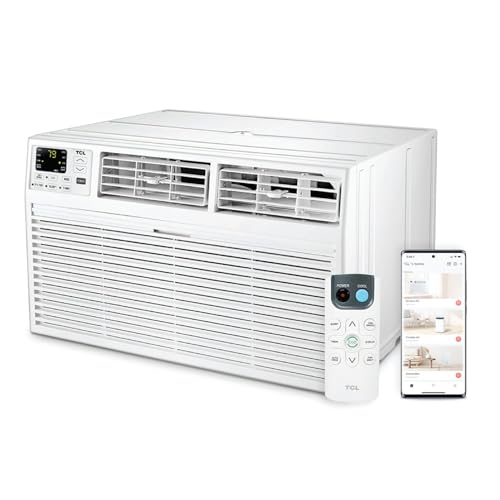
TCL 8,000 BTU Smart Through-the-Wall Air Conditioner with Heater,115V WiFi | 115V, Wall Mounted, Heater, Dehumidifier, Remote Control, Works with Alexa and Google Assistant, Rooms up to 450 Sq.Ft.
Check price on Amazon
LG 11,800 BTU Through the Wall Air Conditioner, 115V, Cools up to 530 Sq. Ft. for Bedroom, Living Room, Apartment, with Remote, 3 Cool & Fan Speeds, Universal design fits most sleeves, White
Check price on AmazonDisclaimer
Some of the content on this site uses AI assistance. Information is provided for educational purposes only. We are not responsible for any losses resulting from the use of this information. By using this site, you waive any right to bring legal claims against us arising from your use of the information provided. If you do not agree, please do not use this site. Read the full disclaimer.