15000 BTU Through the Wall Air Conditioner: The Complete Buyer's Guide
Everything you need to know about 15000 BTU through the wall air conditioners — room sizing, installation requirements, efficiency ratings, feature comparisons, and maintenance — so you can choose the right permanent cooling solution for your space.
START LEARNINGWhy through the wall cooling makes sense: A 15000 BTU through the wall air conditioner delivers strong cooling capacity with a permanent, secure installation that frees up window space. It is an excellent choice for large rooms, additions, and homes where a window unit feels temporary or obstructs the view. This guide walks you through every decision point before you buy.
What Is a 15000 BTU Through the Wall Air Conditioner?
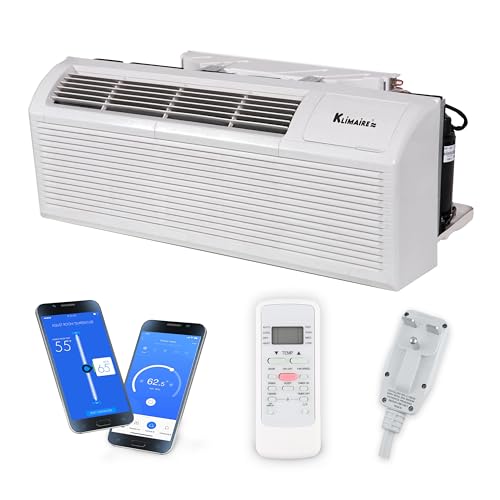
A 15000 BTU through the wall air conditioner is a self-contained cooling unit installed directly into an exterior wall rather than a window. It draws indoor air across an evaporator coil, rejects heat through a condenser coil mounted on the exterior side of the wall, and returns cooled, dehumidified air to the room. Because the chassis is supported by the wall sleeve and the building structure, the unit is more stable, quieter, and more secure than a comparable window air conditioner.
The 15000 BTU capacity sits in the upper-mid range of residential cooling. It is a meaningful step up from 12000 BTU units and a practical alternative to central air for a single large zone. Many 15000 BTU models are available as heat-cool combinations, adding electric resistance heat or a heat pump function for shoulder-season warmth. To understand how capacity translates into room coverage, see our guide to 12000–14000 BTU air conditioners and 18000–24000 BTU air conditioners for the tiers just below and above this class.
Key Specifications at a Glance
Cooling Capacity
15,000 BTU — suitable for large rooms and open-plan spaces
Typical Room Coverage
Approximately 500–700 sq ft, depending on load factors
Electrical Supply
Usually 230/240V on a dedicated circuit; verify the nameplate
Installation Type
Permanent wall sleeve installation, exterior wall required
Common Features
Remote control, programmable timer, heat option, energy-saving mode
Efficiency Focus
Compare CEER/EER and look for ENERGY STAR qualification
Is 15000 BTU the Right Size for Your Room?
Capacity is the single most important decision in the buying process. An undersized unit runs continuously and never fully dehumidifies the space. An oversized unit cools too quickly, cycles on and off, and leaves the room feeling clammy. The 15000 BTU class is the right fit for most large single rooms — but the honest answer depends on more than square footage.
As a baseline, the common rule of thumb is roughly 20 BTU per square foot for an average room with standard 8-foot ceilings and moderate insulation. That places 15000 BTU in the 500–700 square foot range. Adjust upward for high ceilings, large west- or south-facing windows, poor insulation, kitchen heat gain, or multiple occupants. Adjust downward for a well-shaded, well-insulated room. For a more detailed method, read our how to size an air conditioner guide and use the BTU calculator by room size.
Load Factors That Change the Calculation
- Ceiling height: Rooms taller than 8 feet contain more air volume and need more capacity.
- Sun exposure: West- and south-facing glass adds significant solar heat gain.
- Insulation quality: Older walls and single-pane windows increase the load.
- Occupancy and appliances: Each person and each heat-producing appliance adds to the load.
- Climate: Hotter, more humid climates demand a more conservative sizing approach.
If your room is in the 700–900 square foot range, consider stepping up to an 18000–24000 BTU class unit. If it is closer to 400–500 square feet, the 12000–14000 BTU range may be a better match. Buying too large is a common and costly mistake — learn why in our guide on what happens if an AC is too big or too small.
Through the Wall vs Window vs Mini-Split: Which Fits Your Situation?
All three options can cool a large room effectively. The right choice depends on your building, your long-term plans, and how much installation work you are willing to accept. For a deeper comparison, see our dedicated through the wall AC guide and window air conditioner overview.
| Consideration | Through the Wall | Window Unit | Ductless Mini-Split |
|---|---|---|---|
| Installation effort | Moderate to high — wall opening and sleeve required | Low — fits most double-hung windows | High — professional refrigerant work |
| Security | High — fixed into the wall structure | Moderate — accessible from outside | High — no window opening |
| Window space | Fully preserved | Blocked while installed | Fully preserved |
| Noise level | Quieter than window units | Audible compressor and fan noise | Quietest indoor operation |
| Best for | Permanent single-zone cooling, additions, apartments | Renters, temporary cooling, quick setup | Whole-home zoning, multi-room comfort |
| Portability | None — installed permanently | Easy to move between rooms | None — fixed components |
If you need flexibility and cannot modify a wall, a 14000 BTU window unit or a dual hose portable air conditioner may be a better fit. If you want the quietest operation and multi-room coverage, compare with a 24000 BTU mini-split heat pump or a smaller 2-ton mini-split.
Installation Requirements and What to Expect
A through the wall installation is a construction project, not a plug-in appliance setup. Understanding the requirements before you commit will save time, avoid surprises, and protect the warranty.
Wall and Structural Considerations
- The wall must be an exterior wall with enough depth for the sleeve and chassis.
- Load-bearing walls and certain masonry walls require structural assessment.
- The exterior side must have clearance for airflow and condenser heat rejection.
- Rental properties typically require landlord approval and sometimes a professional installer.
Electrical Requirements
Most 15000 BTU through the wall units operate on 230/240V and require a dedicated circuit with a correctly sized breaker. Do not assume an existing outlet is adequate. Check the unit's nameplate for amperage and verify the breaker and wiring match. If you are unsure, consult a licensed electrician. Our guides on 110V vs 240V air conditioners and amps and breaker size for AC units explain the details.
Professional vs DIY Installation
Cutting a wall opening, framing a sleeve, sealing the exterior, and confirming electrical capacity is best handled by a qualified installer unless you have construction experience. A poor installation leads to air leaks, water intrusion, vibration, and reduced efficiency. Before hiring, read our guidance on how to choose an HVAC contractor and questions to ask your installer.
Efficiency Ratings: What to Look For
Efficiency determines how much electricity the unit consumes to deliver its rated cooling. For room air conditioners, the key metric is the Combined Energy Efficiency Ratio (CEER), which replaced EER for many product categories under updated DOE standards. A higher CEER means more cooling per unit of electricity. To understand the wider landscape, see our guides on energy efficiency ratings (SEER, EER, HSPF) and what a SEER rating means.
- ENERGY STAR qualification: Indicates the unit meets or exceeds federal efficiency thresholds for its class.
- Inverter compressors: Modulate speed for steadier temperatures and lower energy use — compare with inverter AC technology.
- Energy-saving mode: Cycles the fan with the compressor to reduce unnecessary airflow energy.
- Programmable timer and thermostat: Avoids cooling an empty room; see how to use a programmable thermostat.
Efficiency also depends on installation quality and maintenance. A high-efficiency unit with a clogged filter and leaking sleeve will underperform a mid-tier unit that is properly installed and serviced. For broader context on efficiency, read efficiency of an air conditioner and ENERGY STAR certified AC.
Features Worth Prioritizing
Not every feature matters equally. These are the ones that most affect day-to-day satisfaction with a 15000 BTU through the wall unit.
Cooling and Comfort
- Heat-cool combination: Adds electric heat or heat pump operation for shoulder seasons. Compare with dedicated 12000 BTU through the wall units with heat.
- Adjustable fan speeds: Low speed for quiet nighttime operation, high speed for rapid cooldown.
- Dehumidification mode: Helps in humid climates without overcooling.
- Sleep mode: Gradually raises the setpoint overnight for comfort and efficiency.
Control and Connectivity
- Remote control: Standard on most modern units.
- Programmable thermostat: Schedule cooling around your routine.
- Wi-Fi and smart control: Remote management via app or voice assistant — see AC with Wi-Fi and smart control.
- Thermostat compatibility: Some models support wall thermostats; see thermostats that control heat and cool.
Air Quality and Quiet Operation
- Washable filter: Essential for airflow and indoor air quality; see how to clean an AC filter.
- Air purifier integration: Some models add filtration stages — compare with AC with air purifier.
- Quiet operation: Look for low decibel ratings, especially for bedrooms; see quiet air conditioner.
- Self-cleaning or anti-microbial surfaces: Reduces odor and maintenance frequency.
Market Tiers for 15000 BTU Through the Wall Units
Through the wall units fall into recognizable market tiers. The descriptors below reflect relative positioning, build quality, and feature depth — not any specific figure. Use them to set expectations and compare models fairly.
| Tier | Typical Characteristics | Best For |
|---|---|---|
| Entry-level | Solid basic cooling, mechanical or simple digital controls, standard filter, lower CEER | Occasional use, secondary rooms, straightforward replacements |
| Mid-range | Better efficiency, remote control, programmable timer, multiple fan speeds, quieter operation | Primary bedrooms, living rooms, daily use |
| Premium | High CEER, inverter or two-stage compressor options, heat pump, smart controls, enhanced filtration | Year-round comfort, energy-conscious households, open-plan spaces |
| Luxury | Top-tier efficiency, premium materials, very low noise, advanced smart home integration, long warranties | High-end renovations, primary suites, design-sensitive installations |
Mid-range models usually offer the most balanced combination of efficiency, features, and durability for most households. Premium and luxury tiers make sense when the unit will run heavily or when noise and efficiency are top priorities. For cross-shopping, review air conditioning brands and HVAC manufacturers to understand who builds what.
Maintenance That Protects Performance
A through the wall unit is exposed to outdoor conditions year-round, so maintenance matters even more than with a portable or window unit that is stored seasonally. A consistent routine keeps efficiency high and extends compressor life.
- Filter care: Clean or replace the filter every two to four weeks during heavy use. See when to replace an AC filter.
- Coil cleaning: Inspect and clean the outdoor condenser coil each season; follow our clean condenser coils guide.
- Evaporator coil: Indoor coils collect dust and require periodic cleaning; see clean evaporator coils.
- Sleeve and seal inspection: Check for air leaks, water intrusion, and deteriorated weather sealing around the wall opening.
- Seasonal checklist: Use our seasonal AC checklist before summer and after winter.
- Professional tune-up: An annual service visit checks refrigerant charge, electrical connections, and overall performance. See annual service expectations and when to call an HVAC technician.
If the unit stops cooling effectively, do not assume it is failing. Review common causes in AC not cooling and AC blowing warm air before calling for service.
Common Problems and What They Mean
- Water leaking indoors: Often a blocked condensate drain or a poorly sealed sleeve. See AC leaking water.
- Frozen coils: Usually restricted airflow from a dirty filter or low refrigerant. See AC frozen coils.
- Unusual noise: Loose chassis, fan obstruction, or worn components. See AC making noise.
- Persistent odors: Microbial growth on the evaporator or in the drain pan. See AC smells bad.
- Short cycling: Often an oversized unit or a thermostat placement issue — revisit sizing with our too big or too small guide.
For failures that involve refrigerant, compressors, or control boards, professional service is the right path. Our articles on compressor replacement and control board replacement explain what the work involves.
Final Buying Checklist
Before you choose a specific 15000 BTU through the wall model, confirm each of these points. They prevent the most common and costly purchasing mistakes.
- Room load: Confirm 15000 BTU matches your square footage, ceiling height, sun exposure, and insulation.
- Wall suitability: Verify an exterior wall location with proper depth, clearance, and structural support.
- Electrical capacity: Match the unit's voltage and amperage to a dedicated circuit and breaker.
- Efficiency: Compare CEER and look for ENERGY STAR qualification if efficiency is a priority.
- Heat option: Decide whether a heat-cool combination is worthwhile for your climate.
- Noise: Check decibel ratings if the unit will be in or near a bedroom.
- Controls: Confirm remote, programmable timer, and smart features match your routine.
- Warranty and support: Review coverage terms and service network; see AC warranty explained.
- Professional installation: Budget for qualified installation and confirm local permit requirements; see do I need a permit for AC.
For adjacent product categories, explore 15000 BTU window air conditioners, 6000 BTU through the wall units, and 8000 BTU through the wall units to compare capacity tiers before finalizing.
Frequently Asked Questions
What size room does a 15000 BTU through the wall air conditioner cool?
A 15000 BTU through the wall air conditioner typically cools rooms between 500 and 700 square feet, depending on ceiling height, insulation, sun exposure, and occupancy. It is well suited for large bedrooms, living rooms, open-plan studios, and small offices. Use a BTU calculator to refine the estimate for your specific room.
Is a 15000 BTU through the wall unit better than a window AC?
Through the wall units offer a permanent, secure installation and free up window space. They are generally quieter and less obtrusive than window units. However, installation requires wall modification and possibly professional help, while window units are easier to install and move. The right choice depends on whether you want permanent cooling or flexibility.
Does a 15000 BTU through the wall air conditioner need a dedicated circuit?
Most 15000 BTU through the wall units run on 230/240V and require a dedicated circuit with a properly sized breaker. Always verify the electrical requirements on the unit's specification label and consult a licensed electrician if your outlet or breaker does not match. Do not rely on an existing circuit without confirmation.
Can a through the wall AC also provide heating?
Many 15000 BTU through the wall models are heat-cool combination units that include electric resistance heating or a heat pump. These are useful in mild climates or as supplemental heating during shoulder seasons, but they are not a full replacement for a central furnace in cold climates. Compare with dedicated through the wall units with heat.
How often should a through the wall air conditioner be maintained?
Clean or replace the air filter every two to four weeks during heavy use, inspect and clean the outdoor coils at least once per season, and schedule a professional tune-up annually. Regular maintenance preserves efficiency, airflow, and the lifespan of the compressor. Follow our seasonal AC checklist for a structured routine.
Can I replace an old through the wall unit with a new 15000 BTU model myself?
Replacing a chassis in an existing sleeve is often straightforward if the sleeve dimensions and electrical supply match the new unit. However, if the new unit requires a different sleeve size, voltage, or amperage, professional installation is strongly recommended. Always confirm sleeve compatibility and electrical requirements before ordering.
Ready to Compare 15000 BTU Through the Wall Models?
You now understand sizing, installation, efficiency, and maintenance. The next step is comparing specific units that match your room, wall, and electrical setup. Explore our recommended models below and choose with confidence.
VIEW RECOMMENDED MODELS