
9000 BTU Mini Split: The Complete Guide for Single-Room Comfort
A 9000 BTU ductless mini split is one of the most efficient ways to heat and cool a single room, studio, or addition. This guide covers sizing, efficiency, installation, and how to pick the right system for your space.
Start With SizingWho this guide is for: If you already know you want a 9000 BTU mini split but need help confirming the capacity, comparing efficiency tiers, and understanding installation requirements, this page walks you through every decision point. By the end, you will know exactly which type of 9000 BTU system fits your room and climate.
What Is a 9000 BTU Mini Split?
A 9000 BTU mini split is a ductless air conditioning system with two main components: an indoor air-handling unit mounted on a wall (or ceiling) and an outdoor condenser. Refrigerant lines and a power cable connect the two through a small wall penetration, typically three inches in diameter. There is no ductwork, which means no energy loss through leaky ducts and no need to modify existing duct systems.
The 9000 BTU capacity places this system squarely in the single-room category. It is the most common entry point into ductless cooling and is widely used for bedrooms, home offices, studio apartments, sunrooms, and garage conversions. Many 9000 BTU mini splits are also heat pumps, meaning they can reverse the refrigerant cycle to provide heating in cooler months. If you need a smaller system for a compact room, a 6000 BTU mini split may be a better fit; for a slightly larger space, a 9000 BTU ductless mini split heat pump is the natural step up.
How Much Space Does a 9000 BTU Mini Split Cool?
As a general rule, a 9000 BTU mini split is designed for rooms between approximately 350 and 450 square feet, depending on ceiling height, insulation, window area, and climate. The table below shows typical application ranges so you can match the system to your room.
| Room Type | Typical Area | 9000 BTU Fit | Notes |
|---|---|---|---|
| Bedroom | 300–400 sq ft | Excellent | Quiet operation is a major advantage for sleeping areas. |
| Home office | 250–400 sq ft | Excellent | Consistent temperature supports focus and equipment cooling. |
| Studio apartment | 350–450 sq ft | Good | Open layouts may need a slightly higher capacity if sun-exposed. |
| Sunroom | 200–350 sq ft | Good | High glazing may push requirements upward. |
| Garage conversion | 300–400 sq ft | Good | Insulation quality is the deciding factor. |
If your room is heavily shaded, well insulated, and has few windows, a 9000 BTU unit may comfortably handle the upper end of that range. If the room has large west-facing windows, poor insulation, or is in a hot climate, stay toward the lower end of the square footage and consider whether a 12000 BTU system would be safer. You can cross-check your calculation using a 9000 BTU cooling area reference before committing.
Efficiency Ratings Explained for 9000 BTU Mini Splits
Mini splits are among the most efficient HVAC products on the market, and 9000 BTU models are no exception. The key metric for cooling efficiency is SEER2 (Seasonal Energy Efficiency Ratio, updated DOE standard). For heating, HSPF2 (Heating Seasonal Performance Factor) applies. Higher numbers mean better efficiency, but the practical difference depends on how many hours per year you run the system.
| Efficiency Tier | SEER2 Range | Best For | Trade-off |
|---|---|---|---|
| Entry-level | 15–17 | Occasional use, mild climates | Basic features, simpler control boards |
| Mid-range | 18–20 | Daily use, most residential rooms | Balanced feature set |
| Premium | 21+ | Heavy use, hot climates, long-term ownership | Higher upfront outlay, advanced inverter controls |
Inverter-driven compressors are standard on most modern 9000 BTU mini splits, even at the entry level. An inverter compressor varies its speed continuously instead of switching on and off, which improves temperature stability and reduces energy use during partial-load conditions. For a deeper explanation of how this works, see the guide on inverter AC technology.
Advantages and Limitations of a 9000 BTU Mini Split
Advantages
- No ductwork required, ideal for older homes and additions
- Zone cooling: you cool only the room you use
- Quiet indoor operation, often below 30 dB on low fan
- Heat pump models provide both cooling and heating
- High efficiency reduces long-term energy consumption
- Compact wall-mounted indoor unit preserves floor space
Limitations
- Requires professional installation for refrigerant lines
- Higher upfront outlay than a window unit
- One indoor head serves one room; multi-zone needs multiple heads
- Outdoor unit placement needs clearance and mounting
- Wall penetration is required for line sets
Installation Requirements and Considerations
A 9000 BTU mini split installation involves mounting the indoor unit, positioning the outdoor condenser, running refrigerant lines, connecting condensate drainage, and commissioning the system with a vacuum pump and gauge manifold. While some homeowners handle the mounting and cosmetic work, refrigerant handling is regulated and typically requires a licensed technician.
Key installation factors
- Electrical: Most 9000 BTU mini splits run on 115V or 208/230V circuits. Confirm the required amperage and breaker size before installation. A dedicated circuit is usually required.
- Line set length: Standard kits include 15 to 25 feet of refrigerant line. Longer runs reduce capacity and efficiency, so keep the indoor and outdoor units as close as practical.
- Condensate drainage: The indoor unit produces condensate that must drain by gravity or a condensate pump. Plan the drain route before mounting.
- Outdoor clearance: The condenser needs airflow clearance on all sides and a stable mounting surface, either wall bracket or ground pad.
- Permits: Many jurisdictions require an electrical or mechanical permit for mini split installation. Check local requirements before scheduling work.
If you are comparing this system to a window-mounted alternative for a similar room size, the 9000 BTU window air conditioner with heat occupies a different installation category entirely. Mini splits avoid window obstruction and operate far more quietly.
Who Should Choose a 9000 BTU Mini Split?
This capacity class is ideal for homeowners and renters who need dedicated comfort in a single room without extending ductwork. Typical buyers include:
- Homeowners adding cooling to a bedroom or home office in a house with no existing ducts
- Owners of older homes where duct installation would be disruptive or structurally difficult
- People converting a garage, attic, or basement into a usable room
- Studio apartment residents who want efficient, quiet cooling without a window unit
- Anyone replacing a failing window AC who wants a cleaner wall installation and better efficiency
If your room is smaller, say 200 to 300 square feet, a 9000 BTU unit may be oversized. In that case, review the 8000 BTU room size guide to see whether the next capacity down is a better match.
Features Worth Prioritizing
Not every feature matters equally. These are the ones that make a practical difference in daily use:
- Inverter compressor: Standard on most modern units, but confirm it. Non-inverter 9000 BTU units are increasingly rare and less efficient.
- Heat pump function: If you need heating, choose a model with a reversing valve. Look at the HSPF2 rating for heating efficiency.
- Wi-Fi and smart controls: Useful for scheduling and remote adjustment, but not essential. Consider whether you will actually use it.
- Quiet mode: Fan speed reduction for sleeping areas. Check the dB rating on the lowest setting.
- Self-cleaning or anti-mold cycles: Helpful in humid climates to reduce coil odor and maintenance frequency.
- Washable filters: Easier long-term maintenance than proprietary filter cartridges.
Maintenance for Long-Term Performance
A 9000 BTU mini split is a long-term investment, and basic maintenance keeps it running efficiently for a decade or more. The most important tasks are simple:
- Clean or rinse the indoor filter every two to four weeks during heavy use
- Inspect and gently clean the indoor coil annually
- Keep the outdoor condenser clear of leaves, debris, and obstructions
- Check the condensate drain line for clogs, especially before cooling season
- Schedule a professional check every two to three years to verify refrigerant charge and electrical connections
For a broader seasonal checklist, see the seasonal AC checklist.
Recommended 9000 BTU Mini Split Systems
⚠️ AFFILIATE DISCLOSURE: This website contains affiliate links. As an Amazon Associate, we earn from qualifying purchases. If you make a purchase through these links, we may receive a small commission at no additional cost to you. Read our full affiliate policy.

Mountman 9000 BTU Mini Split AC/Heating System,19 SEER2 110/120V Energy Efficient Ductless Inverter System,Cools Up to 450 Sq.Ft with Pre-Charged Condenser,Heat Pump & Installation Kits
Check price on Amazon
Rellytech Mini Split AC/Heating System - 19 SEER2 9000 BTU Mini Split AC Unit Inverter Heating and Cooling, 115v Energy Efficient Ductless Air Conditioner Up to 550sq.ft, 24H Timer, Installation Kit
Check price on Amazon
ROVSUN 9000 BTU Wifi Enabled Mini Split Air Conditioner & Heater with Inverter, 20 SEER2 Energy Saving 115V Ductless Split AC Unit with Pre-Charged Condenser, Heat Pump & Installation Kit
Check price on Amazon
Garvee Mini Split AC & Heat Pump, 9000 BTU 18.5 SEER2 208/230V Buit in WiFi | Smart Phone Control, Compatible with Alexa, Cool and Heat Room Up to 450 Sq.ft
Check price on Amazon
Temprium 9000 BTU Mini Split Air Conditioner, 115V 22 SEER2 AC & Heat Pump | Quiet ductless system for up to 450 Sq.Ft. Features R32 refrigerant, WiFi smart control & complete installation kit.
Check price on Amazon
Garvee 9000 BTU Mini Split AC w/Remote Control19 SEER2 Cools Up to 450 Sq. Ft,Ductless Inverter Mini Split System w/0.75 Ton Heat Pump Pre-Charged & Installation Kit, Ultra-Quiet
Check price on Amazon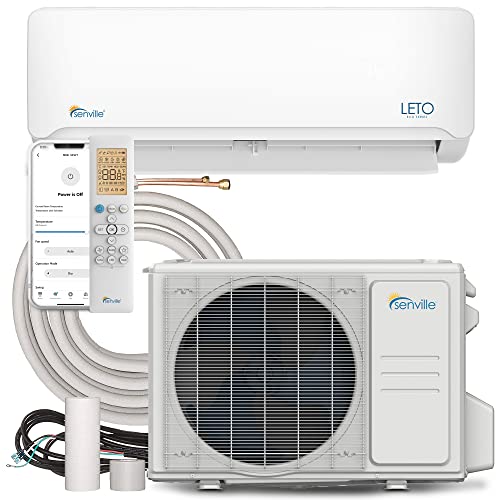
Senville LETO Mini Split Air Conditioner, Heat Pump, White, 9000 BTU | Ductless, Wall Mounted, Works with Alexa, Quiet Operation, 0.75 Ton, 110/120V, Energy Efficient Inverter
Check price on Amazon
ROVSUN 9000 BTU Mini Split AC/Heating System with Inverter, 20 SEER2 Energy Saving 115V Ductless Split-System Air Conditioner with Pre-Charged Condenser, Heat Pump, Remote Control & Installation Kit
Check price on AmazonFrequently Asked Questions
Is a 9000 BTU mini split enough for a bedroom?
For most bedrooms up to about 400 square feet with standard insulation, yes. If the room is larger, has significant sun exposure, or poor insulation, consider stepping up to a 12000 BTU system.
Can a 9000 BTU mini split heat a room in winter?
Heat pump models can provide heating, but cold-climate performance depends on the model's rated operating range. Standard heat pumps lose capacity as outdoor temperatures drop. If you rely on the system for winter heating in a cold climate, choose a model rated for low-ambient operation.
How many amps does a 9000 BTU mini split draw?
Most 9000 BTU mini splits draw roughly 6 to 9 amps on a 115V circuit, or about 4 to 6 amps on a 208/230V circuit. Always confirm the exact rating on the product specification and size the breaker accordingly.
Do I need a professional to install a 9000 BTU mini split?
Refrigerant line connections and system charging require licensed handling in most jurisdictions. DIY installation kits exist, but they still involve refrigerant work that is regulated. Professional installation protects the warranty and ensures the system is properly evacuated and charged.
How loud is a 9000 BTU mini split?
Indoor units typically operate between 19 and 35 dB depending on fan speed. On low fan, many premium models are quieter than a whisper. Outdoor condenser noise is usually in the 45 to 55 dB range.
Ready to Compare 9000 BTU Mini Split Options?
Browse the recommended systems above to compare features, efficiency tiers, and installation requirements side by side.
Compare Features