8000 BTU Air Conditioner Room Size: The Complete Coverage Guide
Understand exactly how much space an 8000 BTU unit can cool, what factors affect its performance, and how to decide if this capacity is right for your room.
START SIZING YOUR ROOMQuick Answer: An 8000 BTU air conditioner is typically designed to cool a room between 300 and 350 square feet under standard conditions. However, ceiling height, insulation, window area, sun exposure, and occupancy can shift this range significantly. This guide walks you through every variable so you can make an informed decision before you buy.
What Does 8000 BTU Actually Mean?
BTU stands for British Thermal Unit, and it measures how much heat an air conditioner can remove from a room in one hour. An 8000 BTU unit removes 8,000 BTUs of heat per hour, which translates to a specific cooling capacity for a given space. Understanding this number is the foundation of choosing the right unit.
For context, a smaller 5000 BTU window air conditioner is typically suited to rooms up to about 150 square feet, while a 12,000 BTU unit handles larger spaces around 400 square feet. The 8000 BTU range sits comfortably in the middle, making it a popular choice for bedrooms, small living rooms, and home offices.
8000 BTU Air Conditioner Room Size: Standard Coverage
The table below provides a general guideline for how an 8000 BTU unit performs across different room sizes. Keep in mind that these figures assume standard ceiling height (8 feet), average insulation, and moderate sun exposure.
| Room Size (sq ft) | Cooling Performance | Best For |
|---|---|---|
| 200 - 250 sq ft | Strong, rapid cooling | Small bedrooms, nurseries, home offices |
| 250 - 300 sq ft | Comfortable, efficient cooling | Standard bedrooms, small living rooms |
| 300 - 350 sq ft | Adequate in standard conditions | Master bedrooms, studio apartments |
| 350 - 400 sq ft | Marginal, depends on insulation | Open-plan spaces with good insulation |
| 400+ sq ft | Insufficient for most setups | Consider a higher BTU unit instead |
If your room falls into the 350 to 400 square feet range, an 8000 BTU unit may still work, but only if the space is well-insulated, shaded, and occupied by one or two people. For spaces larger than 400 square feet, you should explore ENERGY STAR rated units with higher capacity or consider a 9000 BTU mini-split system for more consistent results.
Factors That Change the Effective Room Size
The square footage guideline is only a starting point. Several real-world variables can make an 8000 BTU unit feel underpowered or perfectly matched. Here is what to evaluate before you commit.
1. Ceiling Height
Standard calculations assume 8-foot ceilings. If your room has 10-foot or vaulted ceilings, the actual air volume is much larger than the square footage suggests. In that case, you may need to size up to a portable 8000 BTU unit with stronger airflow or consider a higher capacity altogether.
2. Window Area and Sun Exposure
Large windows, especially those facing south or west, let in substantial solar heat. A room with extensive glazing may need 10 to 20 percent more cooling capacity than the square footage alone suggests. If your space has a small window installation, ensure the unit's airflow is not restricted by curtains or blinds.
3. Insulation Quality
Poorly insulated walls, attics, and floors allow heat to seep in constantly. An older home with minimal insulation may struggle to stay cool with an 8000 BTU unit even at 300 square feet. In contrast, a modern, well-sealed room of 350 square feet may cool easily.
4. Occupancy and Heat-Generating Appliances
Each person adds roughly 400 BTUs of heat per hour. If your room regularly hosts three or more people, or contains electronics like computers, TVs, or kitchen appliances, you should add 500 to 1,000 BTUs to your baseline calculation. A through-the-wall unit with heat can be a versatile option for spaces that need year-round climate control.
5. Climate and Outdoor Temperature
In extremely hot climates where summer temperatures regularly exceed 95°F, an 8000 BTU unit may run continuously to maintain comfort in a 350-square-foot room. In milder climates, the same unit may cool a slightly larger space with ease. Always account for your local climate when sizing.
How to Calculate the Right BTU for Your Room
If you want a more precise estimate than the table above, use this step-by-step approach:
- Measure the room: Multiply length by width to get square footage.
- Apply the baseline rule: Multiply square footage by 20 to get a starting BTU figure. For a 300-square-foot room, that is 6,000 BTUs — but this baseline is for average conditions.
- Adjust upward for heat sources: Add 4,000 BTUs if the room is in direct sunlight, 4,000 BTUs if it is a kitchen, and 400 BTUs per additional occupant beyond two people.
- Adjust for ceiling height: If ceilings exceed 8 feet, increase capacity by roughly 10 percent per additional foot.
- Compare to unit ratings: Choose a unit that matches or slightly exceeds your adjusted figure. An 8000 BTU unit is ideal when your adjusted calculation lands between 7,000 and 8,500 BTUs.
For a deeper dive into sizing methodology, including how to account for ductwork and whole-home systems, explore our complete AC sizing guide.
Which 8000 BTU Unit Type Fits Your Room?
Capacity is only one part of the equation. The form factor of your air conditioner affects installation, efficiency, and how well it distributes cool air throughout the space.
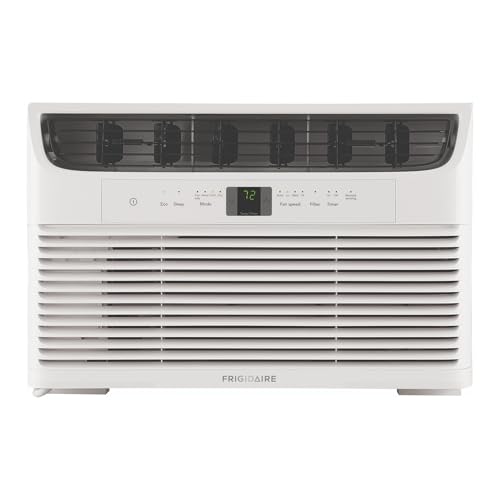
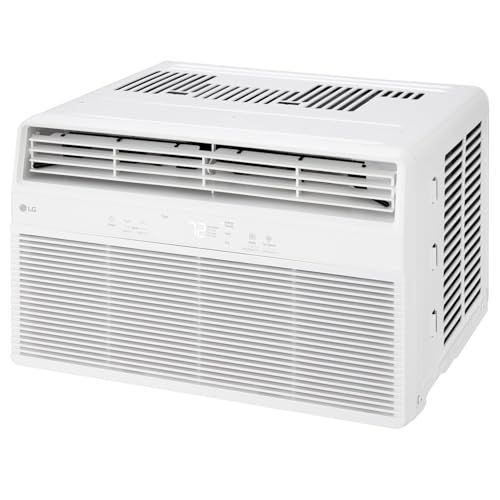
- Window units: A traditional 8000 BTU window air conditioner is efficient and straightforward to install, but it requires a suitable window and blocks part of the view. Models with remote control add convenience for hard-to-reach installations.
- Portable units: An 8000 BTU portable air conditioner offers flexibility and can be moved between rooms. Dual-hose models like the 8000 BTU dual-hose portable AC are more efficient than single-hose designs because they avoid pulling hot air back into the room.
- Mini-split systems: A ductless mini-split provides quiet, whole-room comfort without blocking a window. While a 9000 BTU model is often the smallest standard size, it can be a strong alternative if you want a permanent installation.
- Through-the-wall units: For a clean, built-in look, an 8000 BTU through-the-wall AC with heat offers both cooling and heating in a single unit.
Signs Your 8000 BTU Unit Is Oversized or Undersized
Choosing the wrong capacity leads to discomfort and inefficiency. Watch for these warning signs:
- Undersized: The unit runs constantly, the room never reaches the set temperature on hot days, and energy consumption climbs. This often happens when an 8000 BTU unit is pushed into a 400+ square foot space with poor insulation.
- Oversized: The unit cools the room too quickly and shuts off before removing humidity. The space feels cold and clammy, and the compressor cycles on and off frequently, which wears out components faster. An 8000 BTU unit in a 150-square-foot room is likely oversized.
If you notice these issues, review our guide on what happens when an AC is too big or too small to diagnose and correct the problem.
Energy Efficiency Considerations for 8000 BTU Units
Higher efficiency ratings translate to lower long-term energy use, which matters if you plan to run the unit daily during summer. Entry-level 8000 BTU units typically meet minimum efficiency standards, while mid-range and premium models often include inverter compressors, better insulation, and smarter controls.
An ENERGY STAR certified 8000 BTU air conditioner is a solid choice if you want a balance of performance and efficiency. For quiet operation in a bedroom, look for models marketed as quiet, eco-friendly window units with sound levels below 55 decibels.
If you value smart features, a dual-inverter smart window air conditioner offers app control, scheduling, and adaptive cooling. These features are typical of the mid-tier to high-end tier, where smoother compressor operation and more granular temperature control are standard.
Maintenance Tips to Keep Your 8000 BTU Unit Performing
Regular maintenance ensures your unit delivers the cooling capacity it was designed for. A clogged filter or dirty coils can reduce effective BTU output by 10 to 20 percent.
- Clean or replace the air filter every two to four weeks during heavy use.
- Inspect and gently clean the evaporator and condenser coils at the start of each cooling season.
- Check the drain pan and condensate line for blockages, especially in humid climates.
- Keep the outdoor portion of through-the-wall and window units free of debris and vegetation.
- Schedule a professional inspection every two to three years to verify refrigerant levels and electrical connections.
For a more detailed seasonal checklist, see our AC maintenance guide.
Ready to Choose Your 8000 BTU Air Conditioner?
Now that you understand room size requirements and performance factors, explore top-rated units that match your space.
VIEW RECOMMENDED UNITSFrequently Asked Questions
What room size does an 8000 BTU air conditioner cool?
An 8000 BTU air conditioner is generally designed for rooms between 300 and 350 square feet under standard conditions. Factors such as ceiling height, insulation quality, sun exposure, and occupancy can shift this range, so proper sizing is essential.
How do I calculate the right BTU for my room?
A common rule of thumb is to multiply the room's square footage by 20 to get a baseline BTU figure. Then adjust for factors like high ceilings, large windows, direct sunlight, or multiple occupants. For precise results, use a professional load calculation.
Is an 8000 BTU air conditioner suitable for a bedroom?
Yes, an 8000 BTU unit is often well-suited for a standard bedroom around 300 to 350 square feet. However, if the bedroom has large windows, poor insulation, or receives direct afternoon sun, you may need a higher-capacity unit.
Can an 8000 BTU air conditioner cool a living room?
It can cool a small living room of up to about 300 square feet if the space is well-insulated and does not have excessive heat gain from windows or appliances. Larger living rooms typically require 10,000 BTUs or more.
Will an 8000 BTU unit work in a room with high ceilings?
High ceilings increase the volume of air that needs cooling. If your ceiling is above 8 feet, you may need to size up by 10 to 20 percent, or choose a unit with stronger airflow and better air circulation.
Explore Related Guides
Continue your research with these in-depth resources:
- ENERGY STAR 8000 BTU Air Conditioner Guide
- 8000 BTU Window Air Conditioner Room Size
- 8000 BTU Portable Air Conditioner Overview
- 8000 BTU Dual-Hose Portable AC Benefits
- 8000 BTU AC for Small Windows
- 8000 BTU Through-the-Wall AC with Heat
- 8000 BTU Window AC with Remote Control
- 9000 BTU Mini-Split System
- 9000 BTU Cooling Area Guide
- How to Size an Air Conditioner
- What Happens If AC Is Too Big or Too Small
- AC Maintenance Guide