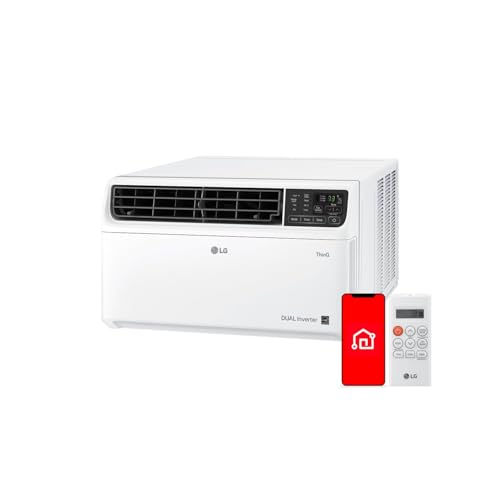
9500 BTU 115V Dual Inverter Smart Window Air Conditioner: The Complete Buyer's Guide
A 9500 BTU window unit with 115V operation, dual inverter technology, and smart control is one of the most balanced choices for medium-sized rooms. This guide explains capacity, efficiency, features, installation, and maintenance so you can decide with confidence.
Start ReadingQuick summary: A 9500 BTU 115V dual inverter smart window air conditioner suits rooms of roughly 350 to 450 square feet in typical conditions. Dual inverter operation smooths temperature swings and reduces noise, while smart connectivity lets you schedule and monitor cooling remotely. Verify your room's load before choosing any single capacity.
What a 9500 BTU Window Unit Actually Means
BTU stands for British Thermal Unit, and it expresses cooling capacity: how much heat the unit can remove from a room per hour. A 9500 BTU rating sits in the middle of the window air conditioner range, above compact 5,000 to 6,000 BTU models and below larger 12,000 BTU and 14,000 BTU units. That middle position is what makes this specification appealing for bedrooms, home offices, and medium living spaces.
Because it combines 9500 BTU cooling with 115V operation, this class of unit is designed for standard household electrical service. That combination is important for buyers who want meaningful cooling power without running a new 240V circuit. Units in this segment are typically sold in a window air conditioner form factor, so they install in a double-hung window and vent heat directly outdoors.
The "dual inverter" and "smart" labels describe how the unit operates rather than how much it cools. A dual inverter system uses variable-speed control for both the compressor and the fan, while smart features add Wi-Fi connectivity, app control, and scheduling. Together, these attributes make a 9500 BTU unit more adaptable than a basic single-speed model of the same capacity.
Before committing to this capacity, it helps to understand the broader relationship between room size and cooling output, which is covered in our guide to 9000 BTU cooling area and in our detailed how to size an air conditioner resource.
Room Sizing: Is 9500 BTU the Right Match?
The most common sizing rule of thumb assigns about 20 BTU of cooling capacity for every square foot of floor area in a standard room. Applied directly, 9500 BTU corresponds to roughly 475 square feet. In practice, real rooms vary enough that a practical working range of 350 to 450 square feet is a safer starting point.
Several factors push the effective room size down or up:
- Ceiling height: Rooms with ceilings above eight feet contain more air volume and need more capacity.
- Sun exposure: Large west- or south-facing windows increase heat gain and reduce the area a unit can comfortably cool.
- Insulation and window quality: Poor insulation and single-pane glass increase load.
- Occupants and appliances: Each person and each heat-generating device adds to the load.
- Kitchen adjacency: Open-plan kitchens add cooking heat that a bedroom does not have.
If your room is near the upper end of the range, or if it has heavy sun exposure, consider whether a slightly larger unit would be better. Oversizing carries its own risks: a unit that cools too quickly may cycle on and off frequently, which reduces dehumidification and can feel clammy. Our article on what happens if an AC is too big or too small explains the trade-offs in detail.
For a more precise estimate, use our BTU calculator by room size. For smaller spaces, you may find that a 8000 BTU window air conditioner room size guide is a better fit.
| Room Type | Typical Floor Area | 9500 BTU Suitability |
|---|---|---|
| Small bedroom | 100–150 sq ft | Overpowered; a smaller unit is usually better |
| Standard bedroom or home office | 150–300 sq ft | Comfortable with margin for sun exposure |
| Medium bedroom or small living room | 300–450 sq ft | Well matched in typical conditions |
| Large living room or open plan | 450+ sq ft | Likely undersized; consider a larger capacity |
Why 115V Matters for a 9500 BTU Unit
Window air conditioners are sold in two main electrical configurations: 115V and 230V. A 115V unit plugs into a standard household outlet, while a 230V unit requires a dedicated circuit that typically must be installed by an electrician. For many buyers, the 115V option removes a significant barrier to installation.
However, 115V does not mean low current draw. A 9500 BTU unit can pull a substantial number of amps during startup and steady operation, so the circuit it uses must be able to handle that load. Best practice is to plug the unit into a dedicated outlet on its own breaker, and never to use an extension cord or a power strip. Doing so risks overheating and creates a fire hazard.
Before installation, confirm three things: the outlet type matches the unit's plug, the breaker is rated for the unit's amperage, and no other high-draw appliances share the same circuit. If you are unsure about your panel capacity, review our guide on checking your home electrical panel and our explanation of amps and breaker size for AC. The difference between voltages is covered in more detail in 110V vs 240V air conditioner.
How Dual Inverter Technology Changes the Experience
A conventional window air conditioner uses a single-speed compressor that is either fully on or fully off. When the room reaches the set temperature, the compressor shuts down; when the room warms up, it restarts. This on-off cycle produces noticeable temperature swings and audible start-up noise.
An inverter compressor instead varies its speed continuously. Rather than stopping and starting, it slows down as the room approaches the target temperature and then holds a low, steady output. The result is a more stable room temperature, quieter operation during long stretches, and generally lower energy consumption because the compressor is not repeatedly drawing high startup current.
Dual inverter extends this idea to the fan motor as well. With both the compressor and the fan able to modulate speed, airflow and cooling output can be tuned together. In practice, this means the unit can run gently for long periods instead of blasting cold air in short bursts. The concept is explained further in our article on how an inverter AC works and in our comparison of inverter vs non-inverter systems.
Practical benefits of dual inverter operation
- Stable temperature: Fewer swings between too warm and too cold.
- Quieter steady state: The compressor and fan settle into low speeds rather than cycling loudly.
- Better part-load efficiency: Long, gentle runs are generally more efficient than repeated full-power startups.
- Smoother humidity control: Continuous low-speed operation removes moisture more consistently than short cycling.
These advantages matter most in bedrooms and home offices, where temperature stability and low noise are valued. If quiet operation is a priority, our guide to quiet air conditioners provides additional context on noise ratings and placement.
Smart Features: What They Add and What They Don't
The smart label on a window air conditioner usually refers to Wi-Fi connectivity combined with app control, scheduling, and voice assistant compatibility. These features do not change cooling capacity or compressor technology, but they change how precisely you can manage the unit.
Typical smart capabilities
- Remote control via app: Turn the unit on before you arrive home or adjust settings from another room.
- Scheduling: Set cooling windows that match your daily routine, reducing wasted operation.
- Voice assistant support: Integrate with common smart home platforms for hands-free adjustments.
- Energy monitoring: Some models report estimated consumption, helping you spot inefficient usage patterns.
- Geofencing: The unit can adjust automatically based on whether occupants are home.
Smart control pairs naturally with inverter operation. Because an inverter unit can hold a steady low output, a schedule that pre-cools a room before arrival works more smoothly than with an on-off compressor. If smart control is central to your decision, our guide to AC with Wi-Fi and smart control covers the ecosystem in more depth.
One caveat: smart features depend on a stable home network and a supported app. Buyers who prefer simplicity may not use them, in which case a non-smart dual inverter model could be a more focused choice. There is no penalty for choosing a unit without connectivity if you will not use it.
Efficiency and Running Behavior
Window air conditioner efficiency is usually expressed through SEER or CEER ratings, with higher numbers indicating more cooling output per unit of electricity. Inverter models in the 9500 BTU class generally sit above basic single-speed units within the same category, though the exact figure varies by model.
Efficiency in real use depends as much on installation and habits as on the rating. A unit that is correctly sized, sealed into the window frame, and kept clean will outperform a higher-rated unit that is poorly installed or neglected. The following practices have the largest practical effect:
- Seal the window gap: Use the included accordion panels and add weather stripping where needed.
- Shade the unit and the room: Direct sun on the unit and large unshaded windows increase load.
- Set a realistic temperature: A moderate setpoint reduces compressor demand; see our guide to the ideal AC temperature setting.
- Use scheduling: Avoid cooling empty rooms.
- Maintain airflow: Keep furniture and curtains clear of the intake and outlet.
For a broader treatment of rating systems, see what is a SEER rating and our overview of ENERGY STAR certified AC units.
Product Tiers in the 9500 BTU Dual Inverter Smart Category
Within this specification, models differ mainly in build quality, feature depth, and refinement rather than in raw cooling capacity. To compare without relying on numeric figures, it helps to think in tiers.
| Tier | Typical Characteristics | Best For |
|---|---|---|
| Entry-level | Core dual inverter operation, basic app control, standard washable filter, functional build | Buyers who want inverter benefits and smart control without extra refinement |
| Mid-range | Quieter fan curves, improved scheduling and voice integration, better filtration, sturdier chassis | Bedrooms and home offices where noise and air quality matter |
| Premium | Refined airflow control, advanced smart routines, enhanced dehumidification modes, premium materials | Primary living spaces and buyers who prioritize long-term comfort |
Entry-level models in this class are generally well-specified for the category. Mid-range units typically add smoother fan behavior and better sealing hardware. Premium models focus on airflow nuance and smart automation depth. None of these tiers is inherently better; the right choice depends on which refinements you will actually notice in daily use.
If you are comparing this capacity against neighbors in the lineup, our pages on 8000 BTU window air conditioner room size and the 8300 BTU 115V quiet eco smart window air conditioner provide useful reference points.
Installation Essentials
Window air conditioners are among the more approachable cooling systems to install, but a 9500 BTU unit is heavier than a compact model and requires care. The following steps cover the essentials.
Before installation
- Confirm the window type and width match the unit's requirements, and check the manufacturer's minimum and maximum window opening.
- Verify the outlet and breaker are appropriate for the unit's amperage. Do not share the circuit with other high-draw appliances.
- Check that the window frame and sill are sound enough to support the unit's weight.
- Measure the room and confirm the capacity is a sensible match, as discussed above.
During installation
- Follow the manufacturer's bracket or support requirements. Many units require an outdoor support bracket for safety.
- Maintain the specified slight outward tilt so condensate drains correctly.
- Seal the accordion panels and any gaps with weather stripping or foam to prevent hot air infiltration.
- Plug directly into the wall outlet. Never use an extension cord.
After installation
Run the unit through a full cooling cycle and check for unusual noise, vibration, or water intrusion. Confirm that the drain path is clear and that the unit is stable in the frame. Our guide on how to test a new AC installation walks through a structured check. For placement questions, see AC indoor and outdoor placement.
Maintenance Checklist
Regular maintenance preserves cooling performance and extends the working life of the unit. A dual inverter system is sensitive to airflow restrictions, so filter care is especially important.
- Filter cleaning: Remove and wash the filter every two weeks during peak season, or at minimum once a month. Our guide on how to clean an AC filter covers the process.
- Coil inspection: Check the evaporator and condenser coils for dust buildup at the start and end of each cooling season. See clean condenser coils for guidance.
- Drain path: Confirm condensate drains freely and that the drain pan or channel is not clogged.
- Seals and frame: Inspect the window seal annually and replace worn weather stripping.
- Seasonal shutdown: Before cold weather, clean the unit, dry it thoroughly, and cover or remove it according to the manufacturer's instructions. Our AC cover for winter guide explains the options.
A structured seasonal routine is outlined in our seasonal AC checklist. Following it consistently is the single most effective way to keep a 9500 BTU unit performing at its rated capacity.
Common Issues and What They Usually Mean
Even well-maintained units can develop problems. The following symptoms account for most service calls in this category.
The unit runs but does not cool effectively
Start with the filter and airflow. A clogged filter or blocked return is the most common cause. If airflow is clear, check whether the unit is correctly sized for the room and whether the window seal is leaking hot air. If the compressor is running but the air is not cold, the issue may involve refrigerant or the compressor itself. Our guide on AC not cooling provides a structured diagnosis.
Water leaking from the unit
Improper tilt, a clogged drain, or a dirty filter that ices the coil can all cause water intrusion. Check the installation angle first, then the drain path. See AC leaking water for step-by-step checks.
The unit is louder than expected
Vibration against the window frame, loose panels, or debris in the fan can increase noise. Confirm the unit is level and secure, and inspect the fan area. Dual inverter models should be relatively quiet at steady state, so a sudden increase in noise warrants inspection.
The unit smells musty
Moisture and dust on the evaporator coil or in the drain pan are the usual cause. Clean the filter and coil and confirm the drain is clear. Our article on AC smells bad covers deeper cleaning options.
Frequent on-off cycling
With a dual inverter unit, frequent full stops are less common than with single-speed models, but they can occur if the unit is oversized for the room or if the setpoint is very close to ambient temperature. Reassess sizing and setpoint before assuming a fault.
Who Should Choose a 9500 BTU 115V Dual Inverter Smart Window AC
This specification is a strong fit for a specific set of buyers. It tends to be a good choice when most of the following apply:
- You need to cool a room in the roughly 350 to 450 square foot range.
- You want inverter benefits such as stable temperature and quieter steady operation.
- You prefer a 115V unit that can use standard household power without a new circuit.
- You value app control, scheduling, or voice assistant integration.
- You are installing in a window rather than through a wall or via ductwork.
It is less suitable if your room is much smaller, where a compact unit will cycle less awkwardly, or much larger, where a higher capacity is needed. If you are cooling a room without suitable window access, a ductless mini-split or a portable air conditioner may be more practical. If you are outfitting an entire home, a central air conditioning system is the more appropriate scale.
For buyers who prioritize smart control above all else, our AC with Wi-Fi and smart control guide compares platforms. For those who want the quietest possible experience, quiet air conditioner covers noise ratings in detail.
Frequently Asked Questions
What size room is a 9500 BTU window air conditioner suitable for?
A 9500 BTU window unit is generally suited for rooms of roughly 350 to 450 square feet, depending on ceiling height, insulation, sun exposure, and occupancy. Rooms with heavy sun or poor insulation sit at the lower end of that range.
Can a 9500 BTU 115V unit run on a standard outlet?
Yes, 115V units are designed for standard household circuits. However, they draw significant current and should be plugged into a dedicated outlet with an appropriately rated breaker. Avoid extension cords and power strips.
What does dual inverter mean?
Dual inverter means both the compressor and the fan motor use variable-speed control. Instead of switching fully on and off, they modulate speed continuously, which improves temperature stability, reduces noise, and generally lowers energy use compared with single-speed units.
Are smart features worth having on a window AC?
Smart features add convenience through scheduling, remote control, and voice integration. They do not change cooling capacity, but they help you avoid cooling empty rooms and let you fine-tune operation. Whether they are worthwhile depends on how much you will use them.
How often should the filter be cleaned?
Check the filter every two weeks during heavy use and clean it at least monthly. A clogged filter restricts airflow, reduces cooling performance, and increases strain on the compressor.
Is a 9500 BTU unit too large for a bedroom?
For a small bedroom under 150 square feet, it is likely oversized. For a standard bedroom of 200 to 350 square feet, it can be a comfortable match. Oversizing can cause short cycling and poorer humidity control.
Can this type of unit be installed through a wall?
Most 9500 BTU units in this class are designed for window installation. Through-the-wall installation requires a specifically designed unit. If wall installation is your only option, look for a through-the-wall model rather than modifying a window unit.
Final Considerations Before You Decide
A 9500 BTU 115V dual inverter smart window air conditioner occupies a practical middle ground: enough capacity for medium rooms, standard-voltage installation, smoother operation than single-speed models, and the convenience of smart control. The key is to confirm that the capacity matches your actual room load and that your electrical setup supports the unit.
If those two conditions are met, this specification is a well-rounded choice for bedrooms, home offices, and small living areas. If your room is smaller, consider a lower capacity; if it is larger or heavily exposed, consider a higher one. Matching the unit to the room remains the most important decision you will make.
Recommended 9500 BTU 115V Dual Inverter Smart Window Air Conditioners
⚠️ AFFILIATE DISCLOSURE: This website contains affiliate links. As an Amazon Associate, we earn from qualifying purchases. If you make a purchase through these links, we may receive a small commission at no additional cost to you. Read our full affiliate policy.

LG 12,000 BTU Dual Inverter Smart Window Air Conditioner, 115V Cools 550 Sq. Ft., Ultra Quiet Operation, Up to 35% More Energy Savings, ENERGY STAR®, works with LG ThinQ, Amazon Alexa and Hey Google
Check price on Amazon
LG 10,000 BTU Smart Window Air Conditioner, 115V, Cools 450 Sq. Ft. for Bedroom, Living Room, Apartment, Dual Inverter, Quiet Operation, Energy Star, works with LG ThinQ, Amazon Alexa and Hey Google
Check price on Amazon
Midea 10,000 BTU Smart Inverter 115V Window Air Conditioner, 450 Sq Ft | Smart Control With App and Alexa Compatibility, Energy Saving Inverter Technology, Quiet, Remote control, Easy Installation
Check price on Amazon
LG 14,000 Window Air Conditioner, 115V, 700 Sq.Ft., Auto Restart, White | 115V, Remote Control, 3 Cooling and Fan Speeds, Auto-Restart, Electronic Controls, Quiet Operation, Rooms up to 800 Sq.Ft.
Check price on Amazon