AC Capacitor: Cost Factors, Replacement & What to Expect
If your air conditioner hums but refuses to start, or the fan spins weakly, the capacitor is one of the first components a technician checks. This guide explains what a capacitor does, why it fails, what influences the final bill, and how to decide whether replacement makes sense.
START LEARNINGAC Units Guide Philosophy: A failed capacitor is one of the most common — and most misunderstood — air conditioning problems. Before approving any repair, it pays to understand the part, the diagnosis, and the factors that shape the final bill.
What Is an AC Capacitor and Why Does It Fail?
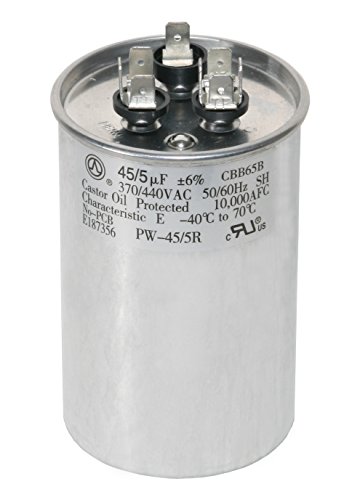
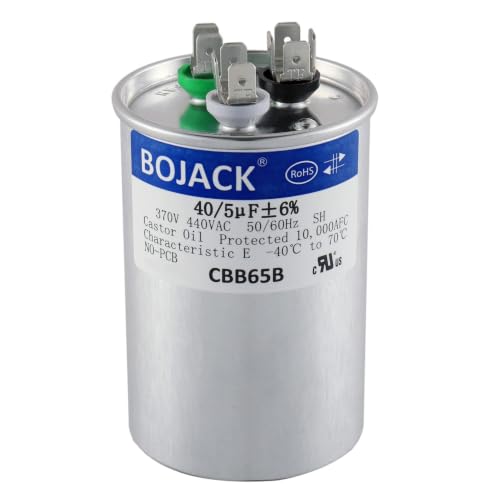
An AC capacitor is a small, cylinder-shaped electrical component that stores and releases energy to help the compressor and fan motors start and run smoothly. Most residential units use a dual-run capacitor, which powers both the compressor and the outdoor fan motor from a single housing. Without a working capacitor, the motor may hum without turning, trip the breaker, or fail to start at all.
Capacitors degrade over time. Heat, voltage spikes, and age cause the internal dielectric fluid to break down. A capacitor that has lost capacitance can no longer supply the burst of energy the motor needs, which is why the most common symptom is a unit that buzzes or clicks but never fully starts.
Understanding how the component fits into the broader system helps — if you are new to HVAC, start with what an air conditioning system is and how the heating, ventilation, and air conditioning system works together. For a deeper look at the electrical side, the guide on air conditioner efficiency explains how components like capacitors influence overall performance.
Signs Your AC Capacitor Needs Attention
Capacitor failure rarely happens without warning. The symptoms below are the most common indicators that the part is weakening or has failed entirely. Recognizing them early can help you describe the problem accurately and avoid unnecessary repairs.
Humming but not starting
The outdoor unit makes a buzzing or humming sound but the fan and compressor do not kick in. This is the classic sign of a failed run capacitor.
Fan spins slowly or weakly
The fan blade turns but with far less force than normal. A weakened capacitor cannot deliver the torque needed for full-speed operation.
Frequent breaker trips
A shorted or bulging capacitor can cause the circuit breaker to trip repeatedly when the unit tries to start.
Visible bulging or leakage
The top of the capacitor may appear domed, cracked, or leaking oil. This is a physical failure that requires immediate replacement.
Inconsistent cooling
The unit may run intermittently or cool poorly because the compressor is struggling to stay engaged. See also AC blowing cool air but not cooling the house.
Clicking sounds
Repeated clicking from the outdoor unit often indicates the capacitor is trying to start the motor but failing.
What Factors Influence the Final Bill for AC Capacitor Replacement?
The final amount on an AC capacitor replacement invoice is shaped by several variables — not just the part itself. Understanding these factors helps you evaluate a quote fairly and decide whether a repair is the right move for your system.
Capacitor type and tier
A standard single-run capacitor is the most basic option, while a dual-run capacitor costs more because it serves two motors. Premium and heavy-duty capacitors with reinforced housings sit at the high-end tier.
Labor and diagnostic time
The technician's time includes diagnosis, safe discharge of the capacitor, removal, and installation. Diagnostic fees are often separate from the repair labor.
System accessibility
Units in tight crawlspaces, rooftops, or behind obstructions take longer to service, which increases labor. A clearly accessible outdoor unit is faster to work on.
Emergency or after-hours service
Calls placed during evenings, weekends, or heat waves often carry a premium. Scheduling during normal business hours is usually the most economical route.
Location and market
Labor rates vary by region and by whether you work with an independent HVAC contractor or a larger service company. The HVAC manufacturers and air conditioner companies active in your area influence the local service landscape.
Related repairs discovered
A failed capacitor sometimes signals a larger issue — a failing compressor, burnt wiring, or a weak contactor. If additional parts are needed, the total rises accordingly.
Capacitor Tiers: A Framework for Comparing Options
When evaluating a replacement, it helps to think in terms of tiers rather than isolated numbers. The table below describes the relative position of common capacitor categories so you can match the part to your system and your expectations.
| Tier | Typical Use | Best For |
|---|---|---|
| Essential tier | Standard single-run capacitor for basic fan or compressor circuits | Older units, straightforward replacements, homeowners who want a solid basic part |
| Balanced tier | Dual-run capacitor serving both compressor and fan | Most modern residential split systems; a good value for its tier |
| High-end tier | Heavy-duty capacitor with reinforced casing and higher temperature tolerance | Hot climates, units that run continuously, homeowners prioritizing durability |
| Professional-grade | OEM-spec capacitor matched to a specific manufacturer's system | Warranty-sensitive repairs, premium systems, long-term investment in reliability |
If you are also evaluating whether to repair or replace the wider system, the guide on AC compressor replacement and AC control board replacement provide useful context on how individual component repairs fit into the bigger picture.
DIY Testing vs. Professional Replacement
Some homeowners test capacitors with a multimeter after discharging them, and this can be a useful diagnostic step for the confident DIYer. However, replacement is a different matter. Capacitors hold a charge even after power is cut, and mishandling can cause serious injury. Professional replacement ensures the correct microfarad rating, proper discharge, and a safe installation.
If you decide to call a technician, the process typically involves:
- Shutting off power at the disconnect and the breaker
- Discharging the capacitor safely
- Testing capacitance with a meter
- Matching the replacement to the original rating (within tolerance)
- Reconnecting wiring and verifying startup
- Checking amp draw and overall system operation
For related electrical and component topics, see the guides on AC coil replacement and AC clutch replacement.
When Replacement Makes Sense — and When to Look Deeper
A capacitor replacement is one of the more straightforward repairs in HVAC. If the rest of the system is in good condition, replacing the capacitor is a sensible, cost-effective fix. But if the unit is older, has a history of electrical problems, or the compressor is also failing, it may be worth evaluating a larger repair or replacement.
Consider the following:
- Age of the system: A 15-year-old unit with multiple failures may not justify repeated component repairs.
- Frequency of failures: If capacitors are failing repeatedly, the underlying cause (voltage spikes, overheating) may need attention.
- Overall efficiency: Replacing a capacitor restores function but does not improve efficiency. See energy efficiency ratings (SEER, EER, HSPF) for context.
- Warranty status: OEM parts may be required to keep a warranty valid.
If you are comparing repair options across the system, guides like AC coil cleaning services and 24-hour AC repair can help you plan the next step.
Frequently Asked Questions
Most capacitors last between 5 and 10 years, depending on operating conditions. Units that run continuously in hot climates, or that experience voltage fluctuations, tend to wear capacitors out faster.
Replacement is physically simple, but the safety risk is significant. Capacitors store a charge even after power is removed. Unless you are trained and comfortable working with high-voltage components, professional replacement is the safer choice.
A failing capacitor puts extra stress on the compressor and fan motor. Continued operation can lead to motor overheating, compressor damage, and more extensive repairs. If you notice symptoms, address them promptly.
No. Capacitors come in different microfarad (µF) ratings and voltage ratings, and they may be single-run or dual-run. The replacement must match the original specification or fall within the manufacturer's tolerance.
It depends on the manufacturer and the age of the system. Many parts warranties cover capacitors for a limited period. Check your documentation, and confirm whether an OEM part is required for coverage.
Ready to Explore Replacement Options?
Review the recommended capacitor options below and compare features, compatibility, and tier positioning before making a decision.
VIEW OPTIONS