AC Unit for Small Room: Complete Cooling Guide
Everything you need to know about choosing, sizing, and maintaining an air conditioner for a small room. Make an informed decision before you buy.
START WITH SIZINGWhy small room cooling deserves careful planning: A small room heats up faster and has less air volume to buffer temperature swings. Choosing the correct BTU capacity and AC type prevents short cycling, reduces energy waste, and keeps noise levels comfortable. This guide walks you through each decision step by step.
Understanding Small Room Cooling Needs
A small room — typically between 80 and 250 square feet — presents unique cooling challenges. Limited floor space restricts where you can place an AC unit, and the smaller air volume means that an oversized system will cool the room too quickly and shut off before it removes humidity. This leads to a clammy, uncomfortable feeling even when the thermostat reads cool.
Conversely, an undersized unit will run continuously, struggle to reach the set temperature, and consume excess energy. The key is matching the cooling capacity to the room’s actual heat load, then selecting the right form factor for your window, wall, and installation constraints.
If your space is particularly tight or lacks traditional windows, you may also want to explore air conditioning units for small spaces or consider an air conditioner for a small vertical window if that describes your situation.
How to Size an AC Unit for a Small Room
Sizing starts with square footage, but several adjustment factors refine the final BTU target. Use the table below as a starting reference, then apply the modifiers that follow.
| Room Size | Base BTU Range | Typical Room Examples |
|---|---|---|
| Up to 150 sq ft | 5,000 – 6,000 BTU | Bedroom, home office, studio nook |
| 150 – 250 sq ft | 8,000 – 10,000 BTU | Small living room, dorm room, guest room |
| 250 – 350 sq ft | 10,000 – 12,000 BTU | Master bedroom, small apartment living area |
Adjustment Factors
- Sun exposure: Add 10% BTU if the room faces south or west and receives direct afternoon sun. Reduce 10% for heavily shaded rooms.
- Ceiling height: Standard tables assume 8-foot ceilings. For every additional foot of height, increase capacity by roughly 10%.
- Occupants: Add about 600 BTU for each person beyond two regular occupants.
- Heat-generating appliances: Add 4,000 BTU if the room contains a kitchen or laundry area. Add 1,000–2,000 BTU for a home office with multiple monitors and electronics.
- Insulation quality: Poorly insulated rooms in older homes may require a 10–20% capacity bump.
Rule of thumb: It is better to slightly undersize than to oversize. A unit that runs longer cycles removes humidity more effectively and maintains steadier temperatures. For a precise calculation, use a dedicated BTU calculator by room size.
Choosing the Right AC Type for a Small Room
Four main categories dominate the small-room cooling market. Each has distinct installation requirements, noise profiles, and efficiency characteristics.
Window Air Conditioners
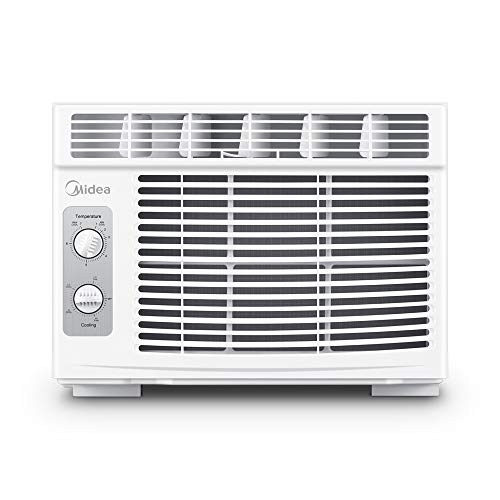
Window units remain the most popular choice for small rooms. They install directly into a double-hung window frame and cool efficiently because the compressor sits outside the conditioned space. Modern window units include remote controls, programmable timers, and energy-saving modes. They are straightforward to remove for winter storage in colder climates.
Browse window air conditioner guides for detailed installation walkthroughs. If your room has a narrow opening, see air conditioner for small vertical window options.
Portable Air Conditioners
Portable units roll on casters and vent exhaust heat through a hose routed to a window or wall opening. They suit renters and rooms where window installation is impractical. Portable ACs consume slightly more energy than window units of the same BTU rating because the compressor sits inside the room, but their flexibility is unmatched. Learn more in the portable air conditioner guide.
Ductless Mini-Split Systems
Mini-splits are the premium choice for permanent small-room installations. An outdoor compressor connects to a slim indoor wall unit via a small conduit. They operate quietly, deliver precise temperature control, and achieve high efficiency ratings. The ductless mini-split AC guide covers sizing and installation considerations.
Through-the-Wall Units
These are installed permanently through an exterior wall and are common in older apartment buildings and hotels. They free up window space and are more secure than window units. See the through-the-wall AC guide for details on sleeve requirements and electrical needs.
Quick Comparison
| AC Type | Tier | Best For | Installation Effort |
|---|---|---|---|
| Window AC | Essential tier | Standard double-hung windows, permanent seasonal use | Moderate (DIY possible) |
| Portable AC | Mid-tier | Renters, rooms without suitable windows | Low (no tools) |
| Mini-Split | Premium tier | Permanent installations, quiet operation priority | High (professional required) |
| Through-the-Wall | Mid-range to high-end | Apartments with existing sleeves, security priority | High (wall modification) |
Efficiency Ratings That Matter
Efficiency directly affects long-term operating expenses and environmental impact. For small rooms, efficiency differences between models can add up over years of seasonal use.
- SEER2 / EER2: Higher ratings indicate more efficient cooling. Look for ENERGY STAR certification for verified performance.
- CEER: This combined rating applies specifically to room air conditioners and factors in standby power draw.
- Inverter technology: Inverter compressors modulate speed rather than cycling on and off, which improves efficiency and temperature stability. Compare inverter AC and non-inverter AC technologies.
For a deeper explanation of efficiency metrics, see what is SEER rating and ENERGY STAR certified AC.
Installation and Placement Tips
- Shade the outdoor side: Window units benefit from an awning or shade that blocks direct sun on the exterior portion.
- Seal the perimeter: Weatherstripping around window installations prevents cool air from escaping and hot air from infiltrating.
- Keep airflow unobstructed: Do not place furniture directly in front of the supply louvers or block the return air path.
- Check electrical requirements: Most 5,000–6,000 BTU units run on standard 115V household circuits, but verify the amperage rating. See 110V vs 240V AC unit if you are unsure.
- Consider a professional for mini-splits: Refrigerant line connections and vacuum procedures require certified technicians. Learn how to choose an HVAC contractor.
Maintenance for Peak Small-Room Performance
Regular maintenance keeps a small-room AC running efficiently and extends its service life. Because small-room units often run frequently, filter condition matters even more than in larger systems.
- Clean or replace the filter monthly during peak cooling season. See AC unit filter guidance and how to clean AC filter.
- Inspect the condensate drain for clogs that cause water leaks. See cleaning air conditioner drain.
- Schedule a seasonal tune-up if you use a mini-split or through-the-wall system. See air conditioning unit tune-up and air conditioner service and maintenance.
- Watch for warning signs: Reduced cooling, unusual noises, or water pooling indicate a problem. Consult common AC problems and air conditioner running but not cooling.
If a repair becomes necessary, understand your coverage through AC warranty explained before scheduling service.
Common Mistakes to Avoid
- Oversizing the unit: A too-powerful AC cools the air before removing humidity, leaving the room feeling damp and uncomfortable.
- Ignoring window orientation: A south-facing room with large unshaded windows can need 20–30% more capacity than a north-facing room of the same size.
- Skipping the electrical check: Plugging a high-draw unit into an overloaded circuit trips breakers and creates safety hazards.
- Blocking the air return: Curtains, furniture, or storage boxes placed against the intake reduce airflow and cooling performance.
- Neglecting the filter: A clogged filter forces the compressor to work harder, raising energy use and accelerating wear.
Recommended AC Units for Small Rooms
The products below represent a curated selection of top-rated small-room air conditioners across different tiers and form factors. Each listing reflects current market availability and verified customer satisfaction. Use the filters and comparisons on the product cards to evaluate features, efficiency ratings, and installation requirements for your specific room.
Before finalizing your choice, cross-reference the BTU guidance above with the room’s actual conditions. A mid-tier window unit with the correct capacity will outperform a premium mini-split that is oversized for the space.