Air Conditioner for Small Vertical Window: Complete Buying and Sizing Guide
Narrow, casement, and sliding vertical windows present unique challenges for AC installation. Learn which window air conditioners actually fit, how to size them correctly, and how to install one safely without damaging your window.
EXPLORE YOUR OPTIONSWhy vertical windows are tricky: Standard window air conditioners are designed for double-hung windows that open vertically. If you have a narrow vertical window, a casement window, or a sliding window, a standard window unit may not fit or may not be safe to install. This guide explains the specific AC types that work with small vertical windows, how to measure before you buy, and what alternatives exist if a traditional window unit is not an option.
Understanding Small Vertical Window Types
Before choosing an AC, identify your window type. The frame, opening mechanism, and available width and height determine which air conditioner will fit and how it must be supported.
Casement Windows
Crank-open windows with a vertical hinge on one side. These are among the most challenging for traditional window ACs and usually require a special casement window air conditioner or a different solution.
Sliding Windows
Windows that slide horizontally. The vertical opening is often narrow, so the AC must fit within a limited height while the width may be adequate for horizontal installation.
Narrow Double-Hung
Double-hung windows with limited width. These can accept small window ACs if the minimum width requirement is met, but many small-window models are designed for 21-23 inch widths.
Awning & Hopper
Windows that open outward at the top or inward at the bottom. These are rarely suitable for traditional window ACs without custom brackets.
Understanding the window type is essential because installing a heavy AC in an unsuitable window risks the unit falling, damaging the window frame, or voiding the warranty. See our related guides on AC for apartments with no usable windows and portable AC without window vent if your window situation is more restricted.
AC Options for Small Vertical Windows
Not every small vertical window can accept a window air conditioner. Below are the realistic options, ranked by how well they suit narrow vertical openings.
- Casement window air conditioner. Purpose-built for crank-open windows. These units are narrow, mount in the window frame, and are the most direct solution for casement windows. They are typically entry-level to mid-range in tier.
- Narrow window AC (small chassis). Compact window units designed for narrow openings. Best suited for small double-hung or sliding windows that meet minimum width requirements.
- Sliding window AC kit. Some standard window ACs include a sliding window adapter kit. This allows installation in horizontal sliding windows where the vertical opening is narrow but width is sufficient.
- Through-the-wall AC. If you have a solid wall adjacent to the window, a through-the-wall unit avoids the window entirely. See our through-the-wall AC guide.
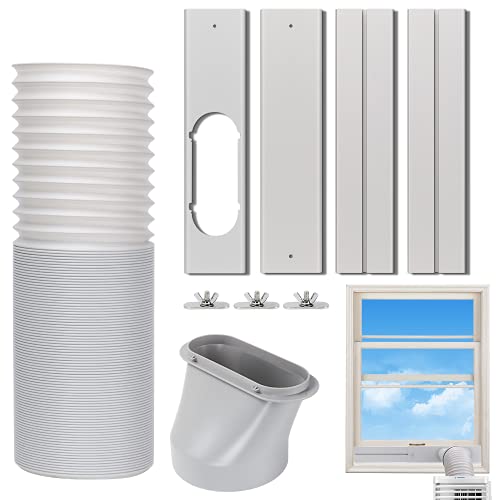
- Portable AC with hose kit. A floor-standing unit that vents through a window using a hose kit. It does not require the window to hold weight, making it suitable for casement and awning windows. See our portable AC guide.
- Ductless mini-split. A wall-mounted indoor unit connected to an outdoor condenser. No window modification required. See our ductless mini-split guide.
For very small rooms where window space is limited, a small room AC may be the right category. If you are renting and cannot modify the window, a no-window AC solution or a unit without an external compressor may be more practical.
Sizing an AC for a Small Window and Small Room
Small vertical windows usually serve small rooms, which means correct sizing matters even more. An oversized unit cools too quickly and leaves humidity behind; an undersized unit runs constantly and struggles. Use the table below as a starting point, then verify with a proper load estimate.
| Room Size (sq ft) | Approx. Capacity (BTU) | Typical Window AC Tier |
|---|---|---|
| Up to 150 | 5,000 – 6,000 | Entry-level compact units |
| 150 – 250 | 8,000 – 10,000 | Mid-range window units |
| 250 – 350 | 10,000 – 12,000 | Mid-range to premium window units |
| 350 – 450 | 12,000 – 14,000 | Premium window units |
For rooms larger than about 450 square feet, a window unit is usually not the right tool, and a 14,000 BTU unit is often the practical upper end for window installations. Larger rooms may need a whole-house solution or a mini-split. A BTU calculator by room size can help confirm your target.
Installing an AC in a Small Vertical Window
Installing a window AC in a narrow vertical opening requires care. The steps below apply to standard and narrow window units; casement-specific units follow manufacturer instructions closely.
- Verify the fit. Confirm the unit's minimum window width and height are compatible with your opening. Do not force a unit that is too large or too heavy.
- Check the electrical circuit. Window units typically require a dedicated circuit. Our electrical panel guide explains what to verify.
- Prepare the window. Remove the screen, clean the track, and check that the window sash can be secured. For sliding windows, confirm the adapter kit will seal the gap.
- Mount the unit with proper support. Use the manufacturer's brackets. For narrow vertical openings, a support bracket is often essential to prevent tipping.
- Seal the gaps. Use foam insulation, weather stripping, or the supplied side panels to seal around the unit. This prevents cool air loss and pest entry.
- Secure the window. Use the supplied lock or a window sash lock to prevent the window from opening further or being tampered with.
- Test the unit. Confirm cooling, drainage, and thermostat operation before finalizing installation.
For details on contractor assistance, see AC installers in my area and how to choose an HVAC contractor. If your building has restrictions, review permit requirements.
When a Window AC Will Not Fit: Alternatives
Some vertical windows — especially casement, awning, and very narrow openings — cannot safely accommodate a window AC. In those cases, these alternatives are worth considering:
Portable AC with Window Hose
A floor unit with a flexible exhaust hose. It does not place weight on the window and can vent through a partially opened casement or sliding window using a hose seal kit.
Through-the-Wall AC
Installs in a wall sleeve adjacent to the window. Requires wall modification but avoids the window entirely. See our through-the-wall AC guide.
Ductless Mini-Split
A wall-mounted indoor unit with an outdoor condenser. Quiet, efficient, and independent of window type. See our ductless mini-split guide.
Central or Ducted System
For whole-home cooling when a single window unit is not enough. See our central air conditioning guide.
If you need a temporary solution while deciding, a small-space AC unit may bridge the gap, and a no-window AC approach can cover severe restrictions.
Features That Matter for Small Window Units
Small window ACs are not all equal. Focus on the features that directly affect comfort, noise, and long-term reliability in a small room.
Inverter Compressor
Variable-speed compressors run more smoothly and are typically quieter than single-speed models. See our inverter AC guide.
Noise Level
Small rooms amplify noise. Look for models with lower decibel ratings, especially for bedrooms. See our quiet AC guide.
Energy Efficiency
Compare CEER and ENERGY STAR ratings for window units. Our ENERGY STAR AC guide explains the labels.
Remote and Timer
A remote and programmable timer add convenience and help reduce runtime when the room is empty.
Washable Filter
Easy filter access makes routine maintenance simpler. See our AC filter guide.
Window Kit Compatibility
Confirm the unit includes or supports the adapter kit needed for your specific window type.
Maintenance and Troubleshooting Basics
Small window ACs require the same maintenance as larger units. Because they sit in the window, they are also exposed to weather, dust, and debris.
- Clean the filter regularly. Follow our filter cleaning guide and cleaning filter article.
- Check the drain path. Window units drain through a small hole or tray. If water drips inside, see AC unit leaking water.
- Watch for weak cooling. Common causes are covered in AC not cooling solutions and AC on but no cold air.
- Listen for unusual noise. See AC making noise if the unit rattles or grinds.
- Check the outdoor air path. Ensure the exterior of the unit is not blocked by shrubs or debris.
If the unit is not cooling and does not respond to basic troubleshooting, see AC service and repair and when to call an HVAC technician.
Frequently Asked Questions
Can I install a regular window AC in a vertical sliding window?
Sometimes. It depends on the vertical opening height and whether the unit's minimum window height requirement is met. Many standard window ACs need about 13-14 inches of vertical opening. If your sliding window opens narrower than that, you need a narrower unit, a casement-specific model, or an alternative like a portable AC.
What is the narrowest window AC available?
Compact window units can fit openings roughly 21 to 23 inches wide. Casement window air conditioners are specifically designed for narrow vertical openings and typically fit in window frames with much narrower width requirements. Always check the specific model's stated minimum width.
Can I put a window AC in a casement window?
Only with a casement-specific air conditioner or a proper casement window kit. Standard window ACs are not designed for casement windows because the crank mechanism and hinge prevent proper support and sealing. A portable AC with a window vent kit is often the safer choice.
What BTU do I need for a small room?
For rooms up to about 150 square feet, 5,000 to 6,000 BTU is usually sufficient. For rooms up to 250 square feet, 8,000 to 10,000 BTU is more appropriate. Use a proper sizing guide and adjust for sun exposure, ceiling height, and insulation. See our BTU calculator by room size.
Is it safe to install a window AC on a second-floor narrow window?
It can be safe with the correct support bracket and secure window sash. However, second-floor installations carry greater risk if the unit is not properly secured. A professional installation is recommended for upper-floor units or heavy models.
Do window ACs need a dedicated electrical circuit?
Most window ACs draw enough current to warrant a dedicated circuit, especially in smaller units over 6,000 BTU. Always check the manufacturer's electrical requirements and verify your panel capacity. See our electrical panel guide and amps and breaker size guide.
What can I do if my window cannot hold the AC unit?
Consider a portable AC with a window vent, a through-the-wall unit, or a ductless mini-split. Each avoids placing weight on the window and works in situations where a traditional window unit cannot be installed safely.
How can I reduce noise from a window AC in a small room?
Choose a model with a lower decibel rating, ensure the unit is level and properly supported, and keep the filter clean. A loose or tilted unit often rattles more than a well-installed one. See our quiet AC guide.
Final Recommendations
A small vertical window does not rule out air conditioning — it just narrows your options. Start by identifying your window type and measuring the actual opening. If a window unit fits, choose a compact model sized correctly for the room and install it with proper support and sealing. If it does not fit, portable AC, through-the-wall units, and ductless mini-splits are all viable alternatives with their own trade-offs.
Whatever path you choose, prioritize correct sizing and safe installation. A well-installed unit will cool better, last longer, and cost less to run over its service life. Use the links below to continue your research.