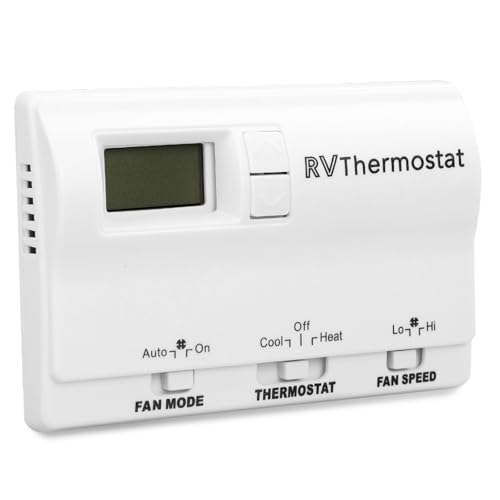
AC Blowing Cool Air But Thermostat Not Going Down
Your vents feel cool, the compressor keeps running, but the number on the thermostat refuses to budge. Here is a systematic breakdown of why this happens, what you can fix yourself, and when it is time to bring in a technician.
The short version: Cool air at the vent only proves the system is producing some cooling. It does not prove the system is removing heat at the rate your room needs. A thermostat that will not go down is almost always a sign of an airflow restriction, a sensor placement problem, a refrigerant charge issue, or a home that is gaining heat faster than the unit can pull it out. Work through the causes below from simplest to most complex.
What This Symptom Actually Tells You
When an air conditioner runs and delivers air that feels cool, the basic refrigeration loop is working — the compressor is compressing refrigerant, the evaporator coil is absorbing heat, and the blower is moving air. So the system is not dead. But "cool" is a relative word. A vent reading of 65°F may feel refreshing on your hand while still being far too weak to pull a 90°F room down to your set point.
The thermostat does not measure how the air feels. It measures the ambient air temperature at the location of its internal sensor. If that sensor is reading warm air, or if the room is genuinely not losing heat fast enough, the display will stall. That gap between "air feels cool" and "temperature will not drop" is the entire diagnostic puzzle, and it narrows down to four families of causes:
- Not enough airflow reaching the coil or the rooms, so cooling output is throttled.
- Not enough refrigerant (or an expansion valve issue) so the coil runs partially starved.
- Thermostat or sensor problem so the reading itself is wrong or badly placed.
- Heat gain outstripping capacity so the system is technically fine but undersized for the conditions.
Before diagnosing, confirm the symptom properly. Use a thermometer at a supply vent and compare it to the return air. A healthy split is roughly 15–20°F under normal conditions. If the split is smaller, cooling is weak. If the split looks fine but the room still stalls, the thermostat placement or the building envelope is the more likely culprit. For a broader walkthrough of similar symptoms, see our guide on an AC unit that won't cool to the set temperature.
Cause 1: A Dirty Air Filter Is Strangling the Coil
1 Restricted airflow from a clogged filter
This is the single most common cause of the symptom, and it is also the easiest to fix. When a filter loads up with dust, the blower pulls less air across the evaporator coil. Less air means less heat transfer, which means the air that does come out is cooler than usual but the total cooling delivered to the house drops sharply. The room never catches up, so the thermostat reading stalls.
Worse, a badly restricted filter can drop coil temperature below freezing, and the coil begins to ice over. Once ice forms, airflow collapses even further and the system can run for hours producing almost no net cooling. Check the filter now — hold it up to a light. If you cannot see through it, replace it. Our detailed walkthrough on the AC unit filter covers filter types, MERV ratings, and replacement intervals for different households.
Cause 2: The Thermostat Is Reading the Wrong Air
2 Sensor placement, calibration drift, or dead batteries
A thermostat is only as good as the air it samples. If the unit is mounted on an exterior wall, near a supply register, in direct sunlight, above a lamp or TV, or in a hallway with poor circulation, its sensor will read a temperature that does not represent the room you care about. The system will happily satisfy that location while your living room stays warm.
Calibration drift is real as well, especially on older units. Place a separate thermometer a few feet away and compare readings after the system has been off for 15 minutes. A difference of more than 2–3°F suggests the thermostat needs recalibration or replacement. Also check batteries and wiring terminals — a loose wire on the R or Y terminal can cause erratic cycling. If you are evaluating whether to upgrade the control itself, our overview of an AC with thermostat integration explains what smart controls can and cannot fix.
Cause 3: Low Refrigerant or a Starved Expansion Valve
3 Partial charge loss or metering device fault
A system that is slightly low on refrigerant can still produce cool air — it just cannot produce enough of it. The evaporator coil is only partially wetted, so the effective cooling surface is smaller and the temperature split across the coil shrinks. Homeowners often describe this exactly as "the air is cool but the thermostat never drops."
Low charge is almost always the result of a leak, not normal consumption. Refrigerant does not wear out. If a technician tops up the charge without finding and repairing the leak, the symptom will return. A failing thermostatic expansion valve can produce a similar starved-coil pattern without any leak at all. Either way, this is not a DIY repair — refrigerant handling is regulated and requires gauges, a recovery machine, and proper certification. For the full diagnostic picture, our article on an AC unit running but not producing cold air covers the refrigerant-side symptoms in depth.
Cause 4: A Clogged or Blocked Condenser Coil
4 Heat cannot escape the outdoor unit
The indoor coil absorbs heat; the outdoor coil has to reject it. If the condenser coil is packed with dust, cottonwood fluff, grass clippings, or pet hair, the system cannot shed heat efficiently. High-side pressure rises, the compressor works harder, and net cooling capacity falls. The air at the vents may still be cool, but the system is fighting itself.
Check the outdoor unit for obvious blockage — leaves, debris, or furniture pushed against the cabinet — and hose down the coil fins gently from the inside out after shutting off power at the disconnect. If the fins are crushed or the coil is deeply matted, a professional coil cleaning is the right call. For placement and clearance guidance, see our notes on an AC unit for outside installation.
Cause 5: Heat Gain Outrunning Capacity
5 The system is fine; the load is too high
Sometimes the equipment is working exactly as designed and the building is simply gaining heat faster than the unit can remove it. Common contributors include an undersized system for the space, a room with large west-facing windows and no shading, an attic with inadequate insulation, ductwork running through a 140°F attic, or an unusual heat wave that pushes outdoor temperatures above the system's design conditions.
A quick sanity check: does the room eventually reach the set point at night but stall during the afternoon? That pattern points to load, not equipment failure. If your home falls into this category, the sizing discussion in our guide on an AC unit not keeping up with the thermostat is the right next read.
Quick Diagnostic Comparison
Use this table to match your observed symptoms to the most likely cause before you start taking anything apart.
| What You Observe | Most Likely Cause | DIY Difficulty | Who Should Handle It |
|---|---|---|---|
| Weak airflow at vents, filter visibly grey | Clogged air filter | Very easy | Homeowner |
| Thermostat reads warm while a nearby thermometer reads cooler | Sensor placement or calibration drift | Easy | Homeowner / pro for recalibration |
| Ice on indoor coil or refrigerant lines | Airflow restriction or low refrigerant | Moderate (thaw only) | Technician for root cause |
| Outdoor unit hot, coil matted with debris | Dirty condenser coil | Easy to moderate | Homeowner for surface cleaning; pro for deep clean |
| Cool at night, stalls in afternoon heat | Heat gain exceeding capacity | N/A | HVAC contractor for load assessment |
| Compressor short cycles, vents cool then warm | Refrigerant charge or control fault | Not DIY | Licensed technician |
Step-by-Step Checks You Can Do Safely
Work through these in order. Stop and call a technician if you reach a step that requires opening refrigerant circuits, electrical panels beyond the disconnect, or anything you are not confident about.
- Replace the air filter. If it has been more than 60–90 days, replace it regardless of appearance. This single step resolves a surprising share of "cool but not cooling" complaints.
- Verify thermostat placement. Confirm the thermostat is not in direct sun, not above a heat source, and not mounted on an exterior wall. Move a freestanding thermometer to the thermostat location and compare after 15 minutes of system-off time.
- Check thermostat batteries and settings. Replace batteries, confirm the mode is COOL (not FAN or AUTO with a high fan-only threshold), and make sure the fan setting is AUTO rather than ON if you want the compressor to control the cycle.
- Inspect the outdoor unit. Shut off power at the disconnect, remove any debris around the cabinet, and rinse the coil fins gently from the inside out. Restore power and observe.
- Measure the temperature split. With the system running steadily for 15 minutes, measure return air and supply air at the nearest register. A split below roughly 15°F points to a charge or airflow problem that needs a technician.
- Look for ice. If you see frost or ice on the indoor coil, refrigerant lines, or the outdoor unit, shut the system off and let it thaw completely before running it again. Ice is a symptom, not the disease — the underlying cause still needs diagnosis.
- Check for obvious duct leaks. Walk the attic or basement and look for disconnected flex duct, torn insulation, or unsealed joints near the air handler. Leaky ducts dump cool air into unconditioned space and starve the rooms.
What Not To Do While Diagnosing
- Do not keep lowering the set point. Dropping the thermostat to 60°F does not make the system cool faster. It only extends compressor runtime and increases the chance of coil icing.
- Do not add refrigerant yourself. Refrigerant handling is regulated, requires recovery equipment, and an overcharged system can be more damaging than an undercharged one.
- Do not run the system with ice on the coil. Running with a frozen coil can slug the compressor with liquid refrigerant and cause permanent damage.
- Do not block return grilles. Furniture, rugs, and boxes placed over return air paths are a silent capacity killer in many homes.
When to Call a Licensed Technician
- You have replaced the filter, verified thermostat placement and batteries, and cleaned accessible coils, but the temperature still will not drop.
- You see ice on the indoor coil, refrigerant lines, or outdoor unit.
- The temperature split between return and supply is below 15°F after 15 minutes of steady runtime.
- You hear grinding, screeching, or clicking from the compressor or blower.
- You smell burning, musty, or chemical odors near the air handler or outdoor unit.
- The outdoor unit trips the breaker repeatedly or the disconnect feels hot.
How to Prevent This From Coming Back
Most recurrences of this symptom trace back to skipped maintenance. A simple seasonal routine keeps the system operating near its rated capacity and makes thermostat stalls far less likely:
- Replace or clean the filter every 60–90 days, and more often in homes with pets or heavy dust.
- Schedule a professional tune-up each spring that includes coil cleaning, charge verification, and electrical inspection.
- Keep two feet of clearance around the outdoor unit and trim vegetation away from the coil.
- Seal accessible duct joints and insulate runs that pass through unconditioned attics or crawlspaces.
- Use a programmable or smart thermostat with a realistic schedule rather than manual set-point swings.
If the system is older and has a history of charge leaks or compressor issues, repeated thermostat stalls are a signal to evaluate replacement rather than another round of repairs. Our guide on an AC unit that is working but not cooling walks through the repair-versus-replace decision framework.
Related Symptoms Worth Reading Next
The "cool air but thermostat stalls" pattern overlaps with several other common complaints. If your observations do not match the causes above, these focused guides will help narrow it down:
- Air conditioner blowing cold air but house not cooling — for cases where the vent air is genuinely cold but the home stays warm.
- Air conditioner blowing cool air but not cooling the house — a broader look at capacity and distribution issues.
- AC unit in apartment not blowing cold air — apartment-specific causes including shared systems and landlord responsibilities.
- AC unit is running but the fan is not — when the compressor runs but the blower does not.
- AC unit outside is running but not blowing air — for outdoor-unit-only symptoms.
Frequently Asked Questions
Why is my AC blowing cool air but the thermostat temperature won't drop?
The most common causes are a dirty air filter, a miscalibrated or poorly placed thermostat, a refrigerant charge that is slightly low, a clogged condenser coil, or a home that is gaining heat faster than the system can remove it. Airflow restriction and thermostat sensor placement are the two issues you can check yourself first.
Can a dirty filter make the thermostat temperature stay high?
Yes. A clogged filter reduces airflow across the evaporator coil, which lowers cooling output and can cause the coil to ice over. The air leaving the vents may still feel cool, but the room never reaches the set point, so the thermostat display keeps showing a temperature that will not go down.
Should I set the thermostat lower to force the AC to cool faster?
No. Lowering the set point does not make the system cool faster; it only makes the compressor run longer, which increases wear and can cause coil icing. Set a realistic target, usually around 78°F when you are home, and address the underlying cause instead of dropping the number.
When should I call a technician for this problem?
Call a licensed technician if you have replaced the filter, checked the thermostat placement and batteries, and cleaned accessible coils, but the temperature still will not drop. Also call immediately if you see ice on the refrigerant lines, hear unusual compressor noises, or smell burning or musty odors near the air handler.
Still Stalling After the Basic Checks?
If the filter is clean, the thermostat is well placed, and the outdoor coil is clear, the remaining causes require gauges and refrigerant certification. A diagnostic visit is the efficient next step — and it prevents a small charge issue from becoming a compressor replacement.
Review Your Warranty Before Booking a Repair