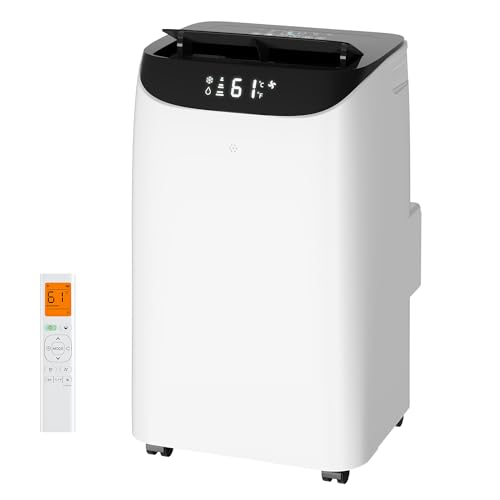
Portable Inverter Air Conditioner: The Complete Buyer's Guide
Everything you need to know about portable inverter AC units — how the technology works, who benefits most, sizing advice, and how to choose the right model for your room before you buy.
START THE GUIDEWhy this guide matters: If you are searching for a portable inverter air conditioner, you already know you want cooling flexibility and better efficiency. This page helps you understand the technology, compare tiers, and make a confident decision — without guesswork.
What Is a Portable Inverter Air Conditioner?
A portable inverter air conditioner is a floor-standing, wheel-mounted cooling unit that uses an inverter compressor instead of a conventional fixed-speed compressor. The inverter component allows the compressor to vary its speed continuously, matching cooling demand rather than switching on and off at full power. This combination gives you the mobility of a portable unit with the efficiency advantages of inverter technology.
Traditional portable ACs cycle the compressor on and off, which creates temperature swings and higher energy use during long cooling sessions. A portable inverter model modulates output smoothly, so the room stays closer to your set temperature. If you want to understand the broader category first, our inverter AC overview explains the core technology in depth.
It is also worth distinguishing this product from a standard portable air conditioner. The portable form factor solves the installation problem — no window unit to lift, no wall bracket to mount — while the inverter compressor solves the efficiency and comfort problem. Together, they serve renters, apartment dwellers, and anyone who needs spot cooling without permanent installation.
How Inverter Technology Improves Portable Cooling
Inside a portable inverter unit, the compressor runs on a variable-frequency drive. When the room is far from the target temperature, the compressor ramps up. As the room approaches the setpoint, it slows down and holds a steady output. This is fundamentally different from a fixed-speed compressor, which only knows two states: full power or off.
The practical results are noticeable:
- Steadier temperatures: No repeated swings between too warm and too cold.
- Quieter operation over time: The compressor spends less time at maximum speed, which reduces noise during long sessions.
- Better energy behavior: Avoiding hard start-stop cycles is more efficient in the long run, especially when the unit runs for hours.
- Less wear on components: Gradual speed changes are gentler on the compressor than repeated full-power starts.
If you are comparing compressor designs, the difference between an air conditioner dual inverter and a single-inverter system is also relevant: dual-inverter models use two compressors or two-stage modulation to extend the efficient operating range even further.
Who Should Choose a Portable Inverter AC?
This category fits specific situations better than others. Consider a portable inverter unit if any of the following describe you:
- Renters and apartment residents: You cannot install a permanent split system or modify the building facade. A wheeled unit with a window vent kit is a practical solution. Our guide to an air conditioner for an apartment covers related constraints.
- Rooms without standard windows: Some spaces have narrow, sliding, or casement windows that complicate window units. Portable units with flexible vent hoses can work with adapter kits.
- Long daily cooling sessions: If the unit runs for many hours, the inverter compressor's steady modulation is more comfortable and more efficient in the long run than a fixed-speed unit.
- Spot cooling in larger homes: You want to cool one bedroom or home office without running the central system for the whole house.
- People sensitive to noise: Inverter models tend to be quieter during sustained operation because they avoid repeated high-speed compressor starts.
Conversely, if you need to cool a large open-plan area or multiple rooms at once, a ductless mini-split or central system is usually the better architecture. Portable units are best for single-room, targeted cooling.
Buying Guide: Key Factors Before You Decide
When you evaluate portable inverter models, focus on the factors below. They determine whether the unit will actually perform well in your space.
1. Cooling capacity and room size
Portable inverter units are commonly available in capacities suited to small and medium rooms. As a general starting point, match the unit's BTU rating to your room's square footage, then adjust upward for sun exposure, ceiling height, and occupancy. If your space is on the boundary between two capacities, a slightly larger unit running at lower speed is usually more comfortable than an undersized unit running at maximum. Our AC sizing guide walks through the calculation step by step.
2. Venting and window compatibility
Every portable AC needs a path for exhaust heat. Most models ship with a hose and a window slider kit. Check whether the kit fits your window type — sliding, casement, or crank. If your window setup is unusual, look at solutions designed for an air conditioner for a room without a window or a crank casement window before committing to a model.
3. Efficiency indicators
Look at the unit's efficiency rating and the compressor type. Inverter models generally perform better in sustained use. Also check whether the unit has an energy-saving mode that reduces compressor speed further once the setpoint is reached. If you want a broader comparison of efficiency metrics, our guide to SEER ratings explains the rating systems even though portable units are rated differently.
4. Noise level
Portable units are inherently noisier than split systems because the compressor sits in the room with you. Inverter models mitigate this by avoiding repeated full-power starts, but you should still check the decibel rating. For bedrooms, prioritize models with a dedicated quiet or night mode.
5. Drainage and maintenance
Portable ACs produce condensate. Some models evaporate most of it automatically; others require manual draining or a hose connection. Check the drainage design, and confirm that the filter is accessible for regular cleaning. Our filter cleaning guide applies to portable units as well.
6. Portability details
Wheels, handle placement, and unit weight matter more than many buyers expect. A unit that is difficult to move defeats the purpose of a portable design. Check the caster quality and whether the exhaust hose is long enough to reach your window from where the unit will sit.
Market Tiers: What to Expect at Each Level
The portable inverter category spans several market tiers. Instead of focusing on figures, use this tier framework to understand relative positioning and feature depth.
| Tier | Typical Characteristics | Best For |
|---|---|---|
| Entry-level | Basic inverter compressor, simple controls, standard vent kit, functional build | Occasional spot cooling, budget-conscious buyers who prioritize core function |
| Mid-range | Better noise control, programmable timer, improved drainage, sturdier casters, remote control | Daily use in bedrooms or home offices, renters who want reliable comfort |
| Premium | Advanced inverter modulation, quiet night mode, smart/app control, enhanced filtration, solid build quality | Long daily sessions, users who value quiet operation and convenience features |
| Top-tier / flagship | Dual-inverter or high-range modulation, premium materials, advanced sensors, full smart-home integration | Maximum comfort and efficiency in a portable form factor, feature-focused buyers |
As a rule, mid-range and premium models tend to offer smoother compressor modulation and better acoustic design than entry-level units. The jump from entry-level to mid-range is usually the most noticeable in everyday comfort.
Maintenance Tips for Portable Inverter Units
A portable inverter AC is a long-term investment, and basic upkeep protects both performance and lifespan.
- Clean or replace the filter every two to four weeks during heavy use. A clogged filter forces the compressor to work harder.
- Empty or drain the condensate according to the manufacturer's instructions. Standing water can lead to odors and reduced cooling.
- Keep the exhaust hose short and straight where possible. Long, kinked hoses reduce exhaust efficiency.
- Inspect the vent kit seal at the window. Gaps let hot outdoor air back in and undermine cooling.
- Store the unit upright during the off-season and cover it to prevent dust buildup in the compressor area.
If you notice the unit running but not cooling effectively, our troubleshooting guide on an air conditioner running but not cooling enough covers the common causes before you consider service.
Common Buying Mistakes to Avoid
- Choosing by capacity alone: A unit that is oversized for the room will cycle inefficiently even with inverter modulation. Match capacity to the space.
- Ignoring the venting setup: The best compressor cannot compensate for a poorly sealed window kit.
- Overlooking noise ratings: If the unit goes in a bedroom, check the decibel figures and look for a night mode.
- Assuming all inverter units are equal: Modulation range and compressor quality vary significantly across tiers.
- Skipping the drainage plan: Confirm how condensate is handled before the unit is delivered.
If your room has unusual window geometry, review the options for an air conditioner for a narrow sliding window or a small vertical window so the vent kit will actually fit.
Frequently Asked Questions
Is a portable inverter AC better than a window AC?
They solve different problems. A window AC is typically more efficient per BTU because the compressor sits outside the conditioned space. A portable inverter unit is easier to move, works in more window configurations, and offers steadier cooling during long sessions. Choose based on your installation constraints and how often you need to relocate the unit.
How long can a portable inverter AC run continuously?
Most quality units are designed for extended daily operation. Inverter compressors handle long sessions better than fixed-speed units because they avoid repeated hard starts. Follow the manufacturer's guidance on continuous runtime and keep the filter clean.
Do portable inverter ACs cool as well as split systems?
For a single room, a well-sized portable inverter unit can deliver comfortable cooling. Split systems remain more efficient and quieter overall because the compressor is outdoors. Portable units are the practical choice when permanent installation is not possible.
What size portable inverter AC do I need for a bedroom?
Match the BTU rating to the room's square footage, then adjust for sun exposure and ceiling height. A slightly larger unit running at lower speed is generally more comfortable than an undersized one at full power. Use our sizing guide for the calculation.
Related Guides for Deeper Research
If you are still narrowing down your options, these related guides can help:
- Inverter AC technology explained — the fundamentals behind variable-speed compressors.
- Portable air conditioner overview — form factors, venting, and general buying advice.
- Dual inverter air conditioners — how two-stage modulation extends efficiency.
- AC for an apartment — installation constraints and practical solutions for renters.
- AC for a room without a window — venting alternatives when a standard window is unavailable.
- How to size an air conditioner — capacity calculation fundamentals.
- AC running but not cooling enough — troubleshooting before you call for service.