Battery-Powered Air Conditioner: Complete Buying Guide
Everything you need to know about cooling without mains power. Learn how battery-powered AC units work, what determines runtime, realistic expectations, and how to choose the right unit for camping, off-grid living, RVs, and emergency backup.
Explore the Buying FactorsWhy this guide matters: A battery-powered air conditioner is not simply an AC with a battery bolted on. Runtime, compressor type, BTU capacity, and battery chemistry all interact in ways that surprise most buyers. This guide explains the physics and practical trade-offs clearly, so you can decide whether a battery AC, a portable AC, or another solution truly fits your situation.
What Is a Battery-Powered Air Conditioner?
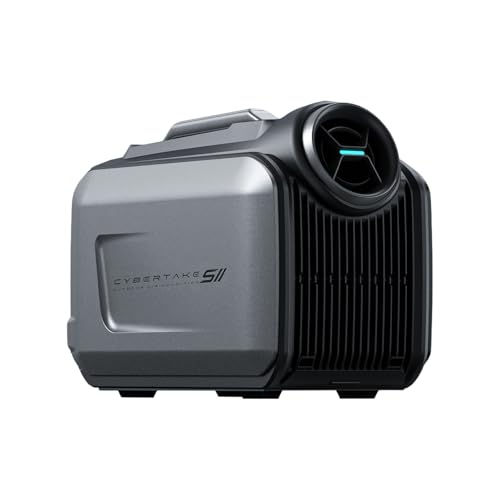
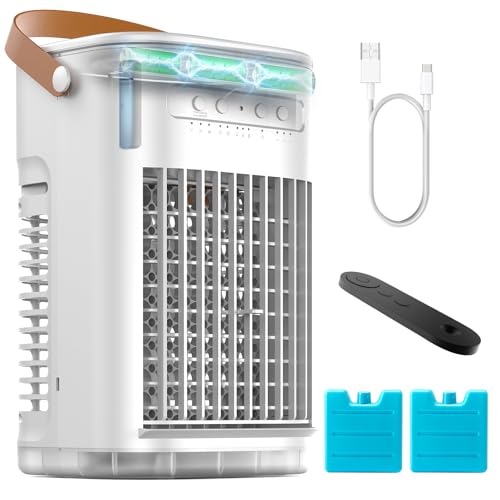
A battery-powered air conditioner is a cooling unit that draws its electrical energy from an integrated or detachable battery pack instead of relying on a wall outlet. These units come in two broad forms: small evaporative-style personal coolers with built-in rechargeable batteries, and true compressor-based AC units powered by large external battery power stations or dedicated battery packs.
It is important to set expectations early. True refrigerant-based cooling consumes significant electrical energy. A small window unit typically draws several hundred to over a thousand watts continuously, and compressors demand a high startup surge. For this reason, most battery-powered cooling products available today fall into one of three categories: compact personal coolers, hybrid portable ACs that run on mains power with battery assist, and full compressor units paired with high-capacity portable power stations.
Understanding which category a product belongs to is the single most important step before purchasing. A buyer who expects whole-room refrigerant cooling from a handheld battery device will be disappointed, while a camper who needs targeted personal cooling for a tent or vehicle cabin will find exactly the right tool. If your needs lean toward standard indoor cooling with conventional power, our overview of in-room air conditioning units is a more appropriate starting point.
How Battery AC Systems Actually Work
There are three distinct technologies marketed under the "battery-powered air conditioner" label, and each behaves very differently in practice.
1. Evaporative Personal Coolers
These small devices use a fan to blow air across a water-soaked pad. Evaporation absorbs heat and produces a cool breeze. Battery consumption is low, often in the range of a few dozen watts, which allows several hours of operation from a modest rechargeable pack. They work best in dry climates and for direct personal cooling, not for cooling an entire room. In humid conditions their cooling effect drops sharply.
2. Hybrid Portable AC Units with Battery Assist
A growing number of portable AC units accept a detachable battery module. These units generally require mains power for full-capacity compressor operation, but the battery can maintain fan-only mode, run the unit during short power interruptions, or sustain cooling for a limited period. The battery is best understood as a backup and mobility aid rather than a primary energy source.
3. Compressor AC Paired with a Portable Power Station
The most capable configuration pairs a genuine compressor-based portable air conditioner with a high-capacity lithium power station. This approach can deliver real refrigerant cooling, but runtime is directly governed by capacity. A unit drawing 500 watts will drain a 1,000 watt-hour battery in roughly two hours at full load, before accounting for inverter losses and compressor cycling. Buyers considering this route should carefully review the power requirements we outline in our guide to sizing an air conditioner, because oversizing the AC dramatically shortens achievable runtime.
Where Battery-Powered Cooling Makes Sense
Camping & Tent Cooling
Personal evaporative coolers and compact battery units provide targeted relief inside tents and small shelters where no power source exists. Runtime of several hours is achievable with modest battery packs.
RV & Van Life
Battery-assisted portable units supplement RV cooling during short stops or when shore power is unavailable. Pairing with a solar setup extends usability considerably.
Emergency & Outage Cooling
During grid outages, battery backup keeps a small room comfortable. Hybrid units that switch to battery for fan-only operation are especially useful for vulnerable household members.
Workshops & Garages
Detached workspaces without wiring benefit from cordless personal cooling. Entry-level evaporative units are practical for spot cooling at a workbench or in a parked vehicle cabin.
Key Factors That Determine Real-World Performance
Battery-powered cooling lives or dies on four interacting variables. Evaluating them together prevents the most common purchasing mistakes.
| Factor | Why It Matters | What to Look For |
|---|---|---|
| Battery Capacity (Wh) | Directly sets maximum runtime. A higher watt-hour rating means longer operation but usually more weight. | A capacity figure stated in watt-hours, not vague "hours of use" claims. Compare Wh against the unit's wattage draw. |
| Power Draw (Watts) | Determines how fast the battery drains. Compressor units draw far more than evaporative coolers. | Continuous running watts plus startup surge rating for compressor models. |
| Cooling Output (BTU) | Defines how much space can realistically be cooled. Higher BTU generally means higher power draw. | A BTU rating matched to your actual space. Smaller spaces need less capacity and preserve runtime. |
| Battery Chemistry | Affects lifespan, weight, and safety. Lithium-based packs are lighter and more energy-dense. | LiFePO4 for longevity and thermal stability; standard lithium-ion for lighter weight. |
| Recharge Method | Solar, vehicle, or mains recharging determines how quickly the unit returns to service. | Multiple input options, especially solar compatibility for off-grid use. |
Market Tiers for Battery Cooling Products
Battery-powered cooling products cluster into recognizable tiers. Using consistent tier language helps you compare products on capability rather than superficial claims.
Essential Tier
Compact evaporative personal coolers with modest battery packs. Best for desk-side, tent, and vehicle-cabin spot cooling. Lightweight and simple, with limited cooling reach.
Mid-Tier
Hybrid portable units with detachable battery modules. Offer fan-only battery operation and short cooling backup. A solid choice for households wanting outage resilience.
Top-Tier
Full compressor portable ACs paired with high-capacity lithium power stations. Genuine refrigerant cooling for small spaces, with runtime governed by the paired battery bank.
Mid-range models typically offer smoother mode transitions and better build quality than entry-level units, while top-tier systems deliver the only configuration capable of sustained refrigerant cooling off-grid. Our broader product recommendations section covers conventional AC categories if battery operation turns out not to be essential for your use case.
Battery AC vs. Conventional Portable and Window Cooling
It helps to see battery cooling in context. The table below compares cooling approaches without reference to any pricing considerations.
| Approach | Cooling Capability | Power Source | Best For |
|---|---|---|---|
| Battery evaporative cooler | Personal spot cooling, dry climates | Rechargeable battery | Tents, desks, vehicle cabins |
| Hybrid portable AC with battery assist | Room cooling on mains, fan backup on battery | Mains primary, battery secondary | Homes needing outage resilience |
| Compressor AC + power station | Genuine refrigerant cooling, limited duration | Large lithium battery bank | Off-grid cabins, van life, emergencies |
| Standard portable AC | Room cooling, continuous | Mains only | Renters, rooms without windows suited to window units |
| Window AC | Room cooling, continuous | Mains only | Permanent installations in suitable windows |
If portability is your main motivation rather than battery power specifically, our comparison of portable AC versus window units clarifies the trade-offs between those two conventional options. For users who need genuine cooling but lack ductwork, a mini-split system remains the most energy-efficient route, though it requires professional installation and mains power.
Estimating Runtime Before You Buy
Runtime estimates are straightforward arithmetic once you know two numbers: battery capacity in watt-hours and average power draw in watts. Divide capacity by draw to get a theoretical maximum, then reduce the result by a realistic margin.
- Base formula: Battery watt-hours ÷ average running watts = theoretical hours.
- Inverter losses: Subtract roughly ten to fifteen percent for conversion inefficiency.
- Compressor cycling: A cycling compressor draws less on average than its peak rating, which can extend runtime, but startup surges must still be supported.
- Temperature and load: Hotter ambient conditions increase compressor duty cycle and reduce runtime.
- Battery age: Lithium packs lose capacity gradually; plan for declining runtime over years of use.
A worked example makes this concrete. A unit averaging 400 watts connected to a 1,200 watt-hour battery yields a theoretical three hours. After inverter losses and typical duty cycle variation, an honest planning figure is closer to two to two and a half hours of meaningful cooling. Buyers who need longer sessions should plan for additional battery capacity or a lower-draw cooling method.
For anyone sizing a system for a specific room, understanding how BTU requirements scale with room size is essential, because a correctly sized unit runs less and therefore extends battery runtime.
Caring for Battery Cooling Equipment
Battery-powered cooling devices need maintenance on two fronts: the cooling mechanism and the battery itself. Neglecting either shortens the product's useful life.
- Clean or replace evaporative pads regularly to prevent mold and maintain airflow.
- Empty and dry water reservoirs after each use to avoid bacterial growth.
- Store lithium batteries at moderate charge levels rather than fully depleted or fully charged for long periods.
- Keep battery contacts clean and dry, and avoid charging in extreme heat.
- Inspect vents and filters on compressor units, following the routine described in our HVAC maintenance guidance.
- Recharge batteries periodically during off-season storage to preserve capacity.
Frequently Asked Questions
Can a battery-powered air conditioner cool a whole room?
Only in specific configurations. Compact evaporative coolers provide personal spot cooling, not room cooling. Genuine room cooling requires a compressor-based unit paired with a high-capacity power station, and even then runtime is limited to a few hours rather than all day. Setting realistic expectations by matching BTU output to room size is essential.
How long does a battery AC run on a single charge?
Runtime depends on battery capacity in watt-hours divided by the unit's average power draw. Personal evaporative coolers can run for several hours on small packs, while compressor units paired with large power stations typically deliver two to four hours of cooling depending on ambient temperature, duty cycle, and battery capacity.
Do battery-powered air conditioners need special maintenance?
Yes. Beyond standard cooling maintenance such as cleaning pads and filters, the battery itself requires care. Store lithium packs at moderate charge, avoid extreme temperatures, and recharge periodically during storage. These habits preserve capacity and extend the usable life of the unit.
Is a battery-powered AC suitable for emergency backup?
Hybrid portable units with battery assist are the most practical choice for outage scenarios, since they can run fan-only cooling on battery while maintaining normal function on mains power. For extended outages in hot climates, pairing a small compressor unit with a sizable power station offers more cooling but requires planning around limited runtime.
Can I recharge a battery AC with solar panels?
Many high-capacity power stations support solar input, which makes off-grid recharging feasible. The practical limitation is charging speed: solar arrays sized for portability recharge slowly relative to the energy a compressor consumes. Solar works best when paired with modest cooling loads and generous daylight hours.
Making the Final Decision
Battery-powered air conditioning is a genuine and growing category, but it rewards buyers who match technology to use case. If you need personal relief in a tent, at a desk, or in a vehicle, an entry-level evaporative cooler is a sensible and effective tool. If you want resilience during outages, a hybrid portable unit with battery assist covers the gap without demanding an oversized battery bank. If you need true refrigerant cooling away from mains power, a compressor unit paired with a high-capacity power station is the only realistic path, and it comes with honest runtime limits you should plan around.
Whichever route you choose, pay close attention to watt-hours, wattage draw, and BTU output rather than marketing language. Those three numbers tell the real story. For broader context on how conventional systems compare, explore our tips and maintenance resources and our guides on whole-house air conditioning. Readers weighing long-term efficiency rather than portability may also find our analysis of whether an inverter AC is worth it useful in framing the trade-offs.