Whole House Air Conditioning: The Complete Guide
Understand how whole home AC systems work, compare central air conditioning and multi-zone ductless mini splits, calculate the right capacity, and choose a system that delivers consistent comfort in every room.
START LEARNINGWhole House AC Guide Philosophy: Whole house air conditioning is a long-term investment in comfort, efficiency, and indoor air quality. This guide helps you research first, understand your home's needs, and then choose the right system with confidence. Learn before you decide.
A whole house air conditioning system is the backbone of year-round comfort in most American homes. Instead of cooling one room at a time, it conditions the entire living space from a single coordinated system. For homeowners researching a new installation, a replacement, or an upgrade from room units, the key questions are always the same: which system type fits the home, how much capacity is needed, and how efficiency affects operation over the years.
This guide covers those questions in detail. It explains the mechanics of residential air conditioning, compares central split systems with ductless mini split whole house solutions, and walks through sizing, efficiency, installation, and maintenance. By the end, you will understand what a well-designed whole home cooling system looks like and how to evaluate proposals from contractors.
How Whole House Air Conditioning Works
Every whole house air conditioner follows the same basic refrigeration cycle. A refrigerant absorbs heat from indoor air and releases it outdoors. The difference between system types is how that cooled air reaches each room.
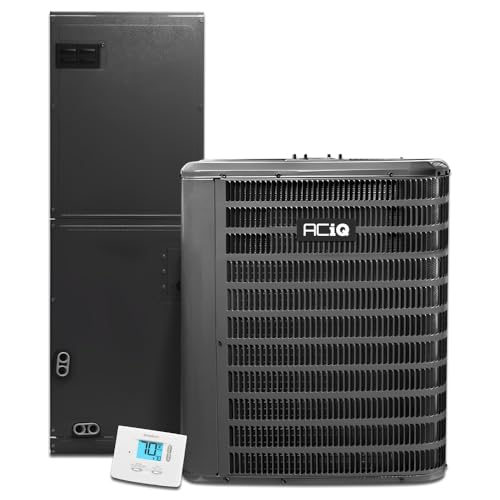
In a central split system, the indoor air handler and evaporator coil are typically located in a closet, attic, or basement. A blower pushes cooled air through a network of insulated ducts that terminate in supply registers in each room. Return air travels back through return vents to the air handler. This design is the most common whole house approach in US homes with existing ductwork. The outside air conditioner unit houses the compressor and condenser coil, and the two halves are connected by a refrigerant line set.
In a packaged unit, all components are combined in a single outdoor cabinet. The unit may sit on a slab beside the house or on the roof. Conditioned air is delivered through ductwork, similar to a split system. Packaged systems are common in homes where interior space for an air handler is limited.
In a multi-zone ductless mini split, one outdoor unit connects to multiple indoor air handlers, one per zone. Each indoor head has its own evaporator coil and blower, and refrigerant lines run to each head. There is no ductwork. This makes a mini split system attractive for homes without ducts, additions, and room-by-room control. The trade-off is that every zone needs its own indoor unit and line set.
Regardless of type, the efficiency of the whole system depends on correct sizing, proper refrigerant charge, clean coils, and sealed ducts. A well-installed entry-level system will usually outperform a poorly installed premium system, which is why installation quality matters as much as the equipment tier.
Types of Whole Home AC Systems Compared
Four system families dominate whole house cooling. Each has a distinct position in the market and suits different homes. The table below compares them using tier descriptors rather than currency figures.
| System Type | Market Position | Best For | Key Consideration |
|---|---|---|---|
| Central Split System | Essential to premium tier | Homes with existing or planned ductwork | Requires a load calculation and well-sealed ducts |
| Packaged Unit | Essential to mid-range tier | Homes with limited indoor space; roof or slab placement | Single cabinet simplifies service access |
| Multi-Zone Ductless Mini Split | Mid-range to high-end tier | Homes without ducts, additions, zoned comfort | One indoor head per zone; no duct losses |
| High-Efficiency Variable Speed System | High-end to top-tier | Homeowners prioritizing long-term efficiency and quiet operation | Higher equipment tier; best paired with a professional design |
For a deeper look at the ductless option, see the guide to ductless mini splits for whole house cooling. If you are comparing central systems, the article on leading central air conditioner brands helps frame the manufacturer landscape.
Central Split System
The standard whole house approach. A single indoor air handler serves the entire home through ducts. Reliable, widely serviced, and available across all equipment tiers.
Packaged Unit
All-in-one outdoor cabinet. A solid choice where indoor mechanical space is tight. Ducted distribution keeps comfort consistent throughout the home.
Multi-Zone Mini Split
No ductwork, no duct losses, and independent zone control. Ideal for homes that cannot accommodate ducts or owners who want room-by-room comfort.
Variable Speed System
Modulating compressor and blower for precise temperature control. Quiet operation and strong efficiency in the long run when correctly sized.
How to Size a Whole House Air Conditioner
Sizing is the single most important decision in whole house air conditioning. An oversized system cools quickly but cycles on and off frequently, which leads to uneven temperatures, higher humidity, and extra wear. An undersized system runs continuously and never fully satisfies the load on hot days. The right answer comes from a proper load calculation.
The industry standard is the Manual J load calculation, which accounts for square footage, ceiling height, insulation levels, window area and orientation, door openings, occupancy, appliance heat, and local climate data. A simpler rule of thumb is roughly 20 BTU per square foot of conditioned space, but this should only be used as a rough starting point. For a reliable estimate, use a sizing an air conditioner guide or ask a contractor for a room-by-room calculation.
- Measure conditioned space. Include every room served by the system, and note ceiling height. Vaulted ceilings increase the load.
- Assess the building envelope. Insulation, window type, shading, and air sealing all change the effective load. A well-insulated ducting system also reduces losses in central designs.
- Count occupants and heat sources. People, kitchens, electronics, and laundry rooms add sensible and latent heat.
- Check the local climate. Design temperature drives the peak load. Two identical homes in different climates need different capacities.
- Confirm with a professional calculation. Manual J output gives the required capacity in tons or BTU. A licensed HVAC professional can validate the result before equipment selection.
For a broader treatment of capacity selection, the guide on how to size an air conditioner covers room-level calculations and common sizing mistakes. If you are also considering heating, a combined heating and cooling system may be a more complete solution than cooling alone.
Efficiency Ratings and Long-Term Operation
Efficiency determines how much electricity a whole house system uses to deliver a given amount of cooling. The main metrics are SEER2 for cooling and HSPF2 for heat pump systems. Higher ratings generally mean lower energy use over the life of the equipment, but the return depends on climate, usage, and installation quality.
Entry-level systems meet minimum standards and are a reasonable choice when the budget priority is upfront equipment tier. Mid-range systems offer a balanced improvement in efficiency and features. High-end and top-tier systems deliver the strongest efficiency, often with variable speed compressors and advanced controls. For a deeper explanation, read what SEER means in air conditioning and the guide to a recommended SEER rating for different climates.
An EER rating is useful for comparing performance at peak design conditions, while HSPF rating matters if the system includes a heat pump. Inverter and variable speed technology is central to modern efficiency. The article on whether an inverter AC is worthwhile explains the operating principle and when it pays off. For a full home solution, an energy-efficient whole house air conditioner should be paired with a well-designed distribution system.
- Higher SEER2 means more cooling per unit of electricity
- Variable speed compressors reduce cycling and improve humidity control
- Proper refrigerant charge protects rated efficiency
- Sealed and insulated ducts reduce losses in central systems
- Programmable and smart thermostats support efficient scheduling
- Federal and utility incentives may apply to qualifying systems
Incentive programs change over time, so check the current HVAC tax credits and rebates before finalizing equipment selection. A variable speed air conditioner often qualifies for higher incentive tiers and delivers quieter, more stable comfort.
Designing Comfort Room by Room
Whole house comfort is not only about the outdoor unit. Air distribution decides whether each room actually reaches the thermostat setpoint. In central systems, duct design, register placement, and return air paths matter as much as equipment capacity. In ductless systems, indoor head placement determines how evenly each zone is conditioned.
A well-designed central system uses properly sized trunks and branches, minimal sharp turns, sealed joints, and balanced airflow. The return vents must be large enough to let air back to the air handler without starving the system. Supply registers should be positioned to mix air without blowing directly on occupants. The ideal AC temperature setting is easier to maintain when the distribution system is balanced.
For ductless systems, each indoor head should be placed on an interior wall with clear airflow and away from direct sunlight. Bedrooms, living rooms, and home offices are common zones. A multi-zone mini split lets each zone run independently, which is useful when occupancy varies through the day. The trade-off is more equipment and more line sets, so a professional layout is essential.
Homes with existing ductwork should have the ducts inspected before a new system is installed. Leaky ducts can waste a significant share of cooling energy. The guide to HVAC system maintenance explains how to check for duct issues. For new construction, duct design should be part of the mechanical plan from the start.
Installation Checklist and Contractor Questions
Installation quality determines whether a whole house air conditioner performs as designed. A careful contractor will perform a load calculation, inspect the electrical panel, verify refrigerant line lengths, evacuate the system, and commission it with measured airflow and temperature split. Skipping any of these steps can reduce efficiency and shorten equipment life.
- Request a load calculation. Ask for a Manual J report or equivalent. A contractor who sizes by square footage alone is not doing the full job.
- Check the electrical panel. Confirm available capacity for the outdoor unit and air handler. The guide to local HVAC services can help identify qualified electricians if an upgrade is needed.
- Verify line set and drain details. Proper line set length and a correctly installed condensate drain prevent performance and water issues. For mini splits, see installing a condensate pump on a mini split.
- Confirm the vacuum and charge procedure. The system must be evacuated with a vacuum pump for the AC system before refrigerant is released. This removes moisture and non-condensables.
- Ask for commissioning measurements. Request static pressure, airflow, and temperature split readings. These confirm the system is delivering rated performance.
- Use the installer question list. The guide on questions to ask an installer covers warranty, permits, and service expectations.
A comparison of HVAC quotes should include equipment model numbers, SEER2 ratings, scope of work, permit responsibility, and warranty terms. For a ductless project, a mini split estimate should specify the number of zones and line set lengths. If you are replacing an older system, the article on the most energy-efficient home air conditioning system provides a useful benchmark for equipment tier comparisons.
Maintenance for Lasting Performance
A whole house air conditioner is a long-term investment. Regular maintenance protects that investment by keeping coils clean, airflow strong, and refrigerant charge correct. Most service tasks are straightforward, and a few are best left to a professional.
Homeowners can replace or clean filters every one to three months, keep the outdoor unit clear of debris, and gently rinse the outdoor coil. The guide to AC condenser maintenance covers outdoor unit care in detail. Indoor coil cleaning and refrigerant checks should be handled by a technician. An annual service visit typically includes coil cleaning, drain flushing, electrical checks, and a refrigerant charge verification. For a complete seasonal routine, see the tips and maintenance section.
If the system stops cooling, start with the things to check when AC is not cooling checklist. Common symptoms such as an AC unit that is not cooling the house or an air conditioner that runs but does not cool often trace back to airflow or refrigerant issues. Low refrigerant symptoms are covered in the guide to low Freon symptoms in a central air conditioner.
Reducing the cooling load also extends equipment life. Shading the outdoor unit, sealing ducts, and using ceiling fans can lower runtime. The article on reducing the AC electricity bill lists practical steps. If the system is aging, compare repair against replacement using the long-term investment perspective before deciding.
Frequently Asked Questions
Whole house air conditioning is a cooling system designed to condition the air in every room from a single coordinated source. It typically uses a central split system with ductwork, a packaged unit, or a multi-zone ductless mini split system to distribute cooled air throughout the building.
Use a professional load calculation such as Manual J. It accounts for square footage, ceiling height, insulation, window area, orientation, occupancy, and local climate. A rough rule of thumb is 20 BTU per square foot, but this should only be a starting point before a proper calculation.
Yes. A multi-zone ductless mini split can cool a whole house when designed with the correct number of indoor heads and outdoor capacity. It is especially suitable for homes without existing ductwork, additions, and properties where zoned comfort is a priority. Proper zone design and professional installation are essential.
For a whole house system, a higher SEER2 rating generally means greater efficiency. Entry-level systems meet minimum standards, mid-range systems offer a balanced improvement, and high-end tier systems deliver the strongest efficiency for long-term operation. Climate, usage, and installation quality all affect the real-world benefit.
A well-installed and properly maintained whole house central air conditioner typically lasts 15 to 20 years. Ductless mini split systems often have a similar service life. Regular filter changes, coil cleaning, and annual professional service help maximize lifespan.
Ready to Explore Whole House AC Options?
Now that you understand how whole house air conditioning works, how to size it, and what to expect from installation and maintenance, you are ready to compare systems. Browse recommended whole house air conditioners below and check availability for your home.
EXPLORE OPTIONS