
Maintenance of HVAC System: The Complete Guide
Discover how proper HVAC maintenance protects your investment, improves energy efficiency, extends equipment lifespan, and keeps your home comfortable all year round.
START LEARNINGWhat You Will Learn on This Page
Why Regular HVAC Maintenance Matters
Your HVAC system is one of the largest mechanical investments in your home. It works quietly in the background to keep your living space comfortable, but it requires regular attention to perform reliably. The maintenance of HVAC system is not a one-time event but an ongoing commitment that pays dividends throughout the equipment's service life.
Neglecting routine maintenance leads to a cascade of problems. A system that runs with clogged filters and dirty coils must work harder to achieve the same cooling or heating output. This additional strain accelerates wear on the compressor, blower motor, and other critical components. Over time, this translates into more frequent repairs, shorter equipment lifespan, and noticeably higher energy consumption.
Benefits of Consistent HVAC Maintenance
- Extended equipment lifespan: Regular care helps your system reach or exceed its expected service life of 12 to 20 years.
- Improved energy efficiency: Clean components and proper refrigerant charge keep the system operating near its rated efficiency.
- Fewer unexpected breakdowns: Technicians identify worn parts and potential failures before they cause a complete system shutdown.
- Better indoor air quality: Clean filters and coils reduce dust, allergens, and microbial growth circulating through your home.
- Preserved warranty coverage: Most manufacturers require documented annual maintenance to honor warranty claims on major components.
- Enhanced comfort: Proper airflow and refrigerant charge ensure consistent temperatures and humidity control throughout your home.
For homeowners evaluating long-term operational reliability, investing in professional maintenance is a wise approach. It reduces the likelihood of mid-summer or mid-winter emergencies and keeps the system performing as designed. Understanding the most efficient home air conditioning system options begins with recognizing that even top-tier equipment requires regular care to deliver its rated performance.
Annual HVAC Maintenance Schedule
A structured maintenance calendar ensures that no task is overlooked and that both the heating and cooling seasons are properly prepared. The ideal approach combines homeowner-performed tasks with professional service visits twice per year.
| Season | Focus Area | Key Tasks | Service Tier |
|---|---|---|---|
| Early Spring | Cooling preparation | Professional AC tune-up, condenser coil cleaning, refrigerant charge check | Balanced Tier |
| Late Spring | Homeowner checklist | Filter replacement, outdoor unit debris removal, thermostat testing | Essential Tier |
| Early Fall | Heating preparation | Furnace or heat pump inspection, burner cleaning, safety checks | Balanced Tier |
| Late Fall | Winter readiness | Condensate line clearing, insulation check, thermostat schedule update | Essential Tier |
| Monthly | Filter monitoring | Inspect and replace filters as needed, clear vents and returns | Essential Tier |
This schedule aligns with the recommendations of licensed HVAC professionals and equipment manufacturers. It addresses the unique demands of each season while keeping maintenance manageable for homeowners. For households with heat pump systems, the spring and fall visits cover both heating and cooling modes, making each inspection especially valuable.
DIY HVAC Maintenance Tasks You Can Do Safely
Several maintenance tasks fall comfortably within the capabilities of most homeowners. Performing these tasks between professional visits keeps the system running smoothly and reduces the burden on technicians during service calls.
1. Replace or Clean Air Filters
The air filter is the simplest yet most impactful maintenance item. A clogged filter restricts airflow, forcing the blower motor to work harder and reducing cooling or heating capacity. Replace standard filters every 30 to 90 days depending on occupancy, pets, and allergy concerns. For thicker pleated filters, a 90-day to 180-day interval is typical.
2. Clean the Outdoor Condenser Unit
The outdoor unit must be free of debris, leaves, grass clippings, and dirt. Clear a two-foot perimeter around the unit and gently rinse the finned coil surface with a garden hose. Avoid using a pressure washer, which can bend the delicate fins. Detailed procedures for this task are covered in the AC condenser maintenance guide.
3. Clear Condensate Drain Lines
The condensate drain removes moisture collected during cooling. Over time, algae and debris can clog the line, leading to water backups and potential water damage. Flush the line with a mixture of water and distilled vinegar every few months. For systems with a condensate pump, the guide on installing a condensate pump on a mini split provides additional context.
4. Inspect and Clean Vents and Return Grilles
Dust accumulation on supply registers and return grilles restricts airflow and reduces indoor air quality. Vacuum these surfaces regularly and remove obstructions such as furniture blocking registers. The importance of unobstructed return vents cannot be overstated for system efficiency.
5. Test the Thermostat
Verify that the thermostat responds correctly to temperature changes and that the programmed schedule aligns with your household routine. Settings such as the ideal AC temperature setting help balance comfort and efficiency. Replace batteries annually in battery-powered models.
Professional HVAC Maintenance Tasks
Certain maintenance procedures require specialized tools, training, and licensing. A qualified technician performs these tasks during semi-annual service visits. These professionals check the aspects of system operation that homeowners cannot safely or accurately evaluate.
Refrigerant Charge Verification
The technician measures system pressures and superheat or subcooling values to confirm the refrigerant charge is correct. An undercharged or overcharged system operates inefficiently and may damage the compressor. Refrigerant handling is regulated, and only licensed HVAC professionals should perform this work. Signs of low refrigerant, such as those described in the symptoms of low Freon in central air conditioner article, warrant prompt professional attention.
Electrical Component Inspection
Technicians inspect contactors, capacitors, relays, and wiring for signs of wear, corrosion, or overheating. They tighten connections and test motor windings to catch failures before they occur. This attention to electrical details is particularly important for systems with variable speed AC technology, where electronic controls are sensitive to voltage irregularities.
Coil Cleaning (Deep Cleaning)
While homeowners can rinse the outdoor coil, a thorough cleaning of both the evaporator and condenser coils requires specialized coil cleaner, access panels removal, and proper containment of rinse water. Clean coils are essential for efficient heat exchange. Related procedures are discussed in the AC condenser maintenance resource.
Blower Motor and Airflow Assessment
The technician evaluates the blower wheel for dirt buildup, checks motor amp draw, and measures static pressure across the air handler. Proper airflow is critical for temperature consistency and equipment longevity. For mini-split systems, the mini split air conditioner repair guide addresses blower-related issues.
Heat Exchanger and Burner Inspection (Heating Mode)
For gas furnaces, the technician inspects the heat exchanger for cracks and cleans the burners. These safety checks are crucial for preventing carbon monoxide hazards. Heat pump systems receive similar scrutiny during the heating season inspection.
HVAC Filter Replacement: A Complete Guide
The air filter is a relatively small component with an outsized effect on system performance, energy consumption, and indoor air quality. Understanding filter types and replacement intervals is fundamental to the maintenance of your HVAC system.
Filter Types and Their Characteristics
| Filter Type | Typical MERV Rating | Replacement Interval | Best For | Tier |
|---|---|---|---|---|
| Fiberglass panel | MERV 1-4 | 30 days | Basic dust protection | Essential Tier |
| Pleated cotton/polyester | MERV 8-11 | 60-90 days | Most residential systems | Balanced Tier |
| Electrostatic washable | MERV 6-10 | Clean monthly | Reusable convenience | Balanced Tier |
| High-efficiency pleated | MERV 13-16 | 90-180 days | Allergy and asthma relief | Premium Tier |
Residential systems typically accommodate 1-inch filters, but media cabinets may accept 4-inch or 5-inch filters that last longer and provide better filtration. Always verify the correct size and MERV rating before purchasing a replacement. High-MERV filters can increase airflow resistance on systems not designed for them; consult a technician if you plan to upgrade.
For window units, the filter is often a washable mesh that should be cleaned every two weeks during peak season. The window unit air conditioner maintenance guide provides specific instructions for this equipment category.
Evaporator and Condenser Coil Care
Coils are the heart of the heat exchange process. The evaporator coil absorbs heat from indoor air, while the condenser coil releases that heat to the outdoors. Dirt, dust, and biological growth on coil surfaces act as insulation, drastically reducing heat transfer efficiency.
Signs That Coils Need Cleaning
- Reduced cooling capacity or uneven room temperatures
- Higher than normal energy consumption
- Visible dirt or lint accumulation on coil fins
- Water leaking from the indoor unit (evaporator coil issues)
- Frozen coil formation during cooling operation
- Musty or unpleasant odors from vents
Outdoor condenser coils collect debris throughout the year, especially in environments with trees, pollen, or construction dust. Homeowners can gently rinse outdoor coils with a garden hose, but a deep cleaning with coil-specific foaming cleaner and fin comb straightening delivers more thorough results. The article on AC condenser maintenance details the safe approach.
Indoor evaporator coils are more challenging to access. A technician removes the access panel, applies no-rinse coil cleaner, and uses a drain pan flush to clear biological growth. For mini-split systems, the indoor coil cleaning process is described in the mini split air conditioner repair resource. Portable units require similar but more frequent attention; refer to the portable air conditioner compared to window units comparison for maintenance expectations by type.
Ductwork Maintenance and Airflow Optimization
The duct system distributes conditioned air throughout the home. Leaky, dirty, or poorly insulated ducts waste a substantial portion of the energy consumed by the HVAC system. Up to 30% of conditioned air can escape through leaks before reaching living spaces.
Duct Maintenance Priorities
- Seal leaks: Use mastic sealant or metal-backed tape on accessible joints, especially at connections to registers, plenums, and the air handler. The insulated air conditioning ducting guide covers sealing techniques.
- Insulate exposed ducts: Ducts running through unconditioned spaces such as attics or crawlspaces should be insulated to prevent thermal loss.
- Clean duct interiors: Over years of operation, ductwork accumulates dust and debris. Professional duct cleaning restores airflow and improves indoor air quality.
- Inspect for obstructions: Ensure that no furniture, rugs, or stored items block supply or return registers.
- Check plenum connections: The plenum in HVAC systems is a common leak point that deserves attention.
For homes undergoing renovation or experiencing persistent airflow problems, a professional duct inspection may be warranted. Technicians use pressure diagnostics and video inspection to identify hidden leaks and blockages. Replacing damaged sections of ductwork can restore system performance dramatically. The replace HVAC ductwork cost article discusses the scope of duct replacement projects.
Seasonal HVAC Preparation Checklist
Transitioning between heating and cooling seasons is an ideal time to perform targeted maintenance tasks. Each season places distinct demands on the system and warrants specific preparation.
Spring Cooling Season Preparation
- Schedule a professional AC tune-up before the first heat wave
- Replace the air filter with a fresh unit
- Clear the outdoor unit of winter debris and vegetation
- Test the thermostat in cooling mode
- Check condensate drain for blockage
- Inspect and clean supply and return registers
- Verify that outdoor unit fan spins freely
- Consider shading an AC unit to improve efficiency during peak summer heat
Fall Heating Season Preparation
- Schedule a professional furnace or heat pump inspection
- Replace the air filter (heating season uses the same filter)
- Test the heating cycle and verify warm air delivery
- Check carbon monoxide detectors and replace batteries
- Clear any obstructions around outdoor unit (heat pump)
- Inspect attic and crawlspace insulation for gaps
- Seal windows and doors to reduce heating load
- Review thermostat programming for heating schedules
Energy Efficiency Benefits of HVAC Maintenance
A well-maintained HVAC system consumes noticeably less energy than a neglected one. The efficiency gains compound over time, making maintenance one of the most impactful strategies for reducing household energy consumption.
Studies of residential HVAC performance consistently show that dirty filters, low refrigerant charge, and dirty condenser coils are among the top causes of efficiency loss. Each of these conditions increases compressor runtime and electricity draw. A system that might normally operate at 15 SEER can degrade to the equivalent of 10 SEER or lower when maintenance is ignored.
Efficiency-Focused Maintenance Actions
- Replace filters on schedule to maintain design airflow
- Keep outdoor coils clean and free of shade-blocking debris
- Verify refrigerant charge annually to avoid compressor inefficiency
- Seal duct leaks to deliver conditioned air where it is needed
- Program the thermostat for unoccupied periods to reduce runtime
- Use ceiling fans to allow higher thermostat settings without comfort loss (see use ceiling fan with AC)
- Upgrade to a programmable or smart thermostat for precise temperature control
- Schedule annual professional tune-ups to keep components calibrated
For homeowners considering equipment replacement versus continued maintenance, the efficiency gains from proper care often extend the system's useful life long enough to make replacement unnecessary for several additional years. This supports a investment AC for long term perspective, where maintenance is viewed as a value-preserving activity rather than an expense. The reduce AC electricity bill guide offers additional strategies for lowering cooling-related energy use.
Maintenance Service Tiers: Choosing the Right Level of Care
HVAC maintenance services are available in several tiers, ranging from basic homeowner self-care to comprehensive professional maintenance agreements. Understanding these tiers helps homeowners match their approach to their system type, household needs, and comfort priorities.
| Tier | Service Level | Included Tasks | Best For |
|---|---|---|---|
| Essential Tier | Homeowner self-maintenance | Filter replacement, outdoor unit rinsing, vent cleaning, thermostat checks | New systems under warranty, budget-conscious households, basic comfort needs |
| Balanced Tier | Semi-annual professional tune-up | All essential tasks plus refrigerant check, coil cleaning, electrical inspection, safety checks | Most single-family homes, systems over 5 years old, homeowners seeking optimal efficiency |
| Premium Tier | Comprehensive maintenance agreement | All balanced tasks plus priority scheduling, parts discounts, annual duct inspection, IAQ assessment | Multi-system homes, allergy-sensitive households, high-use climates |
| Professional-Grade Tier | Commercial and light industrial maintenance | All premium tasks plus building automation checks, economizer inspection, code compliance verification | Commercial buildings, multi-family properties, critical cooling environments |
The essential tier provides a baseline that every homeowner should follow regardless of other service arrangements. Professional tune-ups at the balanced tier represent the sweet spot for most residential systems, delivering the greatest performance benefit per service visit. Premium agreements add convenience and priority support for households that depend on uninterrupted comfort.
Households with heat pump systems, such as those considering a three ton heat pump, benefit particularly from the balanced tier because heat pumps operate year-round and require inspection of both heating and cooling functions. Similarly, owners of mini split air and heat systems benefit from semi-annual professional attention because these systems serve both functions with a single set of components.
Finding a Qualified HVAC Maintenance Provider
Selecting the right service professional for the maintenance of your HVAC system is as important as performing the tasks themselves. Look for companies with proper licensing, insurance, and a track record of quality workmanship. The article on licensed HVAC explains what credentials to verify.
- Verify state or local licensing and liability insurance
- Ask about technician certifications (NATE, EPA Section 608)
- Request a written maintenance checklist before service begins
- Inquire about maintenance agreement terms and scheduling priority
- Check online reviews and ask for references from similar homes
- Confirm that the company services your specific equipment brand and type
When requesting service, be prepared with information about your system's make, model, age, and any known issues. The questions to ask installer guide provides a useful framework for conversations with technicians. For homeowners exploring system options or replacements, the HVAC quotes resource can help frame the discussion.
Frequently Asked Questions About HVAC Maintenance
Ready to Optimize Your HVAC System?
Explore our detailed guides on specific maintenance tasks and system types to take the next step in protecting your home comfort investment.
Browse All Maintenance GuidesRecommended HVAC Maintenance Supplies & Tools
⚠️ AFFILIATE DISCLOSURE: This website contains affiliate links. As an Amazon Associate, we earn from qualifying purchases. If you make a purchase through these links, we may receive a small commission at no additional cost to you. Read our full affiliate policy.

HVAC Systems: Operation, Maintenance, and Optimization
Check price on Amazon
Home Maintenance Logbook: Seasonal Checklists • HVAC & Filter Tracker • Service Records
Check price on Amazon
HVAC Troubleshooting and Diagnostics: A Practical Field Workbook for Diagnosing Common Residential HVAC Problems
Check price on Amazon
HVAC Control Systems
Check price on Amazon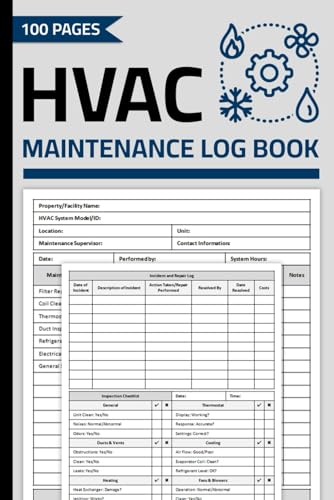
HVAC Maintenance Log Book: HVAC Repair & Service Record with Inspection Checklist | Maintenance Logbook for HVAC Systems | 100 Pages
Check price on Amazon
Audel HVAC Fundamentals, Volume 1: Heating Systems, Furnaces and Boilers (Audel Technical Trades Series)
Check price on Amazon
HVAC TROUBLESHOOTING PREP: A Complete Guide to HVAC Systems, Electrical Diagnostics, Refrigeration, and Heating & Cooling Troubleshooting with 15 Solved Exercises, 3 Practice Exams, and 120 Questions
Check price on Amazon