Air Conditioning 14000 BTU
A 14,000 BTU system sits in the high-capacity range, ideal for large rooms and open living areas. This guide covers sizing, system types, features, and maintenance so you can confidently choose the right unit for your space.
EXPLORE BUYING GUIDEWho this capacity is for: A 14,000 BTU air conditioner suits spaces that standard portable or window units cannot reach. Whether you are cooling a large living room, an open-plan area, or a garage conversion, this capacity delivers strong performance when matched to the right room. Understanding room conditions and system type is key to getting the most from the unit.
What Room Size Does 14,000 BTU Cover?
As a general rule, a 14,000 BTU unit cools rooms between roughly 450 and 550 square feet under average conditions. That starting point is useful, but real-world coverage depends on several variables. Before you commit, consider the characteristics of your space and compare against our broader AC unit for small room guide if your area is on the smaller side, or review the air conditioner overview for a full spectrum of capacities.
| Room Condition | Effective Coverage Impact |
|---|---|
| Standard ceiling (8 ft) | Baseline coverage in the 450 to 550 sq ft range |
| High ceiling or vaulted | Reduced effective coverage; consider a larger unit |
| Poor insulation | Unit works harder; expect shorter effective range |
| Large or unshaded windows | Additional heat gain; choose the upper end of the range |
| Open-plan layout | Air mixes widely; consider zoning or a ducted option |
Practical tip: An oversized unit cycles on and off quickly, leaving the room clammy. An undersized unit runs nonstop without reaching the set point. Aim for the middle of the range and, when in doubt, consult a professional load calculation. If the system runs constantly, review our guide on an air conditioner running constantly but not cooling for troubleshooting tips.
System Types Available at 14,000 BTU
Several configurations offer 14,000 BTU capacity. Each has different installation requirements, noise profiles, and operating characteristics. Compare the options below against your home layout and long-term goals.
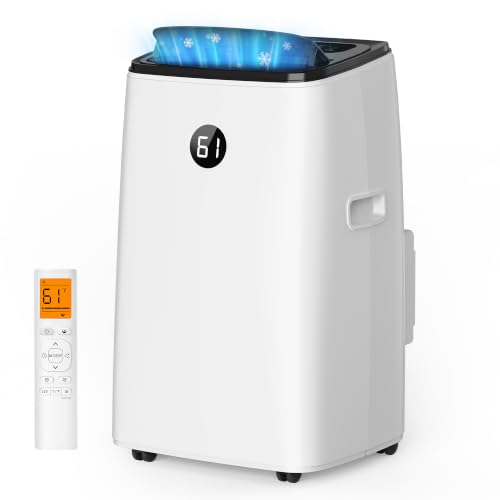
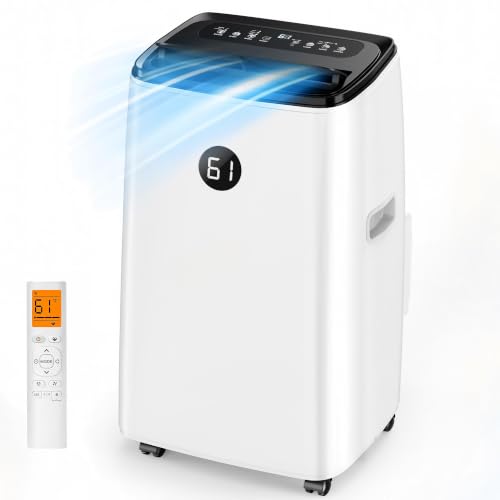
Portable 14,000 BTU Unit
Rolling units that vent through a window kit. They are easy to move and require no permanent installation.
- No professional installation needed
- Can be moved between rooms
- Requires a compatible window for venting
- Consider a dual-hose design for better efficiency
Best for: Renters and spaces without permanent window units.
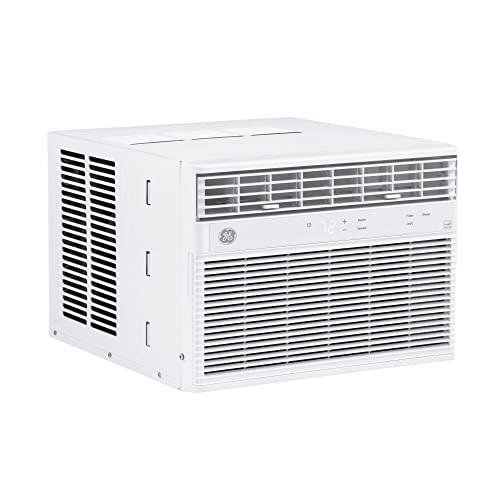
Window 14,000 BTU Unit
A classic through-window installation that is straightforward to service and delivers reliable cooling for one large room.
- Simple installation in a compatible window
- Generally more efficient than portable units
- Requires a sturdy window and proper support
- Seasonal removal is recommended
Best for: Standard double-hung windows and dedicated room cooling.
Ductless Mini-Split 14,000 BTU
A wall-mounted indoor head paired with an outdoor condenser. Delivers quiet operation and precise temperature control.
- Very quiet indoor operation
- Inverter compressors for steady cooling
- Professional installation required
- Can add zones with additional heads
Best for: Homeowners seeking long-term comfort and quiet.
Features That Matter at This Capacity
A high-capacity unit draws more power and moves more air, so the right features make a bigger difference. Prioritize the following when comparing models.
- Inverter compressor: Smooths out temperature swings and reduces cycling compared to single-speed models.
- High SEER or CEER rating: Indicates how efficiently the unit converts energy into cooling over a season.
- Programmable or smart thermostat: Scheduling saves energy during unoccupied hours. See our notes on air conditioner service and maintenance for upkeep tips.
- Washable or high-efficiency filter: Helps maintain airflow. Our guide on the AC unit filter covers replacement intervals.
- Auto-restart and sleep mode: Convenient functions that restore settings after a power interruption and adjust cooling overnight.
- Drain management: Higher-capacity units produce more condensate, so an effective drain system is essential. See our reference on an air conditioning unit leaking water if you notice moisture issues.
Matching Capacity to Efficiency
Efficiency and capacity work together. A 14,000 BTU system that is properly sized will run more efficiently than a smaller unit that is undersized for the space or a larger unit that short-cycles. When comparing options, use the following framework to keep the decision grounded.
Starter Tier Models
Single-stage compressors and standard ratings. These are dependable and easy to service, making them a solid choice for milder climates and secondary rooms.
- Simple controls and fewer electronics
- Good value for its tier
- Requires consistent filter maintenance
Balanced Tier Models
Two-stage or inverter compressors with better humidity control and smoother temperature regulation. Well-suited to primary living spaces.
- Better moisture removal
- Quieter operation at low demand
- Feature-rich for its class
High-End Tier Models
Variable-speed compressors and communicating controls. These deliver precise comfort and are built with premium materials for long-term use.
- Most consistent temperature control
- Efficient in the long run
- Often paired with smart home systems
Installation Considerations
Installation requirements differ significantly by system type. For a portable or window unit, you will need a compatible window and a stable electrical circuit. Mini-split systems require a licensed technician, a dedicated circuit, and a suitable location for the outdoor condenser. If you are considering professional installation, our guide on air conditioner installers in my area covers how to vet a contractor.
Larger systems also place more demand on your electrical panel. Confirm the circuit requirements before purchase. If your home has limited window options, a ductless system may open up layout possibilities. Our overview of an air conditioner for apartment with no windows explores alternatives when standard installations are not feasible.
Keeping a High-Capacity Unit Efficient
High-capacity units benefit most from regular upkeep. A simple routine keeps airflow strong and reduces strain on the compressor. Build the following into your seasonal schedule.
- Clean or replace the air filter every one to two months during heavy use.
- Clear the outdoor condenser of debris and vegetation if your system has one.
- Inspect the condensate drain and pan for buildup or clogs.
- Schedule a professional tune-up before the cooling season. Our air conditioning unit tune-up guide lists what technicians check.
- Listen for unusual noises; early detection prevents bigger repairs. Reference our guides on an air conditioner cooling fan and compressor cycling for common issues.
Practical tip: If the unit is running but not delivering cold air, the issue may be a dirty filter, low refrigerant, or a blocked condenser. Our guide on an air conditioner running but not cooling walks through likely causes and when to call a professional.
When a 14,000 BTU Unit May Not Be the Right Fit
A 14,000 BTU unit is not the answer for every home. Consider alternatives if any of the following apply:
- You need to cool multiple rooms or an entire home. A whole-house cooling system may be more practical.
- You have very high ceilings or a wide open floor plan. Zoned systems or central cooling may work better.
- You need heating as well. An air conditioner and heater combo wall unit or a heat pump offers year-round comfort.
- You are comparing small-space options. Review the air conditioning units for small spaces guide instead.
Frequently Asked Questions
What size room does a 14,000 BTU air conditioner cool?
A 14,000 BTU unit typically cools rooms between 450 and 550 square feet under average conditions. Ceiling height, insulation, window area, sun exposure, and local climate will shift the effective coverage up or down.
Which type of 14,000 BTU air conditioner is best?
Portable and window units suit single rooms, while ductless mini-split systems offer quieter operation and zone control. The best option depends on your window configuration, installation preferences, and how many rooms you need to cool.
Is a 14,000 BTU air conditioner energy efficient?
Efficiency varies by model. Look for higher SEER or CEER ratings and inverter-driven compressors for smoother operation. Matching the capacity to the room correctly is just as important as the rating itself.
Can a 14,000 BTU unit cool an open-plan living area?
It can work well in a moderately sized open-plan space, but airflow becomes less predictable. For larger connected rooms, consider zoning with a ductless multi-zone system or consulting a technician about a central solution.