Ductless Split Air Conditioning System: The Complete Guide
Everything you need to know about ductless mini-split systems — how they work, how to size them, efficiency ratings, installation requirements, and how to choose the right system for your home.
Start LearningWhy Ductless Split Systems Matter: If your home lacks ductwork, or if you want room-by-room temperature control without the energy losses of ducted systems, a ductless split system is one of the most efficient and flexible cooling solutions available today. This guide walks you through every decision point so you can buy with confidence.
In This Guide
What Is a Ductless Split Air Conditioning System?
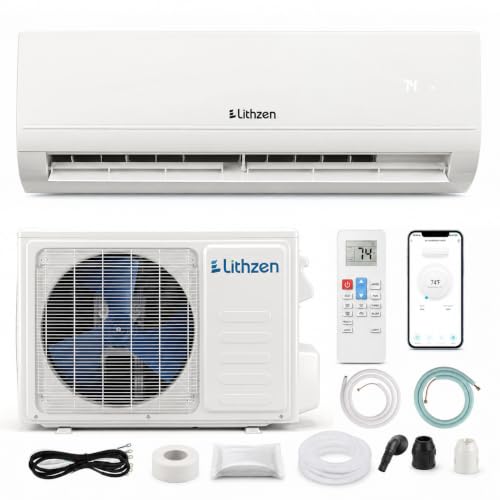
A ductless split system — often called a mini-split — is an air conditioning system composed of two primary components: an outdoor compressor/condenser unit and one or more indoor air-handling units. These components are connected by a small conduit (usually about three inches in diameter) that carries refrigerant lines, electrical wiring, and a condensate drain. The key distinction is the absence of ductwork: conditioned air is delivered directly into the room from the indoor unit.
This design makes ductless systems ideal for homes without existing ducts, room additions, converted garages, and spaces where extending ductwork would be impractical or inefficient. Modern ductless systems are also available as heat pumps, providing both cooling and heating from the same unit. For a broader comparison of system types, see our AC types guide.
Single-Zone System
One outdoor unit paired with one indoor unit. Best for cooling a single room, studio apartment, or small addition. Simple to install and operate.
Multi-Zone System
One outdoor unit connected to multiple indoor units (typically two to five). Each zone has independent temperature control. Ideal for whole-home comfort without ducts.
Heat Pump Variant
Provides both cooling and heating by reversing the refrigerant cycle. Many modern ductless systems are heat pumps, making them a year-round HVAC solution.
How Ductless Split Systems Work
The refrigeration cycle in a ductless system operates on the same principle as any air conditioner. The outdoor unit contains the compressor and condenser coil, while the indoor unit houses the evaporator coil and a fan. Refrigerant circulates between the two, absorbing heat from indoor air and releasing it outdoors.
Here is the step-by-step process:
- Absorption: The indoor unit's fan draws warm room air across the cold evaporator coil. The refrigerant inside absorbs heat and evaporates into gas.
- Compression: The refrigerant gas travels to the outdoor compressor, which pressurizes it, raising its temperature.
- Release: The hot refrigerant passes through the outdoor condenser coil, where it releases heat to the outside air and condenses back into a liquid.
- Return: The cooled liquid refrigerant flows back to the indoor unit through the expansion device, and the cycle repeats.
Because there are no ducts, the system avoids the energy losses that typically occur in ducted systems — losses that can range from 20% to 30% in poorly sealed or insulated ductwork. This is one of the primary reasons ductless systems can be highly efficient. For a deeper dive into the refrigeration cycle, see our split system guide.
Types of Ductless Indoor Units
Ductless systems are not limited to wall-mounted units. Indoor air handlers come in several form factors to suit different room layouts and design preferences:
Wall-Mounted Units
The most common configuration. Installed high on a wall, these units are unobtrusive and distribute air across the room. Available in entry-level through premium tiers.
Ceiling Cassette Units
Flush-mounted into the ceiling with a four-way air distribution grille. Ideal for drop ceilings or rooms where wall space is limited. Usually mid-range to high-end tier.
Floor-Mounted Units
Installed low on the wall or floor, often used in rooms with limited upper-wall space or where heat distribution benefits from low placement. Typically mid-tier.
Ducted Mini-Split Units
Concealed in the ceiling or attic with short duct runs to multiple vents. Offers a more discreet appearance but requires some ceiling space. High-end tier.
For a comprehensive look at ductless mini-split configurations, visit our ductless mini-split AC guide. If you are considering a ducted mini-split, see ducted mini-split systems.
Sizing & BTU Requirements
Correct sizing is critical for comfort and efficiency. An undersized system will struggle to cool the space on hot days, while an oversized system will short-cycle, leading to inconsistent temperatures and higher humidity levels. For a detailed sizing methodology, see our air conditioner sizing guide.
The table below provides a general BTU range based on room size. These are approximate guidelines; factors such as ceiling height, insulation, window area, occupancy, and climate will influence the final calculation.
| Room Size (sq ft) | Recommended BTU Range | Typical Application |
|---|---|---|
| Up to 150 | 5,000 – 6,000 BTU | Small bedroom, home office |
| 150 – 250 | 8,000 – 10,000 BTU | Medium bedroom, small living room |
| 250 – 400 | 12,000 – 14,000 BTU | Large bedroom, living room |
| 400 – 600 | 18,000 – 24,000 BTU | Open living area, master suite |
| 600 – 1,000 | 24,000 – 36,000 BTU | Large open floor plan, small apartment |
For more precise BTU calculations, use our BTU calculator by room size or explore specific capacity guides like 12,000–14,000 BTU AC units. If you are sizing for a whole home without ducts, our AC for large house guide may also be helpful.
Efficiency Ratings Explained
Ductless split systems are available across a wide spectrum of efficiency levels. Understanding the key metrics will help you evaluate systems within their respective tiers.
SEER / SEER2
Seasonal Energy Efficiency Ratio. Higher values indicate greater cooling efficiency over a typical cooling season. SEER2 is the updated DOE standard. Premium-tier ductless systems often achieve significantly higher SEER2 ratings than entry-level models. Learn more in our SEER rating guide.
EER / EER2
Energy Efficiency Ratio. Measures efficiency at peak load conditions. Useful for evaluating performance on the hottest days. See our EER rating explanation.
HSPF / HSPF2
Heating Seasonal Performance Factor. Relevant for heat pump models. Higher values indicate more efficient heating performance. Learn more in our HSPF rating guide.
ENERGY STAR certified ductless systems meet or exceed federal efficiency guidelines. For a list of efficient options, see our ENERGY STAR AC guide. If you are comparing inverter and non-inverter technologies, our inverter AC guide explains the efficiency advantages of variable-speed compressors, which are common in higher-tier ductless systems.
Pros and Cons of Ductless Split Systems
Advantages
- No ductwork required — ideal for retrofits and additions
- Zone-by-zone temperature control
- No energy losses from leaky ducts
- Quiet operation — indoor units are typically very quiet
- Flexible installation options (wall, ceiling, floor)
- Many models offer heat pump functionality
- Easy to add zones incrementally with multi-zone systems
Considerations
- Higher upfront equipment investment compared to window units
- Professional installation required
- Indoor units are visible on walls or ceilings
- Each indoor unit requires its own wall penetration
- Multi-zone systems have a higher total installed footprint
- Filters require regular cleaning for optimal performance
Ductless vs Central Air: Which Is Right for You?
The choice between ductless and central air depends on your home's existing infrastructure, your comfort priorities, and your long-term efficiency goals. For a detailed comparison, see our ductless vs ducted AC guide.
| Factor | Ductless Split System | Central Air System |
|---|---|---|
| Ductwork Required | No | Yes |
| Zone Control | Excellent (each room independent) | Limited (unless zoned) |
| Installation Complexity | Moderate — no ductwork | High — requires duct system |
| Energy Losses | Minimal | Can be significant with leaky ducts |
| Best For | Homes without ducts, additions, room-specific comfort | Homes with existing ductwork, whole-home cooling |
| Aesthetic Impact | Visible indoor units | Discreet vents |
If you are building a new home or have an existing duct system in good condition, central air may be the more practical choice. If you are retrofitting an older home without ducts, adding a room, or want granular control over room temperatures, a ductless system is often the superior solution. For new construction considerations, see our AC for new construction guide.
Installation Considerations
Proper installation is essential for performance, efficiency, and warranty coverage. While some DIY-oriented products exist, most ductless split systems require professional installation involving refrigerant handling, vacuuming, and electrical work.
Outdoor Unit Placement
The outdoor unit should be placed on a level surface with adequate clearance for airflow. It should be accessible for service and not enclosed in a tight space. Learn more about AC indoor and outdoor placement.
Indoor Unit Positioning
Wall-mounted units should be high enough to distribute air across the room, away from direct seating areas. Avoid locations above heat sources or in direct sunlight.
Refrigerant Line Routing
The line set connecting indoor and outdoor units should be as short as practical, with minimal bends. Proper insulation and securing are important. See our refrigerant line set guide.
Electrical Requirements
Most ductless systems require a dedicated circuit. Check your electrical panel capacity before purchasing. See our electrical panel guide and 110V vs 240V AC guide.
For installation cost planning, see our installation cost estimate guide. If you are hiring a contractor, our HVAC contractor selection guide will help you vet installers. For questions to ask before signing, see questions to ask your installer.
Maintenance and Longevity
Ductless systems are relatively low-maintenance, but regular care is essential for efficiency and lifespan. A well-maintained system can last 15 to 20 years or more.
Filter Cleaning
Clean or replace indoor unit filters every two to four weeks during heavy use. Clogged filters reduce airflow and efficiency. See our AC filter cleaning guide.
Coil Cleaning
Evaporator and condenser coils should be cleaned annually by a professional. See our evaporator coil cleaning guide for general principles.
Drain Line Maintenance
Condensate drains can clog over time. Flushing the drain line periodically helps prevent water backup. See our drain pan cleaning guide.
Annual Professional Service
A yearly inspection by a qualified technician helps catch issues early and keeps the system operating efficiently. See our when to call an HVAC technician guide.
Ready to Compare Ductless Split Systems?
Now that you understand the fundamentals, explore our curated selection of ductless split air conditioning systems available through our affiliate partners.
View Recommended Systems