Air Conditioning Units for One Room
Everything you need to know about choosing a dedicated cooling unit for a single room — sizing, AC types, efficiency ratings, installation considerations, and practical recommendations for comfortable, targeted cooling.
Why a single-room solution? Cooling one room is very different from cooling a whole house. A dedicated unit gives you precise control, lower energy draw, and simpler installation — no ductwork required. This guide walks you through the key decisions so you can pick the right unit for your bedroom, home office, living room, or any single space with confidence.
Why Choose a Dedicated AC for One Room?
Whole-home systems are efficient for large living areas, but they often over-cool or under-cool individual rooms. A dedicated one-room air conditioner solves several common problems: it delivers targeted comfort where you actually spend time, avoids the expense of extending ductwork, and gives you independent temperature control. For renters, remote workers, or anyone with a single problem room, a room-specific unit is often the most practical path to reliable cooling. If you are exploring broader options, our guide to air conditioning units for small spaces covers compact solutions in more depth.
Types of Air Conditioning Units for One Room
There are four main categories of single-room cooling units. Each has a distinct installation profile and ideal use case. Understanding these differences is the foundation of a good decision.
Window Air Conditioner
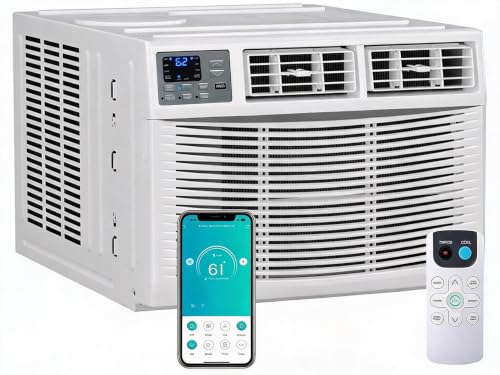
Installed directly in a window frame, a window AC is the simplest and most self-contained option. The entire unit sits in the window opening, with the compressor and condenser exposed to the outside. It is a solid choice for standard double-hung windows and delivers reliable cooling without floor space sacrifice.
Best for: Bedrooms and living rooms with a suitable window and a nearby power outlet.
Portable Air Conditioner
A portable unit rolls on casters and vents exhaust air through a window or wall opening via a hose. It offers placement flexibility and requires no permanent installation. Ideal for rooms where window mounting is not possible or where the unit needs to move between spaces.
Best for: Renters, odd-shaped rooms, and spaces without a suitable window for a window unit.
Ductless Mini-Split AC
A mini-split pairs an indoor wall-mounted air handler with an outdoor compressor. It is the quietest and most energy-efficient option for a single room, and it does not block a window. Installation requires professional refrigerant line work, but the long-term comfort and efficiency are excellent.
Best for: Bedrooms, home offices, and additions where quiet operation and efficiency matter most.
Through-the-Wall AC
A through-the-wall unit is installed into a sleeve in an exterior wall, similar in concept to a window unit but permanent and more secure. It frees up the window entirely and is common in hotels and apartments. Installation is more involved and typically requires wall modification.
Best for: Rooms where window space is needed or where a permanent, secure installation is preferred.
If you are working within a smaller footprint, the dedicated guide to air conditioning units for small apartments covers space-saving strategies and unit selection in detail.
How to Size a One-Room AC Unit
Sizing is the single most important decision. An undersized unit runs constantly and never reaches the set temperature; an oversized unit short-cycles, struggles to remove humidity, and wears out faster. Capacity is measured in BTU (British Thermal Units). The table below gives a practical starting point based on room area.
| Room Size (sq ft) | Recommended Capacity (BTU) | Typical Room Type |
|---|---|---|
| Up to 150 | 5,000 – 6,000 | Small bedroom, studio nook |
| 150 – 250 | 8,000 – 10,000 | Standard bedroom, home office |
| 250 – 400 | 12,000 – 14,000 | Large bedroom, living room |
| 400 – 550 | 18,000 – 24,000 | Open-plan living space, master suite |
These figures assume a standard ceiling height and average insulation. Adjust upward for rooms with strong sun exposure, high ceilings, or many windows, and downward for heavily shaded or well-insulated spaces. For a step-by-step breakdown of the calculation, see our guide on how to size an air conditioner. If you are cooling a larger open area rather than a single room, the resource on air conditioning units for a living room offers additional context on capacity and placement.
Efficiency Ratings That Matter for One Room
Efficiency directly affects long-term running performance and environmental impact. Two ratings are especially relevant for single-room units:
- SEER / SEER2: Seasonal Energy Efficiency Ratio — higher ratings indicate more efficient cooling over a season. For room ACs, look for units that meet or exceed current DOE standards.
- EER: Energy Efficiency Ratio — measures efficiency at a specific test condition. Useful for comparing window and portable units under peak load.
- ENERGY STAR certification: Indicates the unit meets strict efficiency criteria set by the EPA. A reliable shortcut when comparing models.
- Inverter technology: Inverter compressors modulate speed rather than cycling on and off, which improves efficiency and temperature stability. Inverter models are common in mini-splits and increasingly in portable and window units.
Key Features to Compare
Beyond capacity and efficiency, these features separate a good unit from a great one for your specific room:
- Noise level: Measured in decibels (dB). Bedroom units should ideally run below 45 dB on low settings; mini-splits are typically the quietest.
- Smart controls: Wi-Fi connectivity and app control allow scheduling and remote adjustment. See our guide on air conditioners with Wi-Fi for a deeper look.
- Air filtration: Washable filters are standard; some models add multi-stage filtration or air purification. If allergies are a concern, review air conditioners with air purifiers.
- Dehumidification mode: Useful in humid climates to remove moisture without over-cooling.
- Installation kit completeness: Window units need proper brackets and sealing; portable units need window vent kits. Check what is included.
Ready to Compare One-Room Units?
Our curated selection below highlights models suited to single-room cooling across different tiers and form factors. Compare features, then choose the option that fits your space.
Installation Considerations
Installation complexity varies widely by unit type. Window units are the most DIY-friendly for standard double-hung windows, though proper support brackets are essential for safety. Portable units require only a window or wall vent opening. Mini-splits and through-the-wall units typically require professional installation, including electrical work and, for mini-splits, refrigerant line handling.
Before purchasing, verify your electrical setup: most room ACs run on 110V/120V circuits, but larger units may require 240V. Check the circuit breaker capacity and outlet proximity. If you are unsure, consult a qualified electrician. For rooms where a window is not an option, our guide on air conditioning units without a window covers alternatives.
Maintenance Tips for Single-Room Units
- Clean or replace the air filter every two to four weeks during peak season.
- Keep the outdoor side of window units clear of obstructions and debris.
- For portable units, empty the condensate tank regularly and clean the exhaust hose.
- Schedule annual professional service for mini-splits to maintain efficiency and check refrigerant levels.
- Inspect window unit seals each season to prevent cool air leakage.
For a broader maintenance routine, see our guide to air conditioner service and maintenance.
Frequently Asked Questions
What size AC unit do I need for one room?
Match capacity to room area: up to 150 sq ft generally needs 5,000–6,000 BTU; 150–250 sq ft needs 8,000–10,000 BTU; 250–400 sq ft needs 12,000–14,000 BTU. Adjust for sun exposure, ceiling height, and insulation.
Is a window unit or portable unit better for one room?
Window units are typically more efficient and do not consume floor space. Portable units offer placement flexibility and work in rooms where window mounting is not possible. Choose based on your window situation and whether you need portability.
How many BTU per square foot for a single room?
A common rule of thumb is 20 BTU per square foot for average conditions. This is a starting point; always adjust for sun, insulation, and occupancy. For precise sizing, use a BTU calculator or consult a professional.
Can a mini-split cool just one room?
Yes. A single-zone ductless mini-split is specifically designed to cool one room or zone. It is the quietest and most efficient option for single-room cooling, though it requires professional installation.
Still deciding between options? Explore our full air conditioner unit for room guide, or compare air conditioning units for the home if you are considering whether a room-specific unit or a larger system better fits your needs.