Air Conditioning Units for Small Apartments
Compact, efficient, and renter-friendly cooling solutions for studios, one-bedrooms, and tight living spaces. Learn how to choose the right unit, size it correctly, and install it without permanent modifications.
START YOUR GUIDEWhy small apartments need a different approach: Standard central air systems rarely suit compact rentals or studios. Limited square footage, shared walls, window restrictions, and lease rules all shape which cooling solution works best. This guide walks you through each option so you can pick with confidence.
Understanding Cooling Needs in a Small Apartment
Small apartments have unique thermal characteristics. A studio or one-bedroom unit typically ranges from 300 to 700 square feet. Because the cooled volume is smaller, an oversized unit can cool the air too quickly without removing humidity, leaving the space feeling clammy. An undersized unit runs continuously and struggles to reach the set temperature.
Before shopping, measure your actual living area and note these factors:
- Square footage: The primary driver of BTU requirements.
- Ceiling height: Taller ceilings increase the volume of air to cool.
- Sun exposure: South- and west-facing windows add significant heat load.
- Occupancy: More people means more body heat.
- Kitchen proximity: Cooking appliances add heat to open-plan studios.
- Building insulation and window type: Older single-pane windows leak cool air.
If your unit is running but struggling to keep up, it may be undersized or need maintenance — see our guide on an air conditioner running but not lowering temperature for diagnostic steps.
BTU Sizing Guide for Small Apartments
Use this quick-reference table to estimate the cooling capacity you need. These figures assume average ceiling height (about 8 feet) and moderate sun exposure. Add roughly 10 percent for a sunny room or a top-floor unit.
| Apartment Size | Recommended BTU Range | Typical Layout | Best For |
|---|---|---|---|
| Up to 150 sq ft | 5,000 – 6,000 BTU | Studio, bedroom, home office | Entry-level window or portable units |
| 150 – 250 sq ft | 8,000 – 10,000 BTU | Small one-bedroom, large studio | Mid-range window and portable units |
| 250 – 400 sq ft | 12,000 – 14,000 BTU | One-bedroom, open-plan studio | Premium window, portable, mini-split |
| 400 – 600 sq ft | 14,000 – 18,000 BTU | Large one-bedroom, small two-bedroom | Mini-split, through-the-wall, high-end portable |
| 600 – 800 sq ft | 18,000 – 24,000 BTU | Two-bedroom apartment | Ductless mini-split, central if permitted |
Pro tip: If you are unsure between two BTU ratings, choose the lower one for a well-insulated apartment and the higher one for a sunny or poorly insulated space. Oversizing is a common mistake that leads to short cycling — learn more in our article on air conditioner short cycling.
Types of Air Conditioning Units for Small Apartments
There is no single best type — the right choice depends on your window situation, lease terms, budget tier, and how much space you can spare. Here is a breakdown of the main options, each with a quality tier descriptor to help you compare categories.
Window Air Conditioner
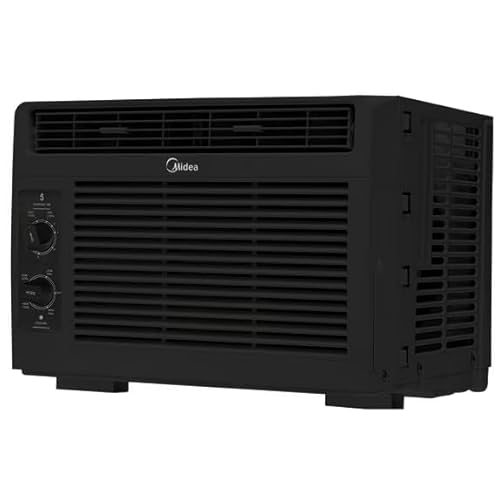
The most common choice for small apartments. Window units sit in a double-hung window and cool a single room efficiently. They are straightforward to install and remove, making them renter-friendly.
Best for: Standard double-hung windows, bedrooms, studios.
Explore air conditioning units for one room for more detail on single-room cooling.
Portable Air Conditioner
Rolling units that vent through a window via a hose. No permanent installation is required, and you can move them between rooms. They are slightly less efficient than window units because the hose introduces some heat leakage.
Best for: Renters who cannot install a window unit, rooms with casement or sliding windows.
See our guide on an air conditioner that does not need a window for alternatives.
Ductless Mini-Split
A wall-mounted indoor unit paired with an outdoor compressor. Mini-splits are quieter and more efficient than window or portable units, and they do not block a window. Installation requires drilling a small hole through a wall, so landlord approval is needed.
Best for: Long-term renters with permission, open-plan studios, apartments without suitable windows.
Compare options in our article on air conditioning options for homes without ductwork.
Through-the-Wall AC
Installed permanently into a wall sleeve. These units free up window space and are common in older apartment buildings that already have wall sleeves. They are not suitable for renters who cannot modify the wall.
Best for: Apartments with existing wall sleeves, long-term residents.
Floor-Mounted AC
A slim floor-standing unit that can be placed against a wall or in a corner. These are a good fit for rooms where window and wall space are limited. Some models double as heat pumps for year-round use.
Best for: Apartments with limited window access, modern interiors.
Smart / Wi-Fi Enabled AC
Many modern window, portable, and mini-split units include Wi-Fi control, scheduling, and energy monitoring. These features help you manage cooling remotely and reduce waste in a small space.
Best for: Tech-savvy renters, frequent travelers, energy-conscious households.
Learn more about Wi-Fi air conditioners and their practical benefits.
Renter-Friendly Installation Tips
Many leases restrict permanent modifications, and some buildings prohibit window units entirely for safety or aesthetic reasons. Before purchasing, confirm the following with your landlord or building management:
- Whether window units are allowed and if window brackets are required.
- Whether drilling into walls for a mini-split is permitted.
- Any restrictions on the type or size of outdoor equipment.
- Whether the building provides a wall sleeve for through-the-wall units.
If your window is an unusual style, you may need a specialized setup. For example, casement windows require a specific kit — see air conditioners for casement windows installation. Sliding windows present a different challenge; our guide on air conditioners that fit in sliding windows covers the options.
For window units that need extra stability without drilling, a window bracket with no drilling is a useful accessory.
Installation, Setup, and Maintenance
Correct installation matters as much as unit selection. A poorly sealed window unit leaks cool air and lets hot air in, forcing the compressor to work harder. Follow these practical steps:
- Seal the gaps: Use foam insulation strips or a window seal kit around the unit frame.
- Support the unit: Use a proper bracket or support so the unit does not sag or fall.
- Clean the filter: Wash or replace the filter every two to four weeks during peak season.
- Check the drain: Ensure condensation can drain away without pooling.
- Schedule a seasonal tune-up: A professional check keeps the unit efficient.
For a deeper maintenance routine, read our guide on air conditioner service and maintenance. If your unit has stopped performing as it should, our article on an air conditioner that stopped blowing cold air walks through common causes.
Energy Efficiency in Small Spaces
Small apartments can cool efficiently with the right habits and equipment. Look for units with a high SEER or CEER rating — these are more efficient in the long run. An ENERGY STAR certified unit is a solid benchmark for efficiency.
Practical habits that reduce energy use:
- Set the thermostat to the highest comfortable temperature (many people find 75–78°F comfortable).
- Use a fan alongside the AC to circulate cool air.
- Close blinds or curtains during peak sun hours.
- Keep the filter clean and the unit maintained.
- Seal gaps around windows and doors.
You can also review our guide on air conditioning and cooling for broader efficiency principles. If you want to understand the electrical load, our article on air conditioner watts explains what to expect.
Buying Checklist for Small Apartment AC Units
Use this checklist before you buy:
- Measure your room: Calculate square footage and note ceiling height.
- Identify your window type: Double-hung, casement, or sliding.
- Check your lease: Confirm what installation methods are allowed.
- Decide on portability: Will you move the unit between rooms?
- Consider noise: Bedroom units benefit from quieter operation.
- Look for efficiency ratings: SEER or CEER, and ENERGY STAR certification.
- Plan for maintenance: Filter access should be easy.
If you are comparing a full-house solution versus a single-room unit, our articles on air conditioning units for one room and air conditioning units for small spaces offer more context.
Common Mistakes to Avoid
- Oversizing the unit: A unit that is too large cools too fast and leaves humidity behind. Match BTU to square footage.
- Ignoring window type: Buying a window unit that does not fit your window style wastes time and effort.
- Skipping landlord approval: Unapproved installation can violate a lease.
- Neglecting filter cleaning: A clogged filter reduces airflow and efficiency.
- Blocking airflow: Do not place furniture directly in front of the unit.
- Ignoring strange noises: Unusual sounds often indicate a maintenance issue — see an air conditioner running constantly but not cooling.
Frequently Asked Questions
What size AC unit do I need for a 500 square foot apartment?
For a 500 square foot apartment, aim for roughly 14,000 to 18,000 BTU. If the unit is well insulated and not in a sunny top-floor location, a 14,000 BTU unit is usually sufficient. If the apartment has large west-facing windows or poor insulation, choose the higher end of the range. Always confirm the actual square footage and consider ceiling height.
Can I use a portable AC in a small apartment?
Yes. Portable AC units are popular in small apartments because they require no permanent installation. They vent through a window hose and can be moved between rooms. Keep in mind that portable units are generally slightly less efficient than window units, so choose a model with a high efficiency rating and ensure the window vent kit is sealed properly.
Are window AC units allowed in apartments?
It depends on your lease and building rules. Some buildings allow window units with proper brackets, while others prohibit them for safety or aesthetic reasons. Always check with your landlord or building management before buying or installing a window unit.
What is the quietest AC option for a small apartment?
Ductless mini-split systems are typically the quietest because the compressor is located outdoors. Among window and portable units, look for models that advertise low decibel levels — many mid-range and premium units operate below 50 dB, which is suitable for bedrooms.
How do I cool an apartment with casement windows?
Casement windows crank outward and do not accommodate standard window units. Options include portable AC units with a casement window vent kit, or a mini-split system. Our guide on air conditioners for casement windows installation explains the available kits and setups in detail.
How often should I clean the AC filter in a small apartment?
During peak cooling season, clean or replace the filter every two to four weeks. In a small apartment, dust and pet hair accumulate quickly. A clean filter maintains airflow and efficiency, and it helps prevent the unit from freezing up or short cycling.
Ready to Choose Your Apartment AC?
Browse our curated selection of air conditioning units suited for small apartments, studios, and one-bedroom layouts.
VIEW RECOMMENDATIONS