Air Duct and Dryer Vent Cleaning: The Complete Guide to Healthier Indoor Air
Discover why duct and dryer vent hygiene matters, learn the warning signs of a contaminated system, understand the professional cleaning process, and make a confident, informed decision before booking a service.
Why this topic matters: The ductwork in your home circulates thousands of cubic feet of air every day. When dust, lint, pet dander, and microbial growth accumulate inside those channels, the air you breathe pays the price. Dryer vents carry an entirely different risk: lint buildup is a leading contributor to residential dryer fires. Understanding both systems — and knowing when to call a professional — is one of the most practical steps any homeowner can take toward a safer, cleaner, and more efficient home.
If you have been searching for reliable information about air duct and dryer vent cleaning, you are likely in the research phase: you suspect your system needs attention, but you want to understand what the service actually involves, how often it should be performed, and what separates a thorough job from a superficial one. This guide walks through each of those questions in detail so that you can evaluate providers with confidence and move forward with a decision that protects both your family's health and your home's mechanical systems.
What Air Duct and Dryer Vent Cleaning Actually Involves
Air duct cleaning is the process of removing accumulated contaminants from the supply and return ductwork that distributes conditioned air throughout a home. A thorough service goes beyond a quick vacuum at the registers: it typically includes agitation of duct surfaces with specialized brushes or air whips, negative-pressure containment to prevent debris from escaping into living spaces, cleaning of the air handler and blower compartment, and often the evaporator coil as well. The goal is to restore the duct interior to a clean condition and to verify that airflow is unobstructed.
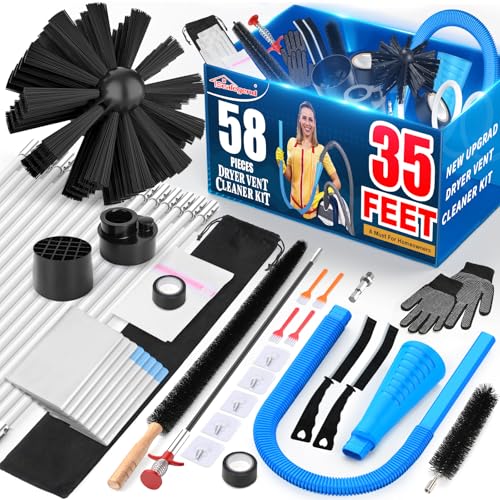
Dryer vent cleaning, by contrast, focuses on the exhaust pathway that carries hot, moist, lint-laden air from the dryer to the exterior of the home. Lint is highly combustible, and when it coats the interior of the vent run — especially in elbows, behind the dryer, and along the exterior termination — airflow is restricted and heat accumulates. A professional cleaning removes this lint with rotary brushes and high-powered vacuums, verifies the entire run from the dryer connection to the exterior hood, and confirms that the termination flap opens and closes freely. Because the two services address different systems, many homeowners book them together, and providers frequently offer a combined air duct cleaning and dryer vent cleaning package that covers both in a single visit.
Warning Signs Your Ducts and Vents Need Attention
Ductwork and dryer vents rarely announce their condition loudly. Instead, they send subtle signals that most homeowners overlook until a larger problem develops. The following indicators are the most reliable reasons to schedule an inspection.
Visible dust puffs
When the system starts and you see a cloud of dust emerge from supply registers, the duct interior is likely coated with debris.
Musty or stale odors
A persistent smell when the HVAC kicks on often points to microbial growth or accumulated organic material inside the ducts.
Uneven airflow
Rooms that never seem to cool or heat properly can indicate partial blockages or collapsed sections within the duct run.
Rapid dust return
If furniture is dusty again within days of cleaning, the duct system is likely reintroducing particles into the living space.
Allergy symptoms indoors
Worsening sneezing, congestion, or irritation while at home may reflect particle recirculation through contaminated ducts.
Dryer taking longer
Clothes that need two cycles to dry, or a dryer that feels hot to the touch, signal a restricted dryer vent.
For dryer vents specifically, additional red flags include a burning smell during operation, lint visible around the exterior termination hood, and a vent flap that no longer opens fully when the dryer runs. These conditions deserve prompt attention because restricted dryer vents are a documented fire hazard. If you notice any of these, an inspection through a qualified air duct vent cleaning provider is the appropriate next step.
Why Cleaning Matters: Health, Efficiency, and Safety
The case for regular duct and vent maintenance rests on three pillars: indoor air quality, system efficiency, and fire safety. Each is significant on its own, and together they make a compelling argument for scheduled professional service.
Indoor air quality and respiratory health
Modern homes are built tightly, which means a larger share of the air you breathe passes through the HVAC system repeatedly. Clean ducts reduce the reservoir of dust, pollen, pet dander, and microbial spores that can be recirculated into bedrooms, living areas, and workspaces. Households with allergy sufferers, asthma, young children, or elderly residents benefit most, but every occupant experiences cleaner air when the delivery system itself is clean.
System efficiency and equipment longevity
Restricted airflow forces the blower motor and compressor to work harder, which raises energy consumption and accelerates wear. Clean ductwork and an unobstructed air handler support the efficiency the equipment was designed to deliver. Regular air conditioning service and maintenance that includes duct inspection helps catch issues before they shorten the life of expensive components.
Dryer fire prevention
Dryer vent lint is a fuel source, and restricted airflow concentrates heat. Annual vent cleaning dramatically reduces this risk and is widely recommended by fire safety organizations. It also shortens drying times, which is a welcome side effect for any household.
The Practical Benefits of a Professional Cleaning
- Cleaner air throughout the home: Fewer particles are recirculated into living spaces, supporting easier breathing for sensitive occupants.
- More consistent room-to-room comfort: Clearing blockages restores balanced airflow so every room receives its intended share of conditioned air.
- Reduced strain on HVAC equipment: Unrestricted airflow lets the blower and coil operate closer to design specifications.
- Lower fire risk from dryer lint: A clean vent run removes the combustible material that causes dryer fires.
- Faster drying cycles: When the vent is clear, the dryer exhausts moist air efficiently and finishes loads more quickly.
- Better system diagnostics: A professional inspection often reveals leaks, disconnected joints, or pest intrusion that would otherwise go unnoticed.
- A documented maintenance record: Service records support warranty claims and demonstrate responsible homeownership.
What a Professional Duct and Vent Cleaning Visit Looks Like
Understanding the step-by-step process helps you evaluate bids and avoid providers who cut corners. A thorough job follows a recognizable sequence, and reputable technicians are happy to explain each stage.
- Assessment and airflow testing: The technician inspects accessible duct runs, the air handler, and the dryer vent pathway, often using a camera to document conditions before work begins.
- Containment setup: Negative-pressure equipment is connected to the system so that loosened debris is captured rather than released into the home.
- Agitation of duct surfaces: Rotary brushes, air whips, and compressed-air tools dislodge accumulated material from duct walls and fittings.
- High-powered vacuum extraction: A truck-mounted or high-capacity vacuum pulls the loosened debris out of the system and into a collection unit.
- Air handler and coil attention: The blower compartment and evaporator coil are cleaned as needed, since these components are part of the air path.
- Dryer vent cleaning: The vent run is cleared from the dryer connection to the exterior hood using rotary brushes and vacuum extraction, and the termination flap is verified.
- Final verification and documentation: The technician confirms airflow, reseals access points, and often provides before-and-after photos as part of the service record.
If your system also includes a boost component to improve distribution, that hardware should be inspected during the visit as well; see our notes on an air duct booster fan for context on how these components interact with duct hygiene. For homes where ductwork itself is aging or damaged, cleaning is often paired with air duct repair to seal leaks and restore integrity.
Comparing Service Tiers: What Different Providers Offer
Not every cleaning service is equivalent. Providers range from essential-tier maintenance crews to professional-grade specialists equipped with camera diagnostics and documented reporting. The table below summarizes the typical characteristics of each tier so you can match the service to your home's needs.
| Service Tier | Typical Scope | Best For |
|---|---|---|
| Essential tier | Register-level vacuuming, surface cleaning of accessible runs, basic dryer vent clearing. | Routine maintenance in homes with light buildup and no reported symptoms. |
| Balanced tier | Negative-pressure containment, rotary brush agitation, air handler cleaning, documented before-and-after photos. | Households with pets, mild allergy concerns, or a first professional cleaning in several years. |
| High-end tier | Full-system agitation and extraction, coil cleaning, camera inspection, airflow verification, and written reporting. | Homes with persistent dust, musty odors, recent renovations, or sensitive occupants. |
| Professional-grade | Comprehensive commercial-capacity equipment, multi-system documentation, microbial assessment, and remediation planning. | Larger homes, multi-zone systems, or properties with confirmed contamination concerns. |
Entry-level and mid-range offerings typically cover the basics competently, while high-end and professional-grade services add diagnostics and reporting that make it easier to track system condition over time. Choosing the right tier is less about the label and more about matching the scope to your home's actual condition — a conversation with the provider after an inspection is the best way to decide.
How Often Should You Schedule Cleaning?
Recommended intervals depend on household conditions rather than a single universal rule. The following guidelines reflect common professional practice:
- Air ducts: Every three to five years for typical households; more frequently for homes with pets, allergy sufferers, recent renovations, or visible mold growth.
- Dryer vents: At least once per year for every household; every six months for homes running many loads weekly or with long, winding vent runs.
- After major events: Schedule an inspection after water damage, pest intrusion, or a renovation that generated significant dust.
- When moving in: A cleaning and inspection before occupying a previously owned home establishes a known baseline.
Between professional visits, homeowners can support system hygiene by replacing filters on schedule, keeping registers unobstructed, and cleaning the lint screen after every dryer load. Our guide to choosing an air filter for HVAC system use explains how filter selection interacts with duct cleanliness and airflow.
How to Choose a Qualified Duct and Vent Cleaning Provider
Because the industry includes both meticulous specialists and quick-visit operators, vetting matters. Consider the following criteria when evaluating candidates:
- Credentials and insurance: Confirm that the company holds appropriate licensing and carries liability coverage.
- Equipment and process: Ask whether they use negative-pressure containment and rotary agitation, or only a shop vacuum at the registers.
- Camera inspection: Reputable providers document conditions before and after, often with photos or video.
- Clear scope of work: A written description of what will be cleaned — and what will not — prevents surprises.
- Verified reviews: Look for patterns in customer feedback rather than a single glowing or negative review.
- Willingness to answer questions: A technician who explains the process patiently is more likely to perform thorough work.
For homeowners who prefer to start with a visual assessment before committing to a full cleaning, an air duct inspection is a sensible first step. If you are also evaluating broader HVAC service needs, our resources on air conditioning service and repair and air conditioning technicians provide useful context on what to expect from qualified professionals.
DIY vs Professional Cleaning: Setting Realistic Expectations
Homeowners can and should handle certain maintenance tasks themselves: replacing filters, vacuuming registers, cleaning the lint screen, and wiping down accessible vent covers. These habits meaningfully reduce the rate at which contaminants accumulate. What DIY efforts cannot replicate, however, is the combination of containment, agitation, and extraction that defines a professional cleaning. Consumer-grade vacuums lack the airflow and filtration to pull debris from deep within duct runs, and inserting makeshift brushes can dislodge material without capturing it, temporarily worsening indoor air quality. For dryer vents, rigid and flexible runs with elbows are difficult to clear thoroughly without rotary equipment, and incomplete cleaning leaves the fire risk largely in place.
The practical division of labor is straightforward: routine surface maintenance at home, comprehensive cleaning and inspection by professionals on a scheduled basis. This combination delivers the best results for both air quality and safety.
Frequently Asked Questions
How often should air ducts be cleaned?
Most homes benefit from professional duct cleaning every three to five years. Homes with pets, allergy sufferers, recent renovations, or visible mold growth may need cleaning more frequently. A certified technician can confirm the right interval after an inspection.
How often should a dryer vent be cleaned?
A dryer vent should be cleaned at least once per year, and every six months for households that run multiple loads per week or have long, winding vent runs. Lint buildup is the leading cause of dryer fires, so annual cleaning is a basic safety measure.
What are the signs that ducts need cleaning?
Common signs include visible dust puffs from supply registers, musty odors when the HVAC system starts, uneven airflow between rooms, excessive dust on furniture shortly after cleaning, and worsening allergy symptoms while indoors.
Does duct cleaning really improve indoor air quality?
Cleaning removes accumulated dust, debris, pet hair, and microbial growth from the duct interior, which reduces the volume of particles that can be recirculated into living spaces. Combined with proper filtration and regular HVAC maintenance, it meaningfully supports healthier indoor air.
Ready to Compare Duct and Vent Cleaning Providers?
Explore our curated selection of professional-grade cleaning equipment and service-related products below to support a cleaner, safer home environment.
Explore Recommended Options