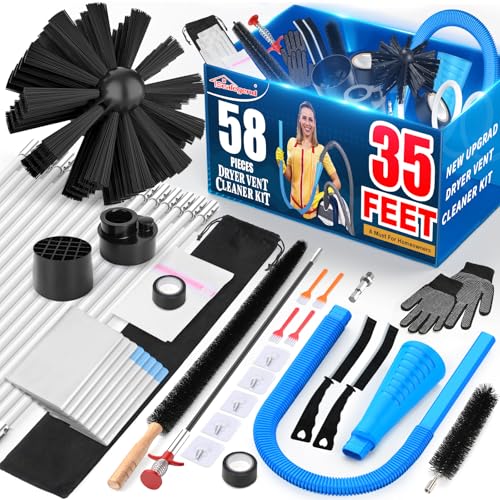
Air Duct Cleaning and Dryer Vent Cleaning: A Complete Guide
Discover why clean ductwork and a clear dryer vent matter for indoor air quality, energy efficiency, and fire safety — plus how the cleaning process works, when to schedule service, and how to keep your system healthy year-round.
START LEARNINGWhy Duct and Vent Cleaning Matters
Your home's ductwork is the circulatory system of the HVAC setup. Every time the system runs, air travels through supply and return ducts, carrying dust, pollen, pet dander, and fine particles along the way. Over time, those particles settle on duct walls, register grilles, and the blower compartment. A dryer vent faces a different but equally serious challenge: it carries hot, moisture-laden air and lint away from the dryer, and any buildup in that path restricts airflow and creates a fire risk.
Addressing both systems together is efficient because the same technician visit can cover the duct network and the dryer vent run. It also gives you a complete picture of your home's air movement. Homeowners who notice recurring dust or a dryer that takes multiple cycles to finish a load often find that professional cleaning restores performance without any equipment replacement.
Health and Comfort Benefits
- Reduced airborne dust, which is especially helpful for allergy and asthma sufferers.
- Fewer musty or stale odors when the HVAC system starts up.
- More consistent airflow from supply registers across every room.
- Cleaner surfaces on furniture and window sills because fewer particles are recirculated.
Efficiency and Safety Benefits
- Unrestricted airflow lets the blower work closer to its intended design, supporting efficient operation.
- A clear dryer vent shortens drying time and reduces wear on the dryer's heating element.
- Removing lint buildup in the dryer vent is one of the most effective ways to lower laundry fire risk.
- Routine inspections catch loose duct connections, pest entry points, and mold growth early.
How Air Duct Cleaning Works
Professional duct cleaning is a source-removal process, not a surface wipe-down. The goal is to dislodge contaminants throughout the duct network and capture them with high-powered vacuum equipment so they never re-enter the living space. A typical service starts with an inspection to map the layout, identify the number of supply and return runs, and check for disconnected joints or damaged flex duct.
Technicians then use specialized tools to reach every branch. Rotary brushes and air whips agitate dust from duct walls, while a negative-pressure vacuum connected to the main trunk keeps debris contained. Supply and return registers are removed, cleaned, and reinstalled. Finally, the technician confirms airflow and documents the work with before-and-after observations.
Equipment Used in Professional Duct Cleaning
| Equipment | Purpose |
|---|---|
| Negative-pressure vacuum | Creates suction at the main trunk so loosened debris is captured instead of drifting into rooms. |
| Rotary brush and cable system | Scrubs dust and buildup from the interior walls of rigid and flex duct runs. |
| Air whip and skipper ball | Uses compressed air to dislodge debris in branches and around fittings. |
| Inspection camera | Documents conditions inside the ductwork and verifies cleaning results. |
| HEPA filtration unit | Filters fine particles from the exhaust air stream for cleaner indoor air. |
What Is Included in a Standard Duct Cleaning Visit
- Initial walkthrough and airflow assessment.
- Protection of floors and furnishings near work areas.
- Removal and cleaning of supply and return grilles.
- Mechanical agitation of all accessible duct runs.
- Vacuum extraction with HEPA filtration.
- Cleaning of the blower compartment and accessible coil surfaces where included.
- Final inspection and a summary of findings.
For systems that also need mechanical attention, pairing duct cleaning with air conditioning service and maintenance keeps the entire air path in good condition. If your ductwork is damaged or poorly sealed, consider a review of air duct repair and air ductwork fundamentals before scheduling a deep clean.
How Dryer Vent Cleaning Works
A dryer vent is a simple path with a serious job: move hot, humid air and lint from the dryer to the outdoors. Lint is highly flammable, and when it accumulates in the vent run, the dryer works harder and the risk of a laundry fire rises. Cleaning the full vent run — not just the lint screen — is the essential maintenance step that many households overlook.
Professional dryer vent cleaning begins at the dryer connection and follows the duct to the exterior hood. Technicians use flexible rods with brush heads, plus vacuums and air pressure, to remove lint from the entire run. They also check the exterior flap for proper operation, confirm the duct material is appropriate, and measure airflow to verify the vent is clear.
Common Dryer Vent Problems
| Problem | What It Means |
|---|---|
| Long or winding vent run | More bends and length increase lint accumulation and reduce airflow. |
| Flexible foil or vinyl duct | Ridged interior surfaces trap lint; smooth rigid metal duct is preferred. |
| Crushed or disconnected duct | Restricts airflow and can release moist air into walls or crawl spaces. |
| Clogged exterior hood | Blocks exhaust and causes heat and moisture to back up into the dryer. |
| Lint behind the dryer | Indicates leakage at the connection and a buildup that needs removal. |
Warning Signs You Should Not Ignore
Ductwork and dryer vents rarely fail suddenly. They give warning signs that are easy to recognize once you know what to look for. Use the checklist below to decide whether it is time to schedule service.
Signs Your Air Ducts Need Cleaning
- Visible dust or debris blowing out of supply registers when the system starts.
- Musty, stale, or dusty odors each time the HVAC system turns on.
- Visible mold growth on or near registers, or on accessible duct surfaces.
- Pest activity — droppings, nesting material, or scratching sounds in the ducts.
- A noticeable increase in dust settling on furniture and surfaces within days of cleaning.
- Uneven airflow between rooms or weak airflow from registers.
- Recent renovation work that generated drywall dust and debris.
Signs Your Dryer Vent Needs Cleaning
- Clothes take longer than one cycle to dry, or loads feel damp at the end.
- The dryer or the laundry room feels unusually warm during operation.
- The exterior vent flap stays closed or shows very little airflow.
- Lint accumulates behind the dryer or around the vent hood.
- The dryer shuts off mid-cycle due to overheating safeguards.
- A burning smell or visible lint buildup in the vent run.
If you are also dealing with refrigerant issues or system faults, review air conditioning unit not cooling properly to rule out equipment problems before focusing on ductwork.
Step-by-Step Cleaning Process
Whether you hire a professional or handle light maintenance yourself, understanding the sequence helps you evaluate the work. A thorough service follows a logical order from inspection to verification.
1. Inspect
Map the duct layout and vent run, check for damage, and identify problem areas.
2. Prepare
Protect floors and furnishings, disconnect power where required, and set up containment.
3. Agitate
Use brushes, air whips, and rods to loosen dust and lint from interior surfaces.
4. Extract
Capture debris with negative-pressure vacuum and HEPA filtration.
5. Clean Components
Remove and clean registers, grilles, and the dryer vent hood.
6. Verify
Confirm airflow, inspect with a camera, and document results.
What Happens Before the Technician Arrives
- Clear access to registers, the air handler, and the dryer.
- Move fragile items away from work areas.
- Note any specific concerns, such as odors, uneven airflow, or slow drying.
- Have your service records available so the technician understands the system history.
For homes with central systems, this service pairs naturally with routine air conditioning unit cleaning and periodic air conditioning unit tune-up visits. If you need a service provider, start with a local search for air duct cleaning companies in my area or air duct cleaning services in my area.
DIY vs Professional Service
Some maintenance tasks are reasonable to handle yourself, while others require equipment and expertise that most homeowners do not have. The table below outlines a practical split.
| Task | Recommended Approach | Best For |
|---|---|---|
| Cleaning register grilles | DIY | Routine upkeep between professional visits |
| Replacing HVAC filters | DIY | Every household, on a regular schedule |
| Clearing lint screen and vent hood surface | DIY | Weekly habit for every laundry room |
| Full duct network cleaning | Professional | Whole-home systems with multiple branches |
| Dryer vent run cleaning | Professional | Long or concealed vent runs; safety-critical |
| Mold remediation in ductwork | Professional | Any confirmed microbial growth |
| Duct repair and resealing | Professional | Disconnected joints or damaged flex duct |
When choosing a provider, confirm insurance, ask about equipment, and request a written scope of work. Homeowners who want a broader service can also explore air duct cleaning and air conditioning combined visits, which address the air path and the cooling equipment in one appointment. For general system upkeep, the resources on air conditioning service and repair and air conditioning solutions are useful references.
How Often Should You Schedule Cleaning?
There is no single schedule that fits every home, but the guidance below covers most situations. Frequency depends on pets, occupancy, allergies, renovations, and the length of the dryer vent run.
| Household Situation | Suggested Duct Inspection | Suggested Dryer Vent Cleaning |
|---|---|---|
| Typical home, no pets | Every 2–3 years | Once per year |
| Homes with pets | Every 1–2 years | Every 6–12 months |
| Allergy or asthma sufferers | Every 1–2 years | Every 6–12 months |
| Recent renovation or construction | Immediately after work | As needed |
| Heavy laundry use (multiple loads daily) | Standard schedule | Every 6 months |
| Long or winding dryer vent run | Standard schedule | Every 6 months or as inspected |
If your system shows performance issues between scheduled visits, a diagnostic review of the equipment may be needed. Browse air conditioning repair companies or search for local air conditioning repair options to find qualified help.
Prevention and Maintenance Tips
Consistent small habits keep ductwork and dryer vents cleaner for longer and reduce the frequency of deep cleaning.
Air Duct Prevention
- Replace HVAC filters on schedule — typically every one to three months, more often with pets.
- Keep return grilles unobstructed by furniture, rugs, or curtains.
- Seal gaps around registers and duct joints to prevent attic or crawl space air from entering.
- During renovations, seal supply and return registers and turn off the system when possible.
- Schedule an air duct inspection if you notice odors or uneven airflow.
Dryer Vent Prevention
- Clean the lint screen before every load — this is the single most effective habit.
- Remove lint from behind and beneath the dryer regularly.
- Keep the exterior vent hood clear of lint, nests, and snow or debris.
- Use smooth rigid metal duct where possible instead of flexible foil or vinyl.
- Avoid overloading the dryer and use the correct cycle settings.
Frequently Asked Questions
How often should air ducts be cleaned?
Most homes benefit from an inspection every one to three years and cleaning when visible debris, mold, or a rodent problem is present. Homes with pets, allergies, recent renovations, or heavy occupancy may need attention more often.
How often should a dryer vent be cleaned?
Clean the lint screen before every load and clear the full vent run at least once a year. Households with long vent runs, multiple laundry loads per day, or pets may need cleaning every six months.
What are the signs that ducts need cleaning?
Watch for visible dust or debris blowing from supply registers, musty odors when the system starts, visible mold growth, pest activity, and unexplained rises in dust on furniture.
What are the warning signs of a clogged dryer vent?
Clothes take longer to dry, the dryer feels unusually hot to the touch, the outside vent flap stays closed or shows little airflow, and lint accumulates behind the dryer or around the vent hood.
Can I clean my own air ducts and dryer vent?
Light dryer vent maintenance and register cleaning are reasonable DIY tasks. Full duct cleaning involves specialized vacuum equipment, rotary brushes, and access tools, so a professional service is recommended for complete results.
Does duct cleaning help with allergies?
For households with allergy or asthma sufferers, reducing settled dust and contaminants in the duct network can improve comfort between professional filter changes. Results depend on the source of the allergens and overall system condition.
Is dryer vent cleaning really necessary for safety?
Yes. Lint is highly flammable, and a restricted vent can cause the dryer to overheat. Cleaning the full vent run and verifying exterior airflow is a core fire-prevention measure for any laundry room.
Ready to Improve Your Home's Air and Safety?
Whether you need a routine inspection, a full duct cleaning, or a dryer vent service, the right provider makes the process straightforward. Review the options below to compare features and find a service that fits your household.
Explore our recommended air duct and dryer vent cleaning solutions in the product section below.