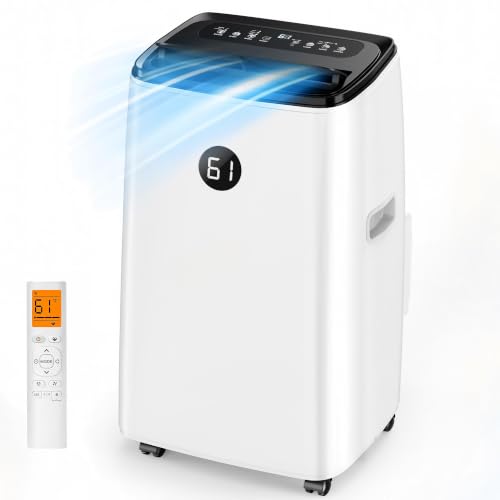
Portable AC Unit That Does Not Require Venting
Understand what a ventless portable cooling unit actually is, how it differs from a compressor-based portable AC, where it works well, and how to choose the right model for dry-climate spot cooling.
START WITH THE BASICSWho this guide is for: Shoppers who searched for a portable AC that does not require venting and are deciding between evaporative coolers, traditional hose-vented portable ACs, and other no-duct cooling options. Read the trade-offs, then compare the recommended models below with realistic expectations.
What Is a Portable AC Unit That Does Not Require Venting?
Strictly speaking, a compressor-based air conditioner cannot run without venting. A compressor AC absorbs heat from the room and must reject that heat somewhere. In a portable AC, the heat leaves through an exhaust hose routed to a window or wall opening. If you seal the hose, the unit dumps hot air back into the same room and efficiency collapses. That is why the phrase "portable AC that does not require venting" almost always refers to a different device: an evaporative cooler.
An evaporative portable cooler, sometimes called a swamp cooler, uses a water-soaked wick or cooling pad. A fan pulls room air across the wet pad, and evaporation absorbs heat from the air stream, lowering the temperature of the air that exits the unit. There is no compressor, no refrigerant, and no exhaust hose. The trade-off is that cooling capacity is modest and the process raises indoor humidity. For a full technical look at the category, see our guide on the ventless evaporative portable air conditioner.
No Exhaust Hose
No window kit and no hot-air exhaust. Place it where an outlet and water tank are convenient.
Evaporative Cooling
Air passes over a wet pad; evaporation lowers the air temperature in the airflow path.
Adds Humidity
The opposite of a compressor AC. Best for dry climates, not humid rooms.
Spot Cooling
Personal comfort near the unit rather than whole-room refrigeration.
Low Power Draw
No compressor means far lower electrical demand than a refrigerated portable AC.
Water Refills
The tank needs periodic refilling; ice packs can boost the initial cool-air burst.
How Evaporative Cooling Works
The core principle is simple: when water evaporates, it absorbs heat from its surroundings. In an evaporative cooler, a pump wets a honeycomb pad, and a fan draws warm dry air through the pad. The air gives up heat to the evaporating water, so the air leaving the unit is cooler and more humid than the air entering it. The effect is strongest when incoming air is dry and relative humidity is low.
If you want to understand the numbers, measure the room's humidity before you buy. Our explainer on what humidity level is good for a house sets the comfort baseline, and what humidity is supposed to be in your house clarifies the range. Evaporative coolers push indoor humidity upward, so they perform best in homes that already run dry and struggle with static and dryness.
Ventless Cooler vs Hose-Vented Portable AC
The most important buying decision is between these two categories. They share the word "portable" but behave very differently. Compare them side by side before committing:
| Feature | Ventless Evaporative Cooler | Hose-Vented Portable AC |
|---|---|---|
| Cooling method | Water evaporation | Refrigerant compressor |
| Exhaust required | No | Yes, through a window or wall |
| Effect on humidity | Raises indoor humidity | Lowers indoor humidity |
| Best climate | Dry, low-humidity regions | Most climates, including humid |
| Cooling strength | Modest spot cooling | Whole-room cooling in a defined space |
| Setup complexity | Fill tank and plug in | Install window kit and route hose |
| Power demand | Low, fan plus small pump | Higher, compressor-driven |
If you actually need refrigerated cooling but cannot use a window, review the options in portable AC unit that does not need a window and the various window-kit solutions such as the portable AC window panel, window vents for portable air conditioners, and the universal adjustable window sealing plate.
Who Should Buy a Ventless Portable Cooler?
Ventless evaporative coolers make sense in a specific set of situations. They are the right tool when the room is dry, the goal is personal comfort, and there is no easy way to route an exhaust hose.
- Dry-climate homes where indoor humidity is consistently low
- Garages, workshops, and patios where a hose would be impractical
- Bedside or desk-side spot cooling for one or two people
- Temporary setups where window kits are not allowed or not feasible
- Supplemental airflow during shoulder seasons before full AC season
Skip a ventless cooler if any of these apply:
- You live in a humid climate with consistently high indoor humidity
- You need to cool a sealed bedroom to a low setpoint overnight
- You have mold sensitivity or a humidity-sensitive space like a basement
- You need to lower the temperature of an entire room, not just the airflow path
For a small, humidity-sensitive space, a hose-vented unit with a proper window setup is often the better fit. Our guide on air conditioning units for small spaces and basement AC covers those scenarios. For a bedroom-specific plan, see bedroom air conditioner.
Capacity, Airflow, and Tank Size
Evaporative coolers are not rated in BTU the way compressor ACs are. Instead, look at airflow in cubic feet per minute (CFM), tank capacity, and the physical size of the airflow outlet. A higher CFM moves more air, which matters more than a headline "cooling power" figure. Match the unit to the space and to how close you will sit to it.
| Use Case | Airflow Range | Typical Tank Size |
|---|---|---|
| Desk or bedside personal cooling | Lower airflow, focused outlet | Small tank, frequent refills |
| Small room spot cooling | Medium airflow | Mid-size tank |
| Garage or workshop | Higher airflow | Large tank or continuous fill |
| Patio or outdoor covered area | High airflow | Large tank, hose-fill option preferred |
CFM and room volume interact, but evaporative cooling is directional. Two units aimed at seating positions can outperform one large unit aimed at the ceiling. For a broader sizing framework, see how to size an air conditioner and the BTU calculator by room size — useful context even though evaporative units are not BTU-rated.
Features That Matter on a Ventless Cooler
Two ventless coolers with similar specs can feel very different in daily use. Prioritize these features:
Adjustable Louvers
Directional airflow lets you aim cool air at the person who needs it rather than the wall.
Multiple Fan Speeds
Low speed for sleep, high speed for rapid spot cooling on demand.
Tank Capacity and Refill Ease
A removable tank or top-fill design saves time; a drain plug simplifies end-of-season storage.
Ice Compartment
Ice packs provide a short burst of colder air; useful for quick relief on hot afternoons.
Washable Cooling Pad
Removable pads are easier to clean and replace, which matters for long-term performance.
Timer and Remote
Scheduling and remote control improve usability for bedroom and office placement.
Low Noise on Low Speed
Fan noise dominates the experience. Check low-speed sound ratings if sleep is the goal.
Oscillation
Sweeping airflow distributes cooling across a wider area without repositioning the unit.
Placement and Usage Best Practices
Evaporative coolers reward thoughtful placement. Follow these guidelines to get the most comfort from a ventless unit:
- Place near an air exchange path. Crack a window or door so humid air can escape and dry air can enter.
- Aim at people, not empty space. The temperature drop is strongest in the airflow path.
- Keep the pad wet. Refill the tank before it runs dry; dry pads turn the unit into a plain fan.
- Use ice for short bursts. Ice packs help most in the first 30 to 60 minutes.
- Monitor humidity. If the room feels clammy or surfaces start to sweat, increase ventilation or reduce runtime.
- Clean the pad and tank regularly. Mineral buildup and biofilm reduce performance and can cause odors.
If humidity management becomes the limiting factor, a compressor-based unit with proper exhaust may be the better choice. Explore the related window exhaust for portable air conditioner and most efficient portable air conditioner guides before switching categories.
Installation Reality: No Hose, But Still Some Setup
Ventless coolers skip the window kit, but they are not entirely plug-and-play. Expect to fill the tank, position the unit, and manage cords. If the unit has a continuous drain option, route the drain line to a floor drain or outside so you do not have to empty the tank manually. Ice packs need freezer space between uses. Cooling pads need periodic cleaning or replacement.
For comparison, a hose-vented portable AC requires window kit installation and seasonal storage of the hose and panel. Our window-mounted air conditioning unit and air conditioning unit without external unit guides cover adjacent installation scenarios that readers often compare against ventless options.
Maintenance for Long-Term Performance
Evaporative coolers are simple machines, but they need routine care to keep working. The two highest-impact tasks are keeping the cooling pad clean and preventing standing water from becoming a breeding ground for odor-causing microbes.
- Rinse the tank and pad weekly during heavy use.
- Replace the cooling pad when it stiffens or visibly mineralizes.
- Dry the tank completely before seasonal storage.
- Check the pump intake for debris that can restrict water flow.
- Wipe exterior surfaces and clean the fan grille to maintain airflow.
If you notice unusual odors or reduced cooling, inspect the pad first. A saturated, mineral-clogged pad is the most common cause of poor performance. For seasonal routines that apply across cooling devices, see the seasonal AC checklist and the broader AC maintenance guide.
Related Alternatives Worth Comparing
Ventless evaporative cooling is one point on a spectrum. Depending on your constraints, these related options may fit better:
- Portable AC unit that does not need a window — compressor cooling with alternative exhaust routing.
- Ventless evaporative portable air conditioner — the category this guide covers, explained in more depth.
- Outdoor cooling system for humid climates — when the space is outdoor and humid.
- Vortex cooling — a different approach to spot cooling in open spaces.
- Air purifier — for readers whose real need is air quality rather than cooling.
- Air to water heat pump — for whole-home systems rather than portable spot cooling.
If whole-room cooling is the actual requirement and the only obstacle is the window, review window air conditioner for sliding windows, window air conditioner for sliding glass door, and window air conditioner for sideways windows before settling for weaker spot cooling.
A Practical Buying Checklist
- Confirm your climate is dry enough. Check indoor humidity first; ventless coolers underperform in humid rooms.
- Decide spot cooling vs room cooling. Ventless units are spot-cooling devices; compressor units are for whole-room cooling.
- Match airflow to the person, not the room. Directional airflow and adjustable speeds matter more than a big nominal rating.
- Check tank size and refill method. A removable top-fill tank saves time daily.
- Look for a washable pad. Easier maintenance means better long-term performance.
- Confirm low-speed noise. Especially important for bedrooms and shared spaces.
- Plan ventilation. Crack a window or door so humid air can leave the room.
Frequently Asked Questions
Is there a portable AC unit that does not require venting?
Yes, but it is not a compressor-based air conditioner. Ventless portable units are evaporative coolers, also called swamp coolers. They cool by moving air across a wet wick or pad, so they add moisture instead of removing it and do not need a window exhaust hose.
Do ventless portable coolers work in humid climates?
Evaporative cooling relies on dry air to absorb moisture. In humid climates, the air is already saturated and the cooling effect drops sharply. Ventless evaporative units are best suited to dry, low-humidity environments.
What is the difference between a ventless cooler and a portable air conditioner?
A portable air conditioner uses a refrigerant compressor and must exhaust hot air outside through a window hose. A ventless evaporative cooler has no compressor and no exhaust; it uses water evaporation to lower air temperature by a few degrees while raising humidity.
How much cooling can I expect from a ventless portable cooler?
Expect a modest temperature drop of a few degrees in the immediate airflow path, not whole-room refrigeration. Ventless coolers are spot-cooling devices for personal comfort near the unit, not substitutes for a compressor-based AC in a closed room.
Can I use a ventless portable cooler in a closed bedroom?
Evaporative coolers raise indoor humidity and work best with ventilation. In a closed room, humidity climbs quickly and comfort can decline. Crack a window or door to allow air exchange and monitor indoor humidity levels.
Ready to Compare Ventless Portable Cooler Options?
Browse the recommended ventless portable cooling units below, filtered for evaporative coolers that do not require venting, and check availability on the retailer page.
VIEW RECOMMENDED MODELS