
Air Conditioning Unit 8000 BTU: Complete Sizing and Buying Guide
An 8000 BTU air conditioning unit is one of the most versatile capacities for medium-sized rooms. This guide explains what it can cool, how it compares across window, portable, and mini-split formats, and how to choose the right unit for your space.
Check Room SizingWhat 8000 BTU Means
BTU stands for British Thermal Unit. An 8000 BTU air conditioning unit removes 8,000 BTU of heat from a room per hour. That places it squarely in the medium-capacity segment of the cooling market, between the small-room 5000-6000 BTU class and the larger-room 12,000 BTU class.
For a homeowner or renter, 8000 BTU is often the sweet spot for bedrooms, medium living rooms, and home offices. It is large enough to cool a real room but small enough to install without major electrical work in most homes.
Understanding how the cooling cycle works helps when comparing units. Our explanation of the AC refrigerant cycle covers the evaporator, condenser, and compressor roles in plain language.
Room Sizing and Capacity
An 8000 BTU unit is generally sized for rooms of about 250 to 350 square feet, but the range is a starting point rather than a hard rule.
| Room Size | Typical BTU Range | 8000 BTU Fit | Notes |
|---|---|---|---|
| Up to 200 sq ft | 6,000 - 8,000 BTU | Generous fit | Bedrooms, home offices, small studies |
| 200 - 350 sq ft | 8,000 - 10,000 BTU | Excellent fit | Medium living rooms, larger bedrooms |
| 350 - 450 sq ft | 10,000 - 12,000 BTU | Marginal fit | May struggle with sun load or high occupancy |
| 450+ sq ft | 12,000+ BTU | Not recommended | Undersized for the space |
Factors That Shift the Sizing
- Ceiling height: Rooms taller than 8 feet hold more air and need more capacity.
- Sun exposure: A west-facing room with afternoon sun can need one size larger.
- Insulation and window quality: Older single-pane windows and poor insulation increase heat gain.
- Occupancy: Each person adds heat load. A family room used by several people at once runs warmer.
- Appliances and electronics: Kitchens, home offices with multiple monitors, and rooms with gaming PCs run hotter.
- Open floor plans: Rooms that connect openly to a kitchen or hallway effectively have a larger area to cool.
If you are comparing 8000 BTU with the smaller 6000 BTU class, our overview of a 6000 BTU air conditioner window unit explains where that capacity fits and when the step up to 8000 BTU becomes worthwhile.
Unit Types Compared
8000 BTU cooling capacity is available in several form factors. Each has trade-offs in installation, noise, and cost of ownership.
| Unit Type | Tier | Best For | Key Characteristics |
|---|---|---|---|
| Window AC | Essential tier | Standard bedrooms and living rooms with double-hung windows | Simple install, reliable, no floor space used, may be noisy |
| Portable AC | Essential tier | Renters, rooms with non-standard windows | Moves between rooms, needs window venting, takes floor space |
| Mini-split | Balanced tier | Permanent installations, quiet operation | Wall-mounted indoor unit, quiet, efficient, professional install |
| Through-the-wall AC | Balanced tier | Buildings with existing wall sleeves | Permanent installation, frees window, requires wall sleeve |
Window AC
Window units are the most common and simplest format. They mount in a window frame and plug into a standard household outlet. For a medium room where the window configuration allows it, a window 8000 BTU unit is the most straightforward choice. The guide on a window-mounted air conditioning unit explains the installation and sealing details.
Portable AC
Portable units roll on casters and vent through a window using a hose kit. They are useful for renters, rooms with casement or awning windows, and spaces where a window unit would be impractical. The trade-off is floor space, noise, and slightly lower efficiency. The most efficient portable air conditioner overview explains what to look for.
Mini-Split
A mini-split uses a wall-mounted indoor unit connected to an outdoor condenser. They are the quietest and most efficient option at this capacity, but require professional installation. The 24000 BTU mini-split guide covers how the system scales up for larger spaces; the principles at 8000 BTU are the same. The mini-split air conditioning units for sale overview explains what to check before buying.
Through-the-Wall AC
These units mount through an exterior wall rather than a window. They are common in hotels and apartments with wall sleeves. Installation is more involved than a window unit but less flexible than a mini-split.
Efficiency Ratings
Efficiency determines how much cooling you get from each unit of electricity. At 8000 BTU, efficiency differences between units can be significant over a full season.
CEER and EER
Window AC units are rated using CEER (Combined Energy Efficiency Ratio). Higher numbers mean better efficiency. For an 8000 BTU unit, the CEER rating is a reliable way to compare models at a glance.
SEER for Mini-Splits
Mini-split heat pumps and AC-only units use SEER2 ratings in the U.S. Higher SEER2 means better efficiency. The guide on what is a SEER rating explains the scale, and SEER vs SEER2 covers the updated DOE standards.
ENERGY STAR
ENERGY STAR certification indicates the unit meets a defined efficiency threshold. Certified 8000 BTU units are typically more efficient than the minimum standard and may qualify for local rebates.
Efficiency in Practice
A more efficient unit uses less electricity for the same cooling output. The savings depend on runtime, local electricity rates, and the difference between the units being compared. The window air conditioner energy efficiency rating overview goes deeper into how ratings translate to real-world behavior.
Installation and Electrical
Installation requirements vary by unit type. The window and portable formats are the most accessible; mini-splits and through-the-wall units are professional installations.
Window Unit Installation
- Window type: Double-hung windows are the standard fit. Sliding windows require a sash kit or a different approach, as covered in the window air conditioner for sliding windows guide.
- Window width and height: Check the manufacturer's minimum and maximum opening requirements.
- Support bracket: Most manufacturers include an L-bracket or support bracket that attaches to the exterior wall. Use it.
- Sealing: Weatherstripping and foam insulation along the sash reduce air leaks.
Portable Unit Installation
- Vent kit: The unit must exhaust hot air through a window. The window exhaust for portable air conditioner guide covers the sealing and hose routing details.
- Window panel: A rigid panel or fabric kit seals the opening around the hose. The window panel for portable air conditioner overview explains the options.
Mini-Split Installation
Mini-splits require refrigerant line routing, electrical connections, and vacuum evacuation. This is not a DIY task. The cost structure of a mini-split installation is different from a window unit, and the ductless mini-split air conditioner installation cost overview explains the factors that drive it.
Electrical Requirements
Most 8000 BTU window units run on 115 volts and draw around 7 to 9 amps. They typically plug into a standard 15-amp circuit. Confirm the nameplate rating and required circuit size before installation. Avoid extension cords and power strips.
If the room's circuit is shared with other appliances, a dedicated circuit may be needed. The AC electrical problems guide explains what tripping breakers and voltage issues can indicate.
Noise and Comfort Features
Noise matters more at 8000 BTU than at smaller capacities because the unit runs longer and moves more air. For bedrooms and home offices, noise should be part of the comparison.
Typical Noise Levels
Window units at 8000 BTU generally run in the 50 to 60 decibel range on high fan speed. On low speed, many units drop into the high 40s. Mini-splits are noticeably quieter, often running in the 20 to 40 decibel range.
Features That Improve Comfort
- Multiple fan speeds: Lets you balance cooling against noise.
- Sleep mode: Reduces fan speed and adjusts temperature overnight.
- Programmable timer: Schedules start and stop times.
- Energy saver mode: Cycles the fan with the compressor.
- Four-way air direction: Adjusts airflow direction.
- Smart controls: Wi-Fi and app control for remote operation.
Humidity Control
At 8000 BTU, humidity control becomes more important because the unit can handle a real room. A properly sized unit that runs long enough removes moisture effectively. Oversized units cool quickly but leave the room clammy. Our guide on what humidity level is good for a house explains target ranges.
Maintenance and Longevity
An 8000 BTU unit is simple hardware, but it still needs regular care to run efficiently and last through its expected service life.
Filter Cleaning
Clean the filter every two to four weeks during heavy use. A clogged filter reduces airflow and forces the compressor to work harder. Most filters are washable; rinse with warm water and let them dry fully before reinstalling.
Coil Cleaning
Both the indoor evaporator coil and the outdoor condenser coil collect dust and debris. The indoor coil is usually accessible after removing the front grille and filter. The outdoor coil may need to be cleaned with a coil cleaner and a soft brush. Turn off power before cleaning.
Seasonal Care
- Spring: Clean filters, inspect coils, check the seal around the window, confirm the bracket is secure.
- Summer: Clean filters frequently and watch for water dripping inside, which can indicate a blocked drain.
- Fall: Remove the unit or cover it for the winter. Leaving a window unit installed year-round increases heat loss and can damage the unit.
The AC maintenance guide covers the broader schedule. When something seems off, the things to check when AC is not cooling guide helps narrow down the cause.
When to Repair vs Replace
Repairs usually make sense for isolated failures such as a capacitor, thermostat, or fan motor. Replacement is often the better path when the unit is near the end of its service life, has a refrigerant leak, or has repeated failures.
How to Choose the Right 8000 BTU Model
Once you have confirmed that 8000 BTU is the right capacity for the room, the buying decision narrows to a handful of practical factors.
Product Tiers
| Tier | Best For | Key Characteristics |
|---|---|---|
| Essential tier | Basic cooling, occasional use, renters | Mechanical controls, standard efficiency, simple install |
| Balanced tier | Regular bedroom or living room use | Digital controls, remote, energy saver mode, better efficiency |
| High-end tier | Quiet operation, smart controls, long-term use | Inverter compressor, Wi-Fi, low-noise design, highest efficiency |
Decision Checklist
Before You Buy
- Confirm room size is within the 250 to 350 square foot range
- Measure window or wall opening against unit requirements
- Check the CEER or SEER2 rating and ENERGY STAR status
- Confirm the plug type and circuit requirements match your home
- Read noise specifications if the room is a bedroom
- Decide between mechanical, digital, or smart controls
- Verify the included mounting hardware and window kit
- Check warranty coverage for the compressor and sealed system
If you are comparing this capacity with the smaller 8000 BTU class entry point, our overview of an 8000 to 10000 BTU AC explains how the range is usually positioned. For rooms that are consistently above 350 square feet, the next step up is covered in the 12000 to 14000 BTU AC guide.
Frequently Asked Questions
What size room does an 8000 BTU air conditioner cool?
An 8000 BTU air conditioner typically cools a room of about 250 to 350 square feet, depending on ceiling height, insulation, sun exposure, occupancy, and heat-generating appliances.
Is 8000 BTU enough for a living room?
For a living room under 350 square feet with standard ceiling height and moderate sun exposure, an 8000 BTU unit is usually sufficient. Larger living rooms or open floor plans may need 10,000 BTU or more.
What is the difference between 8000 BTU window, portable, and mini-split units?
Window units mount in a window frame and are the simplest option. Portable units roll between rooms but need a window vent and take up floor space. Mini-split units mount on a wall and are quieter and more efficient but require professional installation.
How many amps does an 8000 BTU air conditioner use?
Most 8000 BTU window units draw around 7 to 9 amps at 115 volts. Portable units may draw slightly more. Always confirm the nameplate rating and required circuit size before installation.
Can an 8000 BTU air conditioner cool two rooms?
Only if the rooms are connected and the total area is within the unit's capacity. A single 8000 BTU unit is usually not enough for two separate rooms. Use a multi-zone mini-split or separate units for independent rooms.
Can I use an 8000 BTU window unit in a sliding window?
Standard window units are designed for double-hung windows. Sliding windows require a sash kit or a different mounting approach. Our guide to a window air conditioner for sliding glass door covers related setups for larger openings.
How often should I clean the filter on an 8000 BTU unit?
Clean the filter every two to four weeks during heavy use. A clogged filter reduces airflow and efficiency, and it can cause the evaporator coil to freeze. The AC frozen coils solution guide explains what happens when airflow is restricted.
Bottom Line
An 8000 BTU air conditioning unit is the right choice for many medium-sized rooms where a smaller unit would struggle and a larger unit would be overkill. The key is to match capacity to the actual room load, choose a unit type that fits the installation constraints, and prioritize efficiency and noise for the way the room is used.
Once installed, regular filter cleaning and seasonal maintenance keep the unit running efficiently for years. For rooms with unique window configurations, the window air conditioner for sideways windows guide covers the cases where a standard window unit will not fit.
For a room that fits the 8000 BTU class, this is one of the most reliable and well-understood cooling choices available.
Recommended 8000 BTU Air Conditioning Units
⚠️ AFFILIATE DISCLOSURE: This website contains affiliate links. As an Amazon Associate, we earn from qualifying purchases. If you make a purchase through these links, we may receive a small commission at no additional cost to you. Read our full affiliate policy.

Midea 8,000 BTU Smart Inverter Air Conditioner Window Unit with Heat and Dehumidifier – Cools up to 350 Sq. Ft., Energy Star Rated, Quiet Operation, Electronic Controls, Remote Control, White
Check price on Amazon
ROVSUN 8000 BTU Air Conditioner Window Unit with Heat, 4-in-1 Window AC Unit Cooler, Heater, Dehumidifier & Fan with Timer, Remote Control & Installation Kit for Rooms up to 350 Sq. Ft, 115V/60Hz
Check price on Amazon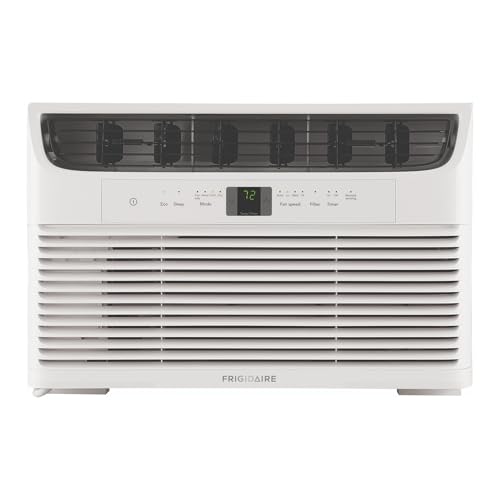
Frigidaire 8,000 BTU Window Air Conditioner with Remote Control, Cools Up to 350 Sq. Ft., Quiet Operation, Eco Mode, 3 Fan Speeds, Auto Restart, White
Check price on Amazon
LG 8,000 Window Air Conditioner, 115V, 350 Sq.Ft. (14' x 25' Room Size), Quiet Operation, Electronic Control with Remote, 3 Cooling & Fan Speeds, Auto Restart, 8000 BTU, White
Check price on Amazon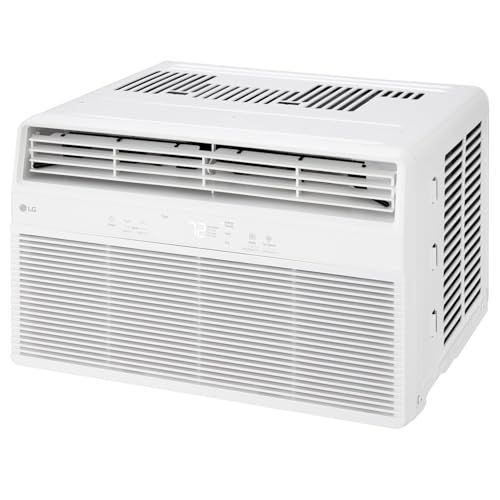
LG 8,000 BTU Window Air Conditioner with Dehumidifier, 115V | 115V, Dehumidifier, Remote Control, 24H Timer, Auto-Restart, for Rooms up to 350 Sq.Ft.
Check price on Amazon
Bonnlo 8,000 BTU Inverter Window Air Conditioner with Heat, WiFi Enabled Window AC Unit Works with Alexa & Google Assistant, Quiet Operation & Easy Install Kit for Rooms up to 350 Sq Ft, 115V / 60HZ
Check price on Amazon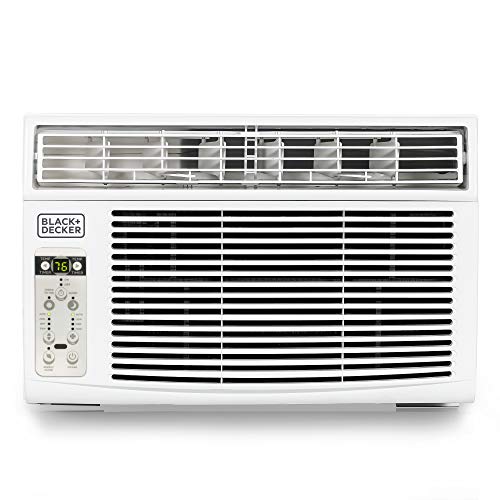
BLACK+DECKER Window Air Conditioner 8000 BTU, BD08WT6, White | AC Window Unit Cools Up to 350 Square Feet, AC Unit with Remote Control, 3 Cooling Speeds and Fan Only Function, 12.2 CEER
Check price on Amazon