Central Air Not Cooling to Set Temperature
Your thermostat says 72°F, but the house feels like 82°F. Discover the most common reasons a central air system fails to reach its set temperature—and learn which fixes you can handle yourself versus when to call a professional.
START DIAGNOSINGQuick Answer: When central air runs continuously but never reaches the set temperature, the most frequent culprits are a clogged air filter, dirty condenser coils, low refrigerant charge, thermostat misconfiguration, or ductwork leaks. Start with the simplest checks—filter, thermostat, and outdoor unit—before suspecting mechanical failure.
Understanding the Problem: Running vs. Cooling
A central air conditioner that runs is not necessarily an air conditioner that cools effectively. The system may be operating—blower fan spinning, outdoor unit humming—yet still fail to bring indoor temperatures down to the thermostat setpoint. This distinction matters because it narrows the diagnostic path considerably.
When a system cannot reach its set temperature, the issue typically falls into one of five categories: airflow restriction, refrigerant problems, thermostat or control issues, ductwork inefficiency, or equipment sizing and age. Each category produces different symptoms and requires a different approach.
Before diving into individual causes, it helps to understand how a central air system is supposed to work. If you are unfamiliar with the components involved, our overview of the central air conditioning system explains the roles of the compressor, condenser, evaporator, and air handler. Understanding these parts makes troubleshooting far more intuitive.
Diagnostic Tip: Measure the temperature difference between the air going into the return vent and the air coming out of a supply register. A healthy system should produce a difference of 15–20°F. If the difference is smaller, the system is not cooling efficiently. If it is larger or the coil is frozen, airflow is likely restricted.
Most Common Causes and How to Address Them
1. Clogged or Dirty Air Filter
This is the single most common reason a central air system struggles to cool. A dirty filter restricts airflow across the evaporator coil, reducing the system's ability to absorb heat from the indoor air. In severe cases, restricted airflow causes the evaporator coil to freeze, which completely stops cooling.
- Check: Remove the filter and hold it up to light. If you cannot see through it, replace it.
- Fix: Replace with a filter of the correct size and MERV rating. For most homes, MERV 8–11 is appropriate. Higher MERV filters restrict more airflow and may require system adjustments.
- Prevention: Check monthly during cooling season and replace every 1–3 months depending on household conditions (pets, dust, allergies).
2. Dirty Condenser Coils
The outdoor condenser coil releases heat absorbed from your home. When it is coated with dirt, leaves, or grass clippings, heat transfer becomes inefficient and the system cannot cool effectively. This is especially common after spring pollen season or if the outdoor unit sits near trees or a dryer vent.
- Check: Visually inspect the outdoor unit's fins. Look for visible debris, bent fins, or a layer of grime.
- Fix: Gently rinse the coils with a garden hose (power off the unit first). For heavy buildup, a professional coil cleaning may be needed.
- Prevention: Keep a 2-foot clearance around the outdoor unit and trim vegetation back.
3. Refrigerant Leak or Low Charge
Refrigerant is the working fluid that transfers heat from indoors to outdoors. If the system has a leak, the refrigerant charge drops and cooling capacity declines. A system that is low on refrigerant will run continuously without reaching the set temperature, and the indoor coil may freeze.
- Check: Look for ice on the copper lines near the indoor air handler. Ice formation is a strong indicator of low refrigerant or restricted airflow.
- Fix: This requires a licensed HVAC technician. Refrigerant cannot be added without first locating and repairing the leak. Simply topping off without fixing the leak is a temporary and environmentally harmful solution.
If you suspect refrigerant issues, see our guide on central air conditioner freon refill for what to expect during service.
4. Thermostat Problems
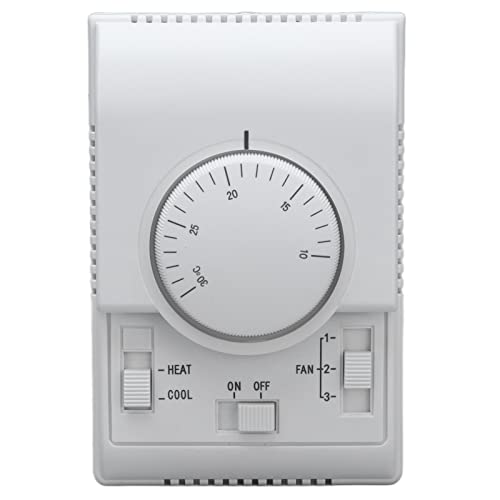
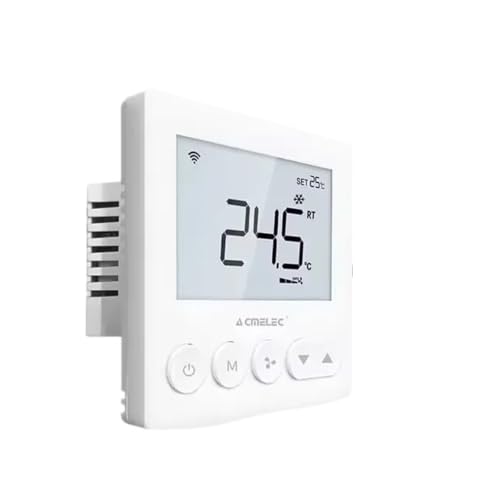
Sometimes the air conditioner is working perfectly—the thermostat is the problem. Misconfigured settings, a failing sensor, or a thermostat placed in a poor location can cause the system to cycle incorrectly or not run long enough to reach the set temperature.
- Check: Verify the thermostat is set to "Cool" and "Auto" (not "Fan On"). Ensure the set temperature is at least 3°F below the current room temperature. Check that the thermostat is not in direct sunlight or near a heat source.
- Fix: Replace batteries if applicable. Recalibrate or replace the thermostat if it appears inaccurate. A smart thermostat with remote sensors can help balance temperatures across rooms.
For a deeper look at thermostat-related issues, our article on the central air conditioner thermostat covers wiring, calibration, and replacement guidance.
5. Ductwork Leaks and Insulation Problems
Ductwork that leaks conditioned air into the attic, crawlspace, or garage wastes cooling capacity. In many homes, 20–30% of conditioned air is lost through duct leaks. Poorly insulated ducts in hot attics can also gain heat before the air reaches the registers.
- Check: Look for disconnected joints, torn insulation, or visible gaps at duct connections. Feel for air escaping at seams while the system runs.
- Fix: Seal leaks with mastic or metal-backed tape (not standard duct tape). Insulate ducts in unconditioned spaces.
6. Undersized System or Extreme Heat
An undersized system will struggle to maintain indoor temperatures during peak summer heat, especially in poorly insulated homes. Similarly, a system that is correctly sized for normal conditions may not keep up during a sustained heat wave.
- Check: Compare your system's capacity to the square footage it serves. Our guide on how to size an air conditioner provides sizing guidance.
- Fix: If the system is consistently undersized, consider a replacement with an appropriately sized unit. In the short term, reduce heat gain by closing blinds, using ceiling fans, and avoiding heat-generating appliances during peak hours.
7. Blower or Air Handler Issues
A weak blower motor, failing capacitor, or dirty blower wheel reduces the volume of air moving through the system. Low airflow means less heat is absorbed from your home, and the system cannot reach the set temperature.
- Check: Listen for unusual sounds from the indoor unit. Feel airflow at registers—if it is weak across all vents, the blower may be the issue.
- Fix: A professional should inspect the blower motor, capacitor, and wheel. DIY repair of blower components is not recommended due to electrical hazards.
8. Failing Compressor or Capacitor
The compressor is the heart of the air conditioner. A failing compressor or a weak run capacitor will prevent the system from cooling effectively. Capacitors are a common failure point and are relatively straightforward for a technician to replace.
- Check: The outdoor unit may hum but not start, or may start and stop repeatedly. The fan may run while the compressor does not.
- Fix: Call a licensed technician. Compressor and capacitor work involves high-voltage electrical components and refrigerant handling.
| Symptom | Likely Cause | Tier of Fix | Who Should Handle |
|---|---|---|---|
| Weak airflow at all registers | Dirty filter, blower issue | Essential tier | DIY (filter) / Technician (blower) |
| System runs continuously, never reaches setpoint | Low refrigerant, undersized system | Mid-tier to high-end tier | Licensed HVAC technician |
| Ice on indoor copper lines | Low refrigerant or restricted airflow | Mid-tier | Technician (refrigerant) / DIY (filter) |
| Outdoor unit fan not spinning | Failed capacitor or motor | Mid-tier | Licensed technician |
| Some rooms cool, others do not | Duct leaks, balancing issues | Essential to mid-tier | DIY (basic sealing) / Technician (balancing) |
| Thermostat reading inaccurate | Thermostat calibration or placement | Essential tier | DIY |
Systematic Troubleshooting: Step by Step
Before calling a technician, work through these steps in order. They are arranged from simplest and least intrusive to more involved. If at any point the problem appears to involve refrigerant, electrical components, or the compressor, stop and call a professional.
- Verify the thermostat. Confirm the mode is "Cool," the fan is on "Auto," and the set temperature is at least 3°F below room temperature. Replace batteries if the display is dim or unresponsive.
- Check the air filter. Replace if dirty. This takes a minute and resolves a surprising number of cooling complaints.
- Inspect the outdoor unit. Ensure it is running (both the fan and the compressor should be operating). Clear debris from around the unit and rinse the coils if visibly dirty.
- Check the electrical panel. Look for a tripped breaker for the outdoor unit or air handler. If a breaker trips repeatedly, do not reset it again—call a technician.
- Look for ice. Check the indoor copper lines and the evaporator coil access panel for ice. If ice is present, turn the system off (fan only or off) and let it thaw before further troubleshooting.
- Measure temperature split. Use a thermometer at a return vent and a supply register. A difference of 15–20°F indicates the system is cooling; a smaller difference suggests a problem.
- Check for duct leaks. Inspect visible ductwork in the attic, basement, or crawlspace for disconnected joints or torn insulation.
If these steps do not resolve the issue, the problem likely requires professional diagnosis. Refrigerant pressure testing, electrical component testing, and compressor evaluation are not DIY tasks.
Related Cooling Problems
If your system is running but not producing cold air at all, or if it has stopped working entirely, these guides cover related symptoms:
Not Cooling Enough Running But Not Cooling Not Blowing Cold Air
When to Call a Professional
Some problems are safe to handle yourself; others are not. Call a licensed HVAC technician if you observe any of the following:
- Ice on the refrigerant lines or indoor coil that returns after thawing—this indicates a refrigerant leak or a persistent airflow problem.
- Loud or unusual noises from the outdoor unit, such as grinding, screeching, or repeated clicking.
- The compressor does not start even though the outdoor fan runs.
- Water leaking from the indoor unit or condensate line.
- Burning smells or scorch marks near electrical components.
- Repeated breaker trips for the AC circuit.
- Refrigerant-related concerns—any work involving refrigerant lines, valves, or charging must be performed by an EPA-certified technician.
Delaying professional service on refrigerant or compressor issues can lead to more extensive damage and a shorter system lifespan. If you are unsure whether a problem is serious, it is always safer to have a technician diagnose it. Our guide on central air conditioning repair explains what to expect during a service call.
Preventive Maintenance to Avoid Future Cooling Problems
Most cooling failures are preventable with routine maintenance. A well-maintained system reaches its set temperature more reliably, runs more efficiently, and lasts longer.
- Replace air filters regularly. Monthly inspection during cooling season; replace every 1–3 months based on household conditions.
- Schedule annual professional maintenance. A spring tune-up includes coil cleaning, refrigerant charge verification, electrical inspection, and condensate drain clearing. Our article on central air conditioning system maintenance covers what a proper tune-up includes.
- Keep the outdoor unit clear. Maintain 2 feet of clearance on all sides. Remove leaves, grass clippings, and debris from the top and sides.
- Seal and insulate ducts. Check visible ductwork annually for leaks and insulation damage.
- Use a programmable or smart thermostat. Proper scheduling reduces runtime and wear while maintaining comfort.
- Address small issues early. A slightly weak airflow or an occasional unusual noise is easier and less disruptive to fix before it becomes a full failure.
Maintenance Reminder: If your system is more than 10–12 years old and requires frequent repairs, it may be more practical to replace it with a modern, higher-efficiency unit. Our guide on central air conditioner replacement covers the factors to consider.
Frequently Asked Questions
Why does my central air run all day but never reach the set temperature?
Continuous runtime without reaching the setpoint usually points to restricted airflow (dirty filter, blocked coil), low refrigerant charge, a failing compressor, or an undersized system. Start by checking the filter and thermostat settings. If those are correct, a professional diagnosis is needed to test refrigerant pressure and electrical components.
Can a dirty filter really prevent my AC from reaching the set temperature?
Yes. A severely clogged filter restricts airflow across the evaporator coil, reducing heat absorption and, in many cases, causing the coil to freeze. A frozen coil cannot cool air at all, so the system runs without effect. Replacing the filter is the first and simplest troubleshooting step for any cooling complaint.
How do I know if my central air is low on refrigerant?
Common signs include ice formation on the indoor copper lines, a system that runs continuously without cooling effectively, and a hissing or bubbling sound near the refrigerant lines. Only a licensed technician can confirm low refrigerant with pressure gauges and locate the leak. Refrigerant is not consumed during normal operation—if it is low, there is a leak.
What temperature difference should I expect between return and supply air?
A properly operating central air system should produce a temperature difference of 15–20°F between the return air and the supply air. Measure at a return grille and a supply register after the system has run for 10–15 minutes. A smaller difference indicates a cooling problem; a larger difference or frozen coil indicates restricted airflow.
Why do some rooms not reach the set temperature while others do?
Room-to-room temperature differences usually stem from duct leaks, poor duct design, closed or blocked registers, or an imbalanced system. Sealing visible duct leaks and ensuring all registers are open and unobstructed are first steps. A professional can perform airflow balancing and duct diagnostics if the problem persists.
Is it normal for the AC to struggle during a heat wave?
A correctly sized system is designed to maintain about 20°F below the outdoor temperature. During extreme heat, the system may run continuously to maintain the setpoint, which is normal. However, if the indoor temperature rises significantly above the setpoint for extended periods, the system may be undersized, low on refrigerant, or suffering from airflow restrictions.
Explore More Central Air Troubleshooting Guides
If your symptoms do not match the causes covered here, these related articles may help narrow down the issue:
Summary: A Methodical Approach Solves Most Cooling Complaints
When central air does not cool to the set temperature, the path to resolution begins with the simplest checks. Air filters, thermostat settings, and outdoor unit cleanliness account for a large share of cooling complaints and are within reach of any homeowner. If those steps do not resolve the issue, the problem likely involves refrigerant, electrical components, or ductwork that requires professional diagnosis.
The key is not to ignore persistent symptoms. A system that runs continuously without reaching its setpoint is working harder than it should, which accelerates wear and raises energy consumption. Early diagnosis and repair protect both comfort and equipment lifespan.
For a broader overview of how central air systems function and how to maintain them, explore our central air conditioning resource hub. If you are considering a new system or need to understand replacement options, our guide on central air conditioner replacement covers the decision factors.