
Commercial HVAC Repair: A Complete Guide for Business Owners
Understand how commercial HVAC systems fail, what repairs are realistic, how to choose a contractor, and when replacement makes more sense than repeated service calls.
Why Commercial HVAC Repair Matters for Your Business
Commercial HVAC systems are the backbone of a comfortable, productive, and compliant building environment. Unlike residential systems that typically serve a single family, commercial units must handle larger loads, longer operating hours, and stricter ventilation requirements. When a commercial system breaks down, the consequences extend well beyond discomfort: customer satisfaction drops, employee productivity suffers, and in some facilities — such as restaurants, medical offices, or server rooms — a failure can force a temporary shutdown.
Understanding commercial HVAC repair is therefore a business-continuity concern, not just a maintenance chore. A well-maintained system also consumes less energy over its service life, which directly affects operating overhead. For facilities managers and business owners, the goal is not simply to fix breakdowns but to build a repair-and-maintenance strategy that keeps systems in their commercial-grade operating window for as long as possible.
This guide is written for decision-makers who need practical clarity: what typically goes wrong, how a technician should diagnose it, and when repeated repairs stop being the sensible choice. If your building relies on a commercial HVAC system, the information below will help you ask better questions and evaluate contractor recommendations with confidence.
Commercial HVAC System Types You Will Encounter
Commercial buildings use a wider variety of HVAC configurations than homes. Knowing which category your building belongs to helps you interpret repair advice correctly, because each system type has its own failure patterns and service requirements.
Rooftop Packaged Units (RTUs)
Rooftop units are the most common commercial configuration for low-rise retail, offices, and light industrial buildings. All components — compressor, condenser, evaporator, and blower — are housed in a single weatherized cabinet on the roof. Repairs often involve refrigerant circuit diagnostics, condenser coil cleaning, and economizer servicing. For more detail on this category, see commercial rooftop air conditioning units.
Split and Multi-Zone Systems
Larger buildings often use split systems where the condensing unit sits outdoors and air-handling equipment is installed indoors. Multi-zone configurations allow different areas to be conditioned independently. Repair on these systems frequently involves zone dampers, control boards, and refrigerant line sets.
VRF and Ductless Commercial Systems
Variable refrigerant flow (VRF) systems and commercial ductless units are increasingly common in retrofits and multi-tenant buildings. They offer granular zone control but require technicians trained specifically in inverter electronics and communication bus troubleshooting. Not every contractor services VRF, so verify expertise before booking a repair.
Chilled Water and Central Plant Systems
Large facilities such as hospitals, hotels, and campuses may use chilled water loops with air-handling units. Repairs here involve pumps, cooling towers, and central plant controls. These systems demand professional-grade service contracts rather than one-off repair visits.
Wall-Mounted and Through-the-Wall Commercial Units
Smaller commercial spaces — server closets, small offices, modular buildings — often use commercial wall-mounted air conditioning units or commercial through-the-wall air conditioners. These compact systems share more in common with residential equipment but still operate under heavier duty cycles.
Most Common Commercial HVAC Failures and Symptoms
Commercial systems fail in predictable patterns. Recognizing the symptom early often reduces the repair scope, because secondary damage (such as a frozen coil or flooded drain pan) is avoided when the problem is caught at the first sign.
| Failure Category | Typical Symptoms | Common Root Causes |
|---|---|---|
| Refrigerant circuit | Weak cooling, ice on coils, hissing noises | Leaks at joints, Schrader valves, or coil pinholes |
| Compressor failure | System runs but no cooling, tripped breaker, loud hum | Electrical faults, refrigerant starvation, aging windings |
| Condensate drainage | Water stains, ceiling leaks, musty odors, float switch trips | Clogged drain line, algae growth, disconnected trap |
| Airflow restriction | Low airflow at registers, frozen evaporator, high static pressure | Dirty filters, collapsed duct insulation, closed dampers |
| Electrical and controls | Unit won't start, erratic cycling, zone not responding | Failed capacitors, contactors, control boards, sensors |
| Blower and motor | Reduced airflow, grinding noise, belt squeal | Worn bearings, loose belts, motor overheating |
| Coil fouling | Gradual efficiency loss, higher runtime, hot condenser air | Dirty condenser coils, biofilm on evaporator coils |
Many of these symptoms overlap. For example, a frozen evaporator coil can be caused by low refrigerant, restricted airflow, or a failing blower motor. This is why proper diagnosis — covered in the next section — is essential before any parts are replaced.
Facility tip: Log every service call with the symptom, date, ambient conditions, and repair performed. Patterns emerge quickly — a system that trips its float switch twice in one season is telling you the drain line needs a permanent routing fix, not another clearing.
The Diagnostic Process a Qualified Technician Follows
A reputable commercial HVAC technician follows a systematic diagnostic sequence rather than jumping to part replacement. Understanding this process helps you evaluate whether a repair recommendation is credible.
- Interview and log review. The technician should ask when the problem started, whether it is constant or intermittent, and review the maintenance history. Intermittent faults require different troubleshooting than hard failures.
- Visual and safety inspection. Cabinet condition, electrical disconnects, breaker status, and obvious refrigerant oil traces are checked first. Safety lockout is confirmed before any electrical work.
- Airflow and filter assessment. Static pressure readings and filter condition reveal whether the system is starving for air — a surprisingly common root cause of "not cooling" complaints.
- Refrigerant circuit measurement. Superheat and subcooling readings, combined with suction and discharge pressures, confirm whether the charge is correct and whether the metering device is functioning.
- Electrical and control verification. Capacitor microfarad readings, contactor condition, and control board diagnostics narrow the fault to a specific component.
- Written findings. You should receive a written diagnosis with the measured values, the recommended repair, and any secondary issues observed.
If a contractor cannot explain why a part failed using measured data, treat the recommendation with caution. For buildings with central systems, ensuring your technician is certified and familiar with the specific equipment brand is worthwhile.
Repair vs Replace: Making the Right Decision
The repair-or-replace decision is the single most consequential choice in commercial HVAC management. Replacing too early wastes capital; repairing too late wastes operating budget and risks business disruption. The following framework helps structure the decision.
Signals That Favor Repair
- The system is under 10 years old and has a documented maintenance history.
- The failure is isolated to a single component (capacitor, contactor, blower motor) with no refrigerant circuit involvement.
- Refrigerant is the current standard (R-410A or newer R-32/R-454B blends) and parts are readily available.
- The repair restores full rated capacity and efficiency.
Signals That Favor Replacement
- The system is beyond 15 years of service or has had three or more major repairs in two years.
- The unit uses R-22 refrigerant, which is phased out and increasingly difficult to service compliantly.
- Compressor replacement is required on an aging system — the compressor is the heart of the unit, and replacing it on a 15-year-old chassis rarely extends life meaningfully.
- Repeated coil leaks suggest systemic corrosion rather than a single point failure.
- The building's cooling load has changed substantially due to renovation or occupancy changes.
When replacement is on the table, request a load calculation rather than a like-for-like swap. Oversized replacement equipment cycles inefficiently and dehumidifies poorly. For guidance on how system sizing interacts with building use, the principles in commercial HVAC system planning apply broadly even though that page focuses on planning metrics.
Decision rule of thumb: If a single repair consumes more than roughly half the relative value of a new high-efficiency replacement, and the system is past the midpoint of its service life, replacement deserves serious consideration. Use relative tier comparisons rather than fixed figures when building your business case.
Preventive Maintenance That Prevents Emergency Repairs
The majority of emergency commercial HVAC repairs trace back to deferred maintenance. A structured preventive program is the highest-leverage investment a facility can make. The table below outlines a practical cadence for most commercial buildings.
| Task | Recommended Frequency | Why It Matters |
|---|---|---|
| Filter inspection and replacement | Monthly to bi-monthly | Prevents airflow restriction, frozen coils, and blower strain |
| Condensate drain clearing | Quarterly | Avoids water damage and float-switch shutdowns |
| Condenser coil cleaning | Quarterly (more often in dusty environments) | Maintains heat rejection and compressor life |
| Refrigerant charge verification | Twice yearly | Early leak detection before compressor damage |
| Electrical component inspection | Twice yearly | Catches failing capacitors and pitted contactors |
| Belt and bearing inspection | Quarterly | Prevents blower failure and airflow loss |
| Economizer and damper function test | Twice yearly | Ensures ventilation compliance and energy savings |
| Controls and thermostat calibration | Annually | Prevents zone imbalance and unnecessary runtime |
Ductwork hygiene is often overlooked but directly affects both air quality and system efficiency. Commercial spaces with heavy foot traffic benefit from periodic commercial air duct cleaning, and facilities with kitchen operations should follow dedicated kitchen hood cleaning schedules for fire safety compliance.
How to Choose a Commercial HVAC Contractor
Commercial repair is not interchangeable with residential service. The equipment is larger, the electrical service is three-phase in many cases, and the consequences of downtime are measured in business impact rather than household inconvenience. Vet contractors against the following criteria:
- Licensing and insurance. Verify state contractor licensing, general liability coverage, and workers compensation. Ask for certificates directly rather than relying on verbal assurance.
- EPA Section 608 certification. Any technician handling refrigerant must hold the appropriate EPA certification. This is a legal requirement, not a nice-to-have.
- Commercial-specific experience. Ask for references from buildings of similar type and size. A contractor who services mainly homes may be excellent at residential work but unfamiliar with rooftop economizers or VRF controls.
- Diagnostic discipline. A good contractor provides written findings with measured values. Beware of verbal-only diagnoses followed immediately by a parts quote.
- Parts availability and response time. For critical facilities, ask about emergency response windows and whether the contractor stocks common parts for your equipment brand.
- Maintenance contract transparency. A maintenance agreement should specify the exact tasks, frequency, and reporting you will receive — not just a visit count.
For buildings with specialized systems, cross-check whether the contractor also handles commercial refrigeration if your operation includes walk-in coolers or display cases, since shared service visits reduce total disruption. Businesses comparing providers may also find value in reviewing how commercial heating and cooling companies structure their service offerings.
System Tier Overview for Planning Purposes
When budgeting for repair or replacement planning, it helps to understand where equipment sits in the market. The tiers below describe relative positioning — useful for comparing options without anchoring on any specific figure.
Entry-Level Tier
Basic commercial-grade equipment suited to small spaces with moderate duty cycles. Solid build for light commercial use; expect standard efficiency and simpler controls.
Mid-Range Tier
Balanced tier with improved efficiency, better control options, and more robust components. The most common choice for retail and office environments.
High-End Tier
Premium materials, advanced controls, and higher efficiency ratings. Appropriate for facilities with long operating hours or strict comfort requirements.
Commercial-Grade Flagship
Top-tier equipment engineered for continuous duty, multi-zone control, and integration with building management systems. Typical in hospitals, data centers, and large campuses.
Repair decisions should account for tier: a mid-tier system with a single failed component is usually worth repairing, while a starter-tier unit with compressor failure at advanced age may be better replaced with a balanced-tier upgrade that improves long-term efficiency.
Ready to Explore Commercial HVAC Options?
Browse recommended commercial HVAC equipment and compare features, tiers, and specifications before committing to a repair or replacement plan.
View Recommended SystemsFrequently Asked Questions
How often should commercial HVAC systems be inspected?
Most commercial systems should be inspected quarterly, with filter changes monthly or bi-monthly depending on occupancy and environment. High-traffic buildings may require more frequent service. Critical facilities sometimes benefit from monthly walkthrough inspections in addition to quarterly technical service.
What are the most common commercial HVAC failures?
Refrigerant leaks, compressor burnout, clogged condensate drains, failed capacitors, dirty coils, blower motor failure, and thermostat or control board malfunction top the list. Most of these are preventable with consistent maintenance.
When should a commercial HVAC system be replaced instead of repaired?
Consider replacement when the system is over 15 years old, requires frequent repairs, uses obsolete refrigerant such as R-22, or when a single repair consumes more than roughly half the relative value of a new high-efficiency system. Load calculations should accompany any replacement decision.
What qualifications should a commercial HVAC contractor have?
Look for state licensing, EPA Section 608 certification for refrigerant handling, liability insurance, workers compensation, manufacturer certifications, and verified commercial project references. Ask for certificates directly and confirm response-time expectations in writing.
Can a commercial HVAC system be repaired during business hours?
Many repairs can be performed during operating hours, but refrigerant work, compressor replacement, and electrical panel work often require partial or full system shutdown. Schedule non-emergency repairs during low-occupancy windows to minimize disruption, and confirm the contractor's after-hours policy in advance.
How long do commercial HVAC systems typically last?
With consistent maintenance, rooftop packaged units commonly serve 15 to 20 years, split systems similar ranges, and VRF systems can exceed 20 years with proper care. Actual service life depends heavily on duty cycle, environment, and maintenance quality.
What is the difference between commercial HVAC repair and residential repair?
Commercial systems are larger, often three-phase, and may include economizers, building automation integration, and multi-zone controls absent from residential equipment. Commercial repair also involves business-continuity planning and stricter documentation requirements.
Recommended Commercial HVAC Systems & Repair Solutions
⚠️ AFFILIATE DISCLOSURE: This website contains affiliate links. As an Amazon Associate, we earn from qualifying purchases. If you make a purchase through these links, we may receive a small commission at no additional cost to you. Read our full affiliate policy.

HVAC Troubleshooting and Diagnostics: A Practical Field Workbook for Diagnosing Common Residential HVAC Problems
Check price on Amazon
Commercial Refrigeration for Air Conditioning Technicians (MindTap Course List)
Check price on Amazon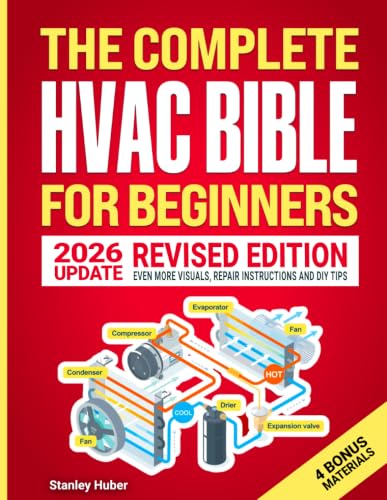
The Complete HVAC BIBLE for Beginners: The Most Practical & Updated Guide to Heating, Ventilation, and Air Conditioning Systems | Installation, Troubleshooting and Repair | Residential & Commercial
Check price on Amazon
100Pcs HVAC Schrader Valve Core High Pressure Teflon Seal for R410 R32 R22 | Fits AC & Refrigeration Systems, Durable & Wear Resistant, Easy Install, Home Commercial HVAC Repair, Valve Stem Core
Check price on Amazon
HVAC TROUBLESHOOTING PREP: A Complete Guide to HVAC Systems, Electrical Diagnostics, Refrigeration, and Heating & Cooling Troubleshooting with 15 Solved Exercises, 3 Practice Exams, and 120 Questions
Check price on Amazon
AUTOMOTIVE A/C & HEATING REPAIR BIBLE: The Complete DIY Guide to Automotive Air Conditioning, Heating, Climate Control, Diagnostics, Refrigerant Service, Troubleshooting, Maintenance, and Repair
Check price on Amazon
A/C Drain Line Sludge Blaster Bladder, Quickly Remove Sludge Blockage | for Common 3/4"-1 Inch HVAC Drain Line Blowout, A/C Condensate Lines, Refrigeration Drain Pipes Wait
Check price on Amazon