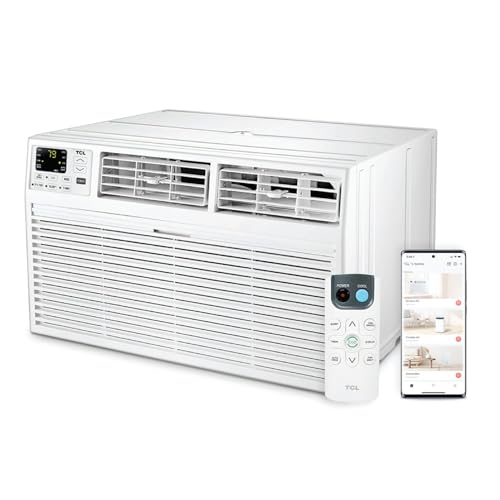
Commercial Wall Mounted Air Conditioning Units
Everything businesses need to know before selecting a ductless wall-mounted cooling system for offices, retail spaces, restaurants, and small commercial buildings.
Read first, understand your load requirements, then choose the right commercial-grade tier.
Who this guide is for: Business owners, facility managers, and contractors researching commercial wall mounted air conditioning units. If you already know you want a ductless wall-mounted system but are unsure about capacity, efficiency ratings, installation requirements, or which tier fits your space, this page walks you through each decision point so you can buy with confidence.
What Is a Commercial Wall Mounted AC Unit?
A commercial wall mounted air conditioning unit is a ductless split system where the indoor air handler hangs high on a wall and connects by refrigerant lines to an outdoor condenser. Unlike residential mini-splits, commercial-grade wall units are engineered for continuous-duty operation, higher static pressure, reinforced coils, and heavier-duty compressors. They are common in spaces where ductwork is impractical or where zone-by-zone control is more efficient than a central system.
These systems are a practical alternative when a full central air conditioning installation is not feasible due to building structure, budget constraints for ductwork, or the need for independent zone control. For larger facilities, they often complement a centralised HVAC system by handling perimeter zones or server rooms.
Key Advantages for Commercial Spaces
Independent Temperature Zones
Each wall unit serves a defined zone, so a conference room can be cooled differently from a warehouse floor. This reduces energy waste compared with conditioning an entire building uniformly.
No Ductwork Required
Retrofitting ductwork into an existing commercial building is often disruptive and structurally complicated. Wall-mounted systems need only a small wall penetration for refrigerant and drain lines.
Continuous-Duty Operation
Commercial-grade units are built to run through long business hours. Reinforced coils, heavy-duty compressors, and commercial-rated control boards distinguish them from residential models.
High SEER2 Ratings
Modern commercial wall units are available in high-efficiency tiers that meet or exceed current DOE standards. Inverter-driven models modulate compressor speed for steadier temperatures and lower energy use.
Space-Saving Design
Wall-mounted air handlers free up floor space that a floor console or portable unit would occupy. This matters in retail showrooms, clinics, and compact offices.
Accessible Service Points
Filters and coils are reachable from the front panel, which simplifies routine cleaning. A planned maintenance schedule keeps commercial systems at peak efficiency.
Types of Commercial Wall Mounted Units
Wall-mounted commercial systems fall into several categories based on compressor technology and application. Understanding these distinctions helps you match the unit to your duty cycle and efficiency goals.
- Single-zone wall-mounted split systems: One indoor wall unit paired with one outdoor condenser. The simplest configuration and the most common for single offices, small retail units, and server rooms.
- Multi-zone wall-mounted systems: One outdoor condenser connected to several indoor wall units. Ideal when you need independent control across several rooms without multiple outdoor units.
- Inverter wall-mounted units: Variable-speed compressors that modulate output. These are the preferred choice for commercial spaces with fluctuating occupancy, as they hold temperature more steadily and reduce cycling losses.
- Heat pump wall-mounted units: Provide both cooling and heating. Useful in climates with mild winters where a separate heating system would be redundant. See combination heating and air conditioning wall units for related options.
- Low-ambient wall-mounted units: Engineered to operate in colder outdoor temperatures, suitable for server rooms and spaces that require year-round cooling even in winter.
How to Size a Commercial Wall Mounted AC
Sizing is the single most important decision. An undersized unit runs continuously without reaching the setpoint, while an oversized unit short-cycles, dehumidifies poorly, and wears out faster. Commercial spaces have higher internal heat gains than homes due to occupancy, lighting, and equipment, so the common shortcut of 20 BTU per square foot is only a starting point.
A proper load calculation accounts for:
- Floor area and ceiling height
- Number of occupants and expected peak occupancy
- Heat-producing equipment such as servers, ovens, or display lighting
- Window area, orientation, and solar gain
- Insulation quality and building envelope leakage
- Ventilation and make-up air requirements
For rough planning, use the table below as a starting reference, then confirm with a professional load calculation before ordering equipment.
| Space Type | Typical Floor Area | Indicative Capacity Range | Recommended Tier |
|---|---|---|---|
| Private office / small clinic room | Up to 250 sq ft | 9,000 – 12,000 BTU | Essential tier |
| Open office / retail floor | 250 – 500 sq ft | 12,000 – 18,000 BTU | Balanced tier |
| Restaurant dining area / showroom | 500 – 900 sq ft | 18,000 – 24,000 BTU | High-end tier |
| Server room / equipment closet | Up to 300 sq ft | 12,000 – 24,000 BTU (year-round duty) | Commercial-grade |
| Multi-room suite (per zone) | 150 – 400 sq ft per zone | 9,000 – 18,000 BTU per zone | Professional-grade |
Efficiency Ratings Explained
Commercial buyers should focus on SEER2, EER2, and HSPF2 ratings, which reflect updated DOE testing standards. Higher SEER2 values indicate better seasonal efficiency. For commercial spaces with long operating hours, the difference between an entry-level efficiency model and a high-efficiency inverter model compounds over years of operation.
Inverter-driven wall units typically deliver better part-load efficiency, which matters in spaces where occupancy varies. If the space runs at full load all day, a high EER2 rating is more relevant than SEER2. For regions with cold winters, HSPF2 indicates heating efficiency for heat pump models.
Installation Requirements
Commercial wall-mounted systems are less invasive than ducted systems but still require careful planning. Key considerations include:
- Electrical service: Confirm the panel can support the condenser's amperage. Larger commercial units may require dedicated circuits or three-phase power. Review checking your home electrical panel principles, which apply to commercial panels as well.
- Outdoor condenser placement: Needs adequate clearance for airflow, a stable base, and protection from snow or debris. Rooftop or ground-level placement should follow local code.
- Refrigerant line length: Long line sets reduce capacity. Plan indoor and outdoor locations to keep runs within manufacturer limits.
- Drainage: Condensate must drain to an appropriate location. In commercial settings, a condensate pump may be required to route water to a drain.
- Permits and inspections: Most jurisdictions require permits for commercial HVAC installation. Working with a certified HVAC technician ensures compliance.
If your project also involves outdoor units on a roof, compare options in commercial rooftop air conditioning units. For projects that combine wall and through-wall solutions, see commercial through-the-wall air conditioners.
Maintenance Best Practices
Commercial systems accumulate dust and debris faster than residential units because of higher traffic and longer operating hours. A proactive maintenance schedule protects efficiency and extends equipment life.
- Clean or replace filters every two to four weeks in high-traffic spaces.
- Clean evaporator and condenser coils at least twice per year, more often in dusty environments. See cleaning air conditioner coils.
- Flush the condensate drain line quarterly to prevent clogs. See clean air conditioner drain line.
- Inspect refrigerant charge and electrical connections annually.
- Schedule a professional service visit before peak cooling season.
For facilities with multiple units, a documented maintenance log helps track filter changes and service history for each zone.
Choosing the Right Tier
Commercial wall-mounted units are available across several market tiers. Use these descriptors to compare options without relying on transient figures:
Essential Tier
Single-zone, fixed-speed units for small offices and low-occupancy rooms. Durable construction with standard efficiency. A solid choice for the tier when duty cycles are moderate.
Balanced Tier
Inverter-driven units with better part-load efficiency and quieter operation. Feature-rich for its class, suitable for open offices and retail floors with variable occupancy.
High-End Tier
Multi-zone systems with advanced controls, higher SEER2 ratings, and reinforced coils. Designed for restaurants, showrooms, and spaces that demand steady comfort.
Professional-Grade
Heavy-duty units for continuous-duty operation, low-ambient cooling, and server rooms. Premium materials and commercial-rated electronics for long-term investment.
Ready to Compare Commercial Wall Mounted Units?
Explore curated options matched to your space type and duty cycle. Each listing includes key specifications so you can compare features side by side.
Explore OptionsFrequently Asked Questions
What is a commercial wall mounted air conditioning unit?
A ductless split system with an indoor air handler mounted high on a wall, paired with an outdoor condenser. It is designed for continuous-duty operation in business environments such as offices, retail spaces, and restaurants.
How do I size a commercial wall mounted AC unit?
Start with floor area and ceiling height, then account for occupancy, equipment heat gain, window exposure, and insulation. Commercial spaces often need 20 to 30 BTU per square foot, but a professional load calculation is the reliable method.
Can a commercial wall mounted AC unit run continuously?
Commercial-grade units are built for continuous-duty operation with heavy-duty compressors, reinforced coils, and commercial-rated electronics. Residential models are not intended for the same duty cycle.
What maintenance does a commercial wall mounted AC need?
Regular filter cleaning or replacement, coil cleaning, drain line flushing, and an annual professional inspection. In high-traffic settings, filters may need attention every two to four weeks.
Are wall mounted units suitable for server rooms?
Yes, when specified as low-ambient or year-round cooling models. Server rooms need cooling even in winter, so choose a commercial-grade unit rated for low outdoor temperatures and continuous operation.
Related Guides
If you are comparing commercial cooling options, these related guides can help:
- Commercial air conditioning units for sale — broader overview of commercial equipment categories.
- Commercial building air conditioning system — how wall units fit into a whole-building strategy.
- Commercial HVAC — system-level planning for commercial facilities.
- Commercial heating and air conditioning units — combined heating and cooling options.
- Commercial HVAC contractors — how to select a qualified installer.