
5 Ton AC Unit: The Complete Guide to Sizing, Installation, and Selection
A 5 ton air conditioner is a substantial system designed for large homes and open floor plans. This guide explains what a 5 ton unit actually delivers, how to confirm whether your home truly needs one, and what to evaluate before committing to a purchase.
What a 5 Ton AC Unit Actually Means
In the HVAC industry, "ton" is a unit of cooling capacity, not weight. One ton of cooling equals 12,000 British Thermal Units (BTU) per hour. A 5 ton air conditioner therefore delivers 60,000 BTU per hour of cooling output. This is one of the largest residential capacities commonly installed, and it sits at the upper end of what most single-family homes require.
Why Capacity Alone Does Not Tell the Full Story
Two homes of identical square footage can require very different cooling capacities. Factors that influence the real load include ceiling height, window area and glazing type, insulation quality, ductwork condition, local climate design temperature, occupancy patterns, and the amount of heat-generating equipment indoors. This is why a professional load calculation — typically following Manual J methodology — is the only reliable way to confirm that a 5 ton system is appropriate.
Oversizing is a common and consequential mistake. A system that is too large will cool the space quickly but will not run long enough to remove humidity effectively. The result is a home that feels cold and clammy, with uneven temperatures and accelerated wear on the compressor due to frequent cycling. Undersizing, by contrast, leaves the system running continuously during peak heat without reaching the setpoint, which strains components and shortens service life.
Confirming Whether Your Home Actually Needs 5 Tons
Before evaluating specific models, it is worth verifying the load requirement. The table below provides a rough orientation, but it should be treated as a starting point for conversation with an HVAC professional — not as a final answer.
| Home Profile | Typical Capacity Range | Notes |
|---|---|---|
| 1,200 – 1,500 sq ft, moderate climate, good insulation | 2 – 2.5 tons | Standard single-story home with average glazing |
| 1,500 – 2,000 sq ft, moderate climate | 2.5 – 3 tons | Common range for typical suburban homes |
| 2,000 – 2,500 sq ft, warm climate | 3 – 4 tons | Higher internal gains and longer cooling season |
| 2,500 – 3,500 sq ft, hot climate or poor envelope | 4 – 5 tons | Large open plans, high ceilings, extensive glazing |
| 3,500 sq ft and above, or multi-zone large home | 5 tons and above (often multiple systems) | Zoning or multiple units usually more effective than one oversized system |
Signs That a Single 5 Ton System May Not Be the Best Fit
- The home has two or more distinct temperature zones that behave very differently throughout the day.
- Ductwork is limited, undersized, or difficult to route across the full footprint.
- There are additions or converted spaces that were not part of the original envelope design.
- The existing system short-cycles frequently or leaves rooms uncomfortable even when running continuously.
- Humidity control is a persistent issue during cooling season.
In these situations, a zoned system or multiple smaller units often deliver better comfort, more even temperatures, and more efficient operation than a single large 5 ton unit. A load calculation will clarify which approach is appropriate.
System Types Available in 5 Ton Capacity
A 5 ton capacity is available across several system architectures. The choice depends on the home's existing ductwork, available space, and the priorities of the household.
Split System Central Air
This is the most common configuration for a 5 ton unit. An outdoor condenser pairs with an indoor evaporator coil and air handler, distributing conditioned air through ductwork. Split systems are well suited to homes with existing ducts and offer broad model selection across efficiency tiers. Installation requires coordination between the outdoor pad location, refrigerant line routing, and the indoor air handler placement.
Packaged Units
A packaged system houses all components in a single outdoor cabinet, typically on a roof or concrete pad. These are common in commercial settings and in homes where indoor mechanical space is limited. For large capacities like 5 tons, packaged units are frequently used in light commercial applications and in residential properties with rooftop access. Ductwork connections are made directly to the unit, and the overall footprint can be more compact than a split system's indoor air handler arrangement.
Ductless Mini-Split Systems
While a single 5 ton ductless system is uncommon, multiple smaller ductless heads are sometimes used in combination to serve a large home without ducts. This approach is more typical in older homes where duct installation is impractical, or in homes where zone-by-zone control is a priority. A 5 ton total capacity would generally be split across several indoor heads rather than delivered by one unit.
Efficiency Ratings and Long-Term Operation
At 5 tons, the efficiency of the system has a magnified effect on long-term operating performance. A larger unit moves more air and consumes more energy per hour of operation, so the difference between an entry-level efficiency tier and a high-end tier is more meaningful than it would be on a smaller system.
SEER2 and EER2
SEER2 is the current seasonal efficiency metric used for residential cooling equipment. Higher values indicate more efficient operation across a typical cooling season. EER2 measures efficiency at a specific peak condition and is often more relevant in hot climates where the system runs heavily during the hottest part of the day. For a 5 ton system in a warm climate, prioritizing strong EER2 performance is generally worthwhile.
Compressor Technology
Two-stage and variable-speed compressors are increasingly common in the 5 ton range. These designs adjust output to match the load rather than running at full capacity or off. In practice, this means longer run times at lower output, which improves humidity removal and reduces temperature swings. Single-stage compressors remain available at the entry-level tier, but for a system of this size, the comfort and efficiency benefits of multi-stage or variable-speed operation are usually worth considering.
If you are evaluating efficiency labels across models, the overview of highest SEER air conditioners explains how to interpret ratings and what practical differences exist between tiers.
| Efficiency Tier | Typical Compressor Type | Best For |
|---|---|---|
| Entry-level | Single-stage | Mild climates, shorter cooling seasons, simpler installations |
| Mid-range | Two-stage | Most climates; balanced comfort and efficiency |
| Premium | Variable-speed | Hot climates, humidity-sensitive homes, long-term efficiency priority |
Installation Requirements and Considerations
Installing a 5 ton system involves more than swapping equipment. The physical size, electrical requirements, and duct capacity all need to be verified before installation begins.
Electrical Requirements
A 5 ton air conditioner typically requires a dedicated 240-volt circuit with a breaker sized to the unit's rated load. Because the current draw is substantial, the existing electrical panel must have sufficient capacity and available space for the new circuit. In older homes, a panel upgrade may be necessary before installation. This should be confirmed during the site assessment rather than discovered on installation day.
Ductwork Capacity
A 5 ton system moves roughly 2,000 cubic feet per minute of air when running at full capacity. The existing ductwork must be sized and sealed to handle that airflow without excessive static pressure. Undersized or leaky ducts will reduce delivered capacity, increase energy use, and create noise. Duct evaluation and sealing are often part of a well-executed installation. The guide on air duct sealing explains why this step matters for system performance.
Outdoor Unit Placement
The condenser requires adequate clearance for airflow, a stable level pad, and reasonable access for service. Placement should also consider noise transmission to neighboring windows and the length of refrigerant line routing to the indoor coil. Longer line sets require additional refrigerant charge and careful design to maintain performance.
Permits and Contractor Selection
Most jurisdictions require a permit for HVAC replacement or new installation. A licensed contractor will typically handle permitting as part of the project. When comparing contractors, confirm licensing, insurance, and whether the proposal includes a load calculation, duct assessment, and commissioning report. The overview of heating and cooling contractors covers what to look for in a qualified installer.
How to Compare 5 Ton Models
Once the load calculation confirms that 5 tons is appropriate, the comparison shifts to system features, build quality, and support. The criteria below are the most useful differentiators at this capacity.
Compressor and Coil Quality
Compressor design and coil construction are the core of long-term reliability. Premium tiers typically use more robust compressor assemblies, thicker coil tubing, and improved cabinet finishes that resist corrosion. In coastal or humid environments, coil durability and cabinet protection are particularly important.
Controls and Zoning Compatibility
Modern 5 ton systems often support communicating thermostats and zoning accessories. If the home has distinct temperature zones or is likely to be expanded, confirming compatibility with zoning controls at the time of purchase avoids costly retrofits later. The overview of smart AC thermostats explains what control features are available and how they interact with multi-stage equipment.
Warranty and Service Network
Warranty terms vary by manufacturer and by tier. Higher-end tiers frequently include longer compressor coverage and broader parts protection. Equally important is the local service network — a strong warranty is only useful if qualified technicians are available to honor it. Ask prospective contractors which brands they service and how warranty claims are handled.
Noise and Footprint
Larger condensers produce more sound and occupy more space than smaller units. Sound ratings are published for most models and are worth comparing if the outdoor unit will be near a patio, bedroom window, or property line. Cabinet dimensions and service clearance requirements should also be checked against the planned location.
Ready to Explore 5 Ton Options?
Compare available models, efficiency tiers, and features to find a system that matches your home's load calculation and comfort priorities.
View Available ModelsMaintenance Expectations for Large Systems
A 5 ton system represents a significant mechanical investment, and maintenance directly affects how long it delivers rated performance. The routine is not fundamentally different from smaller systems, but the consequences of neglect are larger because the equipment works harder and costs more to replace.
- Replace or clean air filters on the schedule recommended for the filter type and household conditions.
- Schedule professional coil cleaning and refrigerant charge verification annually.
- Inspect and seal ductwork periodically, especially in attics and unconditioned spaces.
- Clear debris from around the outdoor condenser and confirm fan clearance.
- Check condensate drainage to prevent water damage and microbial growth.
- Review electrical connections and capacitor condition during annual service.
Annual professional service is the baseline for keeping the system within warranty terms and catching small issues before they become compressor-level failures. The overview of annual AC service explains what a typical service visit includes and why it is worth scheduling before the cooling season begins.
Frequently Asked Questions
How many square feet does a 5 ton AC unit cool?
As a rough orientation, a 5 ton system is often associated with homes in the 2,500 to 3,500 square foot range, but this varies widely by climate, insulation, ceiling height, and window area. A load calculation is the only reliable way to confirm the correct capacity for a specific home.
Is a 5 ton AC unit too large for my house?
It may be. Oversized systems short-cycle, which reduces humidity removal and increases wear. If your home is under roughly 2,500 square feet in a moderate climate, a smaller system is often more appropriate. A professional load calculation will determine whether 5 tons is justified.
What is the difference between a 5 ton and a 4 ton AC unit?
Capacity differs by 12,000 BTU per hour — 5 tons delivers 60,000 BTU/hour versus 48,000 BTU/hour for 4 tons. The correct choice depends on the calculated load, not on preference alone. A 4 ton system may be sufficient for many homes that are sometimes assumed to need 5 tons.
Can a 5 ton AC unit be installed in an existing home?
Yes, provided the electrical panel, ductwork, and outdoor placement can support it. An assessment before installation should confirm circuit capacity, duct sizing, and refrigerant line routing. Retrofits in older homes sometimes require duct upgrades or panel work.
How long does a 5 ton AC unit typically last?
With proper installation and regular maintenance, a central air conditioner commonly provides 12 to 15 years of service, sometimes longer. Equipment tier, climate severity, and maintenance consistency all influence service life. Neglected ductwork and infrequent filter changes shorten it.
Should I choose a variable-speed 5 ton system?
Variable-speed systems generally provide better humidity control, quieter operation, and more stable temperatures than single-stage units. For a 5 ton system in a humid climate, the comfort benefits are usually meaningful. The trade-off is higher equipment complexity and a higher tier position in the market.
Recommended 5 Ton Air Conditioners and Large-Capacity Systems
⚠️ AFFILIATE DISCLOSURE: This website contains affiliate links. As an Amazon Associate, we earn from qualifying purchases. If you make a purchase through these links, we may receive a small commission at no additional cost to you. Read our full affiliate policy.

ACiQ 5 Ton 14.3 SEER2 Central Air Conditioner Unit - R32 AC Condenser | 230V Single Stage, Energy Efficient Air Conditioning, Outdoor Central HVAC Unit for Ducted AC Split Systems
Check price on Amazon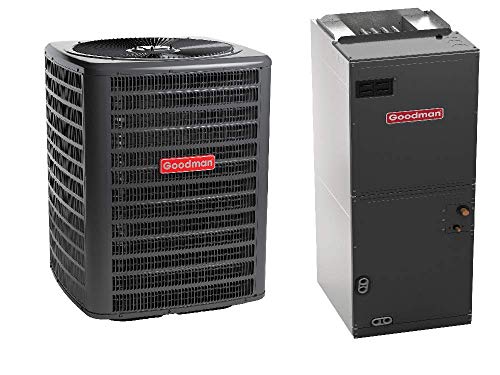
Goodman 5 TON 14.5 SEER2 Multi-Position R-32 Heat Pump System with air handler (GLZS4BA6010 condenser and AMST60DU1300 air handler)
Check price on Amazon
5 Ton Central Air Conditioner System 15.2 SEER (Oxbox by Trane)
Check price on Amazon
Senville Central Air Conditioning System, Heat Pump, 5 Ton | 55000 BTU Air Handler and Condenser Included, 208/230V, Whole House Air Conditioner
Check price on Amazon
ACiQ 5 Ton 120000 BTU AC Gas Package Unit & LP Horizontal Kit, 13.4 SEER2 | R32 Complete AC/Heating System with Install Kit, All-in-One Air Conditioner and 81% AFUE 100K BTU Propane Gas Packaged Unit
Check price on Amazon
ACiQ Extreme 5 Ton 16 SEER2 Central AC Heat Pump Unit - R454B Inverter | High Efficiency -22F Heating Condenser, Ultra Quiet AC Compressor, Central Air Conditioner HVAC Unit for Ducted Split Systems
Check price on Amazon
Goodman 5 Ton and 120000 BTU 14 SEER 81% Efficiency Duel Fuel Package Air Conditioner Model: GPG1461120M41
Check price on Amazon
Senville Central Air Conditioning System, Heat Pump, 5 Ton, 20kW Aux | 55000 BTU Air Handler and Condenser Included, 208/230V, Whole House Air Conditioner
Check price on AmazonDisclaimer
Some of the content on this site uses AI assistance. Information is provided for educational purposes only. We are not responsible for any losses resulting from the use of this information. By using this site, you waive any right to bring legal claims against us arising from your use of the information provided. If you do not agree, please do not use this site. Read the full disclaimer.