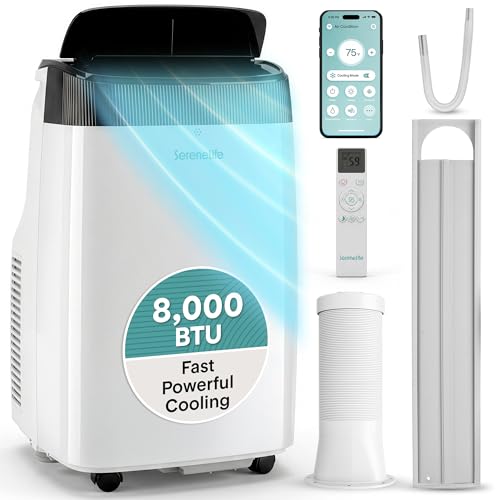
New AC Unit for a 2500 Sq Ft Home
Everything you need to know before choosing a new air conditioning system for a 2500 sq ft home: sizing, system types, efficiency ratings, installation considerations, and how to compare product tiers with confidence.
Start With SizingQuick summary: A 2500 sq ft home generally requires around 5 tons (approximately 60,000 BTU) of cooling capacity, though a professional load calculation is essential. Most homeowners choose between central AC, multi-zone ductless mini-splits, or a hybrid approach. The right system depends on your climate, ductwork condition, and long-term efficiency goals.
Why a 2500 Sq Ft Home Needs Careful Sizing
A 2500 sq ft home sits in the "large home" category. At this size, an undersized unit will run continuously and fail to keep up during peak heat, while an oversized unit will short-cycle, leaving rooms clammy and increasing wear on components. Correct sizing is the single most important decision in the entire selection process.
The common rule of thumb is roughly 20 BTU per square foot of living space, which puts a 2500 sq ft home near 50,000 BTU before adjustments. Real-world sizing then accounts for:
- Climate zone — a home in a hot, humid region needs more capacity than one in a mild coastal climate.
- Ceiling height — vaulted or two-story spaces increase the volume of air to be cooled.
- Insulation and window quality — older homes with single-pane windows and limited insulation need more capacity.
- Occupancy and appliance load — kitchens, home offices, and server closets add internal heat gain.
- Ductwork condition — leaky ducts can waste a significant share of cooling capacity.
In practice, most 2500 sq ft homes land in the 4.5 to 5.5 ton range, with 5 tons being the most common central system size. A proper Manual J load calculation is the only reliable way to confirm the number for your specific home.
Typical capacity reference by home size
| Home Size | Typical Capacity | Best For |
|---|---|---|
| 1,000 – 1,200 sq ft | 2 – 2.5 tons | Small single-story homes, condos |
| 1,500 sq ft | 2.5 – 3 tons | Standard single-family homes |
| 2,000 – 2,200 sq ft | 3.5 – 4 tons | Mid-size two-story homes |
| 2,500 sq ft | 4.5 – 5.5 tons | Large homes, multi-zone layouts |
| 3,000+ sq ft | 5 – 6+ tons | Large homes with multiple zones |
For a deeper comparison of how sizing scales across home sizes, see our related guides on a new AC unit for a 1500 sq ft home and a 1200 sq ft house.
System Types That Fit a 2500 Sq Ft Home
Once the capacity is confirmed, the next decision is the system architecture. For a home this size, three options dominate the conversation.
1. Central Air Conditioning
Central AC remains the standard for 2500 sq ft homes. A single outdoor condenser paired with an indoor air handler pushes cooled air through ductwork to every room. It offers even temperatures, integrated filtration, and the ability to combine with a heat pump for year-round comfort.
Central systems are the most practical choice when the home already has ductwork. If ducts are missing or in poor condition, the project scope expands considerably. Our detailed breakdown of installing a central air conditioning system covers what that expansion involves, and a separate guide addresses installing central air with ductwork.
2. Ductless Mini-Split Systems
Multi-zone ductless mini-splits are increasingly popular for large homes. Instead of one central system, individual wall-mounted or ceiling cassette heads serve each zone, with a single outdoor unit (or a few) connected by refrigerant lines. This approach excels in homes with no ductwork, additions, or rooms that never cool properly on a central system.
For a 2500 sq ft home, a typical ductless layout uses four to six indoor heads. Explore the broader scope in our guide to installing a ductless air conditioner and the more specific mini-split installation breakdown.
3. Hybrid and Split System Approaches
Some homeowners combine a central system for the main living areas with a ductless head for a converted garage, sunroom, or finished basement. This hybrid strategy keeps the central system from being oversized for the whole house while ensuring hard-to-reach spaces stay comfortable. Our guide to installing a split air conditioner is a useful reference for the component side of this approach.
System type comparison
| System Type | Best For | Key Consideration |
|---|---|---|
| Central AC | Homes with existing ductwork, whole-home even cooling | Requires duct inspection and possibly sealing |
| Multi-zone ductless mini-split | Homes without ducts, room-by-room control | Multiple indoor heads; higher component count |
| Hybrid central + ductless | Homes with problem rooms or additions | Two systems to maintain and register |
Efficiency Ratings: What Matters for a Large Home
For a 2500 sq ft home, the AC runs longer and more often than in a smaller home, so efficiency ratings have an outsized impact on long-term energy use. Three ratings matter most:
- SEER2 — seasonal efficiency. The current minimum for new residential systems is 14.3 SEER2 in most regions, with higher thresholds in hotter climate zones.
- EER2 — efficiency at peak heat. Particularly relevant in hot climates where the system runs near full load for hours.
- HSPF2 — heating efficiency, relevant if you choose a heat pump rather than a cooling-only system.
In practical terms, entry-level systems cluster near the minimum SEER2 threshold, mid-range systems land in the 15–16 SEER2 band, and high-end tier and premium systems reach 18 SEER2 and above. The jump from mid-range to high-end tier typically brings variable-speed compressors, quieter outdoor units, and better humidity control — features that matter more in a large home than in a small apartment.
If efficiency is a top priority, our guide to a new high-efficiency air conditioner explains how these tiers compare in real installations.
Installation Factors Unique to a 2500 Sq Ft Home
Installation for a home this size is more involved than for a smaller property. The main variables include:
- Electrical service — a 5-ton system often requires a dedicated 240V circuit and may need a panel upgrade in older homes.
- Ductwork evaluation — duct size, insulation, and leakage all affect delivered capacity. Sealing and rebalancing are common add-ons.
- Line set length and routing — longer refrigerant runs require careful sizing and additional refrigerant charge.
- Outdoor unit placement — clearance, noise, and drainage all matter, especially in tight suburban lots.
- Permits and inspections — most jurisdictions require a mechanical permit for a system replacement of this size.
For a full walkthrough of the installation sequence and what to expect on site, see our guide to installing new central air conditioning and the broader central AC installation overview. If you are comparing a full replacement against other options, replacing a central air conditioning unit and new central air unit and installation are useful companion reads.
Pre-purchase checklist for a 2500 sq ft home
- Obtain a Manual J load calculation from at least one contractor.
- Inspect existing ductwork for leakage, sizing, and insulation.
- Confirm electrical panel capacity for a 5-ton system.
- Decide between cooling-only and heat pump configuration.
- Compare at least three quotes with itemized equipment and labor.
- Verify warranty terms for both equipment and labor.
- Ask about thermostat compatibility and smart control options.
- Schedule installation outside peak cooling season if possible.
Comparing Product Tiers for a 2500 Sq Ft Home
Because this site does not publish figures, the most useful way to compare systems is by tier. The descriptors below are consistent across our guides and reflect relative market position rather than absolute figures.
| Tier | Best For | Typical Characteristics |
|---|---|---|
| Entry-level | Homeowners prioritizing a straightforward replacement | Single-stage compressor, standard sound levels, basic thermostat compatibility |
| Mid-range | Most 2500 sq ft homes with average climate exposure | Two-stage or entry variable-speed compressor, better humidity control, quieter operation |
| High-end tier | Hot climates, long daily run times, comfort-focused owners | Full variable-speed inverter compressor, premium sound insulation, advanced controls |
| Premium / flagship tier | Large homes with strict comfort and efficiency goals | Top-tier SEER2 performance, communicating systems, integrated zoning support |
For a 2500 sq ft home, the mid-range tier is the most balanced choice for most households. High-end tier systems become worthwhile when the home sits in a hot climate, has long daily cooling hours, or includes zones that demand precise temperature control. Entry-level systems remain a solid choice for mild climates and shorter ownership horizons.
Replacement vs. New Installation
Many 2500 sq ft homeowners are replacing an existing system rather than installing cooling for the first time. The two scenarios differ in scope:
- Straight replacement — reuse existing ductwork, line set (if compatible), and electrical. Scope is smaller and scheduling is faster.
- New installation — includes duct design, line set routing, electrical work, and permits. Scope is larger and requires more coordination.
- Partial replacement — replacing only the condenser or only the air handler. Viable in some cases but risks efficiency mismatch.
If you are weighing a full replacement, our guide to replacing an air conditioning unit and the more specific replacement walkthrough cover the decision points. For homes adding cooling for the first time, adding central air to a home and putting central air in a house are the right starting points.
Maintenance Outlook for a Large System
A 2500 sq ft home typically runs a larger, more complex system than a smaller property, which makes routine maintenance more important. Key practices include:
- Replacing air filters every one to three months during cooling season.
- Cleaning condenser coils annually to maintain efficiency.
- Scheduling a professional tune-up before each cooling season.
- Inspecting ductwork for leakage every few years.
- Monitoring refrigerant charge and looking for signs of leaks.
Well-maintained systems hold their efficiency longer and are less likely to need major repairs. For homeowners comparing service options, our guide to servicing an air conditioning unit outlines what a typical service visit includes.
Frequently Asked Questions
What size AC unit does a 2500 sq ft home need?
A 2500 sq ft home typically needs around 5 tons of cooling capacity, which translates to roughly 60,000 BTU. However, a proper load calculation considers ceiling height, insulation, window area, climate zone, and occupancy rather than square footage alone.
Is a central AC system the best choice for a 2500 sq ft home?
Central air conditioning is the most common choice for a 2500 sq ft home because it distributes conditioned air evenly through ductwork. Ductless mini-split systems with multiple zones are a strong alternative for homes without ducts or with uneven cooling needs.
What SEER rating should I look for in a new AC unit for a large home?
For a 2500 sq ft home, a mid-tier system with a SEER2 rating around 15 to 16 is a solid baseline, while high-end tier systems with SEER2 ratings of 18 and above offer better long-term efficiency. The right choice depends on climate, usage hours, and how long you plan to stay in the home.
How long does installation of a new AC unit take for a 2500 sq ft home?
A straightforward replacement of an existing central AC system usually takes one to two days. New installations that require ductwork, electrical upgrades, or a new line set can take three to five days or more depending on the scope.
Can I replace just the outdoor unit instead of the entire system?
Replacing only the outdoor condenser is possible when the indoor coil and air handler are compatible and in good condition. However, mismatched components can reduce efficiency and may void warranties, so a full system replacement is often the better long-term investment.
Ready to compare systems for your 2500 sq ft home?
Use the product recommendations below to explore options by tier and feature set, then confirm sizing with a local contractor before committing.
Explore Recommended Systems