Crank Out Casement Window Air Conditioner: The Complete Guide
Casement windows open outward with a crank and leave no room for a standard window AC. This guide explains how specialized crank out casement window air conditioners solve that problem — from how they fit, to sizing, efficiency, and installation.
Researching before you buy? You already know you need a cooling solution for a casement window. The challenge is that most window AC units are built for double-hung windows. This guide walks you through every detail that matters — fit, capacity, efficiency, and installation — so you can choose confidently.
What Is a Crank Out Casement Window Air Conditioner?
A crank out casement window air conditioner is a compact cooling unit designed specifically for vertical casement windows — the type that swings outward when you turn a hand crank. Standard window AC units are wide and shallow, made for double-hung windows that slide up and down. Casement windows are tall and narrow, and their crank mechanism leaves no horizontal sill space for a traditional unit.
Casement AC units solve this by using a slim, vertical cabinet that fits into the narrow window opening. Instead of resting on the sill like a traditional window unit, the air conditioner is typically mounted in a special frame or bracket that secures it within the casement window track. The unit's body extends outward while the front panel faces the room.
These units are also sometimes called vertical window air conditioners or casement window ACs. They are a niche category, but for homes with crank-out windows — common in older construction, coastal homes, and some modern designs — they are often the only practical window-mounted cooling option.
How Crank Out Casement Window ACs Work
Mechanically, a casement window AC works like any other window air conditioner. It pulls in indoor air, passes it over cold evaporator coils, and blows cooled air back into the room. Heat absorbed from the room is released outdoors through condenser coils on the exterior portion of the unit.
The difference is the mounting design. Because casement windows open outward rather than sliding, the AC unit cannot simply sit on the sill and be blocked by the window sash. Instead:
- The window stays partially open. The unit is installed in the opening, and the crank window remains partially open to accommodate the unit's depth.
- A mounting frame or bracket secures the unit. Most casement ACs come with or require a specialized frame that holds the unit firmly in the window track.
- Weather sealing is critical. Since the window cannot close fully, installation kits include insulation panels and weather stripping to minimize air leaks around the unit.
Because the window remains open, casement ACs are generally less airtight than a properly installed double-hung window unit. Buyers should plan for careful sealing and accept that some efficiency loss is inherent to the design.
Casement Window AC vs Standard Window AC: Key Differences
Understanding how casement units differ from conventional window air conditioners helps you set realistic expectations.
| Feature | Crank Out Casement AC | Standard Window AC |
|---|---|---|
| Window type | Vertical casement (crank-out) | Double-hung (slide-up) |
| Shape | Tall and narrow | Wide and shallow |
| Capacity range | Typically 5,000–12,000 BTU | 5,000–25,000+ BTU |
| Mounting | Frame or bracket in window track | Rest on sill with support bracket |
| Window closure | Window remains partially open | Window sash closes onto unit |
| Selection | Limited models | Wide variety |
| Efficiency potential | Good, but sealing-dependent | Excellent with proper installation |
The capacity ceiling is one of the most important differences. Casement units rarely exceed 12,000 BTU, which limits them to single rooms or small open-plan spaces. For larger areas, a ductless mini-split system or central air is usually a better fit.
Is Your Window Compatible? Checking Before You Buy
Not every casement window can accept an air conditioner. Before shopping, measure carefully and confirm the following:
- Window opening width: Casement ACs are narrow — often around 14–16 inches wide. Measure the clear opening width between the frame edges.
- Window opening height: Units are tall, sometimes 20–24 inches or more. Confirm the height available when the window is open.
- Crank mechanism clearance: The crank handle and hinge arms must not interfere with the AC frame. Some installations require removing the crank or using a special bracket.
- Window track depth: The mounting frame needs enough depth in the track to sit securely.
- Sill condition: The sill must be solid enough to bear the unit's weight, even though the weight is mostly carried by the frame.
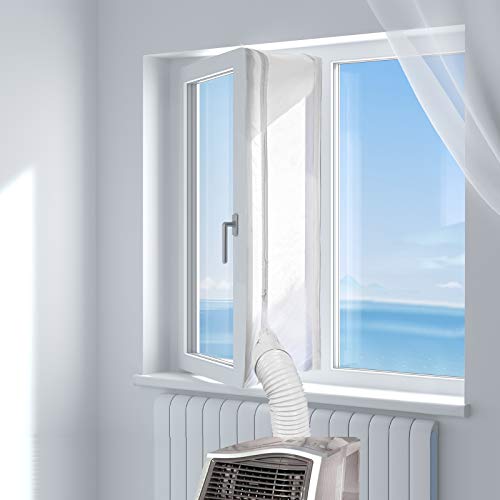
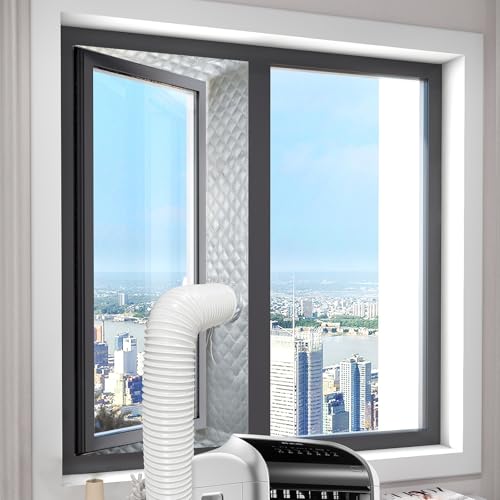
If your window does not meet these requirements, alternatives include a portable air conditioner for crank out windows using a fabric window seal, or a crank out window kit for portable air conditioners. For homes with multiple casement windows, a floor mounted mini-split or ductless mini-split can be a more permanent solution.
Sizing a Casement Window AC: BTU and Room Area
Correct sizing is the single biggest factor in comfort and efficiency. An undersized unit runs constantly without cooling the room; an oversized unit cools too quickly, cycles off, and leaves the room humid and clammy.
The basic rule of thumb is 20 BTU per square foot of floor area, adjusted for sun exposure, ceiling height, occupancy, and kitchen heat. Here is a practical starting point:
| Room Size | Suggested Capacity | Typical Use |
|---|---|---|
| Up to 150 sq ft | 5,000–6,000 BTU | Bedroom, small office |
| 150–250 sq ft | 8,000–10,000 BTU | Living room, studio |
| 250–350 sq ft | 10,000–12,000 BTU | Large bedroom, open living area |
Since casement units top out around 12,000 BTU, they suit single rooms rather than whole homes. If your space exceeds 350 square feet or is open to other rooms, consider a high-efficiency air conditioner for a small room paired with a second unit, or explore different types of air conditioning for homes to find a system-level solution.
For a precise calculation, use a BTU calculator that accounts for window area, insulation, and climate. Homes in hot, humid climates often need a capacity bump, while shaded, well-insulated rooms can use the lower end of the range.
Efficiency and Operating Characteristics
Casement window ACs are available in entry-level, mid-range, and premium tiers. Efficiency varies noticeably across tiers:
- Entry-level units typically use single-speed compressors and basic mechanical controls. They cool adequately but cycle on and off, which can cause temperature swings.
- Mid-range units often add electronic controls, programmable timers, and better insulation around the cabinet. Some include inverter-driven compressors for smoother operation.
- Premium models may offer inverter compressors, higher EER ratings, quieter fans, and improved sealing kits. They are generally more efficient in the long run and better suited to bedrooms where noise matters.
Inverter technology is particularly relevant for casement ACs. Because these units are often slightly less airtight than standard window units, an inverter compressor that modulates speed can maintain temperature more steadily and avoid the energy spikes of on/off cycling. For more on this, see our guide to energy-efficient window air conditioners.
Look for ENERGY STAR certification where available, and compare EER or CEER ratings within the casement category. Higher ratings mean more cooling per unit of electricity — a meaningful long-term investment for units that run daily during summer.
Installation: What to Expect
Casement AC installation is more involved than sliding a standard unit into a double-hung window. Most models require:
- Assembling the mounting frame. Many units ship with a frame that must be assembled and fitted to the window track.
- Securing the frame in the window opening. This usually involves brackets, screws, or tension mechanisms. Some installations require drilling into the window frame — check rental agreements before proceeding.
- Placing and leveling the unit. The AC must sit level so condensate drains properly. A slight outward tilt is sometimes recommended per the manufacturer's instructions.
- Sealing gaps. Insulation panels, foam strips, and weather sealing are essential to prevent hot air from leaking in around the unit.
- Supporting the exterior. Some units require an exterior support bracket, especially larger capacities. Follow the manual precisely.
If you are not comfortable with tools or the window frame is fragile, professional installation is advisable. A poorly sealed or improperly supported unit can leak, vibrate, or fall — and warranty coverage may depend on correct installation. For context on professional service, see what to expect in the first week after AC installation.
Renters should note that casement AC installation often modifies the window frame. Removable frame designs exist but are less common. If modifications are not permitted, a portable unit with a fabric seal is the safer route.
Maintenance Tips for Casement Window ACs
Casement units need the same care as any window AC, plus extra attention to sealing:
- Clean or replace the filter every 2–4 weeks during heavy use. A clogged filter reduces cooling and strains the compressor.
- Inspect the window seal seasonally. Foam strips compress over time; replace them when gaps appear.
- Check the exterior support at the start of each cooling season. Tighten brackets and look for rust or movement.
- Clean the coils annually. Dust and pollen buildup on condenser coils reduces efficiency. A soft brush and coil cleaner are usually sufficient.
- Drain or tilt for condensate. Ensure the unit drains properly to avoid water pooling inside the window frame.
- Remove the unit in winter if possible. Leaving it installed exposes it to weather and defeats window insulation.
Well-maintained casement units can last many seasons. If you notice reduced cooling, unusual noises, or water leaks, address them early — small issues escalate quickly in window-mounted equipment.
Alternatives to Casement Window ACs
Casement ACs are not the only option for crank-out windows. Consider these alternatives based on your situation:
- Portable AC with a crank-out window seal: Flexible fabric seals let you vent a portable unit through a casement window without permanent modification. This is the most renter-friendly option. See our guide to crank out window portable air conditioners.
- Ductless mini-split: A permanent, highly efficient solution that requires no window opening at all. Installation is more involved and may need professional help. Compare options in our ducted vs ductless comparison.
- Through-the-wall AC: If you have an exterior wall available, a through-the-wall unit avoids the window entirely. See dual inverter through-the-wall air conditioners.
- Central air: For whole-home cooling, central air or a ductless mini-split heat pump offers the best comfort and efficiency, though at a higher installation complexity.
The right choice depends on whether you own or rent, how long you plan to stay, and how many rooms need cooling. Casement window ACs remain the most direct solution for a single room with a crank-out window.
Who Should Buy a Crank Out Casement Window AC?
This category is a strong fit for:
- Homeowners with casement windows who want room-level cooling without ductwork.
- Renters in buildings with crank-out windows, provided the frame design is removable or the landlord approves.
- Bedroom and home-office users who need quiet, reliable cooling in a space under 350 square feet.
- Coastal and older homes where casement windows are common and retrofitting ductwork is impractical.
It is a weaker fit for large open-plan spaces, whole-home cooling, or situations where the window cannot be modified at all. In those cases, portable or ductless options are more practical.
Frequently Asked Questions
Can any casement window fit an air conditioner?
No. The window opening must be tall and wide enough for the unit's cabinet, and the crank mechanism must not block the frame. Measure the clear opening width and height, and check the track depth before buying. Some windows require removing the crank or using a specialized bracket.
Do casement window ACs need special installation?
Yes. They typically require a mounting frame secured in the window track, plus insulation panels to seal the partially open window. Installation is more involved than a standard double-hung window unit, and professional help is advisable if the frame is fragile or the unit is heavy.
How many BTU do I need for a casement window AC?
Most casement units range from 5,000 to 12,000 BTU. As a starting point, allow about 20 BTU per square foot, then adjust for sun exposure, ceiling height, and occupancy. A 150-square-foot bedroom typically needs 5,000–6,000 BTU; a 300-square-foot living area may need 10,000–12,000 BTU.
Are casement window ACs efficient?
Efficiency varies by tier. Entry-level models use single-speed compressors, while mid-range and premium units may include inverter compressors and better sealing. Because the window stays partially open, sealing quality strongly affects real-world efficiency. Look for ENERGY STAR models and compare EER ratings within the category.
Can I use a regular window AC in a casement window?
Generally no. Standard window ACs are wide and shallow, designed to rest on a double-hung window sill. They do not fit the tall, narrow opening of a casement window and cannot be secured by the crank mechanism. A dedicated casement unit or a portable AC with a fabric window seal is the correct approach.
What if my window cannot be modified?
A portable air conditioner with a crank-out window seal is the best alternative. These fabric seals attach around the open window and vent the unit's exhaust hose without drilling or permanent changes. They are popular with renters and in historic buildings.
Before finalizing your choice, review how the unit will be maintained and whether professional service may be needed down the line. Our resources on fixing an air conditioner and HVAC tune-up expectations can help you plan for long-term care. If you are comparing a casement unit against a larger system, the energy-efficient split system air conditioner guide explains when a split system makes more sense.
Ready to Compare Casement Window AC Options?
Browse recommended models below, compare features side by side, and choose the unit that fits your window and room.
View Recommended Models