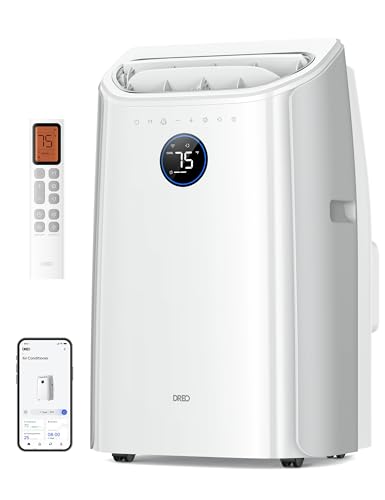
Dual Inverter Portable Air Conditioner: The Complete Guide
Everything you need to know before choosing a dual inverter portable AC — how the technology works, how to size it for your room, what to look for, and which features actually matter for comfort and efficiency.
SEE RECOMMENDED MODELSQuick summary: A dual inverter portable air conditioner pairs a variable-speed compressor with a variable-speed fan motor, allowing the unit to modulate its output instead of cycling fully on and off. The result is steadier room temperature, quieter operation, and noticeably better energy performance during long cooling sessions. This guide explains when that upgrade is worthwhile and how to choose the right unit for your space.
What Is a Dual Inverter Portable Air Conditioner?
A dual inverter portable air conditioner is a freestanding, wheel-mounted cooling unit that uses inverter-controlled components to vary its cooling output continuously. In a conventional portable AC, the compressor either runs at full power or stops entirely. In a dual inverter design, both the compressor and the indoor fan are driven by inverter motors that can slow down or speed up in fine increments.
That matters more than it might sound. When a compressor only has two states — full blast or off — the room temperature naturally oscillates around your set point. A dual inverter system adjusts gently, trimming output as the room approaches the target temperature and ramping up again only when needed. The practical benefits are a more stable climate, less mechanical wear, and lower energy consumption over extended run times.
If you are still comparing broad categories of cooling equipment, our overview of the different types of air conditioning for homes is a useful starting point before narrowing down to portable units.
How Dual Inverter Technology Works
The term "dual inverter" refers to two inverter-driven elements working together:
- Inverter compressor: Instead of switching on and off, the compressor changes speed to match the cooling demand. It runs slowly when the room is close to the set temperature and speeds up when extra cooling is required.
- Inverter fan motor: The indoor fan also varies its speed, working in coordination with the compressor so airflow matches cooling output. This reduces drafts and acoustic spikes.
Because both components modulate together, the unit avoids the sharp power surges and temperature swings associated with fixed-speed compressors. For a deeper technical comparison, our article on inverter vs non-inverter air conditioners explains the underlying principles in more detail.
Why Choose a Portable Design?
Portability is the defining advantage. A portable AC requires no permanent installation, no wall bracket, and no professional contractor in most cases. It can be rolled from a bedroom to a home office, stored away in the off-season, and used in spaces where a window unit is impractical or prohibited by building rules.
That flexibility makes portable units especially relevant for renters, older homes without ductwork, and rooms where a mini-split installation is not feasible. If your situation involves a home that was never built for central cooling, our guide on ductless air conditioning for older homes covers the wider set of alternatives.
Key Features to Evaluate Before Buying
Dual inverter technology is only one part of the decision. The features below determine how pleasant and practical the unit will be in daily use.
Cooling Capacity (BTU)
Match capacity to room size. Undersized units run constantly; oversized units cool too quickly and leave the room clammy.
Inverter Compressor & Fan
Confirm both components are inverter-driven. Some listings say "inverter" but only the compressor qualifies.
Vent Hose & Window Kit
A well-sealed exhaust kit prevents hot air from leaking back in. Check hose length against your window layout.
Condensate Management
Self-evaporative systems reduce manual draining, though humid climates may still require periodic tank emptying.
Noise Level
Inverter fans are generally quieter, but check decibel ratings for bedrooms and shared spaces.
Smart Controls
Wi-Fi, scheduling, and app control add convenience, especially if the unit moves between rooms.
Sizing a Dual Inverter Portable AC Correctly
Portable air conditioners are rated differently from window or central systems, so manufacturer guidance should take priority. As a working estimate, plan for roughly 20 BTU per square foot of floor area, then adjust for conditions:
- Add capacity for rooms with large south- or west-facing windows.
- Add capacity for high ceilings, kitchens, or rooms with heat-generating equipment.
- Add capacity for each additional occupant beyond two.
- Subtract capacity for heavily shaded rooms or basement spaces.
| Room Size | Estimated Capacity | Typical Use Case |
|---|---|---|
| Up to 150 sq ft | 5,000 – 6,000 BTU | Bedroom, nursery, small home office |
| 150 – 250 sq ft | 8,000 – 10,000 BTU | Living room, medium bedroom, studio |
| 250 – 400 sq ft | 12,000 – 14,000 BTU | Open-plan living area, large bedroom |
| 400 – 600 sq ft | 14,000 – 18,000 BTU | Combined living/dining space, loft |
These figures are starting points, not rules. A dual inverter unit with a slightly higher capacity can modulate down efficiently, but buying dramatically oversized equipment still compromises dehumidification. For a more detailed calculation method, see our guide on how to size an air conditioner.
Advantages and Limitations
Strengths
- Steadier room temperature with fewer hot and cold swings
- Quieter operation, particularly at low demand
- Lower energy consumption during long cooling sessions
- Less mechanical wear from eliminating hard start-stop cycles
- No permanent installation required
Trade-offs
- Heavier and bulkier than window units of similar capacity
- Requires a vented window or exhaust path
- Condensate tank may need manual draining in humid climates
- Floor space and hose routing must be planned
- Higher tier than entry-level portable models
Portable AC Tiers: Where Dual Inverter Fits
It helps to think about portable air conditioners in market tiers rather than specific figures. The table below uses a single consistent classification system throughout this guide.
| Tier | Typical Characteristics | Best For |
|---|---|---|
| Entry-Level | Fixed-speed compressor, basic mechanical controls, single-speed fan, simpler vent kit | Occasional use in small rooms; short cooling sessions |
| Mid-Range | Inverter compressor, digital controls, improved fan design, self-evaporative condensate handling | Daily use in bedrooms and living rooms; renters |
| High-End Tier | Dual inverter compressor and fan, Wi-Fi control, quieter operation, refined vent kits | Long daily sessions; households prioritizing comfort and efficiency |
| Flagship Tier | Premium materials, advanced sensors, app integration, maximum modulation range | Users who want top-tier comfort and smart-home integration |
Dual inverter portable units generally sit in the high-end and flagship tiers. They are a long-term investment for households that run cooling for many hours per day, and the efficiency gains tend to matter most in exactly that scenario.
Installation and Placement Best Practices
Portable ACs are simple to set up, but placement strongly affects performance:
- Position near the exhaust window. Shorter hose runs reduce back-pressure and improve efficiency. If your window layout is awkward, a long exhaust hose for a portable air conditioner can help, but keep runs as short and straight as practical.
- Seal the window kit. Gaps around the panel let hot outdoor air back in and undermine cooling.
- Keep the unit on a level surface. Many portable ACs rely on gravity for condensate drainage.
- Avoid obstructions. Leave clearance around intake and exhaust grilles.
- Check electrical capacity. Confirm the outlet and circuit can handle the unit's rated draw; our guide on electrical outlet plugs covers common configurations.
Maintenance That Protects Performance
A dual inverter system is durable, but routine care is what keeps efficiency high across seasons:
- Clean the air filter every two to four weeks during heavy use. A clogged filter forces the compressor to work harder.
- Drain the condensate tank regularly. Even self-evaporative units may need manual draining in humid conditions.
- Inspect and clean the vent hose for kinks, dust buildup, or leaks at the window connection.
- Clean the condenser coils at least once per season to maintain heat exchange efficiency.
- Store properly in the off-season — drain fully, clean the filter, and cover the unit to prevent dust ingress.
If you notice reduced cooling, unusual noises, or water pooling, address the issue early. Our troubleshooting resource on fixing an air conditioner covers the most common portable and room AC problems.
Who Should Choose a Dual Inverter Portable AC?
This category is a strong fit for:
- Renters who cannot install permanent equipment or modify windows.
- Homeowners with older homes lacking ductwork, where a full system retrofit is impractical.
- Households cooling one room at a time rather than a whole house.
- People who run AC for long hours daily and will benefit from inverter efficiency.
- Anyone prioritizing quiet operation in bedrooms or home offices.
Conversely, if you need to cool multiple rooms simultaneously or want the lowest possible visual footprint, a ductless mini-split may be the better long-term direction. Our overview of ductless mini-split systems explains how those compare.
Final Buying Checklist
Before committing to a specific model, verify each of the following:
- Capacity matches your room size and heat load.
- Both compressor and fan are inverter-driven (true dual inverter).
- Noise rating is appropriate for the intended room.
- Vent kit suits your window type and size.
- Condensate handling matches your climate's humidity levels.
- Controls — remote, app, scheduling — fit your routine.
- Warranty covers the compressor for a meaningful period.
- Physical dimensions and weight work for your floor space and mobility needs.
Ready to Compare Dual Inverter Portable AC Models?
Explore our curated selection of dual inverter portable air conditioners, each evaluated for cooling performance, noise, and build quality.
VIEW RECOMMENDED MODELSFrequently Asked Questions
A dual inverter portable air conditioner uses two inverter-controlled components — typically the compressor and the fan motor — to continuously modulate cooling output rather than switching fully on and off. This design delivers steadier temperatures, quieter operation, and better energy efficiency than single-speed portable units.
Yes, for most users. Dual inverter models typically maintain room temperature more precisely, run more quietly, and consume less energy over long cooling sessions. Standard single-speed portable ACs may be suitable for short, occasional use, but dual inverter units are the stronger choice for daily comfort.
As a general rule, aim for about 20 BTU per square foot of floor area, then adjust upward for sun exposure, high ceilings, or multiple occupants. A 300 square foot room usually needs roughly 6,000 to 8,000 BTU. Always verify the manufacturer's recommended room size, since portable AC BTU ratings are measured differently from window units.
Yes. All portable air conditioners, including dual inverter models, must exhaust hot air through a window or dedicated vent kit. Proper venting is essential for cooling performance and for removing humidity from the room.
Clean or replace the air filter every two to four weeks during heavy use, drain the condensate tank regularly, and clean the condenser coils and vent hose at least once per season. Annual inspection of the compressor and electrical components helps extend the unit's lifespan.
Yes, and this is one of the strongest use cases. Inverter operation keeps the compressor at low, stable speeds once the room reaches the set temperature, which typically results in quieter, less disruptive performance than a fixed-speed unit cycling on and off overnight. Check the decibel rating and choose a model with a dedicated sleep mode for the best experience.