
Long Exhaust Hose for Portable Air Conditioner: Complete Guide
Portable AC units live or die by how well they vent hot air outside. Learn how to choose, extend, and install a long exhaust hose so your unit cools efficiently without wasting energy.
Explore Hose OptionsWhy this guide matters: The exhaust hose is the most overlooked part of a portable air conditioner — and one of the most important. A poorly sized, kinked, or uninsulated hose can cut cooling performance dramatically. This guide gives you the sizing rules, insulation tips, and installation guidance you need to get the most from your portable unit.
What Does a Portable AC Exhaust Hose Do?
A portable air conditioner works by removing heat and moisture from indoor air and dumping that heat outdoors. The exhaust hose is the conduit that carries that hot, humid air away from the unit and out through a window, wall, or sliding door. Without a properly connected exhaust hose, the unit simply recirculates heat and never cools the room effectively.
The hose connects the unit's exhaust port to a window kit or wall vent. Most units ship with a short hose — often around five feet — which is fine for tight window setups but limiting for rooms where the nearest window is farther away. That is why many owners look for a longer exhaust hose, and why extension kits are so widely available.
Understanding the broader context of different types of air conditioning for homes helps explain why portable units are vent-dependent while other systems are not. If you are comparing alternatives, our guide to a ductless mini-split covers systems that do not rely on a window hose at all.
Why You Might Need a Longer Exhaust Hose
Portable AC units are often placed in rooms where the only suitable window is not directly next to the unit. Common scenarios that call for a long exhaust hose include:
- Large rooms where the unit sits in the middle. The nearest window may be ten or fifteen feet away.
- Rooms with furniture blocking the window area. Routing around obstacles requires extra length.
- Sliding glass doors or casement windows. The vent location may be offset from the unit.
- Office or workspace setups. Desks and equipment push the unit away from the vent point.
- Bedrooms with the window behind a bed or dresser. The hose must route around the furniture.
In these cases, a longer hose — within manufacturer limits — is a practical solution. Our article on a mini air conditioner for room use covers placement considerations that apply equally to portable units.
Sizing Rules for Long Exhaust Hoses
There is a limit to how long an exhaust hose can be before performance suffers. As hose length increases, air resistance rises and the unit's fan must work harder to push hot air out. Heat gain through the hose walls also increases, especially if the hose is not insulated.
General guidelines to follow:
- Stay within the manufacturer's maximum. Most portable AC manufacturers specify a maximum hose length, commonly nine to fifteen feet. Exceeding that limit can void the warranty and reduce cooling.
- Keep the run as short as practical. If you need only eight feet, do not buy a fifteen-foot hose and coil the excess.
- Minimize bends. Every sharp bend adds resistance. Gentle curves are far better than tight kinks.
- Match the diameter exactly. A five-inch hose will not fit a six-inch port without an adapter, and mismatched diameters reduce airflow.
- Insulate the hose. An insulated hose prevents heat from radiating back into the room, which is especially important for long runs.
Our guide to a long exhaust hose for portable air conditioner use expands on how to plan a route that respects these constraints.
Hose Diameter: 5-Inch vs. 6-Inch
Most portable air conditioners use either a five-inch or six-inch exhaust hose. The diameter matters because the hose must match the unit's exhaust port and the window kit connector. Using an adapter is possible, but adapters introduce another point of potential leakage and airflow loss.
| Feature | 5-Inch Hose | 6-Inch Hose |
|---|---|---|
| Typical Use | Smaller portable units, lower BTU capacity | Larger portable units, higher BTU capacity |
| Airflow Volume | Lower | Higher |
| Compatibility | Must match 5-inch port or use adapter | Must match 6-inch port or use adapter |
| Common Accessories | Widely available window kits | Widely available window kits |
| Typical Tier | Essential tier | Mid-tier |
Always measure your unit's port and existing hose before ordering. If your unit is a dual inverter portable air conditioner, check the manual for the specified hose diameter and maximum length, since inverter models sometimes have different venting requirements.
Hose Materials and Insulation
Exhaust hoses are typically made from flexible plastic or aluminum foil laminate, often reinforced with a spiral wire to hold their shape. The quality of the material affects durability and heat resistance. Thin, single-layer hoses are common on entry-level units and are adequate for short runs, while heavier multi-layer hoses resist heat and kinking better over long distances.
Insulation is a major factor for long runs. An uninsulated hose radiates heat back into the room, forcing the unit to work harder. Insulated hoses — or a separate insulating sleeve wrapped around the hose — reduce heat gain and improve cooling efficiency. This is especially important in small rooms where any additional heat load is noticeable.
For context on how heat load affects overall comfort, our guide to a mini-split AC unit for 500 square feet explains how capacity is matched to room size — the same logic applies to portable unit selection. Our article on the most efficient way to heat and cool a house covers broader efficiency strategies.
How to Install a Long Exhaust Hose Properly
A careful installation makes the difference between a hose that works and one that leaks hot air back into the room. Follow these steps:
- Measure the run. Plan the route from the unit's exhaust port to the window or wall vent. Add a little slack for gentle curves, but do not oversize the hose.
- Check the diameter. Confirm the hose matches the unit's port and the window kit connector. Use adapters only when necessary.
- Connect the hose to the unit. Twist or clip the hose onto the exhaust port until it is secure. A loose connection leaks hot air.
- Route the hose carefully. Keep the run as straight as possible. Avoid sharp bends and do not coil excess hose tightly — coils trap heat and restrict airflow.
- Seal the window kit. Use the foam or fabric seals included with the window kit to close gaps around the hose. Any gap lets hot outdoor air in.
- Insulate if needed. Wrap the hose in an insulating sleeve, especially for long runs or in small rooms.
- Test the airflow. Turn the unit on and feel for strong airflow at the outdoor end. Weak airflow suggests a kink, a blockage, or an oversized run.
If your window situation is unusual — for example, a room with no suitable window — our article on I need an air conditioner but no window covers alternative options. Our guide to the most efficient window air conditioner with heater is also worth reviewing if you are comparing window units to portable ones.
Pre-Purchase Checklist
- Measure the existing hose diameter and length.
- Check the manufacturer's maximum hose length in the manual.
- Plan the route and count the number of bends required.
- Confirm the window kit type and connector style.
- Decide whether insulation is needed for your run length.
- Verify that adapters, if needed, are included or available.
Troubleshooting Common Exhaust Hose Problems
Weak Cooling Despite a Working Unit
If the unit runs but the room stays warm, check the hose for kinks, blockages, or an excessively long run. Also verify that the window seal is tight — a leaky seal lets hot air back in. Our guide on a fully evaporative portable air conditioner explains how evaporative units differ from refrigerated portable ACs, since troubleshooting steps vary.
Hose Getting Hot
A hot hose is normal to some degree, but excessive heat indicates poor insulation or a long, uninsulated run. Adding an insulating sleeve reduces heat radiation into the room.
Condensation on the Hose
In humid climates, condensation can form on the outside of a cold hose. Insulation helps, and a slight downward slope toward the outdoor end allows moisture to drain away rather than pooling.
Hose Detaching from the Unit
Loose connections are usually caused by a missing retaining ring or a mismatched adapter. Replace worn connectors rather than taping the hose in place, which rarely holds.
For broader context on portable unit troubleshooting, our guide on fixing an air conditioner covers diagnostic steps that apply across system types.
Maintaining Your Exhaust Hose for Long-Term Performance
Exhaust hoses are simple components, but a few maintenance habits extend their life and preserve performance:
- Inspect the hose for cracks or tears at the start of each cooling season.
- Clean dust and lint from the hose interior with a soft brush or vacuum.
- Store the hose loosely coiled — not tightly folded — during the off-season.
- Replace hoses that have lost their shape or developed leaks.
If your portable unit is part of a broader home cooling strategy, our article on the most efficient air conditioner split system explains how to compare long-term operating efficiency. Our guide to the most efficient small room air conditioner is a useful reference if you are re-evaluating your setup.
Understanding Exhaust Hose Market Tiers
Exhaust hoses and extension kits fall into three broad market tiers. Use these descriptors to orient yourself before comparing specific products:
- Essential tier — basic single-layer hoses in standard lengths. A solid choice for short runs and temporary setups.
- Mid-tier — reinforced multi-layer hoses with better heat resistance and secure connectors. A balanced option for most households.
- Premium tier — insulated, heavy-duty hoses with premium connectors and adapters. Best for long runs, small rooms, and owners who prioritize efficiency.
Mid-tier and premium hoses generally offer better durability and heat resistance than entry-level options. Feature-rich kits in the higher tiers often include insulation sleeves and multiple adapters, which matters when window setups vary. Match the tier to your run length and your comfort priorities.
Ready to Compare Long Exhaust Hoses?
Browse curated options below, review the specifications that matter, and choose the hose that fits your portable AC and your room layout.
View Recommended HosesFrequently Asked Questions
Can I extend the exhaust hose on my portable air conditioner?
Yes, in most cases you can extend the exhaust hose, but you should keep the total length within the manufacturer's recommendation, typically around nine to fifteen feet. Longer runs reduce cooling efficiency and can strain the unit, so plan the route carefully.
Does a longer exhaust hose make a portable AC less effective?
A longer hose increases resistance and heat gain, which can reduce cooling performance. Insulating the hose and keeping the run as short and straight as possible helps preserve efficiency.
What diameter exhaust hose does my portable AC need?
Most portable AC units use either a five-inch or six-inch diameter hose. Check your unit's manual or measure the existing hose and connector before ordering a replacement or extension.
Can I use a dryer vent hose as a portable AC exhaust hose?
It is not recommended. Dryer vent hoses are designed for different airflow and temperature conditions, and they may not seal properly against the unit's port or window kit. Use a hose designed specifically for portable air conditioners.
Related Guides
Recommended Long Exhaust Hoses for Portable AC Units
⚠️ AFFILIATE DISCLOSURE: This website contains affiliate links. As an Amazon Associate, we earn from qualifying purchases. If you make a purchase through these links, we may receive a small commission at no additional cost to you. Read our full affiliate policy.

Portable Air Conditioner Hose. AC Exhaust Hose Vent with 5.9" Diameter, Anti-Clockwise Thread & Length up to 80". Portable AC Hose Compatible with LG, Delonghi and Many More.
Check price on Amazon
Portable Air Conditioner Hose, 5.9" Diameter Anti-Clockwise Thread, Universal Replacement AC Vent Hose Length up to 80" (Does not include coupler)
Check price on Amazon
80" Length 5.9 Inch Diameter Portable Air Conditioner Hose, AC Exhaust Hose Anti-Clockwise Thread Air Conditioner Parts Compatible with Haier, Delonghi and More (Anti-Clockwise 5.9 inch)
Check price on Amazon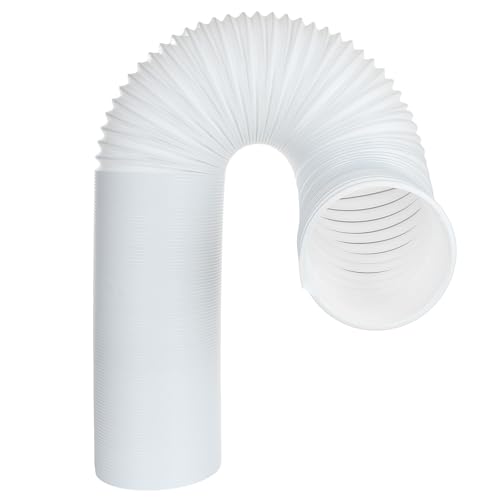
SENENQU Portable Air Conditioner Universal Exhaust Hose 5 Inch Diameter 59" Long Clockwise Thread Room Airconditioner AC Vent Replacement Tube
Check price on Amazon
SUREPHON Portable Ac Hose, 80" length 5.9" Diameter Portable Air Conditioner Exhaust Vent Hose, Anti-Clockwise Thread Universal Replacement Ac Duct Hose (No Coupler)
Check price on Amazon
Outus 5.9'' Diameter 98'' Long Portable Air Conditioner Hose | Portable Air Conditioner Exhaust Hose, with Square Exhaust Hose Tube Adapter Portable Air Conditioner Ducting Parts
Check price on Amazon