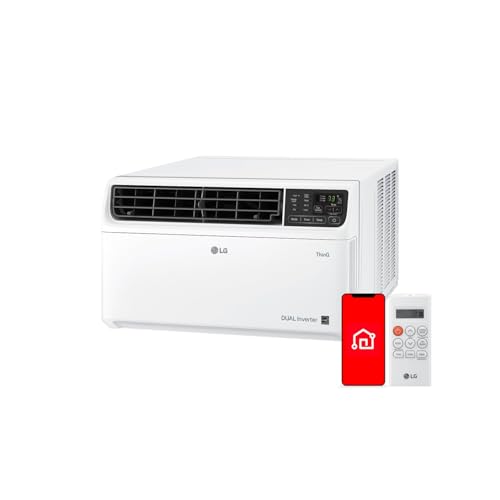
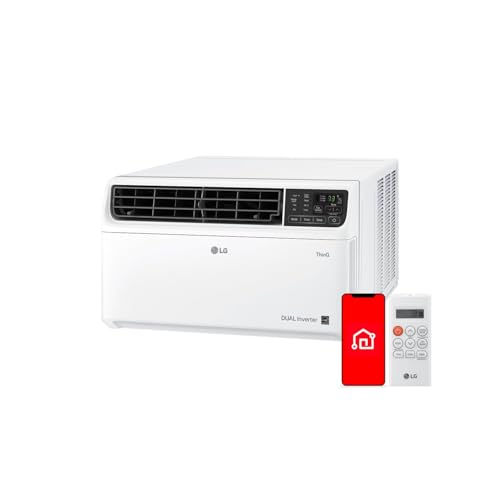
Dual Inverter Smart Wi-Fi Enabled Window Air Conditioner
Everything you need to know before choosing a window AC that pairs variable-speed dual inverter cooling with app, voice, and scheduling control.
Explore the GuideWhy this category stands out: A dual inverter smart Wi-Fi enabled window air conditioner combines two technologies that were once found only in premium central systems — variable-speed compressor modulation and connected smart control — inside a standard window-mount form factor.
If you have been researching window units and keep landing on models labeled "dual inverter" and "smart Wi-Fi," this guide explains what those terms actually mean, how they affect comfort and electricity use, and which configuration best fits your room, your home's electrical setup, and the way you live.
Window ACs remain the most practical cooling option for renters, older homes without ductwork, and single rooms that need targeted comfort. For a broader look at how this form factor fits alongside other system types, see our overview of the different types of air conditioning for homes.
What Is a Dual Inverter Smart Wi-Fi Window AC?
A conventional window air conditioner uses a single-speed compressor that is either fully on or fully off. When the room reaches the set temperature, the compressor stops; when the room warms up again, it restarts at full power. That cycle is simple and reliable, but it produces noticeable temperature swings and repeated high-current startups.
A dual inverter design takes a different approach. Two inverter-driven compressor stages work together to vary cooling output smoothly across a wide range. Instead of cycling between zero and one hundred percent, the system holds a steady, low output once the room is conditioned, then ramps up only when demand increases. The result is tighter temperature control, quieter long-run operation, and typically lower energy use over extended sessions.
The smart Wi-Fi layer adds connectivity. Through a companion app you can turn the unit on before you get home, set schedules, monitor filter status, and adjust modes remotely. Many models also support Amazon Alexa and Google Assistant for hands-free voice commands. Together, these two feature sets define the modern higher-end window AC segment.
If you want to understand the underlying compressor comparison in more depth, our article on inverter vs non-inverter air conditioners covers the engineering differences, while this page focuses on the specific window-mount dual inverter smart variant.
How Dual Inverter Cooling Works in a Window Unit
Inside a dual inverter window AC, the compressor motor is driven by an inverter board that converts incoming AC power to a variable-frequency output. By adjusting that frequency, the board controls compressor speed continuously rather than switching it on and off. A dual-stage configuration pairs two compressor elements or two inverter-driven stages so the unit can operate efficiently at very low loads as well as ramp to full capacity on hot afternoons.
What this means in daily use
During the initial pull-down, both stages can run to bring a warm room to the target temperature quickly. Once the setpoint is reached, the system throttles back to a low, stable output that simply maintains comfort. Because the compressor does not stop and restart constantly, humidity removal tends to be more consistent, and the unit avoids the short-cycling that plagues oversized single-speed window ACs.
This is also why proper sizing matters even more with inverter models. A dual inverter unit that is significantly oversized will still spend most of its time at minimum output, which can reduce dehumidification. A unit matched to the room lets the inverter range do its job across normal summer conditions.
Key Features to Evaluate Before You Buy
Dual Inverter Compressor
Two inverter-driven stages modulate output for steadier temperatures, quieter long-run operation, and reduced startup current draw compared with single-speed compressors.
Wi-Fi & App Control
Remote on/off, temperature adjustment, mode changes, and scheduling from a smartphone. Useful for pre-cooling a bedroom or office before you arrive.
Voice Assistant Support
Alexa and Google Assistant compatibility varies by model. Confirm support in the product documentation if hands-free control is a priority for your household.
SEER / CEER Rating
The efficiency score for window units. Higher ratings indicate more cooling delivered per unit of electricity. ENERGY STAR certification is a useful shortcut to efficient models.
Noise Level (dB)
Inverter units run quietly at low load but can be audible at full ramp. Check published sound levels, especially for bedrooms and home offices.
Modes & Dehumidification
Cool, fan-only, dry/dehumidify, and auto modes are common. A dedicated dry mode is valuable in humid climates even when sensible cooling demand is low.
Air Direction & Louvers
Adjustable horizontal and vertical louvers let you direct airflow away from seating areas. Some smart models add motorized swing controlled from the app.
Filter Access & Washability
A slide-out, washable filter simplifies routine maintenance. Smart models may display a filter-clean reminder in the app based on runtime hours.
Installation Kit & Window Fit
Check the included mounting kit, minimum and maximum window width, and whether the unit needs exterior support brackets for your window type.
Sizing a Dual Inverter Window AC for Your Room
Capacity is expressed in BTU (British Thermal Units). The table below is a starting reference for standard rooms with average ceiling height (around eight feet), typical insulation, and moderate sun exposure. Adjust upward for west-facing windows, vaulted ceilings, kitchens, or rooms with many occupants, and downward for heavily shaded, well-insulated spaces.
For a more precise estimate, use a room-by-room BTU calculation that factors in window area, ceiling height, and occupancy. Rooms above roughly 400 square feet are usually better served by a different form factor — a mini-split system or a whole-house air conditioner — because a single window unit struggles to distribute air across multiple zones.
Also confirm your electrical circuit. Smaller window units run on a standard 115V household outlet, while larger capacities often require a dedicated 230V circuit. Our guide to 110V vs 240V air conditioners explains how to check what your home can support before ordering.
Dual Inverter Smart Window AC vs Other Window Options
The table below compares the main window AC configurations by market positioning and typical use case. Tiers are relative descriptors, not absolute rankings, and vary by manufacturer and model year.
| Configuration | Market Tier | Compressor Behavior | Smart Control | Best For |
|---|---|---|---|---|
| Basic single-speed window AC | Entry-level | On/off cycling at full power | None or basic remote | Occasional cooling in a spare room |
| Single inverter window AC | Mid-range | One variable-speed stage | Sometimes app-enabled | Bedrooms needing quieter, steadier cooling |
| Dual inverter window AC | Upper mid-range | Two variable-speed stages, wider modulation range | Often Wi-Fi capable | Long daily runtime, humidity-sensitive rooms |
| Dual inverter smart Wi-Fi window AC | Premium | Two variable-speed stages with connected controls | App, scheduling, voice assistants | Remote management, energy monitoring, smart-home integration |
If portability matters more than window mounting, the dual inverter portable air conditioner category applies the same compressor technology in a floor-standing chassis. For homes where a window opening is unavailable or restricted, a dual inverter through-the-wall air conditioner is the wall-sleeve alternative.
Advantages and Trade-Offs
Strengths
- Steadier room temperature with fewer noticeable swings
- Lower energy use during long cooling sessions compared with single-speed cycling
- Quieter steady-state operation at low load
- Consistent humidity removal because the compressor runs continuously at reduced output
- Remote pre-cooling and scheduling through the companion app
- Voice control integration in many models
- Filter reminders and runtime diagnostics in the app
Trade-Offs
- Higher market positioning than basic window units
- App setup requires a stable 2.4 GHz Wi-Fi network in most cases
- Smart features vary by brand; ecosystems are not universal
- Larger capacities may need a dedicated circuit
- Inverter boards add a component that can fail and requires qualified service
- Still blocks part of the window view and admits some exterior noise
Pre-Purchase Checklist
Before finalizing a model, run through the items below. Each one addresses a common source of post-purchase frustration with smart inverter window units.
- Measure the window opening width and height, and compare with the unit's minimum and maximum fit range.
- Confirm the electrical requirement: 115V standard outlet or 230V dedicated circuit.
- Check the published SEER or CEER rating and whether the model is ENERGY STAR certified.
- Verify Wi-Fi band support (2.4 GHz vs 5 GHz) and which voice assistants are supported.
- Review the decibel rating for the noise-sensitive room where the unit will run.
- Confirm whether exterior support brackets are required by the manufacturer or local code.
- Check the warranty terms for the sealed system and the electronics separately.
- Read whether the mounting kit, remote, and window sealing panels are included.
If you are replacing an older unit, our guide on what to expect in the first week after AC installation covers the settling-in period, including initial odors, condensate behavior, and when to call for service.
Maintenance for Long-Term Performance
A dual inverter smart window AC rewards consistent, simple maintenance. The washable air filter should be checked every two to four weeks during peak season and rinsed with lukewarm water. A clogged filter forces the inverter to run at higher output to meet the setpoint, which erodes the efficiency advantage the design provides.
Keep the exterior condenser coils clear of leaves, pollen, and debris. On most window units the outdoor coil is accessible from outside the window; a soft brush and coil cleaner applied seasonally helps maintain heat rejection. Check that the unit remains level and that the window sealing panels are intact so outside air is not bypassing the cooling coil.
In the app, review any filter-reminder notifications and firmware updates the manufacturer pushes. Smart models occasionally receive firmware that improves scheduling behavior or fixes connectivity issues. If the unit stops cooling or begins short-cycling despite a clean filter, our troubleshooting article on why a house is not cooling from the air conditioner covers the diagnostic sequence before you schedule service.
Ready to Compare Models?
You now have the framework: match BTU to your room, confirm voltage, prioritize a strong efficiency rating, and verify that the smart platform works with the assistants you already use. The curated selection below highlights dual inverter smart Wi-Fi window air conditioners across entry-level, mid-range, and premium tiers.
View Recommended ModelsFrequently Asked Questions
What is a dual inverter window air conditioner?
A dual inverter window AC uses two inverter-driven compressor stages that work together to vary cooling output smoothly. This lets the unit match the room's cooling load precisely, reducing energy waste and temperature swings compared with a single-speed compressor that only runs on or off.
Is a smart Wi-Fi window AC worth it?
A smart Wi-Fi window AC adds remote control, scheduling, and voice assistant support. For anyone who wants to pre-cool a room before arriving home or monitor runtime and filter status from a phone, the convenience is a meaningful upgrade over a basic window unit.
What size dual inverter window AC do I need?
Sizing depends on square footage, ceiling height, sun exposure, and insulation. As a starting point, 5,000 to 6,000 BTU suits rooms up to about 150 square feet, 8,000 to 10,000 BTU suits 150 to 250 square feet, and 12,000 to 14,000 BTU suits 250 to 400 square feet. Adjust for west-facing windows and open-plan layouts.
Can a dual inverter window AC save energy?
Because the inverter compressor varies speed instead of cycling on and off at full power, it typically uses less energy over long cooling sessions. Look for a high SEER or CEER rating and ENERGY STAR certification to confirm efficiency for a specific model.
Does a smart window AC work with Alexa and Google Assistant?
Many smart Wi-Fi window ACs support Amazon Alexa and Google Assistant for voice control, but support varies by model and region. Check the product documentation before purchasing if voice control is important in your setup.
Can I install a dual inverter window AC myself?
Most window units are designed for DIY installation, but larger capacities are heavy and may require two people plus exterior support brackets. If your window type or building code requires professional mounting, consult a qualified installer. Our article on hiring a handyman to install a window air conditioner covers what the job involves.