Ductless Mini Split Air Conditioner Installation Cost
A complete guide to the real drivers behind a ductless mini split installation: equipment tiers, zones, line sets, electrical work, permits, and how to compare quotes before you commit.
START LEARNINGWhat the Installation Involves
A ductless mini split installation is a multi-trade project. It combines refrigeration work, electrical work, and physical mounting. The equipment itself is only part of the picture. Understanding the full scope helps you compare quotes on an apples-to-apples basis and spot the places where installers cut corners.
The core steps are similar across systems: mount the indoor air handler, mount the outdoor condenser, run the refrigerant line set between them, make the electrical connections, evacuate the lines, release the factory charge, and commission the system. Multi-zone systems repeat the indoor steps for each zone and add a branch box or multiple line sets back to a single outdoor unit.
If you are still deciding whether a mini split is the right system for your home, the ductless mini split air conditioning systems guide and the ductless mini split system overview explain how the technology compares to central and window options.
Main Cost Drivers
Ductless mini split air conditioner installation cost is shaped by a handful of variables. When quotes vary widely, it is almost always because one or more of these variables differ between the proposals.
| Driver | What It Affects | What Raises the Total |
|---|---|---|
| Equipment tier | Efficiency, features, warranty | Higher SEER2, variable-speed compressors, premium filtration, longer warranties |
| Number of zones | Indoor heads, line sets, labor hours | Multi-zone systems with three or more indoor units |
| Line set length and routing | Materials and labor | Long runs, wall penetrations, routing through finished spaces |
| Electrical work | New circuit, panel work | Full panel, long wire runs, permit and inspection |
| Permits and inspections | Timeline and administrative work | Jurisdictions with stricter permitting |
| Local labor rates | Total labor | High-demand markets with limited contractor availability |
If your project is a straightforward single-zone install in a home with open panel capacity, the scope is small. If it is a four-zone retrofit in a home with a full panel and finished walls, the scope grows considerably. The same equipment can produce very different totals depending on the house.
Equipment Tiers and What They Include
Mini split equipment ranges from basic single-stage units to flagship variable-speed systems. The tier you choose affects both the equipment line and the complexity of the installation.
| Tier | Best For | Typical Characteristics |
|---|---|---|
| Entry-level | Single-room cooling, budget-conscious projects | Single-stage compressor, standard SEER2, basic remote, shorter warranty |
| Mid-range | Most residential single-zone and small multi-zone installs | Inverter compressor, good SEER2, quiet operation, Wi-Fi option, solid warranty |
| High-end tier | Whole-home or hard-working systems | High SEER2, variable-speed, advanced filtration, better cold-climate performance |
| Top-tier | Premium multi-zone and flagship projects | Flagship efficiency, multi-zone smart control, extended parts and labor warranty |
Higher tiers usually install the same way as mid-range units, but they may require more precise charging and commissioning. The bigger difference is in the equipment line, not the labor line. For most homes, a mid-range system is the balanced choice: solid efficiency, reliable components, and a warranty that covers the compressor and parts for a reasonable period.
For specific equipment options, the mini split air conditioning units for sale overview covers what to look for across categories, and the ductless mini split system air conditioners guide explains the efficiency ratings that matter.
Single-Zone vs Multi-Zone
The number of indoor zones is one of the largest variables in the project. A single-zone system uses one indoor head and one outdoor unit with one line set. A multi-zone system uses multiple indoor heads connected to a single outdoor unit, either through a branch box or through multiple line sets.
Single-zone
One indoor head, one line set, one wall penetration. Fastest and simplest installation.
Two-zone
Two indoor heads, two line sets. Additional wall penetrations and longer commissioning time.
Three-zone
Three heads and a branch box or larger outdoor unit. More complex routing and balancing.
Four-plus zones
Whole-home coverage. Often a full-day or multi-day install with branch box, larger electrical feed, and more commissioning work.
Multi-zone systems are efficient and flexible, but the installation cost per zone is not simply additive. Each zone adds an indoor head, a line set, a wall penetration, and commissioning work. A four-zone project can cost substantially more than four times a single-zone project because the system-level components — branch box, larger outdoor unit, bigger electrical feed — are shared across the zones.
If you are weighing a multi-zone system against a single-zone system, the multi-zone ductless AC guide explains how zoning affects comfort and energy use. For a single large room, the 24000 BTU mini split article covers capacity matching in more detail.
Electrical Work and Panel Checks
Almost all mini splits require a dedicated 220V circuit sized to the unit's data plate. The electrical portion of the project is a common source of quote variation, because it depends heavily on the house rather than the equipment.
- Panel capacity. If the panel has open slots and enough total capacity, the electrical work is straightforward. If the panel is full or undersized, a panel upgrade may be required, which adds a significant line item.
- Distance from panel to unit. Long wire runs add material and labor. Routing through finished walls adds more.
- Disconnect and surge protection. Most installs include an outdoor disconnect. Surge protection is a good add-on in areas with frequent storms.
- Permit and inspection. Electrical work typically requires its own permit and inspection, separate from the HVAC permit in some jurisdictions.
If your home has older wiring, the AC electrical problems guide covers the warning signs of an undersized or failing circuit. And if you are considering a 220V unit for the first time, the 220 air conditioners guide explains the electrical basics.
Line Set Length and Routing
The line set is the pair of copper tubes that carries refrigerant between the indoor and outdoor units. Line set length, routing, and the number of penetrations all affect the installation total.
Length matters
Every mini split has a maximum line set length and a maximum elevation difference. Standard kits include a pre-charged line set of a fixed length. If the actual run is longer, additional refrigerant may be required, and the labor for a longer run is greater. If the run is much shorter, the excess line set is usually coiled behind the outdoor unit, which is fine but adds a bit of labor for proper routing.
Routing matters more
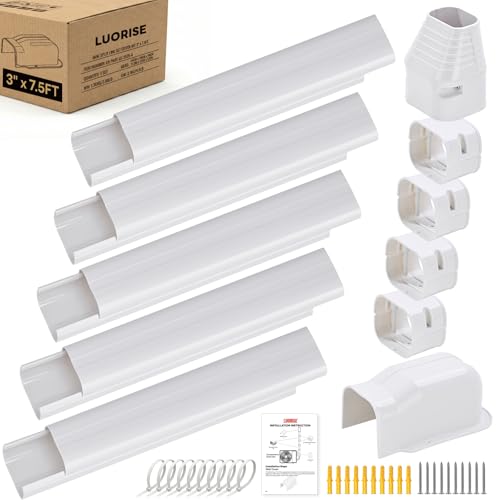
A line set that runs along an exterior wall is fast. A line set that runs through an attic, a closet, and a finished wall is slow and invasive. Line set covers (sometimes called line hide) improve appearance but add material and labor. Long or difficult runs are one of the most common reasons two quotes for the same equipment come in very different totals.
If the indoor unit is in a room without easy exterior access, the installer may need to route the line set through a different wall or soffit. That decision affects both the visual result and the labor line. The ductless mini split with ceiling cassette guide is useful if the room layout makes a wall-mounted head awkward.
Permits, Inspections, and Timing
Mini split installations are typically permitted work. The permit covers both the refrigerant side and the electrical side, and the inspection confirms the work meets code. Permit and inspection work is part of the project total, and it also affects the timeline.
- Permit application. The contractor typically pulls the permit on your behalf. Some jurisdictions allow homeowners to pull their own, but the inspection still applies.
- Inspection timing. Inspections are scheduled around the contractor's availability and the building department's schedule. In busy seasons, this can add days or weeks to the project.
- Documentation. Keep the permit, the inspection record, and the commissioning report. They are useful for warranty claims and for resale.
Some homeowners ask whether they can skip the permit to save time. The short answer is no. Unpermitted work can complicate insurance, resale, and future service. A licensed contractor will include the permit in the quote, and a quote that does not mention permits is a red flag.
If you are comparing contractors, the heating and air conditioning service companies guide explains what to ask about licensing and permits. The air conditioning companies near my location article covers how to vet local providers.
How to Compare Quotes
Two quotes with the same equipment can differ by a wide margin for legitimate reasons. Use the checklist below to compare them fairly.
| Item | Why It Matters | What a Good Quote Includes |
|---|---|---|
| Equipment model and SEER2 | Confirms you are comparing the same tier | Model number, capacity, efficiency rating |
| Line set length and routing | Affects materials, labor, and appearance | Stated length, route, penetrations, line hide |
| Electrical scope | Often the biggest variable between quotes | Circuit size, wire run, disconnect, panel work if needed |
| Permits and inspections | Confirms the work is legal and inspected | Permit line, inspection line, who pulls the permit |
| Commissioning and startup | Confirms the system is charged and tested correctly | Evacuation, charge verification, temperature split test |
| Warranty and labor coverage | Protects you if something fails | Parts warranty, labor warranty, registration responsibility |
A low quote that omits the electrical line, the permit, or the line hide is not actually lower. It is a smaller scope. A high quote that includes premium equipment, a difficult line route, a panel upgrade, and extended labor coverage is not necessarily overpriced. It may simply be a bigger project.
If you are still deciding between a mini split and a central system, the HVAC replacement guide and the ratings of central air conditioning systems article can help you compare long-term value. If you want to compare installation against a repair, the air conditioning unit service cost article explains what different service tiers typically include.
Frequently Asked Questions
Final Thoughts
Ductless mini split air conditioner installation cost is not a single number. It is the sum of equipment tier, zones, line set routing, electrical work, permits, and local labor rates. The best way to control the total is to plan the project before the quote: decide how many zones you need, identify where the line sets can run, and confirm your panel has capacity.
If you are ready to compare equipment, the mini split air conditioning units for sale overview and the ductless mini split system air conditioners guide cover the categories in more detail. If you want to understand how the system fits your home, the ductless mini split air conditioning systems guide and the multi-zone ductless AC article are good next reads. And if you are weighing a mini split against a new central system, the HVAC replacement guide can help you compare the long-term decision.