
Electric Forced Air Heater: The Complete Guide to Efficient Home Heating
Understand how electric forced air heating works, how to size a system for your home, what efficiency ratings mean, and which tier of equipment matches your needs — before you decide.
Start LearningHow an Electric Forced Air Heater Works
An electric forced air heater is a central heating system that warms air and distributes it throughout a home using a blower fan and ductwork. Unlike combustion-based furnaces, it relies entirely on electric resistance heating elements to generate warmth. The sequence is straightforward: the thermostat calls for heat, the heating elements energize, the blower activates, and heated air is pushed through ducts into each room.
Because there is no flame and no flue for exhaust gases, an electric forced air system is often chosen in homes without natural gas access, in regions where electricity is the dominant energy source, or in applications where indoor air quality and simplicity of maintenance are priorities. These systems are also frequently paired with central air conditioning in a shared air handler, making them a common component of combined heating and cooling systems.
Understanding the basics of air distribution helps when evaluating any heater. The blower, heat exchanger or resistance coil, and duct network all work together. If you are still exploring broader system categories, our HVAC overview and educational guides provide useful background.
Electric Forced Air vs. Other Heating Options
Choosing a heating system is rarely about a single product — it is about how the system fits your home, climate, and infrastructure. The table below summarizes how electric forced air heating compares with common alternatives.
| Heating Type | Best For | Notable Characteristics |
|---|---|---|
| Electric Forced Air | Homes with ductwork; regions with reliable electricity | Simple operation, no combustion, easy integration with central AC |
| Gas Forced Air | Homes with natural gas access | Fast heating, requires venting and combustion safety measures |
| Heat Pump | Mild-to-moderate climates; efficient year-round | Heats and cools; performance drops in extreme cold |
| Baseboard / Radiant | Room-by-room zoning; retrofits | No ducts required; slower to warm large spaces |
| Portable Space Heaters | Supplemental or single-room use | No installation; limited coverage area |
If you are comparing system categories more broadly, our guide to heating and cooling air conditioning units explains how heaters and AC units are often combined. Homeowners evaluating a ducted system may also benefit from understanding heating and ductwork design principles. For homes exploring ductless options, the ductless heat air conditioner guide is a useful complement.
Sizing an Electric Forced Air Heater
Correct sizing is the single most important factor in comfort and efficiency. An undersized unit runs continuously and never fully satisfies the thermostat; an oversized unit cycles on and off frequently, creating temperature swings and unnecessary wear. Sizing is expressed in BTU per hour (BTU/h) and should be based on a room-by-room heat load calculation, not simply floor area.
Factors That Affect Heating Load
- Climate zone: Colder regions require more heating capacity.
- Insulation and air sealing: Poorly sealed homes lose heat quickly.
- Window area and glazing type: Large or single-pane windows increase load.
- Ceiling height and home volume: Tall ceilings increase cubic footage.
- Occupancy and internal gains: Appliances and people add heat.
- Duct location: Ducts in unconditioned spaces lose heat.
For a structured starting point, review our guide on how to size an air conditioner — the same load principles apply to heating. If you are sizing a complete system for a specific home size, the resources on HVAC for 1,000 sq ft and HVAC for 1,500 sq ft outline typical system configurations.
Efficiency Ratings for Electric Heating
Electric resistance heating converts nearly all input energy into heat at the point of use, so the concept of combustion efficiency (AFUE) is less relevant than for gas furnaces. Instead, the practical efficiency question is how well the system distributes heat and how much energy is lost through ducts and controls.
What to Look For
- Variable-speed blowers: Improve comfort and reduce cycling losses.
- Sealed and insulated ductwork: Reduce heat loss in unconditioned spaces.
- Programmable or smart thermostats: Enable scheduling and zoning.
- Zoning systems: Avoid heating unused rooms.
For broader context on efficiency standards and system comparisons, see our guides on high-efficiency HVAC and energy efficiency of an air conditioner, which explain how efficiency metrics are applied across heating and cooling equipment.
Key Components of an Electric Forced Air System
Understanding the parts helps you evaluate quality tiers and plan maintenance.
Heating Elements
Electric resistance coils are the heat source. Higher-tier units often use more robust coil assemblies and better thermal protection. Element staging — where capacity is delivered in steps — improves comfort and reduces sudden temperature spikes.
Blower and Air Handler
The blower moves air across the heating elements and through the duct system. Variable-speed blowers are characteristic of mid-range and premium systems, while single-speed blowers are common in essential-tier equipment.
Heat Exchanger / Cabinet
The cabinet houses the elements and blower. Durable construction, insulated cabinets, and secure paneling are markers of better build quality.
Controls and Thermostat
Modern systems pair with digital thermostats. A digital air conditioner thermostat guide explains programmable and smart control options that also apply to heating schedules.
Installation Considerations
Electric forced air heaters are typically installed as part of a central system, often sharing an air handler with cooling equipment. Key installation factors include:
- Electrical capacity: Dedicated circuits and appropriate breaker sizing are essential. Confirm panel capacity before installation.
- Ductwork condition: Existing ducts should be inspected, sealed, and insulated where needed.
- Placement: Air handler location affects duct runs, noise, and service access.
- Permits: Many jurisdictions require permits for HVAC replacement or new installation. Our guide on whether you need a permit for AC covers the general permitting process.
- Contractor selection: Choosing a qualified installer is critical. See how to choose an HVAC contractor and how to avoid AC scams.
If you are adding heating to a home that already has forced air cooling, the guide on adding AC to a house with forced air explains the shared-infrastructure approach in reverse. For broader system planning, the heating and air conditioning service companies resource helps you identify qualified providers.
Maintenance and Longevity
Electric forced air systems have fewer wear components than combustion furnaces, but regular maintenance still matters for safety, efficiency, and lifespan.
Routine Tasks
- Replace or clean air filters every 1–3 months during heating season.
- Inspect and clean blower components annually.
- Check ductwork for leaks and insulation gaps.
- Test thermostat calibration and scheduling.
- Schedule professional inspection before each heating season.
For general repair and service context, see heating and repair and furnace and heating repair. If your system shares components with cooling equipment, the heater and air conditioner repair guide explains combined service considerations.
Product Tiers: Matching Equipment to Your Needs
Electric forced air heaters and air handlers are available across a range of market positions. Rather than focusing on figures, it helps to understand what each tier typically delivers.
| Tier | Typical Characteristics | Best For |
|---|---|---|
| Essential tier | Single-stage heating, standard blower, basic controls | Straightforward replacements; budget-conscious projects |
| Mid-tier | Two-stage or stepped elements, improved cabinet insulation, compatible with programmable thermostats | Homeowners seeking better comfort and control |
| High-end tier | Variable-speed blower, advanced controls, quieter operation, robust build | Whole-home comfort with zoning and smart integration |
| Professional-grade | Heavy-duty components, extended service life, commercial-oriented design | Large homes, multi-zone systems, demanding duty cycles |
Entry-level equipment is generally suitable for straightforward replacements where ductwork is already in good condition. Mid-range models typically offer smoother temperature control and better sound characteristics. Premium and professional-grade systems are worthwhile investments when comfort, zoning, and long service life are priorities. For broader equipment context, see heater units and house heater system overviews.
Recommended Electric Forced Air Heaters
⚠️ AFFILIATE DISCLOSURE: This website contains affiliate links. As an Amazon Associate, we earn from qualifying purchases. If you make a purchase through these links, we may receive a small commission at no additional cost to you. Read our full affiliate policy.

Dura Heat 240V Electric Space Heater for Garage, 3750W, 12800 BTU - EUH4000 | 6-20P Plug, Electric Industrial Garage Heater, Workshop, Wall & Ceiling Mount, Steel Body, Thermostat, Overheat Shut Off
Check price on Amazon
Dura Heat Electric Forced Air Heater, 5,120 BTU- EUH1500 | Workspace Heater, Steel Body, Thermostat, Heats up to 250 sq ft, Overheat Shut Off, Carry Handel, Garage &Greenhouse Heater
Check price on Amazon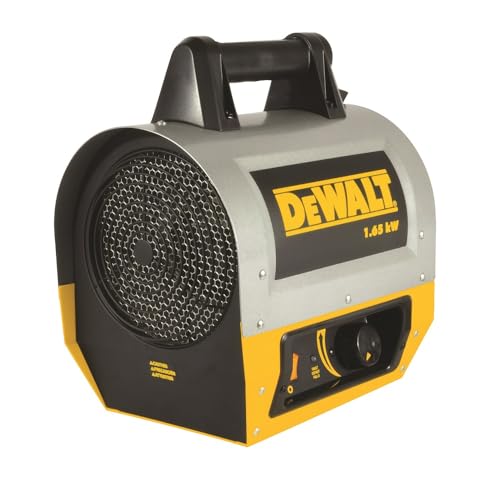
DEWALT Forced Air Electric Construction Heater (1.65 kw) | 5,630 BTU, 1,500 Watts
Check price on Amazon
Powerful Portable Heating Cannon for Garage, Includes US 3-Prong Adapter, 2000W-3000W Rapid Heater with Multi-Safety Features (3000W)
Check price on Amazon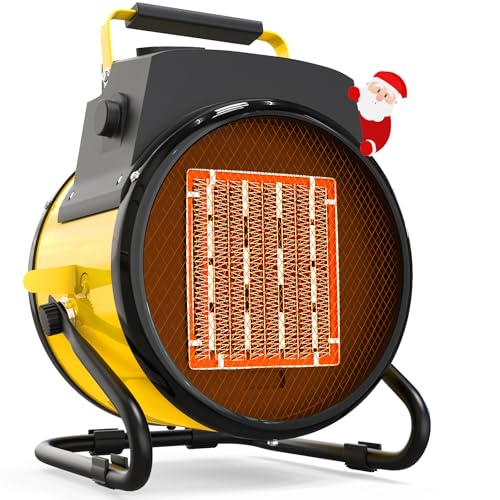
Outdoor Heater for Patio, 1500W Electric Garage Outdoor Heaters with 3 Modes, 3s Fast Heating, with Overheat Protection, Electric Space Heaters for Patio, Garage, Greenhouse, Office
Check price on Amazon
DR. INFRARED HEATER DR-PS11024 Salamander Construction 10000-Watt, Single Phase, 240-Volt Portable Fan Forced Electric Heater
Check price on Amazon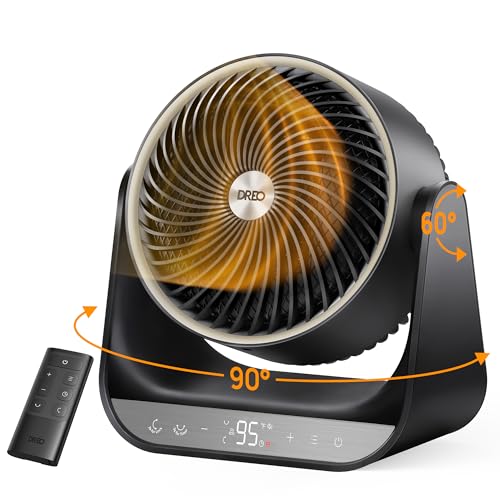
DREO Whole Room Heater, 3D Oscillating Heating Space Heaters for Indoor Use | Automatic 60° Vertical & 90° Horizontal Oscillation, 12 ft/s Long-Range Circulator, 3 Heat & 3 Fan Settings, Bedroom, Office
Check price on AmazonFrequently Asked Questions
Is an electric forced air heater suitable for cold climates?
Electric resistance heating can operate in any climate because it does not depend on outdoor temperature. However, operating characteristics vary, and in very cold regions a heat pump or dual-fuel setup may be more practical for year-round efficiency. A load calculation will confirm the right capacity for your climate zone.
How long does an electric forced air heater last?
With regular maintenance, a well-built system can provide many years of service. Longevity depends on build quality, duty cycle, and maintenance practices. Professional-grade equipment generally has a longer service life than essential-tier units.
Can I add central air conditioning to an electric forced air system?
Yes. Many homes share an air handler between heating and cooling. The guide on adding AC to a house with forced air explains how shared ductwork is used and what to evaluate.
What size electric forced air heater do I need?
Sizing depends on your home's heat load, not just floor area. A Manual J calculation accounts for insulation, windows, climate, and duct losses. Our sizing guide explains the principles that apply to both heating and cooling.
Do electric forced air heaters require ductwork?
Yes — the defining feature of a forced air system is ducted distribution. Homes without ducts may consider ductless alternatives such as a ductless heat air conditioner or a heat pump system.
This guide is provided for educational purposes. System selection and installation should be performed by qualified professionals who can evaluate your specific home and local code requirements.