Energy Audit for HVAC: Complete Home Efficiency Guide
Discover how a professional energy audit evaluates your heating and cooling system, uncovers hidden inefficiencies, and helps you make smarter decisions before installing a new air conditioner.
START LEARNINGWhy this matters: Many homeowners replace an aging AC only to find that the new unit underperforms because the real problems were duct leakage, poor insulation, or envelope air leaks. An energy audit for HVAC identifies those issues first, so your next system is sized and installed correctly from day one.
What Is an Energy Audit for HVAC?
An energy audit for HVAC is a structured assessment of how your heating and cooling equipment interacts with your home's envelope, ductwork, and insulation. Instead of looking only at the air conditioner itself, an auditor evaluates the entire system that delivers comfort: the building shell, the distribution network, and the equipment that conditions the air.
The goal is simple. An audit finds where energy is being wasted and ranks those problems by impact. Common findings include leaky ducts in attics, insufficient attic insulation, air infiltration around windows and doors, oversized or undersized equipment, and blocked returns that starve the system of airflow.
For homeowners planning to install a new air conditioner, the audit is a critical first step. It provides the data needed for an accurate load calculation, which is the foundation of proper sizing. Without that data, a contractor may simply match the old unit's capacity, repeating mistakes that caused discomfort and high energy use in the first place. If you are still comparing system types, the guides on ductless mini split systems and ductless vs ducted AC explain how each configuration interacts with the building envelope.
Why an Audit Matters Before Buying an AC
Buying a new air conditioner without an audit is like buying new tires without checking alignment. The equipment may be excellent, but the surrounding system can prevent it from performing as designed. An audit protects your investment in three practical ways.
Correct Sizing
A room-by-room load calculation based on audit data confirms the right capacity. Oversized units short-cycle, dehumidify poorly, and wear out faster.
Duct Integrity
Duct leakage testing reveals air loss before installation. Sealing ducts first means the new system delivers the airflow it is rated to produce.
Envelope Performance
Insulation and air-sealing improvements reduce the load on the new equipment, allowing a smaller, more efficient system to do the same job.
There is also a comfort dimension. Rooms that stay hot in summer or cold in winter often have distribution problems rather than equipment problems. An audit identifies unbalanced airflow, undersized returns, and pressure imbalances that no new condenser can fix on its own. Reviewing energy efficiency HVAC fundamentals helps you connect audit findings to equipment selection criteria such as SEER2 ratings and variable-speed operation.
What Inspectors Check During the Audit
A comprehensive residential energy audit covers the building envelope, the mechanical system, and the distribution network. The exact scope varies by provider, but most professional audits include the following areas.
Building Envelope
- Attic insulation levels and coverage — gaps, compression, and inconsistent depth are common.
- Wall insulation — verified through thermal imaging or inspection ports.
- Air infiltration paths — around windows, doors, recessed lights, plumbing penetrations, and rim joists.
- Window and door performance — glazing type, frame condition, and weatherstripping integrity.
- Foundation and crawlspace sealing — moisture and air movement that affect the conditioned space.
HVAC Equipment
- Equipment age, model, and rated efficiency — compared against current standards.
- Refrigerant charge and airflow — measured to confirm the system is operating within specification.
- Combustion safety — for gas furnaces, testing for spillage and carbon monoxide.
- Thermostat and controls — verification of settings, scheduling, and sensor placement.
Duct System
- Duct location — whether ducts run through conditioned or unconditioned space.
- Leakage — measured with a duct blaster or pressure pan testing.
- Insulation and sealing — condition of duct wrap, mastic, and connections.
- Return air paths — adequacy of return grilles and transfer grilles between rooms.
Auditors also review utility usage history when available. Comparing past consumption against the home's characteristics helps identify whether the system has been underperforming for years. If ductwork issues are found, resources on ductwork design guide and ductwork cleaning explain remediation options.
Core Testing Methods Explained
Professional audits rely on calibrated instruments rather than visual guesses. Four tests appear most frequently in residential reports.
| Test | What It Measures | Why It Matters for HVAC |
|---|---|---|
| Blower Door Test | Whole-home air leakage rate under controlled depressurization. | Quantifies infiltration that adds to the cooling load and identifies major leakage zones. |
| Duct Leakage Test | Air loss from the duct system, often expressed as a percentage of fan flow. | Leaky ducts in attics or crawlspaces waste conditioned air before it reaches rooms. |
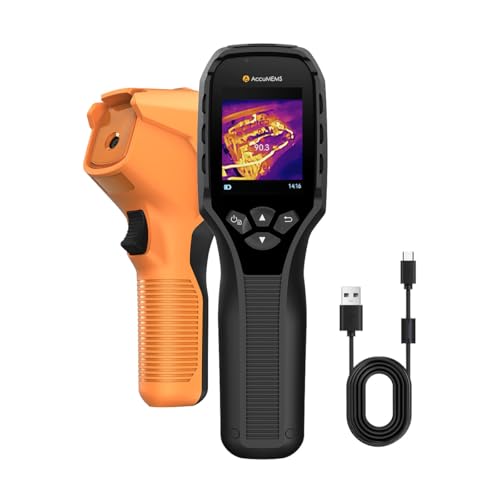
| Thermal Imaging | Surface temperature differences using an infrared camera. | Reveals missing insulation, thermal bridging, and hidden air leaks without demolition. |
| Room-by-Room Airflow | Measured supply and return airflow at each register. | Confirms balanced distribution and detects rooms that are starved of conditioned air. |
The blower door test is the centerpiece of most audits. A calibrated fan is mounted in an exterior doorway, and the home is depressurized to a standard reference pressure. The resulting leakage figure, often expressed in air changes per hour at a reference pressure, gives the auditor a benchmark for comparing the home against typical performance for its size and climate zone.
Duct leakage testing uses a similar principle applied to the duct system. The ducts are temporarily sealed at the registers, a calibrated fan pressurizes the system, and leakage is measured. In homes where ducts run through unconditioned attics, leakage rates above the recommended threshold are common and represent a significant efficiency loss.
Thermal imaging complements both tests by showing where problems are located. An infrared camera can reveal a missing patch of attic insulation, a duct run buried under loose fill, or a rim joist that leaks cold air. When combined with a blower door running simultaneously, thermal imaging becomes even more effective at exposing hidden infiltration paths.
How to Read and Prioritize the Audit Report
A well-prepared audit report ranks recommendations by impact and effort. Homeowners who understand how to read the report can sequence improvements logically instead of tackling everything at once.
What the Report Typically Contains
- Baseline measurements — blower door results, duct leakage, and insulation levels.
- Prioritized recommendations — often grouped into quick fixes, moderate projects, and major upgrades.
- Estimated impact — expected changes in comfort and efficiency, expressed qualitatively or through modeling.
- Health and safety notes — combustion appliance issues that require immediate attention.
A Practical Prioritization Order
- Safety first. Address combustion safety, carbon monoxide, and moisture problems immediately.
- Air sealing and duct sealing. These are typically the most effective improvements relative to effort and should come before new equipment.
- Insulation upgrades. Attic insulation and rim joist sealing reduce the load that the HVAC system must handle.
- Equipment replacement. Once the envelope and distribution are addressed, a correctly sized, high-efficiency system delivers its rated performance.
The sequencing matters because equipment sizing depends on the post-improvement load. Installing a new air conditioner before air sealing and insulation upgrades can result in an oversized unit. The recommended approach is to model the load after planned envelope improvements, then select equipment for that future load. Guides on ENERGY STAR certified AC and energy efficient central air unit options help translate the audit's sizing data into product choices.
Energy Audit vs. Standard HVAC Tune-Up
An energy audit and a routine HVAC tune-up are often confused, but they serve different purposes. A tune-up focuses on the equipment itself: cleaning coils, checking refrigerant charge, inspecting electrical components, and verifying safe operation. It keeps the existing system running as well as it can.
An energy audit looks at the whole system, including the equipment but also the envelope, the ducts, and the interaction between them. Where a tune-up answers "is this unit operating correctly," an audit answers "is this home set up to be comfortable and efficient in the first place."
| Aspect | Standard Tune-Up | Energy Audit |
|---|---|---|
| Primary focus | Equipment performance and safety | Whole-system performance and building envelope |
| Typical tools | Manifold gauges, multimeter, coil brush | Blower door, duct blaster, thermal camera, airflow meter |
| Output | Service checklist and equipment status | Prioritized recommendations with measured baselines |
| Best timing | Annually, before cooling season | Before equipment replacement or major renovation |
| Who performs it | HVAC technician | Certified energy auditor or home performance contractor |
Many homeowners benefit from both. A tune-up keeps the current system safe and functional while the audit informs longer-term planning. When an audit reveals that the existing equipment is near end of life, the tune-up findings can be folded into the replacement decision. Related reading on HVAC energy efficiency and ENERGY STAR HVAC standards provides context for evaluating replacement options.
DIY Checks vs. Professional Audit
Homeowners can perform useful preliminary checks before scheduling a professional audit. These self-checks do not replace calibrated testing, but they help identify obvious issues and prepare questions for the auditor.
Useful DIY Observations
- Feel for air movement around windows, doors, and electrical outlets on a windy day.
- Check attic insulation depth and look for gaps or compressed areas.
- Inspect visible duct runs for disconnected joints, torn insulation, or excessive flex duct sagging.
- Note rooms that are consistently warmer or cooler than the rest of the home.
- Listen for whistling at registers or doors, which can indicate pressure imbalance.
- Review the air filter schedule and confirm the filter is the correct size and type.
Where Professional Testing Is Essential
Blower door testing, duct leakage measurement, combustion safety analysis, and refrigerant charge verification require calibrated instruments and trained interpretation. A professional auditor also carries liability coverage and can provide a written report suitable for contractor bidding and program incentives. In many regions, utility rebate programs require a certified audit as a precondition for participation, which makes professional documentation valuable beyond the report itself.
If the audit identifies distribution problems, the next step is often a conversation about system configuration. Homeowners weighing ducted versus ductless options can review ductless mini split air conditioning systems and ductless HVAC systems for background on how each approach handles rooms that were previously underserved.
What to Do After the Audit
The audit is only valuable if its findings are acted upon. A practical sequence keeps the project manageable and ensures that each improvement supports the next.
- Review the report with the auditor. Ask which recommendations deliver the largest comfort improvement relative to effort, and which can be deferred.
- Complete air sealing and duct sealing first. These improvements reduce the load and improve distribution before any equipment decision is finalized.
- Upgrade insulation where recommended. Attic and rim joist insulation are common priorities because they deliver year-round benefits.
- Recalculate the load. After envelope improvements, a room-by-room load calculation confirms the correct capacity for the new or existing system.
- Select equipment for the future load. Use the recalculated load and efficiency criteria to choose a system that matches the improved home.
- Verify performance after installation. Post-installation testing confirms that airflow and refrigerant charge meet specification.
Homeowners who follow this sequence often find that the required equipment capacity is smaller than the old unit, which improves dehumidification and reduces cycling. The savings from envelope improvements also compound over the life of the new system. For a broader view of efficiency measures that complement an audit, see energy efficiency HVAC and ENERGY STAR certified air conditioners.
Ready to Choose the Right System After Your Audit?
Once your audit confirms the correct load and distribution plan, explore air conditioner options that match your home's improved performance profile. Compare system types, efficiency tiers, and features before making a final decision.
EXPLORE RECOMMENDED UNITSFrequently Asked Questions
What is an energy audit for HVAC?
An energy audit for HVAC is a professional assessment of how your heating and cooling system, ductwork, insulation, and building envelope work together. It identifies air leaks, duct losses, insulation gaps, and equipment inefficiencies so you can prioritize improvements.
How long does a home energy audit take?
A typical residential energy audit takes between two and four hours depending on home size and the scope of testing. Larger homes or audits that include combustion safety testing and thermal imaging may take longer.
Should I get an energy audit before buying a new AC?
Yes. An audit reveals duct leakage, insulation problems, and envelope issues that affect sizing and performance. Fixing these first helps ensure a new system is correctly sized and delivers expected efficiency.
What is a blower door test?
A blower door test uses a calibrated fan mounted in an exterior doorway to depressurize the home. It measures how much air leaks through the building envelope and helps locate major leakage paths.
Does an energy audit include duct leakage testing?
Many comprehensive audits include duct leakage testing, which pressurizes the duct system to measure air loss. Duct leakage in unconditioned spaces can significantly reduce HVAC efficiency.
Can I do an energy audit myself?
You can perform useful preliminary checks such as feeling for drafts and inspecting visible insulation. However, calibrated testing for envelope leakage, duct leakage, and combustion safety requires professional instruments and training for reliable results.