Freon for the Air Conditioner: The Complete Guide to Refrigerants
If your air conditioner is not cooling properly, you may have heard that it needs "freon." But what freon actually is, which refrigerant your system uses, and whether it is safe to handle are questions most homeowners cannot easily answer. This guide explains refrigerant types, how to recognize a leak, current regulations, and when to call a certified technician before you make any decision.
What Is Freon and How Does It Work in an AC?
"Freon" is a trademarked brand name that has become a generic term for refrigerants used in air conditioning and refrigeration. In everyday conversation, homeowners say their AC "needs freon" when they mean the system is low on refrigerant. The refrigerant is the fluid that circulates through the closed loop of your air conditioner, absorbing heat indoors and releasing it outdoors.
In a split or central system, refrigerant moves between the indoor evaporator coil and the outdoor condenser coil. As it evaporates in the indoor coil, it absorbs heat from the air. The compressor then raises its pressure and temperature, and the outdoor coil releases that heat to the outside air. This cycle is the foundation of mechanical cooling, and it is explained in more detail in our overview of how an air conditioner works and the AC refrigerant cycle.
Refrigerant Types: R-22, R-410A, R-32, and R-454B
Several refrigerants have been used in residential air conditioning over the decades. The type your system uses depends on its age and design, and the two fluids are not interchangeable.
| Refrigerant | Status | Common Systems | Notes |
|---|---|---|---|
| R-22 (HCFC-22) | Phased out for new equipment | Older central AC and heat pumps | Ozone-depleting; production and import phased out under the Montreal Protocol |
| R-410A | Widely used in current systems | Modern split, central, and mini-split systems | Higher pressure; not interchangeable with R-22; being transitioned in some markets |
| R-32 | Growing in new equipment | Newer residential and mini-split systems | Lower global warming potential than R-410A; mildly flammable, requires specific handling |
| R-454B | Transition refrigerant | New equipment designed for lower-GWP refrigerants | Mildly flammable; part of the industry transition to lower environmental impact |
The refrigerants are not interchangeable. R-410A operates at higher pressures than R-22 and requires different equipment, gauges, and handling. Attempting to substitute one for the other can damage the compressor and create a safety hazard. For regulatory context, see our notes on the R410A phase-out and the new refrigerant standards.
If you are comparing systems that use different refrigerants, the guide on heat pump vs air conditioner explains how refrigerant choices interact with overall system design.
Signs Your AC Is Low on Refrigerant
Low refrigerant is not always obvious, and several of its symptoms overlap with other faults. Still, there are clear signs that point toward a refrigerant issue.
Weak Cooling
The system runs but delivers only mildly cool air. This is the most common complaint, but it can also be caused by a dirty filter or a failing compressor.
Ice on the Coils
Frost or ice on the indoor evaporator coil or the outdoor refrigerant lines is a strong indicator of low refrigerant or restricted airflow.
Hissing or Bubbling
A hissing or bubbling sound near the indoor or outdoor unit can indicate refrigerant escaping through a leak.
Longer Run Times
The system runs continuously without reaching the set point because it cannot transfer enough heat.
Higher Energy Use
A system low on refrigerant works harder for less cooling, which can show up as higher energy consumption over time.
Warm Air from Vents
In severe cases, the system may blow warm air because the refrigerant charge is too low to produce a cooling effect.
If your system is not cooling, our troubleshooting overview on AC not cooling and the discussion of a home AC compressor that turns on but produces no cold air will help you narrow down whether the cause is refrigerant or something else.
Why Refrigerant Leaks Happen and Why They Matter
A refrigerant leak is the only reason a sealed system becomes low on refrigerant. Leaks can develop for several reasons, and some are more common than others.
Common Causes of Leaks
- Vibration and wear: Over time, vibration can loosen joints and fittings, creating small leaks.
- Corrosion: Coils and lines can corrode, especially in coastal or humid environments.
- Poor installation practices: Improperly brazed joints or under-tightened connections can leak from day one.
- Physical damage: Line sets can be damaged during renovations, lawn care, or accidental contact.
- Formicary corrosion: A type of corrosion in copper tubing that can cause pinhole leaks, often in indoor coils.
Leaks matter because they are not just a performance issue. Refrigerant leaks reduce efficiency and, in the case of older refrigerants, can have environmental impacts. The right approach is to find and fix the leak, then recharge the system, rather than topping off the refrigerant repeatedly.
If you are considering whether to repair or replace a leaking system, the guide on AC replace or repair is a useful reference, and the overview of an investment AC for long-term use explains how newer systems are designed to reduce leak-prone components.
AC Recharge: What It Involves and When It Is Needed
An AC recharge, sometimes called "topping off," means adding refrigerant to the system. If the system is low, the correct procedure is to find and fix the leak first, then evacuate the system and recharge it to the manufacturer's specified charge weight.
What a Proper Recharge Includes
- Leak detection: A technician uses electronic leak detectors, pressure tests, or UV dye to locate the leak.
- Repair: The leaking component is repaired or replaced, depending on the location and severity.
- Evacuation: The system is evacuated with a vacuum pump to remove air and moisture.
- Recharge: Refrigerant is added by weight to match the manufacturer's specification.
- Verification: The technician checks pressures, temperatures, and system performance to confirm proper operation.
The phrase "freon gas cost" or similar searches often reflect a misunderstanding: a recharge is not a routine maintenance task. In a sealed system, refrigerant does not get consumed. If you are told that a recharge is needed without a leak explanation, ask for the leak diagnosis in writing.
For related background on part-level repairs, the notes on HVAC expansion valve replacement and the overview of HVAC motor replacement explain how some components relate to refrigerant flow and system performance.
EPA Regulations and the R-22 Phase-Out
Refrigerants are regulated in the United States under Section 608 of the Clean Air Act, administered by the Environmental Protection Agency (EPA). The rules restrict how refrigerants are handled, sold, and disposed of, and they require technicians to be certified to work with them.
What Homeowners Should Understand
- R-22 is no longer produced or imported for new equipment in the U.S., though recovered and reclaimed R-22 can still be used in existing systems under certain conditions.
- Technicians must be certified to purchase and handle regulated refrigerants. DIY recharge kits for R-22 are not a safe or legal workaround.
- Venting refrigerant to the atmosphere is illegal. This applies to all refrigerants covered by the rule, not just R-22.
- Newer refrigerants like R-32 and R-454B are mildly flammable and require specific handling and equipment as part of the industry transition.
For the broader regulatory picture, see our guides on EPA refrigerant regulations and the R410A phase-out. The new refrigerant standards overview explains the environmental reasons behind the shift to lower-GWP refrigerants.
Safety and Handling Rules for Homeowners
Refrigerants are generally safe when they are contained within a properly functioning system. The risk arises when a system is leaking, when a component is being serviced, or when an untrained person attempts to handle refrigerant directly.
Homeowner Safety Guidelines
- Do not attempt to recharge the system yourself. Refrigerant handling requires certification and specialized equipment.
- If you smell an unusual chemical odor or suspect a major leak, ventilate the area and leave the space.
- Do not puncture, cut, or open refrigerant lines or the compressor.
- Keep children and pets away from an area where a leak is suspected.
- Use a certified HVAC technician for all refrigerant work, including diagnosis and recharge.
- Ensure the electrical supply is properly grounded; our guide on electrical outlet plugs explains outlet types and ratings.
Refrigerant exposure in a well-ventilated space is rarely a health concern, but in an enclosed area it can displace oxygen. If you suspect a leak, ventilate and call a professional rather than attempting to investigate the system yourself.
For general maintenance that you can safely handle on your own, such as filter changes, our notes on furnace and air conditioning service and fixing an air conditioner cover routine tasks.
Refrigerant Service Market Tiers
Refrigerant-related service varies significantly by provider and by scope. Instead of focusing on figures, it helps to understand what each service tier typically delivers. The tiers below describe relative service depth, not absolute pricing.
| Tier | Typical Focus | What to Expect | Best For |
|---|---|---|---|
| Entry-Level | Basic diagnostic and top-off | Pressure check, simple recharge, limited leak investigation | Quick assessment of a known minor issue |
| Mid-Range | Leak detection and repair | Electronic leak detection, targeted repair, evacuation, and recharge to specification | Most residential systems with a confirmed leak |
| Premium | Full-system performance review | Comprehensive diagnostics, leak repair, refrigerant charge verification, airflow and electrical checks | Systems with multiple symptoms or long service history |
| Professional-Grade | Commercial and specialty systems | Specialty refrigerant handling, code-compliant documentation, and multi-zone system service | Commercial buildings and complex multi-zone systems |
A mid-range service generally offers a more durable outcome than an entry-level top-off, because it addresses the root cause. Premium and professional-grade tiers are worthwhile when a system has a history of issues or when documentation is required. For related maintenance context, see the overview of HVAC service companies and HVAC contracting.
Frequently Asked Questions
Does my air conditioner use freon?
It uses a refrigerant, which many people call freon. The specific type depends on the age and design of the system. Older units may use R-22, while newer systems typically use R-410A, R-32, or R-454B.
Can I add refrigerant to my AC myself?
No. Refrigerant handling requires EPA certification and specialized equipment. Improper handling is illegal, can damage the system, and is a safety hazard. Always use a certified technician.
Why is my AC low on refrigerant if it is a sealed system?
A sealed system should not lose refrigerant over time. If it is low, there is a leak. The correct approach is to find and repair the leak before recharging.
Is R-22 still available?
R-22 production and import for new equipment have been phased out in the U.S. Recovered and reclaimed R-22 may still be used in existing systems under specific conditions, but it is no longer a routine option.
How often does an AC need a recharge?
A properly sealed system does not need routine recharges. A recharge is only appropriate after a leak has been found and repaired, and the system has been evacuated and recharged to the manufacturer's specification.
What are the signs of a refrigerant leak?
Weak cooling, ice on the coils, hissing or bubbling sounds, longer run times, and higher energy use are common signs. A certified technician can confirm a leak with proper detection equipment.
Ready to Compare Refrigerant and AC Tools?
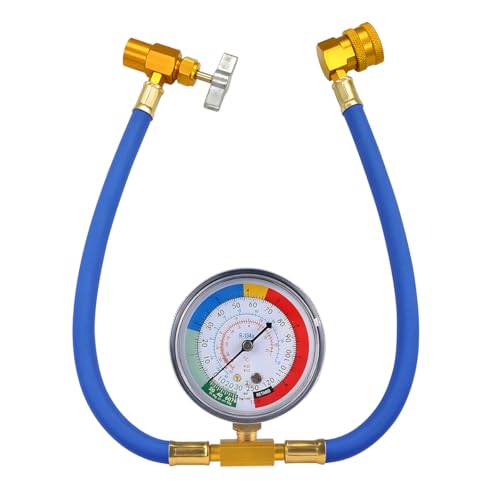
Browse our recommended products below to compare leak detectors, gauges, and related tools for professional HVAC work. Every option is selected to help you or your technician handle refrigerant work safely and accurately.
View Recommended Options