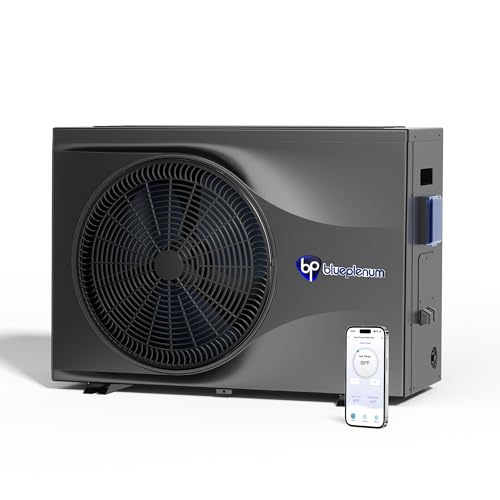
Ground Source Heating and Cooling Systems
Discover how geothermal heat pumps use the stable temperature of the earth to heat and cool your home efficiently, year after year. This guide explains how the technology works, the different ground loop configurations, key benefits, and what to evaluate before choosing a system.
EXPLORE THE GUIDEWhy ground source systems matter: Unlike conventional air conditioners and furnaces that exchange heat with outdoor air, ground source systems exchange heat with the earth below. Because underground temperatures stay remarkably consistent, these systems can heat and cool a home with far less energy across every season. That makes them a serious option for homeowners planning a long-term, high-efficiency upgrade.
How Ground Source Heating and Cooling Works
The Basic Principle
A ground source heating and cooling system — often called a geothermal heat pump — moves heat rather than generating it from fuel. A sealed network of pipes, known as a ground loop, is buried in the yard or drilled deep into the ground. A mixture of water and antifreeze circulates through this loop and absorbs heat from the earth in winter. The heat pump concentrates that heat and distributes it indoors. In summer, the process reverses: the system extracts heat from your home and releases it into the cooler ground.
This heat-transfer approach is what separates ground source systems from conventional equipment. Air-source heat pumps and air conditioners rely on outdoor air temperature, which fluctuates widely. Ground source systems rely on earth temperature, which stays relatively stable several feet below the surface. That stability translates into consistent performance even during extreme weather.
The Four Main Components
- The ground loop: Buried pipes that exchange heat with the soil or groundwater. The loop is the defining feature of a ground source system and the element that requires the most site planning.
- The heat pump unit: Located indoors, this unit contains a compressor, heat exchanger, and refrigerant circuit. It moves heat between the loop and your home's distribution system.
- The distribution system: Typically forced-air ductwork, radiant floor tubing, or fan coil units. Some retrofits can reuse existing ducts.
- The controls: Thermostats and sensors that manage operation, including switching between heating and cooling modes and optimizing compressor speed on variable-capacity models.
Types of Ground Loops Explained
The ground loop is the most site-specific part of any ground source system. The right configuration depends on available land, soil conditions, local regulations, and the size of the building. Here are the four main options.
Horizontal Loops
Horizontal loops are laid in trenches roughly four to six feet deep and require a meaningful amount of yard space — often several hundred feet of trench length depending on system size. They are typically the most straightforward configuration to install when land is available, and they suit suburban and rural properties with open ground. Trenching equipment is used rather than drilling rigs, which simplifies the installation process.
Vertical Loops
Vertical loops are installed by drilling boreholes — commonly 100 to 400 feet deep — and inserting a U-shaped pipe into each one. This configuration is the go-to choice for properties with limited land, including denser suburban lots and urban infill sites. Vertical loops have a smaller surface footprint but require specialized drilling equipment, so they are typically more complex to install than horizontal loops.
Pond or Lake Loops
If a property has a suitable body of water nearby, a pond or lake loop can be an efficient option. Coils of pipe are submerged at a depth where water temperature remains stable. This configuration can be simpler than drilling or trenching, but it depends entirely on having access to a water body of sufficient size and depth, and it is subject to local environmental regulations.
Open-Loop Systems
Open-loop systems draw groundwater from a well, pass it through a heat exchanger, and return it to a separate well or drainage point. They can be effective where clean groundwater is plentiful, but they require careful permitting and water-quality testing. Because they interact with local water resources, open-loop systems are more regulated than closed-loop designs.
System Tiers and What to Expect
Ground source systems are available in different market tiers. Rather than thinking in terms of figures, it helps to understand how tiers differ in capability, build quality, and features.
Entry-Level Ground Source
Entry-level systems typically use single-speed compressors and a straightforward control scheme. They cover the basics reliably and are a solid choice for homeowners prioritizing simplicity. These systems are well-specified for their class and are most appropriate where load calculations show steady, moderate demand.
Mid-Range Ground Source
Mid-range systems commonly introduce two-stage compressors, improved sound insulation, and more capable controls. They offer a step up in comfort consistency and efficiency without the added complexity of top-tier equipment. For many households, this tier represents a good balance of capability and simplicity.
High-End Ground Source
High-end tier systems use variable-speed compressors that modulate output precisely to match demand. This results in smoother temperature control, quieter operation, and strong part-load efficiency. These models are feature-rich for their class and suit homeowners who want maximum comfort and refined performance.
Commercial-Grade Ground Source
Professional-grade and commercial-grade systems are built with heavy-duty components and reinforced construction for demanding applications — multi-unit buildings, light commercial spaces, and installations with high runtime expectations. They are designed for durability over long service life and are supported by commercial-level service networks.
Benefits and Considerations
Advantages
- High efficiency in both heating and cooling because the system exchanges heat with a stable underground temperature.
- Consistent performance across seasons, including in cold climates where air-source equipment can struggle.
- Long service life — the ground loop can last 50 years or more, far longer than the heat pump unit itself.
- Reduced dependence on outdoor air temperature, which translates to steady comfort during extreme weather.
- Supports renewable energy goals and can pair well with other efficiency upgrades in a whole-home strategy.
Considerations
- Installation involves ground work — trenching or drilling — which requires site assessment and permitting.
- Upfront investment is typically higher than conventional air-source systems, reflecting the ground loop work.
- Not every property has the land area, soil conditions, or water access needed for every loop type.
- Installation should be handled by experienced geothermal contractors who understand local soil and code requirements.
- Planning is important: the system must be sized correctly to the building load for best results.
Ground Source vs. Other Systems
| System Type | Heat Source / Sink | Seasonal Consistency | Typical Best For |
|---|---|---|---|
| Ground source heat pump | Soil or groundwater | High — stable underground temperature | Long-term efficiency, cold climates, new builds |
| Air-source heat pump | Outdoor air | Moderate — affected by outdoor temperature | Retrofits with limited land, moderate climates |
| Central air conditioner + furnace | Outdoor air (cooling) / fuel (heating) | Depends on equipment and fuel supply | Established ducted homes with existing infrastructure |
| Ductless mini-split | Outdoor air | Moderate — zone-based comfort | Homes without ducts, room-by-room control |
| Evaporative cooler | Outdoor air and water evaporation | Low in humid climates | Dry climates with low humidity |
What to Evaluate Before Choosing a System
1. Site and Soil Assessment
Before choosing a loop type, a contractor will assess the property's soil composition, moisture content, and available land. Soil thermal properties directly influence loop sizing and performance. For properties with limited space, vertical loops may be the practical route; for larger lots, horizontal loops often make more sense.
2. Load Calculation and Sizing
A proper load calculation — often following Manual J methodology — determines how much heating and cooling capacity the home actually needs. Correct sizing is essential. An undersized system will struggle during peak demand, while an oversized system may cycle excessively and deliver uneven comfort. Learn more in our guide on how to size an air conditioner.
3. Distribution System Compatibility
If your home already has ductwork, a forced-air ground source heat pump may be able to use it, provided the ducts are in good condition and properly sized. Homes without ducts may consider radiant floor heating or fan coil units. Understanding the existing setup helps determine which configuration is most practical.
4. Efficiency Ratings
Ground source heat pumps are rated for heating and cooling efficiency using standardized metrics. Higher efficiency generally means better performance in the long run. Our resources on energy efficiency of an air conditioner and high-efficiency HVAC explain the fundamentals of these ratings.
5. Contractor Experience
Ground source installation involves specialized knowledge — loop design, drilling or trenching, and system commissioning. Choosing an experienced geothermal contractor is one of the most important decisions you will make. Our guide on how to choose an HVAC contractor covers what to look for.
Maintenance and Long-Term Ownership
Routine Maintenance
Ground source systems have relatively modest maintenance needs compared with fuel-burning equipment, but routine care still matters. Filter changes, heat exchanger inspections, and periodic checks of loop pressure and refrigerant charge help keep the system operating efficiently. The underground loop itself requires essentially no maintenance once installed correctly.
Annual service visits are worthwhile — they catch small issues before they become larger ones and help preserve efficiency over the life of the system. Our broader resources on heating and cooling systems and energy-efficient heating and cooling systems for homes provide additional context on whole-system upkeep.
Expected Service Life
The heat pump unit typically lasts 20 to 25 years with proper maintenance. The ground loop, because it is buried and protected from weather, can last 50 years or more. That difference means the loop is a long-term investment that may serve two or even three heat pump replacements over its lifetime — a key reason ground source systems are often described as a long-term investment in home comfort.
Ground Source Systems in a Whole-Home Strategy
Ground source heat pumps are most effective when considered as part of a whole-home efficiency plan. That means pairing the system with good insulation, air sealing, and a well-designed distribution setup. Homeowners exploring broader HVAC options may also want to review resources on different types of central air conditioning systems and heating, ventilating, and air conditioning fundamentals to compare approaches.
For homeowners considering a new installation, it also helps to understand the full scope of adding or replacing a system. Guides such as cost to install a new HVAC system with ductwork and cost of installing air conditioning in a house describe the planning factors involved, including the site work and distribution components that apply to geothermal projects as well.
If you are comparing ground source against other high-efficiency options, our pages on energy-efficient AC and eco heating and cooling offer a useful frame of reference for evaluating efficiency across system types.
Ready to Explore Ground Source Options?
Ground source heating and cooling systems reward careful planning. Understand your site, get a proper load calculation, and choose a contractor with geothermal experience. When designed well, these systems deliver steady comfort and strong efficiency for decades.
VIEW RECOMMENDED SYSTEMSFrequently Asked Questions
How does a ground source heating and cooling system work?
A ground source system uses a network of buried pipes (ground loop) to exchange heat with the stable temperature of the earth. In winter, the loop absorbs heat from the ground and transfers it indoors through a heat pump. In summer, the process reverses, rejecting heat from the home into the cooler ground.
What are the main types of ground loops?
The four main types are horizontal loops, vertical loops, pond or lake loops, and open-loop systems. Horizontal loops suit homes with ample land, vertical loops suit limited lots, pond loops require a suitable body of water, and open-loop systems use well water.
Are ground source heat pumps suitable for cold climates?
Yes. Because underground temperatures remain relatively stable year-round, ground source heat pumps perform reliably in cold climates. They are among the most efficient heating options available in regions with long heating seasons.
How long do ground source systems last?
The heat pump unit typically lasts 20 to 25 years, while the underground loop can last 50 years or more. This makes the ground loop a long-term investment that may outlive several heat pump replacements.
Do ground source systems require ductwork?
Not always. Forced-air ground source heat pumps use ductwork, but some systems are ductless and use radiant floor heating or fan coil units. The configuration depends on the home's existing distribution system.