
HVAC Fan Replacement: What Influences the Outlay
Understand the parts involved, the factors that shape the overall project outlay, the warning signs of a failing fan, and how to decide between repair and replacement.
Explore the FactorsQuick Summary: HVAC fan replacement involves either the indoor blower motor or the outdoor condenser fan motor. The overall project outlay depends on the fan type, motor tier, system age, labor complexity, and regional labor rates. This guide explains what drives those variables so you can evaluate a contractor's proposal with confidence.
When an HVAC system starts making odd noises or stops moving air properly, the fan is often the first component to investigate. The fan is the part of the system that physically moves conditioned air through the home and exhausts heat outdoors. Because it runs every time the system operates, it accumulates wear faster than many other components. Homeowners who search for "HVAC fan replacement cost" are usually trying to answer one practical question: what is a reasonable outlay for this repair, and is it worth doing at all?
This guide reframes that question in a more useful way. Rather than quoting a single number — which varies by region, system type, and contractor — it explains the components involved, the variables that move the overall outlay up or down, and the decision framework professionals use. Once you understand those variables, you can interpret any proposal you receive and judge whether it is fair for your situation.
What Is an HVAC Fan, and Why Does It Matter?
Most residential HVAC systems contain two distinct fans, each with a different job. The indoor blower fan sits inside the air handler or furnace and pushes conditioned air through the ductwork into the home. The outdoor condenser fan sits on top of the outdoor unit and pulls air across the condenser coil so the system can release heat. Both are driven by electric motors, and both are common points of failure.
When the blower fan fails, the system may run but deliver almost no air, or the air may be warm because it is not passing across the evaporator coil correctly. When the condenser fan fails, the compressor may overheat and shut down on a safety switch, and the home loses cooling even though the indoor fan still runs. Knowing which fan is failing is the first step toward understanding what the replacement project will involve.
Factors That Shape HVAC Fan Replacement Outlay
No two fan replacement projects are identical, which is why estimates vary widely between homes and between contractors. The factors below are the ones professionals weigh when they prepare a proposal.
1. Which Fan Is Replaced
An outdoor condenser fan motor is generally simpler to access than an indoor blower motor, which may require removing panels and working in a tight air handler. The fan type is often the largest single driver of the project scope.
2. Motor Tier
Replacement motors range from entry-level to premium variable-speed designs. A mid-range motor is often the standard choice, while premium electronically commutated motors offer quieter, more efficient operation and a longer service horizon.
3. System Age and Brand
Older systems may use discontinued motor mounts or proprietary connectors that require additional adapter parts. Matching the original equipment manufacturer's specification avoids future compatibility issues.
4. Labor Complexity
Access, wiring, and the condition of surrounding components all affect labor time. A rusted fan cage or seized bearing can add significant effort to a task that is otherwise straightforward.
5. Regional Labor Rates
Labor rates vary by market. Contractors in dense metropolitan areas typically operate with higher overhead, which is reflected in the proposal.
6. Additional Repairs Found
Fan failures sometimes accompany other issues — a failing capacitor, a clogged coil, or a worn contactor. A thorough diagnosis may uncover additional work that should be addressed during the same visit.
Typical Fan Types and Their Tier Positioning
Replacement motors fall into a few broad categories. Each tier has a different profile in terms of durability, noise, and efficiency. The table below uses neutral tier descriptors rather than figures, so it stays relevant over time.
| Motor Tier | Typical Use | Best For |
|---|---|---|
| Entry-level | Basic replacement for standard single-speed systems | Budget-conscious replacements in older systems |
| Mid-range | Standard replacement for most residential systems | Balanced durability and reliable everyday performance |
| Premium | Electronically commutated motors with variable speed | Quieter operation and better humidity control |
| Professional-grade | Heavy-duty motors built for continuous commercial use | Light commercial and high-duty-cycle applications |
In general, a mid-range motor offers good value for its tier and is the sensible starting point for most residential systems. Premium motors are worthwhile when noise reduction and efficiency are priorities, or when the home has a variable-speed system that requires a specific motor type. An entry-level motor can be a reasonable choice for an older system that is itself nearing the end of its service life.
Signs Your HVAC Fan Needs Attention
Fan failure rarely happens without warning. The earlier you notice the symptoms, the more options you have — and the lower the risk of collateral damage to the compressor or other components.
- Weak or no airflow from vents. The blower fan may be failing, or the fan cage may be clogged with debris. In some cases, the problem is a failed capacitor rather than the motor itself.
- Loud grinding, rattling, or squealing. Worn bearings produce a characteristic grinding sound, while a loose fan blade causes rattling. Squealing often points to a failing motor bearing.
- The outdoor fan does not spin. If the compressor hums but the fan remains still, the condenser fan motor or its capacitor has likely failed.
- The system shuts down after a short run. A failing condenser fan allows the compressor to overheat, triggering a safety shutdown. Repeated cycling can damage the compressor.
- Warm air from the vents. When the blower is weak, air passes over the coil too slowly, and the home never reaches the setpoint.
- Burning smell or tripped breaker. An overheated motor or a short in its wiring can trip the breaker. Stop using the system and call a professional.
Diagnostic note: A fan that does not start is not always a failed motor. Capacitors, relays, and control boards can produce identical symptoms. A technician should test the motor and its supporting components before recommending replacement, so you do not pay for a motor that was not the real problem.
Repair or Replace? A Practical Decision Framework
Once the fan diagnosis is confirmed, the next question is whether to replace just the fan, or to consider a broader system decision. The framework below is the one most reputable contractors use.
- If the system is under a decade old and otherwise healthy: replacing the failed fan is almost always the right decision. The rest of the system still has service life ahead, and the repair restores full function.
- If the system is in the middle of its service life: weigh the fan replacement against the overall condition. If this is the first major repair, the fan replacement is reasonable. If it is the third or fourth in recent seasons, a broader replacement conversation is warranted.
- If the system is near the end of its service life: a fan replacement may still be worthwhile as a short-term measure, but it should be paired with a plan for eventual system replacement. In some cases, putting the fan replacement budget toward a new system is the more sensible long-term investment.
- If the compressor has also failed: the project scope grows considerably. In that situation, comparing the combined repair against replacement of the outdoor unit or the full system is the correct comparison.
For homeowners considering a system replacement, understanding the different types of air conditioning for homes is useful context. Systems without existing ductwork may benefit from a ductless mini-split, while homes with ducts can often retain their distribution system and replace only the equipment. Reviewing HVAC quotes from multiple contractors is the standard way to compare options fairly.
How to Evaluate a Fan Replacement Proposal
When a contractor presents a proposal, the document should be specific enough that you can compare it to others. Look for the following elements:
- Motor specification. The proposal should name the motor model or at least its tier and specifications, not just "new fan motor."
- Diagnostic findings. The technician should explain what failed and how it was confirmed, including the capacitor and control board tests.
- Labor description. The scope of labor — removal, installation, wiring, testing — should be itemized or clearly described.
- Warranty terms. Motor warranties and labor warranties are separate. Both should be documented.
- Additional recommendations. Any other issues found during the visit should be listed separately so you can decide whether to address them now or later.
Comparing proposals is easier when you understand the terminology. Resources on how HVAC service companies operate and what to expect from a qualified HVAC repair technician can help you ask better questions. If the diagnosis points to broader air handler issues rather than just the fan, a dedicated blower fan replacement discussion is the relevant next read.
Considering a System Replacement Instead?
If your system is aging and the fan is one of several failing components, browse our recommended air conditioners to compare options for your home.
Explore Recommended UnitsMaintenance Habits That Extend Fan Life
Fan motors fail for predictable reasons: dust buildup, lack of lubrication, electrical wear, and heat. A few routine habits meaningfully extend service life:
- Replace air filters on schedule. A restricted filter forces the blower to work harder, accelerating motor wear. This is the single most effective preventive step.
- Keep the outdoor unit clear. Debris around the condenser restricts airflow and forces the outdoor fan to work against higher static pressure.
- Schedule annual maintenance. A spring tune-up includes motor inspection, capacitor testing, and coil cleaning — the three items most associated with fan longevity.
- Listen for early warning signs. A new squeal or rattle is cheap to investigate early and costly to ignore.
- Address electrical issues promptly. A failing capacitor stresses the motor every time it starts. Replacing the capacitor early prevents motor failure later.
For homes with older ductwork, sealing leaks and improving the ductwork design can also reduce the load on the blower. When the system is well-matched to the home, the fan operates closer to its design point and lasts longer.
Frequently Asked Questions
Which HVAC fan is more likely to fail — the indoor blower or the outdoor condenser fan?
Both fail with some regularity, but the outdoor condenser fan is exposed to weather and debris, while the indoor blower runs longer per cycle. Failure rates depend heavily on maintenance history and local climate.
Can I replace an HVAC fan motor myself?
Replacing a fan motor involves electrical connections, correct motor matching, and safe handling of capacitors. It is a task best left to a licensed technician. DIY attempts risk damaging the motor, the control board, or the person doing the work.
How long does a replacement fan motor typically last?
A well-matched, properly installed motor in a maintained system typically provides many years of service. Lifespan depends on the motor tier, operating hours, and whether the system is kept clean and correctly charged.
Does a fan replacement require replacing the capacitor too?
Not always, but it is often advisable. A weak capacitor stresses a new motor from the first start. Many technicians replace the capacitor as a precaution when installing a new motor, and the proposal should state whether it is included.
Why does my AC fan keep failing?
Repeated failures usually point to an underlying cause: incorrect motor matching, chronic overheating from restricted airflow, electrical supply problems, or a system that is oversized or undersized for the home. A thorough diagnosis should identify the root cause rather than just replacing the motor again.
Is it better to replace the fan or the whole system?
If the system is otherwise healthy, replacing the fan is the sensible choice. If the system is aging and has needed multiple repairs, putting the fan replacement budget toward a new system may be the better long-term decision. A professional assessment comparing both paths is the right way to decide.
Recommended HVAC Fans and Air Movers for Replacement Planning
⚠️ AFFILIATE DISCLOSURE: This website contains affiliate links. As an Amazon Associate, we earn from qualifying purchases. If you make a purchase through these links, we may receive a small commission at no additional cost to you. Read our full affiliate policy.

Criditpid Furnace Blower Fan Replacement for Dayton 1TDT8, 5C508, Hvac Blower Fan for Century JE2J047NS, 9459.
Check price on Amazon
90318 HVAC Fan Motor Accessories Replacement - for Packard HVAC Refrigeration Blowers - 1550 RPM 115V 1/8 HP
Check price on Amazon
B1086756 - Goodman Replacement Condenser Fan Blade -3 x 18" CCW
Check price on Amazon
98M20 - Lennox Replacement Condenser Fan Blade -4 x 18" CCW
Check price on Amazon
CNMXIAN ORM5458 Condenser Fan Motor 1/3-1/6 HP 208-230V 1075 RPM 48Y Frame | Reversible Rotation AC Motor Compatible with A.O.Smith F48U23A01, ORM5458B, Fits HVAC AC Unit(Includes Capacitor)
Check price on Amazon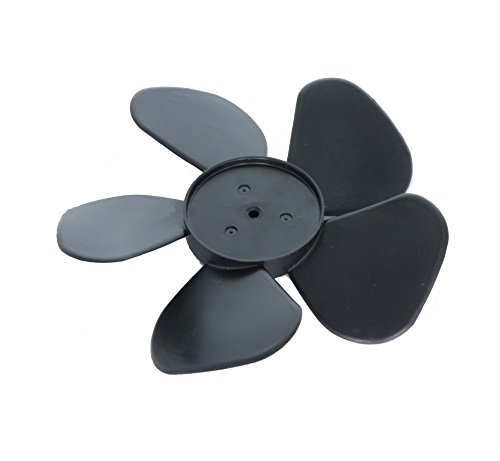
Endurance Pro S99020272 Fan Blade Replacement for Broan
Check price on Amazon
Dreyoo 4 Pack 24V AC Fan Relay, 90-380 HVAC Blower Isolation AC Switch SPST | 24V Relay with UL Certification, AC Switch Compatible with Goodman HVAC Furnace Blower, Humidifier, Blower, Heat Sequencer
Check price on Amazon