
HVAC Repair Technician: How to Choose the Right Professional
Your heating and cooling system is only as reliable as the technician who services it. Learn how to evaluate credentials, understand diagnostic steps, and hire a repair pro you can trust.
Explore Technician ToolsWhy this guide matters: Finding a skilled HVAC repair technician is one of the most important decisions a homeowner makes. A well-qualified technician diagnoses accurately, repairs safely, and helps you avoid repeat failures. This guide gives you the criteria, questions, and process to hire with confidence.
What Does an HVAC Repair Technician Actually Do?
An HVAC repair technician is a trained specialist who diagnoses and repairs heating, ventilation, and air conditioning equipment. The role spans far more than swapping parts. A skilled technician assesses the entire system — refrigerant charge, electrical components, airflow, ductwork, controls, and safety devices — to identify the root cause of a problem rather than masking a symptom.
Common tasks include testing capacitors and contactors, measuring refrigerant pressures, checking blower motor amp draw, verifying thermostat operation, inspecting drain lines, and evaluating heat exchanger integrity in furnaces. Understanding the broader context of different types of air conditioning for homes helps you appreciate why each system type calls for slightly different diagnostic skills.
If the issue is confined to airflow and ductwork, the technician may reference principles from a ductwork design guide to diagnose restrictions. If the problem is refrigerant-related, our guide on freon for the air conditioner explains the role of refrigerant charge in system performance.
When Should You Call an HVAC Repair Technician?
Not every hiccup requires a service visit. Simple issues like a tripped breaker, a clogged filter, or a thermostat set incorrectly can often be resolved with basic troubleshooting. However, certain symptoms strongly signal that professional help is warranted:
If your compressor turns on but produces no cold air, our guide on a home AC compressor that turns on but no cold air walks through likely causes. If the whole house is warm, our article on a house not cooling from the air conditioner helps separate technician-level problems from basic fixes.
Credentials to Verify Before Hiring
Credentials separate a trained professional from an unqualified handyman. Before booking a repair visit, verify the following:
- State or local licensing. Most jurisdictions require HVAC contractors to hold a license. Verify the license number with your state licensing board.
- EPA Section 608 certification. Required for any technician who handles refrigerants. This certification confirms safe refrigerant handling practices.
- NATE certification. North American Technician Excellence is a widely recognized industry credential that validates technician knowledge across system types.
- Liability insurance and bonding. Protects you if damage occurs during the repair.
- Manufacturer authorization. If your system is under warranty, using an authorized technician preserves coverage.
For a broader look at how to vet service providers, our guide on HVAC service companies and our article on heating and air conditioning repair in my area explain how to compare providers and avoid common pitfalls.
What to Expect During a Diagnostic Visit
A thorough technician follows a structured diagnostic process. Knowing what to expect helps you evaluate whether the visit is comprehensive:
- Interview and symptom review. The technician asks when the problem started, what symptoms you noticed, and whether anything changed recently.
- Visual inspection. Filter condition, drain pan, duct connections, and equipment condition are checked.
- Electrical testing. Capacitors, contactors, relays, and control boards are tested with a multimeter. Our guide on a fuse in HVAC explains how a simple blown fuse can mimic a larger failure.
- Refrigerant and airflow measurements. Superheat, subcooling, static pressure, and temperature split are measured to verify system performance.
- Component inspection. Blower motor amp draw, compressor operation, and fan blade condition are assessed. Our HVAC blower fan replacement guide explains what a failing blower looks like.
- Report and recommendation. The technician should explain findings in plain language, offer repair options, and provide a written summary.
If the diagnosis points to a failing compressor, our guide on compressor symptoms provides useful context. If airflow restrictions are the issue, review the principles in a ductwork design guide.
Questions to Ask Before Hiring
- Are you licensed and insured in my state?
- Do you hold EPA Section 608 certification?
- Will you provide a written estimate before starting work?
- Is there a diagnostic fee, and is it applied to the repair?
- Do you carry common parts on the truck, or will ordering delay the repair?
- What is your warranty on parts and labor?
- Can you show NATE or manufacturer certifications?
Common Pitfalls and How to Avoid Them
Even with good intentions, homeowners can run into trouble when hiring repair technicians. Watch for these warning signs:
- Pressure to replace instead of repair. A reputable technician will explain both options and let you decide. If replacement is pushed aggressively without a clear diagnosis, seek a second opinion.
- No written diagnosis. Verbal explanations are fine, but a written summary protects you and clarifies scope.
- Unclear warranty terms. Confirm in writing what is covered and for how long.
- Unmarked vehicles or no identification. Legitimate technicians arrive in branded vehicles and carry ID.
- Cash-only demands. Reputable companies offer standard payment methods and provide invoices.
For a broader comparison of service channels, our guide on HVAC contracting covers how to evaluate company structure and service agreements. Our article on HVAC quotes explains what a fair written estimate should include.
Repair or Replace? How Technicians Decide
Technicians weigh several factors when recommending repair versus replacement: system age, repair frequency, refrigerant type, efficiency, and part availability. A system nearing the end of its expected life with a major component failure (compressor, coil, or heat exchanger) may warrant replacement rather than repeated repairs.
If your system is relatively new and still under warranty, repair is usually the right call. If the system is older and has had multiple repairs in recent years, replacement may deliver better long-term reliability. Our guide on high efficiency heating and air conditioning explains how modern systems compare on efficiency, and our overview of ENERGY STAR HVAC equipment covers efficiency certifications.
For homeowners considering a system upgrade, our article on a high efficiency furnace and air conditioner combination explains how matched systems perform together.
How Regular Maintenance Reduces Repair Calls
Preventive maintenance is the best defense against emergency repair calls. A seasonal tune-up includes filter replacement, coil cleaning, refrigerant charge verification, electrical checks, and blower inspection. These visits catch small issues before they become failures.
At home, replacing filters on schedule and keeping the outdoor unit clear of debris go a long way. If your system includes a humidifier or air cleaner, our guide on a furnace air cleaner system explains how those accessories interact with airflow and filter loading. Our article on furnace evaporator coil cleaning explains why clean coils matter for efficiency and reliability.
Understanding the Technician Market Tiers
HVAC repair providers generally fall into three broad market tiers. Use these descriptors to orient yourself before comparing specific companies:
- Essential tier — independent technicians and small shops offering basic diagnostics and common repairs. A solid choice for straightforward fixes and routine maintenance.
- Mid-tier — established local companies with multiple technicians, standard service agreements, and broader parts inventory. A balanced option for most homeowners.
- Premium tier — full-service contractors with manufacturer authorizations, NATE-certified teams, 24/7 emergency service, and comprehensive warranties. Best for complex systems, warranty work, and homeowners who prioritize responsiveness.
Mid-tier and premium providers generally offer faster scheduling, more thorough diagnostics, and stronger warranty backing than entry-level options. Feature-rich service agreements in the higher tiers often include seasonal tune-ups and priority response, which matters in climates with extreme temperature swings. Match the tier to your system complexity and your comfort with risk.
Ready to Compare Technician Tools and Equipment?
Browse curated options below for the tools and equipment HVAC repair professionals rely on, and choose what fits your needs.
View Recommended EquipmentFrequently Asked Questions
What does an HVAC repair technician do?
An HVAC repair technician diagnoses and repairs heating, ventilation, and air conditioning equipment. This includes checking refrigerant charge, electrical components, blower motors, compressors, thermostats, and airflow, then performing the necessary repairs or replacements.
What certifications should an HVAC repair technician have?
Look for NATE certification, EPA Section 608 refrigerant handling certification, state or local licensing, and liability insurance. These credentials confirm training, safe refrigerant handling, and accountability.
How do I know if I need an HVAC repair technician?
Call a technician if your system is not cooling or heating properly, makes unusual noises, leaks water, trips breakers, emits strange odors, or if the compressor runs but no cold air reaches the rooms. Persistent issues after basic troubleshooting warrant a professional visit.
Should I repair or replace my HVAC system?
The decision depends on system age, repair frequency, refrigerant type, and whether a major component has failed. A technician can provide a written assessment. For systems near the end of their life with major failures, replacement is often the more reliable path.
Related Guides
Recommended Tools for HVAC Repair Technicians
⚠️ AFFILIATE DISCLOSURE: This website contains affiliate links. As an Amazon Associate, we earn from qualifying purchases. If you make a purchase through these links, we may receive a small commission at no additional cost to you. Read our full affiliate policy.

HVAC Troubleshooting and Diagnostics: A Practical Field Workbook for Diagnosing Common Residential HVAC Problems
Check price on Amazon
Aoebwpwi 12PCS Swage Tool HVAC Repairing Set with Bit Holder, Air Conditioner Copper Tube Expander Swaging Tool Drill Bit Copper Pipe Swage, 1/4'', 3/8'',1/2'',5/8'',3/4'',7/8'' Bits Set (12PCS)
Check price on Amazon
Funny HVAC Tech T-Shirt AC Repairman Technician Tees for Men
Check price on Amazon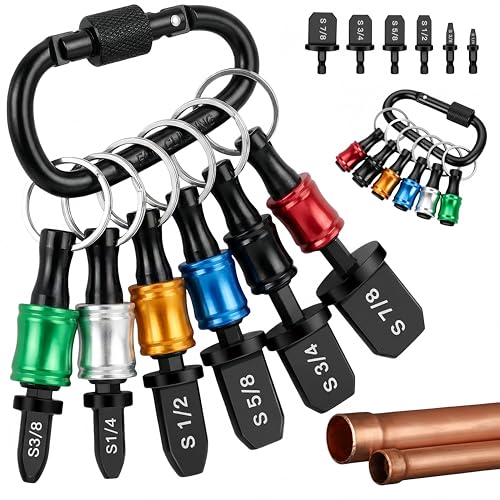
13PCS Swage Tool HVAC Repairing Set with Bit Holders, Hvac Gifts, Air Conditioner Copper Tube Expander Swaging Tool Drill Bit Copper Pipe Swage 1/4'', 3/8'',1/2'',5/8'',3/4'',7/8''
Check price on Amazon
HVAC Tech Hourly Rate - HVAC Technician AC Repair T-Shirt
Check price on Amazon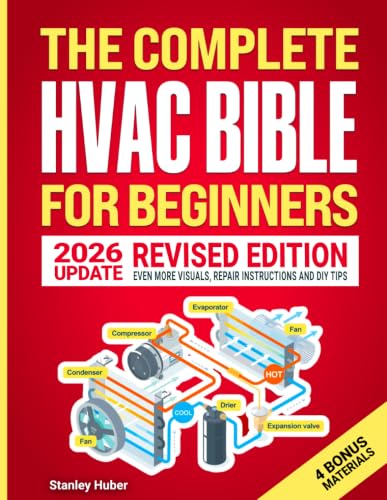
The Complete HVAC BIBLE for Beginners: The Most Practical & Updated Guide to Heating, Ventilation, and Air Conditioning Systems | Installation, Troubleshooting and Repair | Residential & Commercial
Check price on Amazon
Trahzia Small HVAC Tool Pouch Bag Canvas Electrician Tool Organizer for Men | Multiple Pocket, Metal Hanging Hook, Ergonomic Top Handle, Adjustable Shoulder Strap, Ideal for Maintenance Repair Technician
Check price on Amazon