HVAC Blower Fan Replacement: The Complete Guide
Is your system moving weak air or making strange noises? Learn how to diagnose a failing blower fan, choose the right replacement, and restore strong, even airflow across your home.
Explore Blower Fan OptionsWhy this guide matters: The blower fan is the quiet workhorse of your HVAC system — it moves conditioned air through every room. When it fails, comfort drops fast. This guide explains the symptoms, the parts involved, the replacement process, and the product tiers worth considering so you can make a confident, informed decision.
What Is an HVAC Blower Fan and Why Does It Matter?
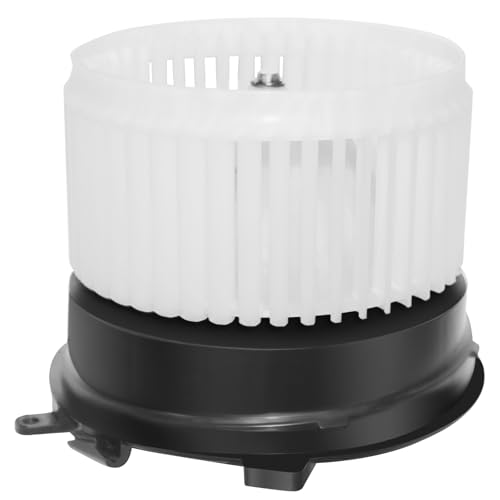
The blower fan is the component inside your air handler or furnace that pushes heated or cooled air through your ductwork and into your living space. It sits behind the return-air grille and is driven by a blower motor, usually with a capacitor and a wheel-shaped fan cage. Without a working blower, your system may run — compressor, burners, and all — but no conditioned air reaches your rooms.
Blower fans work alongside the rest of your air distribution equipment. If your issue is actually distribution rather than the fan, our ductwork design guide explains how duct sizing and routing affect airflow. If the symptom is weak airflow from ceiling vents, the blower and the ducts both deserve attention, and it helps to understand the broader context of different types of air conditioning for homes and how each design moves air.
In systems without ductwork, the equivalent component sits inside the indoor head of a mini-split AC system, and the same diagnostic logic applies: if the fan does not turn freely or the motor draws excessive current, airflow suffers.
Signs Your Blower Fan Needs Replacement
Catching a failing blower early prevents secondary damage to the motor, control board, and compressor. Watch for these warning signs:
Not every airflow complaint means a failed blower. Sometimes the issue is a clogged filter, a stuck damper, or a refrigerant problem. Our guide on a home AC compressor that turns on but produces no cold air helps separate blower issues from refrigerant issues. If the whole house feels warm, our article on a house not cooling from the air conditioner walks through the full diagnostic sequence.
PSC vs. ECM Blower Motors: Which Do You Have?
Before ordering a replacement, identify your motor type. The two most common categories behave very differently and are not interchangeable without proper matching.
| Feature | PSC Motor | ECM Motor |
|---|---|---|
| Speed Control | Fixed multi-speed taps | Variable, electronically controlled |
| Efficiency | Standard | Higher, especially at low speeds |
| Capacitor | Requires run capacitor | Usually does not use a run capacitor |
| Programming | None | Often requires matching module and setup |
| Replacement Complexity | Straightforward for a capable DIYer | Best handled by a technician |
| Typical Tier | Essential to mid-tier | Mid-tier to premium |
ECM motors are increasingly common in high efficiency heating and air conditioning systems because they maintain consistent airflow as filters load up. If your system uses a variable-speed compressor, it almost certainly uses an ECM blower as well. Matching the replacement to the original is the safest approach.
The Blower Fan Replacement Process, Step by Step
Whether you hire a technician or handle the work yourself, knowing the sequence helps you plan, prepare, and verify the job. A typical replacement follows these steps:
- Disconnect power. Turn off the furnace or air handler at the breaker and at the service switch. Never work on a live blower assembly.
- Remove access panels. Locate the blower compartment, usually behind the lower service panel. Take a photo of wiring before disconnecting anything.
- Disconnect electrical connections. Label wires, disconnect the motor harness, and discharge the capacitor safely before touching terminals.
- Remove the blower assembly. Most blowers slide out after removing retaining screws. Note the orientation of the assembly for reinstallation.
- Separate the motor from the housing. Remove the fan wheel and mounting bracket. Clean the wheel while it is out — a dirty wheel reduces airflow even on a healthy motor.
- Install the new motor. Match the motor's voltage, horsepower, speed, rotation direction, and mounting pattern. Transfer the capacitor if required and wire according to the diagram.
- Reassemble and test. Reinstall the assembly, restore power, and verify airflow, amp draw, and noise level. Check that the blower wheel spins freely without rubbing.
If your system also needs refrigerant or compressor work, the scope broadens. Our overview of fixing an air conditioner covers how to prioritize repairs when multiple components are involved. For systems where the blower is fine but the compressor is failing, our guide on a compressor that runs without cooling is a useful cross-check.
Pre-Replacement Checklist
- Record the model and serial numbers of your air handler or furnace.
- Identify the motor type (PSC or ECM), voltage, horsepower, and speed taps.
- Note the rotation direction and mounting bolt pattern.
- Confirm capacitor ratings if your motor uses one.
- Have a multimeter and a capacitance tester on hand for verification.
- Photograph all wiring before disconnecting anything.
When to Call a Professional
While PSC motor swaps are within reach for an experienced DIYer, ECM motors and unfamiliar systems are best handled by a licensed technician. A professional will verify airflow, check static pressure, and confirm that the replacement motor is properly programmed. If your system is under warranty, self-replacement may void coverage.
If the blower failure is part of a larger pattern of problems — repeated breaker trips, unusual noises from multiple components, or refrigerant issues — a broader diagnostic is warranted. Our guide to heating and air conditioning repair in my area explains how to choose a qualified service provider.
How to Extend the Life of Your New Blower Fan
A replacement blower can last many years with simple care. Replace filters on schedule — a clogged filter forces the motor to work harder and can overheat ECM modules. Keep the blower wheel clean, and schedule an annual inspection that includes amp-draw and capacitor checks. If your system has a humidifier or an air cleaner, our guide to a furnace air cleaner system explains how these accessories interact with airflow and filter loading.
For homes in dry climates, an evaporative air cooler or portable air conditioner can reduce runtime on the main system and extend blower life as a secondary benefit.
Choosing the Right Blower Fan Tier
Blower motors and assemblies fall into three broad market tiers. Use these descriptors to orient yourself before comparing specific models:
- Essential tier — standard PSC motors and basic blower assemblies. A solid choice for older systems and straightforward swaps.
- Mid-tier — improved bearings, better-balanced wheels, and more precise speed taps. A balanced option for most residential systems.
- Premium tier — ECM motors, variable-speed operation, and heavy-duty housings. Best for high-efficiency systems and homeowners who prioritize quiet, consistent airflow.
Mid-tier and premium blowers generally offer smoother operation and quieter performance than entry-level units. Feature-rich assemblies in the higher tiers often include reinforced housings and better vibration isolation, which matters in bedrooms and open-plan living spaces. Match the tier to your system's original specification and your comfort priorities.
Ready to Compare Blower Fan Replacements?
Browse curated options below, review the specifications that matter, and choose the tier that fits your system and comfort goals.
View Recommended Blower FansFrequently Asked Questions
How do I know if my HVAC blower fan needs replacement?
Common signs include weak airflow from vents, unusual rattling or squealing noises, the blower running constantly or not at all, burning smells, and visible damage to the fan blades or motor. If the motor draws excessive current or fails to spin freely, replacement is usually the right path.
Can I replace an HVAC blower fan myself?
Replacing a blower fan is a moderately complex DIY task that involves electrical disconnection, removing the blower assembly, and matching the motor and capacitor correctly. Homeowners comfortable with electrical work and HVAC basics can do it, but hiring a licensed technician is safer for ECM motors and unfamiliar systems.
What is the difference between a PSC and an ECM blower motor?
PSC motors are simpler, run at fixed speeds, and use a run capacitor. ECM motors are electronically commutated, more efficient, often programmable, and typically found in premium systems. ECM replacements usually require matching the control module and programming.
How long does a blower fan replacement take?
A straightforward PSC motor swap typically takes one to two hours for an experienced technician. ECM motor replacements or full assembly swaps may take longer, especially if wiring or programming is required.
Related Guides
Recommended HVAC Blower Fans & Motors
⚠️ AFFILIATE DISCLOSURE: This website contains affiliate links. As an Amazon Associate, we earn from qualifying purchases. If you make a purchase through these links, we may receive a small commission at no additional cost to you. Read our full affiliate policy.

A-NAFTULY AC Blower Motor Fan Replacement for 2007-2017 Ford Edge Fusion, Honda Pilot Accord Odyssey CRV, Dodge Ram 1500 Avenger Caliber, Jeep Patriot Compass, Lincoln HVAC Heater Blower Motor, 700203
Check price on Amazon
HVAC Blower Motor Fan Replacement for 2004-2015 Nissan Titan, 2005-2015 Nissan Armada, 2004-2010 Infiniti QX56, 2004 Pathfinder - AC Heater Blower Motor Plastic, Replace 700174
Check price on Amazon
ECCPP HVAC Heater Blower Motor for Honda Civic,for Acura CSX,Jeep Wrangler | for Acura CSX 2006-11,for Honda Civic,2007-2010 for Jeep Wrangler Heater Fan HVAC Blower Motor Replacement w/Fan Cage 700194
Check price on Amazon
1TDR9, 4C448 Dayton Direct OEM Interchange Replacement Blower
Check price on Amazon
Criditpid Furnace Blower Fan Replacement for Dayton 1TDT8, 5C508, Hvac Blower Fan for Century JE2J047NS, 9459.
Check price on Amazon
GVPART4U Front Blower Motor for 2007-2020 Toyota Camry 4Runner Highlander | Fit for 871030E040 Tundra Venza Avalon, for 2008 2009 2010 2011 2012 2013 2014 2015 2016 2017 2018 Lexus OE: PM9351 75830
Check price on Amazon
POHILA 700215 Front HVAC Blower Motor for Toyota Tundra 2007-2020 | Fit for Toyota Camry 4Runner Highlander Venza Avalon 2005-2018, Lexus ES300h 2013, Dodge, Replace PM9351 75830 871030E040
Check price on Amazon