
Mini Portable Air Conditioner for Camping
Your complete guide to staying cool in a tent, RV, or cabin — covering types, sizing, power sources, setup strategies, and what to look for before you buy.
Why a Mini Portable Air Conditioner for Camping Makes Sense
Camping has evolved. What was once strictly a tent-and-sleeping-bag experience now includes family-friendly trips with power stations, campers, and comfort-focused gear. A mini portable air conditioner for camping bridges the gap between roughing it and sleeping through a humid summer night. These compact units are designed to cool small enclosed spaces — a tent, a camper van, a pop-up trailer, or a cabin — without the installation complexity of a traditional HVAC system.
The appeal is straightforward: you get cooled, dehumidified air in a space that would otherwise become an oven by mid-afternoon. Modern camping AC units have become significantly more efficient, quieter, and more versatile than the bulky models of a decade ago. Many now run on standard power stations, 12V DC outlets, or even dedicated battery packs, which makes them viable far from a wall outlet.
That said, camping air conditioning is not a one-size-fits-all purchase. The wrong unit — undersized, overpowered, or incompatible with your power setup — becomes dead weight. This guide walks through every decision point so you can match a unit to your tent size, your power source, and your actual camping style.
How Camping Air Conditioners Actually Work
Most mini portable AC units for camping use the same vapor-compression cycle found in home air conditioners, just scaled down. A compressor circulates refrigerant through evaporator and condenser coils. The evaporator absorbs heat and moisture from the air inside your tent; the condenser releases that heat outside. A fan pushes cooled air back into the space.
This is an important distinction from evaporative "swamp coolers," which add moisture to the air rather than removing it. Evaporative coolers only work in dry climates and can make a humid tent feel worse. If you camp in the South, the Midwest, or anywhere with summer humidity, a compressor-based unit is the right choice. If you camp exclusively in arid regions, an evaporative unit can be lighter and draw less power.
There is also a third category: thermoelectric (Peltier) coolers. These are small, silent, and power-efficient, but their cooling capacity is limited to a few degrees below ambient. They are best understood as personal spot coolers rather than room air conditioners. For a genuinely cooled tent, a compressor-based mini AC is the standard.
Key insight: All compressor-based portable AC units produce exhaust heat. In a tent, that heat must be vented outside through a window, a duct port, or a custom fabric sleeve. Units that "don't need venting" are typically evaporative or thermoelectric and will not deliver true refrigeration-level cooling.
Types of Mini Portable Air Conditioners for Camping
1. Battery-Powered / Power-Station Compatible Units
These are purpose-built for off-grid use. They typically run on 12V or 24V DC and pair with a portable power station or a dedicated lithium battery. Cooling capacity is modest — usually in the 2,000–5,000 BTU range — but they are quiet, compact, and genuinely portable. They are the best fit for tent campers and van lifers who do not have access to shore power. If you want to explore this niche further, our guide to a small portable air conditioner battery operated covers runtime calculations and battery pairing in detail.
2. Standard Portable AC Units (Vented)
These are the familiar wheeled units with a flexible exhaust hose. They plug into a standard outlet or a sufficiently large power station and deliver 5,000–14,000 BTU. They cool effectively but are heavier and require a vent path. For camping, they work best in RVs, cabins, and large family tents with a window or vent panel. If you are weighing vented versus non-vented options, our article on portable AC units that do not need venting explains the trade-offs honestly.
3. Personal / Spot Coolers
These are small, often USB-powered or 12V units that direct a stream of cooled air at a person rather than cooling a space. They are useful for sleeping comfort in a hammock or a single bunk, but they will not lower the ambient temperature of a tent. Our guide to a personal space air conditioner covers how to use these effectively without overestimating their capability.
4. 12V Truck / RV Units
Designed for vehicles, these units run directly from a 12V system and are popular with van conversions and truck campers. They are durable and integrate with existing vehicle electrical systems, but they usually require a deep-cycle battery bank and careful wiring. If your camping setup revolves around a vehicle, this category deserves serious consideration.
How to Size a Camping Air Conditioner
Sizing a camping AC is not the same as sizing a home unit. Tents have almost no insulation, thin fabric walls, and significant heat gain through the roof. A tent that measures 100 square feet may need the same cooling capacity as a 200-square-foot insulated room. The practical rule of thumb for tents is to size up roughly one step relative to a home calculation.
As a starting point:
- 2-person tent (30–50 sq ft): 2,000–3,500 BTU is usually sufficient, especially with a battery-powered unit.
- 4-person tent (60–100 sq ft): 4,000–6,000 BTU delivers meaningful cooling.
- 6–8 person tent (100–150 sq ft): 6,000–8,000 BTU, or a 5,000 BTU unit combined with shade and ventilation.
- Large family tent or cabin tent (150+ sq ft): 8,000–10,000 BTU or multiple smaller units.
These figures assume a vented compressor unit. Battery-powered models at the lower end of the range will take longer to cool a space and are best used to maintain comfort overnight rather than to cool a hot tent from scratch in the afternoon. If you want a more rigorous method, our guide on how to size an air conditioner explains the BTU calculation in detail, and the BTU calculator by room size gives you a starting number you can adjust for tent conditions.
Oversizing caution: A unit that is too large for a tent will short-cycle — it cools the air quickly, shuts off, and leaves humidity behind. In a tent, humidity is the enemy of comfort. Slightly undersizing, or choosing a unit with a dehumidify mode, often produces a better night's sleep than brute-force cooling.
Power Sources: The Make-or-Break Decision
Power is where most camping AC purchases go wrong. A 5,000 BTU portable AC typically draws 400–500 watts while running, with a higher startup surge. A battery-powered mini unit may draw 100–300 watts. Your power station or battery bank must handle both the running load and the surge, and it must have enough capacity for the hours you intend to run the unit.
A practical way to estimate runtime: divide your power station's usable watt-hours by the unit's average draw. A 500 Wh station running a 250 W unit yields roughly two hours of runtime — not enough for an overnight. A 2,000 Wh station running the same unit yields closer to eight hours, which is realistic for sleep. Always derate by 15–20% for inverter losses and real-world conditions.
For tent campers, the most common setups are:
- A mid-range power station (1,000–2,000 Wh) paired with a low-draw battery-powered AC.
- A high-end power station (2,000+ Wh) paired with a small vented portable AC.
- A dedicated 12V battery bank in a van or trailer, wired to a 12V AC unit.
- Shore power at an RV campground, which removes the runtime constraint entirely.
If you are planning a vehicle-based setup, our article on a 1500 watt car inverter explains how inverter sizing interacts with AC startup surge, and the power inverter 4000 watts guide covers larger setups for van conversions.
Features That Matter in a Camping AC
Noise Level
In a tent, sound is amplified. A unit rated at 55 dB will feel louder than the same rating in a living room. Look for units under 52 dB for sleeping use, and prefer models with a dedicated sleep mode that lowers fan speed. Battery-powered mini units are generally quieter than compressor portables, often in the 40–48 dB range.
Dehumidification Mode
Humidity is often the bigger comfort problem in a tent. A unit with a dedicated dehumidify mode can run at lower cooling output while still pulling moisture from the air, which saves power and improves sleep quality. This is especially valuable in the South and Midwest.
Drainage Options
Portable AC units produce condensate. Some have a small internal tank that must be emptied; others support continuous drainage via a hose. In a tent, continuous drainage is far more convenient — route the hose outside and forget it. Battery-powered units often use a small removable tank, so check the capacity and plan for a mid-night empty if you run it continuously.
Venting Method
Vented units need a path for the exhaust hose. Some tents have built-in port panels; others require a window adapter or a custom fabric sleeve. Before buying, confirm how you will vent the unit from your specific tent. A unit that cannot be vented properly will underperform and dump heat back into the tent.
Remote Control and Programmability
A remote or app control is genuinely useful in a tent — you can adjust settings without unzipping the door. Some units support scheduling, which lets you pre-cool before bedtime. If smart control matters to you, our guide to an AC thermostat with remote control covers the ecosystem.
Weight and Footprint
Battery-powered mini units typically weigh 10–25 lbs; vented portables weigh 40–70 lbs. If you are carrying the unit any distance from your vehicle, weight becomes a primary filter. Look for units with integrated handles and a footprint that fits your tent's floor plan without blocking the door.
Camping AC Tiers: Matching a Unit to Your Style
Rather than sorting by specifications alone, it helps to group camping air conditioners into three practical tiers based on intended use. This classification is consistent with how the rest of our site evaluates products.
Personal & Solo Camping
Battery-powered or thermoelectric spot coolers for one or two people. Low draw, lightweight, quiet. Best for hammock camping, solo tents, and van bunks where a few degrees of relief is the goal.
Family Tent Camping
Mid-range vented portables or higher-capacity battery units paired with a power station. Delivers genuine temperature reduction in a 4–6 person tent. The most common and most versatile category.
RV & Cabin Use
Higher-BTU vented portables with continuous drainage, remote control, and durable construction. Designed for shore power or large battery banks. Built for multi-night comfort rather than portability.
Within each tier, the differentiator is not raw cooling output alone — it is how well the unit's power draw, noise level, and venting requirements match your actual campsite. A top-tier unit in a solo tent is overkill; an essential-tier unit in a family tent will disappoint. Match the tier to the scenario first, then compare models within it.
Setting Up a Camping AC for Best Results
Even a well-chosen unit underperforms if it is set up poorly. These practices make a measurable difference:
- Shade the tent first. A reflective tarp or a site under trees can drop internal tent temperature by 10°F or more before the AC even turns on. Cooling a shaded tent is dramatically easier than cooling a sun-baked one.
- Seal the tent. Close mesh panels that are not needed for ventilation. Every open mesh panel is cooled air escaping. Use the AC's venting port for exhaust and keep the rest of the tent as closed as safety allows.
- Position the unit to circulate air. Place the AC so its cool-air outlet points across the sleeping area rather than directly at one person. A small battery fan can help distribute cooled air in a larger tent.
- Vent exhaust outside, always. Route the exhaust hose through a window, a port panel, or a fabric sleeve. Never exhaust into the tent — it will heat the space and introduce combustion byproducts if the unit uses a fuel source (most do not, but the heat issue alone is decisive).
- Pre-cool before peak heat. Start the unit in the early afternoon rather than waiting for the tent to become unbearable. Maintaining a cool space uses less energy than pulling a hot tent down to temperature.
- Manage condensate. Set up continuous drainage if available. If not, empty the tank before sleep and again if you wake during the night.
If your camping setup is a cabin or a fixed structure rather than a tent, the installation principles overlap with residential work. Our installation guide covers the fundamentals of positioning and venting that apply to any small space.
Camping AC Types at a Glance
| Type | Best For | Power Source | Cooling Strength | Portability |
|---|---|---|---|---|
| Battery-powered mini AC | Solo and small tent camping | 12V/24V battery, power station | Moderate (2,000–5,000 BTU) | Excellent |
| Vented portable AC | Family tents, RVs, cabins | AC outlet or large power station | Strong (5,000–14,000 BTU) | Fair |
| Personal spot cooler | Single-person spot cooling | USB, 12V, small battery | Minimal (local airflow) | Excellent |
| 12V truck/RV unit | Van conversions, truck campers | Vehicle 12V system | Moderate to strong | Fixed installation |
| Evaporative cooler | Dry-climate camping only | 12V or AC | Moderate in dry air | Good |
Maintenance and Longevity
Camping AC units live in dust, pollen, and humidity — conditions that accelerate wear. A few habits extend the working life significantly:
- Clean or replace the air filter after every trip. A clogged filter reduces cooling and strains the compressor.
- Dry the unit thoroughly before storage. Residual moisture in the coils or drain tank encourages mold and corrosion.
- Store the exhaust hose and window kit separately so they do not crease or tear.
- Check the drain path before each trip — a blocked hose causes water to back up into the unit.
- For battery-powered units, store the battery at partial charge and recharge before each season.
For more detailed routines that apply to any portable AC, see our guides on how to clean an AC filter and cleaning condenser coils. If your unit develops a refrigerant issue, our article on AC refrigerant leak repair explains when a repair is realistic versus when replacement makes more sense.
Common Mistakes to Avoid
Most disappointing camping AC experiences trace back to one of these errors:
- Buying an evaporative cooler for a humid climate. It will add moisture and make the tent feel worse. Compressor-based cooling is the only reliable option in humid conditions.
- Underestimating power needs. A power station that runs a fan all weekend may not run an AC for a single night. Calculate runtime before you buy.
- Ignoring venting. A vented unit without a vent path is a space heater with extra steps.
- Expecting home-AC performance in a tent. Tent walls have negligible insulation. A camping AC reduces discomfort; it does not turn a tent into a bedroom. Setting realistic expectations prevents disappointment.
- Overlooking noise. A unit that seems quiet in a store can be disruptive in a tent at 2 a.m. Check decibel ratings and prefer sleep modes.
If you are comparing a camping unit against other small-space cooling options, our overview of a small air conditioning unit covers the broader category, and the portable air conditioning unit for office guide shows how similar units perform in another small enclosed space.
Frequently Asked Questions
Can a mini portable air conditioner really cool a tent?
Do camping air conditioners need to be vented?
How long can a battery-powered camping AC run?
What size camping AC do I need for a 4-person tent?
Are camping air conditioners noisy?
Can I use a home portable AC for camping?
What is the difference between a camping AC and an evaporative cooler?
Final Thoughts: Match the Unit to the Campout
The best mini portable air conditioner for camping is not the most powerful or the most feature-packed — it is the one that fits your tent, your power source, and the way you actually camp. A solo hiker with a backpack has different constraints than a family in a cabin tent with a power station, and both have different constraints than a van lifer with a 12V system.
Start with sizing, then power, then venting, then features. That order prevents the most common and most frustrating purchase mistakes. Once those are settled, the product comparisons below narrow the field to units that fit your scenario.
If you are still deciding between a camping-specific unit and a more general-purpose small AC, our guides to a portable air conditioner and a small room air conditioner no window cover adjacent categories that may suit cabin or RV setups.
Recommended Mini Portable Air Conditioners for Camping
⚠️ AFFILIATE DISCLOSURE: This website contains affiliate links. As an Amazon Associate, we earn from qualifying purchases. If you make a purchase through these links, we may receive a small commission at no additional cost to you. Read our full affiliate policy.

Portable Camping Air Conditioner 5200 BTU Tent AC Unit | 400W Low power 4-in-1 portable AC for indoor & outdoor,fast cooling for RV, truck,van,car,small warehouse and pet house
Check price on Amazon
Glimibox Evaporative Air Cooler Cooling Fan Portable AC Unit with Timer,3 Speeds 2 Mist Modes,1000ml,7-Color Light,USB Mini Air Cooling Fan for Bedroom Kitchen RV Camping Car
Check price on Amazon
Gavscient Mini Portable Air Conditioner for Small Rooms, 2700 BTU Compact AC Unit, 280W Low Wattage 3-in-1 Cooling, 45dB Quiet Personal Room Cooler with Exhaust Hose & 12H Timer
Check price on Amazon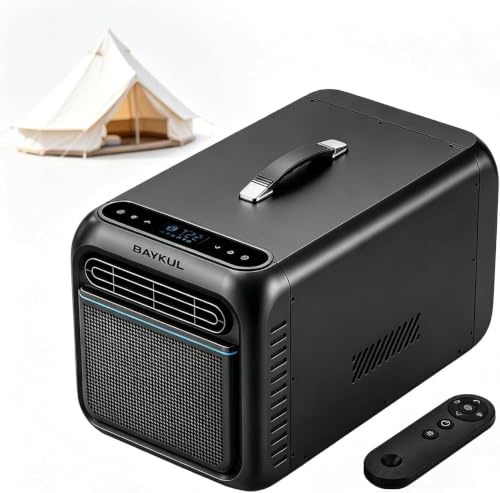
BAYKUL 5000 BTU Portable Camping Air Conditioner, Compact Tent AC Unit | Ideal For Tents,RVs,Vans,Trucks,Pet Houses&Off‑Grid Boondocking Adventures, Instant-Cooling,Camping AC for Outdoor Activities
Check price on Amazon
USB Powered Portable Air Conditioner for Car, 1.2L Water Tank & 2 Ice Packs | Mini Air Conditioner for Camping, Personal Air Cooling Fan with remote, 7H Timer, for Tent Desktop, snow white no battery
Check price on Amazon
Baykul 5000 BTU Portable Tent Air Conditioner, Compact Camping AC Unit | Fast-Cooling, Ideal For Tents,RVs,Vans,Trucks,Pet Houses&Off‑Grid Boondocking Adventures, Camping AC for Outdoor Activities
Check price on Amazon
FLOWBREEZE 3-IN-1 Portable ac for Car, Dual Mist, 5400mAh Battery | Mini Air Conditioner for Camping, Personal Air Cooling Fan with 2 Ice Packs,1.2L Water Tank, 7H Timer, for Tent Desktop
Check price on Amazon
Evapolar Evaporative Air Cooler - Portable AC Unit EvaChill, Grey | Small Personal Air Conditioner for Desk, Office, Camping and Tent, Mini Cooling Fan, 3 Speeds and Led Light
Check price on AmazonDisclaimer
Some of the content on this site uses AI assistance. Information is provided for educational purposes only. We are not responsible for any losses resulting from the use of this information. By using this site, you waive any right to bring legal claims against us arising from your use of the information provided. If you do not agree, please do not use this site. Read the full disclaimer.