
Most Efficient Heating And Air Conditioning Systems
Understand what truly separates top-tier HVAC equipment from entry-level models. This research-focused guide explains SEER2 and HSPF2 ratings, inverter heat pump technology, variable-speed airflow, and the system configurations that deliver the strongest year-round efficiency for your home.
Explore the Efficiency GuideWhat Defines the Most Efficient HVAC Systems
Efficiency in heating and air conditioning is not a single number. It is the result of how well a system converts electrical energy into conditioned air across an entire season. The most efficient systems share several engineering traits: inverter-driven compressors, variable-speed blowers, advanced refrigerant handling, and intelligent controls that match output to actual demand.
Before comparing equipment tiers, it helps to understand the metrics that appear on every specification sheet. These ratings allow you to compare systems fairly and predict how they will behave in your climate.
SEER2
Seasonal Energy Efficiency Ratio for cooling. Higher values indicate more cooling output per unit of electricity across the cooling season. Top-tier systems reach the upper range of current standards.
HSPF2
Heating Seasonal Performance Factor. Measures heating efficiency across the season. Critical for heat pumps and cold-climate systems that operate year-round.
EER2
Energy Efficiency Ratio at peak load. Reflects performance on the hottest days when the system runs continuously. Useful for warm-climate buyers.
Variable-Speed Output
Inverter compressors and variable-speed blowers adjust capacity in small increments, avoiding energy spikes from on/off cycling and improving humidity control.
Understanding these metrics is only the first step. The next step is recognizing how different system architectures use them in practice. For a broader reference on efficiency ratings, see our guide on what SEER stands for in air conditioning and the explanation of HSPF ratings.
Efficiency by System Type
Different system types achieve efficiency in different ways. The table below compares the most common high-efficiency configurations so you can see which architecture aligns with your home, climate, and ductwork situation.
| System Type | Typical Tier | Best For | Efficiency Strengths |
|---|---|---|---|
| Cold-Climate Inverter Heat Pump | Top-tier / flagship | Year-round heating and cooling in mixed and cold climates | High HSPF2, strong low-temperature capacity, variable-speed modulation |
| Ductless Mini-Split | High-end tier | Homes without ducts, room additions, zoned comfort | No duct losses, inverter compressor, per-room control |
| Variable-Speed Central Heat Pump | Premium / top-tier | Whole-home retrofit with existing ductwork | High SEER2, improved humidity control, quiet operation |
| Two-Stage Central Air Conditioner + High-Efficiency Furnace | Mid-range to premium | Homes in climates with long heating seasons | Balanced efficiency, reliable performance, broad contractor support |
| Window and Portable Units | Entry-level to mid-range | Single rooms, renters, temporary cooling | Energy Star models offer competitive EER2 for small spaces |
Notice that efficiency tier does not map perfectly to system category. A top-tier ductless mini-split and a premium central heat pump can both deliver excellent efficiency, but they serve different installation contexts. For room-specific solutions, our breakdown of the most efficient mini-split air conditioner explores how ductless systems achieve their ratings.
Why Heat Pumps Lead in Year-Round Efficiency
Heat pumps move heat rather than generate it, which is why they can exceed 100% efficiency in moderate conditions. Modern cold-climate inverter heat pumps extend that advantage into freezing temperatures, making them a genuine replacement for separate furnace and air conditioner combinations in many regions.
The most efficient heat pump systems share these characteristics:
- Inverter-driven compressors that modulate capacity smoothly instead of cycling on and off.
- Variable-speed indoor blowers that maintain consistent airflow and improve humidity removal.
- Enhanced vapor injection or similar cold-climate technology that preserves heating capacity at low outdoor temperatures.
- Smart defrost controls that minimize energy waste during winter operation.
- High HSPF2 ratings that reflect real seasonal heating performance, not just peak conditions.
For a detailed look at how heat pumps compare to traditional systems, see our guide on HVAC heat pump technology and the comparison of heat pump vs air conditioner. If you are evaluating ductless options, the overview of mini-split air and heat explains how a single system can handle both seasons.
Equipment Tiers and What They Deliver
To compare systems without relying on fluctuating market figures, it helps to use universal quality tiers. The following descriptors reflect relative market position and engineering sophistication, and they remain stable over time.
Entry-Level Tier
Single-stage compressors, basic controls, and standard efficiency ratings. A solid choice for mild climates and limited-use spaces, with durable construction but fewer advanced features.
Mid-Range Tier
Two-stage or basic inverter compressors, improved humidity control, and better seasonal ratings. A balanced tier that fits most whole-home retrofits and delivers noticeable efficiency gains.
Premium Tier
Fully variable-speed inverters, advanced refrigerant management, quieter operation, and strong SEER2 and HSPF2 figures. Well-specified for homeowners prioritizing long-term efficiency.
Top-Tier / Flagship
The highest efficiency ratings in the category, cold-climate performance, smart diagnostics, and premium materials. A long-term investment for maximum seasonal performance.
Tier descriptors should guide expectations, not replace specification review. A mid-range model with excellent installation quality can outperform a premium model installed poorly. This is why our guide on questions to ask your installer is essential reading before committing to any system.
Installation Quality and Real-World Efficiency
Even the most efficient equipment loses its advantage when installation is rushed or ductwork is leaky. The highest-performing systems depend on three factors beyond the equipment itself:
- Correct sizing. An oversized system short-cycles, wasting energy and failing to dehumidify. A professional load calculation prevents this. See our guide on sizing an air conditioner for the methodology.
- Sealed and insulated ductwork. Duct losses can erase efficiency gains quickly. Review our resource on insulated air conditioning ducting to understand the impact.
- Proper refrigerant charge and airflow. Small commissioning errors reduce capacity and efficiency. A licensed contractor should verify charge and static pressure. Our overview of licensed HVAC professionals explains what credentials to confirm.
Smart Controls, Zoning, and Efficiency Gains
The most efficient systems are increasingly paired with intelligent controls that reduce waste without sacrificing comfort. Programmable and learning thermostats, zone dampers, and remote sensors allow a system to condition only the spaces that need it.
Key strategies include:
- Using ideal AC temperature settings that balance comfort and energy use.
- Pairing the system with ceiling fans to raise the thermostat setpoint without losing comfort.
- Sealing and balancing ductwork so zoned systems deliver intended airflow.
- Taking advantage of HVAC tax credits and rebates for qualifying high-efficiency equipment.
For homeowners evaluating long-term returns, our discussion of an AC as a long-term investment frames efficiency upgrades in terms of lifecycle performance rather than short-term outlay.
How High-Efficiency Systems Compare to Alternatives
Not every home needs a flagship heat pump. Sometimes a well-chosen window unit or portable system is the right fit. The key is matching the system tier to the space and usage pattern.
For single-room cooling, our guide to the most efficient air conditioner window unit explains how Energy Star models achieve strong EER2 figures in a compact form factor. For small spaces, the breakdown of the most energy-efficient small window air conditioner highlights where efficiency matters most.
For whole-home projects, the resource on the most energy-efficient whole house air conditioner connects equipment ratings to ductwork, zoning, and load calculation. And for homeowners comparing overall operating profiles, the analysis of the most economical heating and cooling system provides a lifecycle perspective.
Recommended High-Efficiency Heating and Cooling Systems
⚠️ AFFILIATE DISCLOSURE: This website contains affiliate links. As an Amazon Associate, we earn from qualifying purchases. If you make a purchase through these links, we may receive a small commission at no additional cost to you. Read our full affiliate policy.

Rellytech Mini Split AC/Heating System, 12000 BTU, 19 SEER2 115V/110V | Ductless air conditioner, energy efficient, pre-charged system, up to 750sq.ft coverage, inverter heating and cooling
Check price on Amazon
Upstreman 12000 BTU Mini Split AC/Heating System, 230V Silver Mini Split Air Conditioner, 20 SEER2 Ductless Split AC, Energy Efficient Inverter, WiFi Control, with Mounting Bracket, Up to 750 Sq.Ft
Check price on Amazon
Midea 8,000 BTU Smart Inverter Air Conditioner Window Unit with Heat and Dehumidifier – Cools up to 350 Sq. Ft., Energy Star Rated, Quiet Operation, Electronic Controls, Remote Control, White
Check price on Amazon
Mountman 18000 BTU Mini Split AC/Heating System,19 SEER2 208/230V Energy Efficient Ductless Inverter System,Cools Up to 1250 Sq.Ft with Pre-Charged Condenser,Heat Pump & Installation Kits
Check price on Amazon
Mountman 12000BTU Mini Split AC/Heating System, 19SEER2 115V Energy Efficient Mini Split Air Conditioner with Heat Pump, Cools Up to 750sq.ft, Ductless Inverter AC Unit with Pre-Charged Condenser
Check price on Amazon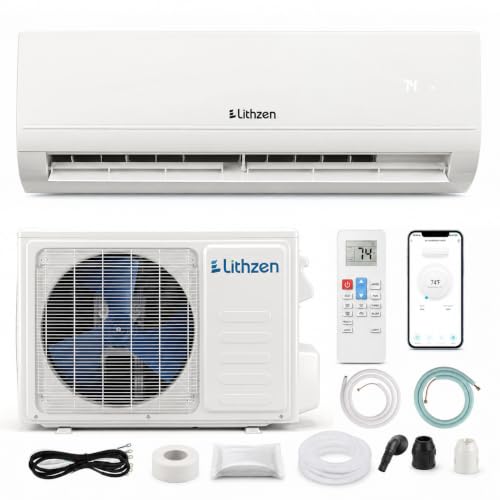
LITHZEN 12000 BTU Mini Split AC/Heating System, 17 SEER2 115V | Wifi Ductless Inverter AC w/1 Ton Heat Pump & Installation Kit, Compatible with Alexa, Cools Rooms Up to 750 Sq.Ft
Check price on Amazon
Rellytech 11500 BTU Mini Split AC/Heating System 17 SEER2 Ductless Inverter | Pre-Charged, Ultra Quiet 29dB, Cools Up to 550 Sq.Ft, 110/115V, ETL & AHRI Certified, Works to -5°F
Check price on AmazonFrequently Asked Questions
What makes a heating and air conditioning system the most efficient?
The most efficient systems combine high SEER2 and HSPF2 ratings with inverter-driven compressors, variable-speed airflow, and advanced heat pump technology. Proper sizing, sealed ductwork, and smart thermostats further maximize real-world efficiency.
Are heat pumps more efficient than traditional furnaces and air conditioners?
Modern cold-climate heat pumps often outperform separate furnace and air conditioner combinations because they move heat rather than generate it. High-end inverter heat pumps maintain strong capacity in freezing temperatures and deliver year-round efficiency from a single system.
What SEER2 and HSPF2 ratings should I look for?
For cooling, look for SEER2 ratings at or above the current minimum standards, with top-tier models reaching the upper 20s. For heating, HSPF2 ratings in the upper range indicate strong cold-weather performance. Always match ratings to your climate zone and ductwork condition.
Does a higher efficiency system always lower energy use?
A high-efficiency system delivers its best results when it is correctly sized, professionally installed, and paired with well-sealed ducts and a programmable thermostat. Efficiency ratings describe the equipment, while installation quality and home envelope determine actual energy use.