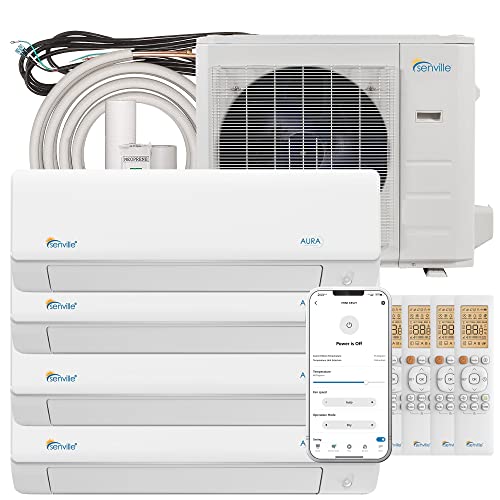
Multi Head Mini Split: Complete Guide to Multi-Zone Ductless Comfort
Discover how a single outdoor condenser can deliver independent comfort to multiple rooms, and learn how to choose, size, and install the right multi zone mini split for your home.
START LEARNINGAC Units Guide Philosophy: A multi head mini split is one of the most flexible comfort solutions available today. This guide walks you through how these systems work, how to plan zoning, what to consider during installation, and which features matter most — so you can make a confident, well-informed decision.
What Is a Multi Head Mini Split?
A multi head mini split — also called a multi zone mini split or ductless multi split — is a ductless heating and cooling system in which a single outdoor condenser is connected to two or more indoor air-handling units, commonly referred to as “heads.” Each indoor head is installed in a separate room, zone, or area, and each one operates independently through its own remote or thermostat.
Unlike a traditional central air conditioner that relies on a network of ducts to distribute conditioned air, a multi head mini split delivers air directly into each space. This design eliminates duct losses, allows room-by-room temperature control, and makes the system ideal for homes without existing ductwork, additions, and multi-story layouts.
The concept extends beyond cooling. Most modern multi head mini split systems are heat pumps, capable of reversing the refrigerant cycle to provide efficient heating in cooler months. This dual-function capability makes a single system a year-round comfort solution. If you are weighing the broader category, our guide to multi-zone ductless heating and cooling systems explains how these platforms compare with other approaches.
How a Multi Head Mini Split System Works
At the heart of the system is a variable-speed inverter compressor housed in the outdoor unit. This compressor modulates its output based on the combined demand from all connected indoor heads. When only one room calls for cooling, the compressor runs at a low capacity; when several rooms demand conditioned air simultaneously, it ramps up smoothly. This variable operation is what allows a multi zone mini split to maintain stable temperatures while operating efficiently.
Refrigerant lines run from the outdoor unit to a branch box or directly to each indoor head, depending on the manufacturer's design. Each indoor head contains its own evaporator coil and blower, pulling in room air, conditioning it, and returning it to the space. Because there are no ducts, energy is not lost through leaky ductwork or long runs through unconditioned attics.
To understand the underlying technology in more detail, our explanation of how inverter AC works covers the modulation principles that make these systems so effective.
Single-Zone vs Multi-Zone: Key Differences
A single-zone ductless system pairs one outdoor unit with one indoor head. A multi head mini split pairs one outdoor unit with multiple heads. The distinction matters for both design and long-term operation.
| Feature | Single-Zone Mini Split | Multi Head Mini Split |
|---|---|---|
| Outdoor units required | One per indoor head | One shared outdoor unit |
| Zoning flexibility | Limited to one room | Independent control per room |
| Exterior footprint | Larger (multiple condensers) | Smaller (single condenser) |
| Simultaneous operation | Not applicable | Multiple heads can run at once |
| Ideal for | Single room, garage, addition | Whole home, multi-room, multi-story |
For a deeper look at the multi-zone category, our overview of multi-zone mini split systems expands on the design considerations and use cases.
Benefits of a Multi Head Mini Split
1. Room-by-Room Comfort
Each indoor head can be set to a different temperature and schedule. A home office can be cooled during work hours while bedrooms remain at a comfortable sleeping temperature. This level of personalization is difficult to achieve with a single central thermostat.
2. No Ductwork Required
Retrofitting ductwork into an older home is often impractical and disruptive. A multi head mini split bypasses ducts entirely, making it a viable option for historic homes, additions, and spaces where duct runs are not feasible.
3. Reduced Exterior Clutter
Instead of installing three, four, or five separate outdoor condensers, a single multi head mini split outdoor unit serves the entire system. This preserves exterior aesthetics and simplifies maintenance.
4. High Seasonal Efficiency
Because the compressor modulates rather than cycling on and off at full power, and because there are no duct losses, multi zone mini split systems typically achieve strong seasonal efficiency ratings. Many models qualify for ENERGY STAR certification, indicating verified efficiency performance.
5. Year-Round Heating and Cooling
Heat pump versions of multi head mini split systems provide both cooling and heating. In many climates, this makes them a primary comfort system rather than a seasonal add-on.
Common Configurations and Capacity Planning
Multi head mini split systems are typically available in configurations supporting two, three, four, or five indoor heads, with commercial-grade models supporting additional zones. The outdoor unit's capacity must be matched to the combined load of all connected indoor heads, but with an important nuance: the system does not need to be sized to run every head at full capacity simultaneously. Manufacturers publish allowable combinations, and a qualified installer will match the outdoor unit to realistic simultaneous demand.
Capacity is expressed in British thermal units (BTU). Indoor heads are available in a range of capacities, from compact units suited to small bedrooms up to larger heads for open living areas. Because the outdoor unit is shared, the total connected capacity may exceed the outdoor unit's rated capacity — this is normal and is governed by the manufacturer's combination matrix.
If you are planning the overall capacity picture, our guide to how to size an air conditioner and the BTU calculator by room size provide practical frameworks you can apply room by room.
Zoning Strategy for Multi Head Mini Split Systems
Zoning is the art of deciding which rooms share an indoor head and which rooms get their own. A thoughtful zoning plan maximizes comfort and efficiency.
- Group rooms with similar occupancy patterns. Bedrooms that are used at night can be grouped on separate heads from living areas used during the day.
- Consider sun exposure. West-facing rooms gain more heat in the afternoon and may benefit from dedicated heads or slightly larger capacity.
- Account for open-plan spaces. Large open living and dining areas often need a single larger head rather than two smaller ones, unless airflow obstacles exist.
- Plan for future use. If a basement or addition may become a living space later, choose an outdoor unit with spare capacity for an additional head.
- Respect manufacturer limits. Each outdoor unit has a maximum number of connectable heads and a maximum connected capacity ratio. Stay within these limits.
Efficiency Ratings That Matter
When comparing multi head mini split systems, focus on the seasonal efficiency metrics that reflect real-world performance. SEER2 measures cooling efficiency, while HSPF2 measures heating efficiency for heat pump models. Higher ratings indicate greater efficiency, but the delivered efficiency also depends on installation quality, zoning strategy, and how the system is operated.
Our guides to what is a SEER rating and SEER vs SEER2 under DOE standards explain how these ratings are calculated and how to interpret them when comparing models.
It is also worth noting that a multi zone mini split's efficiency is realized through part-load operation. If a homeowner routinely runs all heads at full blast, the efficiency advantage narrows. The system performs best when zoning is matched to actual occupancy and the thermostat is used strategically.
Installation Considerations
Installing a multi head mini split is more involved than installing a single window unit, and the quality of installation has a direct impact on performance, efficiency, and longevity.
Outdoor Unit Placement
The outdoor condenser requires adequate clearance for airflow, a stable mounting surface, and reasonable proximity to the indoor heads to keep refrigerant line runs within manufacturer limits. Placement should also consider noise transmission to neighboring properties and access for future service.
Refrigerant Line Routing
Lines must be routed carefully, protected from physical damage, and kept within the maximum allowable length and elevation differences specified by the manufacturer. Longer runs can reduce capacity and efficiency if not properly accounted for.
Condensate Management
Each indoor head produces condensate during cooling. Drain lines must slope correctly and terminate appropriately. Poor condensate management is one of the most common causes of water damage and callbacks.
Electrical Work
Multi head mini split systems typically require a dedicated circuit and, depending on capacity, may require 240V service. A licensed electrician should evaluate the panel and run the circuit. Our article on 110V vs 240V air conditioner service explains the differences.
For a broader view of the installation process, including permit requirements and contractor selection, see our installation guide.
Maintenance for Long-Term Performance
A multi head mini split rewards regular maintenance with sustained efficiency and fewer repairs. Key tasks include:
- Clean or replace indoor filters every four to eight weeks during heavy use. Clogged filters reduce airflow and strain the blower.
- Clean indoor coils and blower wheels annually to prevent mold growth and maintain airflow.
- Clean outdoor condenser coils at least once per year, more often in dusty environments.
- Check condensate drains for clogs and proper slope.
- Schedule professional service to verify refrigerant charge, electrical connections, and overall system performance.
Our AC maintenance guide provides a detailed seasonal checklist you can follow.
Common Issues and Troubleshooting
Even well-installed systems can develop issues over time. Understanding the symptoms helps you decide whether a simple fix is possible or a technician is needed.
- One zone not cooling while others work: Often related to a blocked filter, a closed valve at the branch box, or a communication fault with that specific head. See our guide on AC not cooling for a systematic diagnostic approach.
- Water leaking from an indoor head: Usually a clogged condensate drain or a frozen coil. Our article on AC leaking water explains the common causes.
- System blowing warm air: Could indicate low refrigerant charge, a reversing valve issue on heat pump models, or a compressor problem. Start with our guide on AC blowing warm air.
- Outdoor unit not running: Check the breaker, disconnect switch, and thermostat settings first. Our article on outside AC unit not running walks through the basics.
Because multi head systems involve refrigerant circuits and communication between components, troubleshooting beyond filters and drains is best left to a licensed technician.
Multi Head Mini Split vs Other Ductless Options
The ductless category includes several system types. Here is how a multi head mini split compares with two common alternatives.
| System Type | Best For | Key Characteristic |
|---|---|---|
| Multi head mini split | Whole-home or multi-room comfort | One outdoor unit, multiple indoor heads |
| Single-zone mini split | One room, addition, or garage | One outdoor unit, one indoor head |
| Portable air conditioner | Temporary or rental situations | Freestanding, requires venting |
If you are considering a portable solution for a specific room, our guide to portable air conditioner units covers venting requirements and use cases. For a direct comparison of ducted and ductless approaches, see ductless vs ducted AC.
Who Should Choose a Multi Head Mini Split?
A multi head mini split is a strong fit for:
- Homeowners without existing ductwork who want whole-home or multi-room comfort without the expense and disruption of duct installation.
- Owners of older homes where retrofitting ducts is impractical.
- Multi-story homes where a single central system struggles to balance temperatures between floors.
- Homeowners adding an addition or finishing a basement who need independent temperature control for the new space.
- Anyone seeking room-by-room personalization rather than a single whole-home setpoint.
It may be less suitable for very small homes with one or two rooms where a single-zone system already meets the need, or for situations where the outdoor unit cannot be placed within line-length limits of all indoor heads.
Shopping Checklist Before You Decide
- Number of zones needed now and in the future. Choose an outdoor unit with capacity for planned additions.
- Heating requirements. If the system will be a primary heat source, verify cold-climate performance and HSPF2 rating.
- Indoor head styles. Wall-mounted heads are most common; ceiling cassettes and floor-mounted units suit specific layouts.
- Smart controls. Wi-Fi capability and app-based scheduling add convenience and can improve efficiency.
- Noise levels. Check the published sound levels of indoor and outdoor units, especially for bedrooms and outdoor areas near neighbors.
- Warranty terms. Manufacturer warranties vary; professional installation is often required to keep coverage valid. Our AC warranty explained guide covers the details.
- Contractor quality. The best system underperforms if installed poorly. See our guide on how to choose an HVAC contractor.
Frequently Asked Questions
What is a multi head mini split system?
A multi head mini split is a ductless HVAC system where a single outdoor condenser connects to two or more indoor air-handling units (heads). Each indoor head is installed in a separate room or zone and can be controlled independently, delivering customized comfort without ductwork.
How many rooms can a multi head mini split cool?
Most residential multi head mini split systems support between two and five indoor heads on one outdoor unit. Commercial-grade and larger capacity models can support up to eight heads, but the total connected capacity must stay within the outdoor unit's rated range.
Is a multi zone mini split more efficient than multiple single-zone units?
In most homes, yes. A multi zone mini split shares one outdoor compressor among several indoor heads, which reduces the number of outdoor units, lowers standby losses, and often delivers higher overall seasonal efficiency than installing several separate single-zone systems, especially when not every room is occupied at once.
Can I install a multi head mini split myself?
Multi head mini split installation involves refrigerant line routing, vacuuming, brazing or flare connections, electrical work, and condensate management. Because refrigerant handling is regulated in most jurisdictions and improper installation voids warranties, professional installation by a licensed HVAC contractor is strongly recommended.
Do multi head mini split systems provide heating too?
Most modern multi head mini split systems are heat pumps, meaning they provide both cooling in summer and efficient heating in winter by reversing the refrigerant cycle. Cold-climate models are designed to operate effectively at low outdoor temperatures and can serve as a primary heating source in many regions.
Final Thoughts
A multi head mini split is a versatile, efficient, and comfortable solution for homes that need room-by-room temperature control without ductwork. The key to a successful installation is thoughtful zoning, correct capacity planning, and a qualified installer who follows manufacturer specifications. By understanding how these systems work and what to look for, you can choose a configuration that delivers reliable comfort for years to come.
Explore more in our guide to multi head mini split systems, or continue your research with our buying guide.