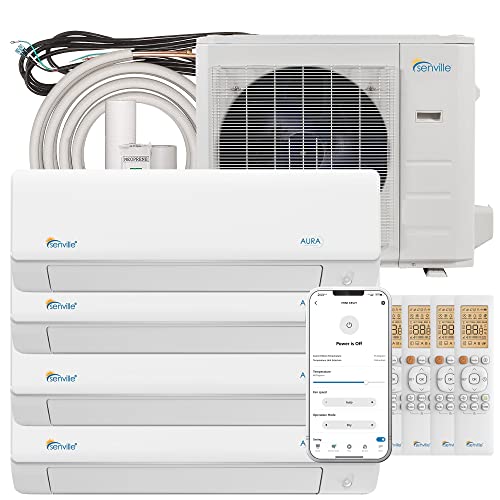
Multi Zone Mini Split: Personalized Comfort for Every Room
A multi zone mini split system lets you heat and cool different areas of your home independently, all from a single outdoor condenser. Learn how zoning works, how to size it, and what to look for before you choose.
Explore Ductless ZoningWhy this page matters: If you have rooms that are always too hot or too cold, a single-zone system cannot solve the problem. A multi zone mini split gives each space its own thermostat, so you stop paying to condition empty rooms and stop fighting over the thermostat. This guide walks you through the essentials so you can choose with confidence.
What Is a Multi Zone Mini Split?
A multi zone mini split is a ductless HVAC system in which one outdoor condenser connects to two or more indoor air handlers. Each indoor unit, often called a head, operates independently. You can set one bedroom to a cooler temperature while a home office stays warmer, or heat a basement while cooling a sunroom. Unlike a traditional central system that pushes conditioned air through ductwork, a multi zone mini split delivers air directly into each room through a wall-mounted or ceiling-mounted unit.
The technology is built on inverter-driven compressors. Instead of switching on and off at full power, the compressor modulates its speed to match the combined demand from all connected zones. This modulation is what makes a multi zone mini split so efficient in real-world use. When only one zone calls for cooling, the compressor slows down and uses less energy. When several zones demand attention, it ramps up smoothly.
For homeowners who want room-by-room control without major renovation, a multi zone ductless heating and cooling system is often the most practical answer. It avoids duct losses, installs quickly with small wall penetrations, and can be expanded later by adding another indoor head to the same outdoor unit, within its capacity limits.
Key Benefits of Zoned Comfort
Room-by-Room Control
Each zone has its own setpoint. You no longer have to condition the whole house to keep one room comfortable. This is especially useful in homes with unused guest rooms or basements.
Energy Efficiency
Inverter compressors and zone-specific operation reduce wasted cooling. You condition only the spaces that need it, which lowers energy use compared to a single central system running full-time.
No Ductwork Required
A multi zone mini split needs only a small line set through the wall. This is ideal for older homes, additions, and spaces where running ductwork would be disruptive or impractical.
Quiet Operation
Indoor air handlers in a mini split system run quietly, often below the noise level of a normal conversation. The compressor sits outside, so the indoor environment stays calm.
Heating and Cooling in One
Heat pump models provide both cooling and heating. In mild to moderate climates, a multi zone mini split can replace both an air conditioner and a separate heating source.
Scalable Design
You can start with two zones and add more heads later if the outdoor unit has spare capacity. This makes a multi zone mini split a flexible long-term investment for evolving households.
How a Multi Zone Mini Split Works
The system has three main parts: the outdoor condenser, the indoor air handlers, and the refrigerant lines that connect them. The outdoor unit contains the compressor and the condenser coil. Each indoor unit contains an evaporator coil and a blower fan. Refrigerant travels between them through small copper lines, absorbing heat from indoor air in cooling mode and releasing it outdoors.
What separates a multi zone mini split from a single-zone unit is the branch controller or distribution box. This component directs refrigerant to the indoor units that are actively calling for conditioning. Some systems use a simpler design where the outdoor unit manages the flow electronically. Either way, the goal is the same: send refrigerant only where it is needed.
Each indoor head has its own remote or wall thermostat. When a zone reaches its setpoint, that head reduces or stops its demand. The compressor then adjusts its speed based on the remaining load. This is why zoned systems avoid the energy penalty of cooling empty rooms. For a deeper look at how these systems compare to single-zone setups, see the guide on multi head mini split systems.
Multi Zone vs. Single Zone vs. Central AC
| Feature | Multi Zone Mini Split | Single Zone Mini Split | Central AC |
|---|---|---|---|
| Independent room control | Yes, each zone has its own setpoint | No, one zone only | Limited, depends on zoning dampers |
| Ductwork required | No | No | Yes |
| Best for | Homes with varied room usage | Single room or open area | Whole-home uniform cooling |
| Installation complexity | Moderate, multiple line sets | Low | High, requires ductwork |
| Efficiency in part-load | High, inverter modulation across zones | High for one zone | Moderate, duct losses apply |
| Expandability | Add heads within capacity | Not expandable | Limited by duct design |
How to Size a Multi Zone Mini Split
Sizing a multi zone system is not as simple as adding up the square footage of each room. The outdoor unit must be matched to the combined load of all indoor heads, but it also needs to handle the diversity factor. In practice, not every zone runs at full demand at the same time. A properly sized system accounts for this by allowing the outdoor capacity to be somewhat lower than the sum of the indoor capacities.
A common starting point is to calculate the BTU requirement for each room. Bedrooms and living areas typically need 20 to 30 BTU per square foot, depending on insulation, window area, and climate. Kitchens and sunrooms need more. Once you have the per-room numbers, you can select indoor heads that match each room and then choose an outdoor unit that covers the total with some margin.
However, rules of thumb are only a starting point. A proper Manual J load calculation considers wall insulation, window U-values, air infiltration, occupancy, and local design temperatures. If you are unsure, ask a qualified HVAC contractor to run the numbers. Oversizing a multi zone mini split can cause short cycling in individual zones, while undersizing leaves you uncomfortable on the hottest days.
- Entry-level sizing: Two to three zones for a small home or apartment, typically covering a living area and one or two bedrooms.
- Mid-range sizing: Three to four zones for a typical single-family home, covering main living spaces plus bedrooms.
- High-end sizing: Four to five zones for larger homes or homes with additions, basements, or home offices that need independent control.
If you are also considering a single-zone ductless unit for a specific room, the guide on portable ductless mini split air conditioners can help you compare options. And if you want to understand how multi zone systems fit into a broader efficiency strategy, see the article on the most energy efficient room air conditioner types.
Installation Considerations
Installing a multi zone mini split is more involved than installing a window unit, but less invasive than a full central system. The outdoor condenser needs a stable pad or wall bracket and enough clearance for airflow. Each indoor head needs a clear wall or ceiling location, plus a small hole for the refrigerant lines, power cable, and condensate drain. The line sets should be kept as short as practical to preserve efficiency.
Because multiple line sets run from one outdoor unit, planning the routing is important. Long runs and many bends increase refrigerant charge and can reduce performance. A professional installer will calculate the additional refrigerant needed and ensure the system is properly evacuated and charged. DIY installation is possible in some regions, but it requires specialized tools and knowledge of refrigerant handling regulations.
Electrical requirements also vary. Most residential multi zone systems run on 208/240V circuits, but some smaller models use 115V. Check the nameplate rating and consult a licensed electrician if your panel does not have a suitable circuit. For context on electrical planning, the article on outside air conditioning unit placement and power is a useful reference.
Ready to Compare Multi Zone Systems?
Explore our curated selection of multi zone mini split systems below. Each option is chosen for reliability, efficiency, and ease of installation.
View Recommended SystemsFrequently Asked Questions
How many zones can a multi zone mini split support?
Most residential multi zone mini split systems support between two and five indoor air handlers connected to a single outdoor condenser. Some commercial-grade models can handle up to eight zones, but the majority of homes use two to four zones for optimal efficiency.
Can each zone in a multi zone mini split have its own temperature?
Yes. Each indoor air handler in a multi zone system operates independently with its own thermostat or remote control. This means one room can be cooled while another is heated, all from a single outdoor unit. This independence is the primary advantage over traditional single-zone systems.
Is a multi zone mini split more efficient than multiple single-zone units?
In most cases, yes. A single outdoor condenser serving multiple indoor units uses less energy than several separate outdoor condensers. Inverter-driven compressors adjust output based on the combined demand across all zones, reducing cycling and standby losses. The result is typically lower energy use and smoother temperature control.
What size outdoor unit do I need for a multi zone mini split?
The outdoor unit must be sized to handle the combined load of all indoor units, not just the largest one. A common rule of thumb is that the outdoor capacity should cover roughly 100 to 120 percent of the total connected indoor capacity. However, a proper Manual J load calculation is always recommended to account for insulation, windows, climate, and occupancy.
Can a multi zone mini split heat and cool different rooms at the same time?
Yes, with a heat pump multi zone system, each indoor unit can run in either heating or cooling mode independently. Some advanced models allow simultaneous heating and cooling across different zones, although the majority of residential systems operate all zones in the same mode at a given time while allowing individual temperature setpoints.
Related Reading
If you are still weighing your options, these guides can help you go deeper:
- Multi zone mini split overview — a broader look at how these systems compare to other ductless configurations.
- Most reliable air conditioner — brand and model reliability considerations that apply to mini split systems.
- My AC isn't blowing cold air — troubleshooting tips if your existing system is underperforming.
- Most energy efficient wall air conditioner — a comparison point if you are considering wall-mounted alternatives.