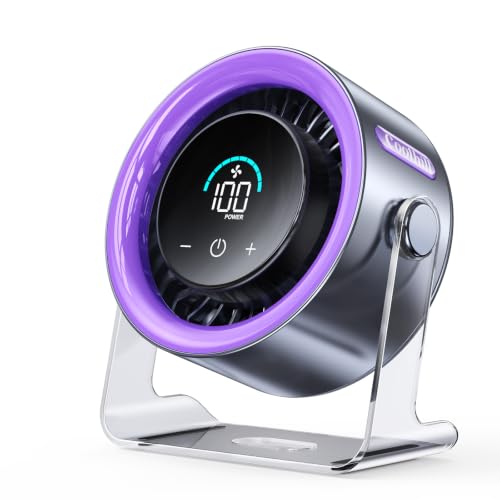
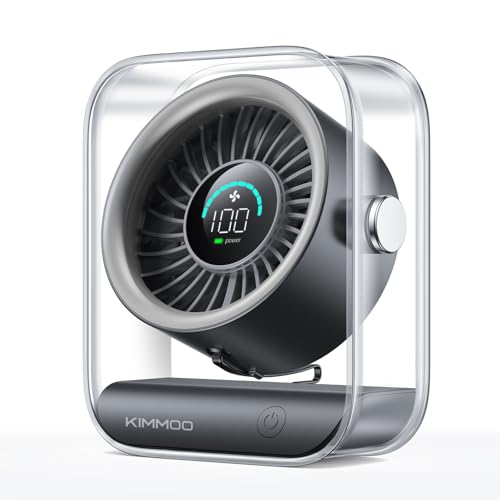
Office Desk AC: The Complete Guide to Personal Workspace Cooling
Discover how a dedicated desk air conditioner can transform your workspace comfort. Learn about personal cooling types, sizing, placement strategies, and how to choose the right unit for your office or home workstation.
Explore Top PicksWhy a desk AC matters: Shared offices, home workstations, and warm corner cubicles often suffer from uneven cooling. Central HVAC may keep the conference room comfortable while your desk sits in a stagnant pocket of warm air. An office desk AC delivers focused, personal cooling exactly where you need it — without the expense or installation complexity of a full-room system. This guide walks you through everything you need to know before choosing one.
What Is an Office Desk AC?
An office desk AC — sometimes called a desk air conditioner, personal air conditioner, or desktop cooling unit — is a compact cooling device designed to sit on or near a desk. Unlike a window unit or portable AC that attempts to cool an entire room, a desk AC focuses airflow on a single user's immediate workspace. This makes it an ideal solution for shared offices, home workstations, and spaces where installing a traditional air conditioner is impractical or unnecessary.
These units range from small evaporative personal coolers that use water and fan-driven airflow to compressor-based desktop air conditioners that function like miniature portable ACs. The right choice depends on your climate, workspace layout, and how much cooling power you actually need. For a broader look at room-level alternatives, our office space air conditioner guide covers larger-scale solutions.
Types of Office Desk AC Units
Not all desk cooling devices work the same way. Understanding the core technologies helps you match the unit to your environment and comfort expectations.
Evaporative Personal Coolers
These units draw air through a water-saturated cooling pad, lowering the air temperature through evaporation. They work best in dry climates and add moisture to the air, which can be pleasant in arid office environments.
Entry-level tierThermoelectric (Peltier) Desk AC
Solid-state cooling using the Peltier effect. No refrigerant, no compressor, and generally no venting required. Quiet and compact, but cooling output is modest — best for spot relief directly at the desk surface.
Essential tierCompressor-Based Desktop AC
These are true miniature air conditioners with a refrigerant cycle. They deliver the strongest cooling among desk units but require an exhaust hose routed to a window or vent. Heavier and louder than passive coolers.
Mid-range to premium tierPersonal Cooling Fans with Misting
A hybrid category that combines a high-velocity fan with a fine mist or water reservoir. Lightweight and portable, though cooling is temporary and evaporative in nature. Good for quick relief in dry heat.
Starter tierIf you are considering a larger portable solution instead, our guide to portable AC units for rooms explains when a floor-standing unit makes more sense than a desk-sized device.
How Much Cooling Power Does a Desk AC Need?
Desk AC units are measured in BTU (British Thermal Units), just like full-size air conditioners, but the scale is much smaller. Because a desk unit only cools the immediate personal zone — typically 10 to 50 square feet around the user — a modest BTU output is usually sufficient.
| Cooling Tier | Typical BTU Range | Best For | Venting Required |
|---|---|---|---|
| Personal spot cooler | Under 2,000 BTU | Direct desk airflow, dry climates, light relief | No |
| Compact desk AC | 2,000 – 4,000 BTU | Small office, home workstation, cubicle | Usually yes (exhaust hose) |
| High-output desktop unit | 4,000 – 6,000 BTU | Larger desk area, warmer rooms, stronger spot cooling | Yes (window vent kit) |
| Mini room AC (non-desk) | 6,000 – 8,000 BTU | Small enclosed office or bedroom | Yes |
For a deeper dive into matching BTU to room dimensions, see our air conditioner sizing guide. If you are unsure whether your workspace is better served by a window-mounted unit, our resource on non-window air conditioning units covers alternatives that do not require a traditional window frame.
Placement and Setup Tips for Desk AC Units
Where you place your desk AC has a significant impact on how effective it feels. Follow these practical guidelines to get the most from your unit:
- Position at desk level, not on the floor. Cool air settles, so placing the unit on your desk or a side table puts the airflow directly in your personal breathing zone.
- Avoid blocking the air intake. Keep at least 6 inches of clearance around the back and sides so the unit can draw in air efficiently.
- Angle the airflow toward your upper body. Directing cool air toward your face and torso provides faster perceived comfort than aiming at your feet.
- For compressor-based units, plan the exhaust route. The exhaust hose must reach a window or vent. Measure the distance before purchasing and consider a window vent kit if one is not included.
- Keep the unit away from direct sunlight and heat sources. A desk AC placed next to a sunny window or beside a printer will work harder and cool less effectively.
- Use a stable, flat surface. Compressor-based desk units vibrate slightly; a sturdy desk or dedicated stand prevents noise and movement.
Important: Compressor-based desk AC units produce condensate water. Most include a small drain tank or continuous drain option. Check the drainage method before purchase — especially if the unit will run for many hours during the workday. Units without auto-drain features require manual emptying.
Key Features to Evaluate
When comparing office desk AC models, focus on the features that directly affect daily usability rather than marketing claims. The following checklist covers the most meaningful specifications:
- Noise level: Office environments demand quiet operation. Look for units rated under 50 dB, and prefer models with a sleep or low-fan mode for shared spaces.
- Adjustable airflow direction: Oscillating louvers or manually adjustable vents let you direct cooling precisely where it is needed.
- Energy efficiency: For compressor units, a higher EER or CEER rating means more cooling per unit of electricity. Personal coolers draw very little power by design.
- Remote or app control: Mid-range and premium desk AC units increasingly offer remote controls or smartphone app integration, which is convenient when the unit sits slightly out of reach.
- Timer and programmable shutoff: Useful for automatically turning the unit off after work hours or during meetings.
- Filter accessibility: A removable, washable filter makes routine maintenance simple and keeps airflow strong over time.
- Footprint and weight: Desk space is precious. Check the unit's dimensions and weight to ensure it fits your workstation without crowding your monitor, keyboard, or documents.
For users exploring off-grid or solar-powered workspace setups, our article on off-grid solar AC discusses how personal cooling devices can integrate with low-power environments.
Maintenance for Desk AC Units
Desk AC units are low-maintenance compared to whole-home systems, but a few simple habits keep them running efficiently and extend their service life:
- Clean or replace the filter every two to four weeks during heavy use. A clogged filter reduces airflow and forces the unit to work harder.
- Empty and clean the water tank on evaporative and compressor-based units regularly to prevent mold, mildew, and unpleasant odors.
- Wipe down the exterior and air vents with a damp cloth to keep dust from accumulating around the intake and output grilles.
- Store the unit properly during off-season. Drain all water, clean the filter, and cover the unit to prevent dust buildup before storing.
- Check the exhaust hose and window kit on compressor models for cracks or loose seals that could let warm air back into the workspace.
If your desk unit shares a workspace with a larger HVAC system, our guide on normal indoor humidity levels can help you balance moisture and comfort across the whole office.
Advantages and Limitations of Desk AC Units
Understanding both sides of the equation helps set realistic expectations. Desk AC units are excellent personal cooling tools, but they are not a substitute for room-level air conditioning.
| Advantages | Limitations |
|---|---|
| Focused, personal cooling exactly where you sit | Cannot cool an entire room |
| Compact footprint fits on or beside a desk | Compressor models require exhaust venting |
| Low power draw compared to full-room systems | Cooling output is modest, especially for passive coolers |
| No permanent installation or structural modification | Water tank needs regular emptying on some models |
| Portable and easy to move between workstations | Noise can be noticeable in very quiet offices |
| Ideal for shared offices with uneven cooling | Effectiveness depends heavily on ambient humidity and climate |
Who Should Consider an Office Desk AC?
A desk AC is not for everyone, but for the right user it solves a very specific and frustrating problem. Consider one if any of the following describes your situation:
- You work in a shared office where the central thermostat is controlled by others and your area consistently runs warm.
- You have a home office or study that lacks dedicated cooling or receives poor airflow from the main HVAC system.
- You rent a workspace and cannot install a window unit or ductless mini-split.
- You only need cooling during certain hours — for example, afternoon sun exposure — and want a targeted solution.
- You value portability and want a cooling device you can move between your desk, a meeting room, or home.
If your workspace is a small enclosed room rather than a single desk, a portable floor unit may be more appropriate. Our guide to portable air conditioners for bedrooms covers similar sizing logic that applies to small office rooms as well.
Frequently Asked Questions
An office desk AC is a compact personal cooling device designed to sit on or near a desk, delivering focused airflow to a single workspace rather than cooling an entire room. These units are ideal for shared offices, home workstations, and spaces where central cooling is insufficient or unavailable.
Most office desk AC units fall in the 2,000 to 6,000 BTU range. For personal spot cooling at a desk, a lower BTU output is usually sufficient because the unit only needs to cool the immediate area around the user, not the whole room.
No. Desk AC units are designed for personal spot cooling and are not intended to cool an entire room. For whole-room cooling, consider a window unit, portable AC, or ductless mini-split system.
It depends on the type. Evaporative personal coolers and thermoelectric units generally do not need venting. Compressor-based portable desk AC units require an exhaust hose routed to a window or vent. Always check the product specifications before purchase.
Yes, relative to their size. Desk AC units consume far less power than full-room systems because they cool a much smaller area. Entry-level personal coolers draw very little electricity, while compressor-based desk units use more but still less than a standard room air conditioner.
Compressor-based desk AC units work in humid climates because they dehumidify as they cool, similar to a standard air conditioner. Evaporative coolers, however, are much less effective in high humidity and can make the air feel clammy. For humid environments, a compressor-based unit or a thermoelectric cooler is the better choice.
Final Thoughts: Is an Office Desk AC Right for You?
An office desk AC is a practical, targeted solution for anyone who struggles with uneven cooling in a shared office, home workspace, or warm cubicle. It will not replace a central HVAC system or a full-room air conditioner, but it fills a specific gap that larger systems often leave unaddressed: personal, immediate comfort at your desk.
If you need strong spot cooling and can route an exhaust hose to a window, a compressor-based desktop unit is the most capable option in the mid-range to premium tier. If you prefer a simpler, vent-free setup for light relief in a dry climate, an evaporative or thermoelectric personal cooler in the entry-level to essential tier will serve you well.
Whichever type you choose, match the unit to your workspace size, climate, and daily routine. A well-placed desk AC can turn a sweltering afternoon into a productive one — and that is exactly what personal cooling is designed to do.