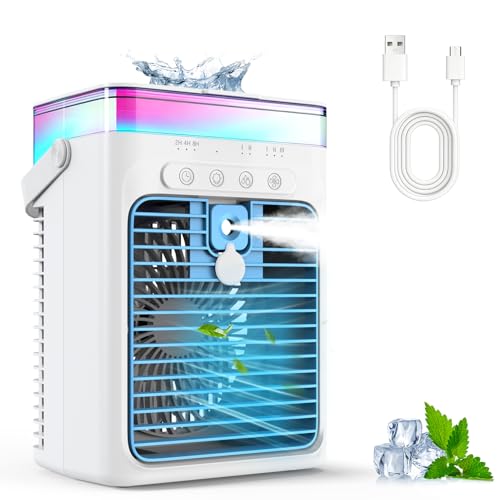
Personal Air Conditioner: Your Complete Buying Guide
Everything you need to know about personal air conditioning units — how they work, who they are for, what features matter, and how to pick the right one for your desk, bedroom, or workspace.
Explore Recommended ModelsWhat Is a Personal Air Conditioner?
A personal air conditioner — also called a personal air cond, personal cooling device, or spot cooler — is a small-scale cooling appliance designed to deliver cool air to a limited area. Unlike a full-size window unit or central system, a personal air conditioning unit is built around the idea of cooling people, not entire rooms. It sits close to you, aims airflow in your direction, and uses far less energy than a conventional AC.
These devices come in several forms: true compressor-based units that cool air using refrigerant, evaporative coolers that rely on water evaporation, and hybrid models that combine cooling with fan or misting functions. Understanding which type fits your climate and space is the first step toward choosing wisely. If you are exploring broader options, our guide to personal cooling systems covers the full spectrum of targeted cooling technologies.
The core appeal of a personal AC is simple: you get cooling exactly where you need it, without paying to chill empty rooms. For renters, remote workers, students in dorms, and anyone who spends long hours at a desk, a personal cooling device can be a practical and energy-conscious addition to the home.
Who Should Consider a Personal Air Conditioner?
A personal AC is not a replacement for whole-home cooling, and it is not meant to be. It shines in specific situations where targeted comfort matters more than room-wide temperature control. Consider a personal air cond unit if any of the following applies to you:
- You work at a desk for long hours. A desk AC keeps you comfortable without cooling the entire office or home office.
- You sleep hot but your partner does not. A bedside personal unit lets you cool your side of the bed without adjusting the whole-room thermostat.
- You live in a small apartment or dorm. Space is tight, and a compact personal unit fits where a full-size AC cannot.
- You rent and cannot install a permanent unit. Personal coolers are portable, non-permanent, and easy to move when you relocate.
- You want to reduce energy use. Cooling one person instead of a whole room uses a fraction of the electricity of a central system.
- You need cooling in a garage, workshop, or shed. Spot cooling is ideal for spaces that are not connected to central ductwork.
If your goal is to cool an entire room — say a 300-square-foot living area — a personal unit will likely disappoint. In that case, a traditional portable AC unit for a room or a window unit is the better fit. Personal ACs are about precision, not coverage.
Types of Personal Air Conditioning Units
Not all personal coolers work the same way. The technology inside determines how effective the unit will be, what maintenance it needs, and whether it suits your climate. Here are the main categories you will encounter:
True Personal AC Units
These use a refrigerant cycle — just like a full-size air conditioner — to produce genuinely cold air. They are the most effective type for humid climates and typically require an exhaust hose vented through a window. Look for models in the 5,000–8,000 BTU range for spot cooling.
Personal Evaporative Coolers
Also called swamp coolers, these draw air through a wet pad to create a cooling breeze. They add moisture to the air, so they work best in dry climates. They do not require venting and use very little electricity, but they are less effective in high humidity.
Personal Cooling Systems
These combine a fan with misting nozzles or a small water reservoir to deliver a cool, damp breeze. They are lightweight and portable but offer the most modest temperature drop. Best for outdoor patios or dry, ventilated spaces.
Personal Wearable Coolers
Neck fans, cooling vests, and wearable personal cooling devices are a separate category. They do not cool the air around you but instead help regulate your body temperature. Useful for outdoor work and commuting, but not a substitute for an AC unit.
For most indoor residential use — especially in humid regions — a compressor-based personal AC is the most reliable choice. If you live in an arid climate and want a vent-free option, an evaporative cooler can be a sensible alternative. Our article on personal wearable portable air conditioners explores the wearable category in more detail if that is the direction you are considering.
Understanding BTU and Cooling Capacity
BTU (British Thermal Unit) is the standard measure of cooling capacity. The higher the BTU rating, the more heat the unit can remove from the air. For personal air conditioners, the BTU range is typically much smaller than for room units — usually between 5,000 and 8,000 BTU.
Here is a practical way to think about capacity for personal cooling:
| Cooling Capacity | Best For | Typical Use Case |
|---|---|---|
| 5,000–6,000 BTU | Spot cooling one person | Desk, bedside, small home office corner |
| 6,000–7,000 BTU | Small zones up to 150 sq ft | Tiny bedroom, dorm room, studio nook |
| 7,000–8,000 BTU | Larger personal spaces up to 250 sq ft | Small office, converted garage workspace |
Be careful not to oversize a personal unit. A 10,000 BTU AC aimed at a single desk will cycle on and off quickly, which is inefficient and can leave the space feeling clammy. The right capacity is the one that matches the zone you actually want to cool. If you are unsure about sizing for a larger area, our guide to sizing an air conditioner walks through the calculation in detail.
Key Features to Look For
Once you have settled on a type and capacity, the next step is evaluating features. A well-specified personal air cond unit will include several of the following:
Portability and Footprint
The whole point of a personal unit is that it goes where you go. Look for built-in handles, caster wheels, or a lightweight chassis. Compact models that fit on a desk or nightstand are ideal, but check the dimensions carefully — some "personal" units are larger than they appear in photos.
Airflow Direction and Oscillation
Adjustable louvers and oscillation let you aim cool air precisely where you want it. A unit with a wide oscillation range can cover a slightly larger zone without losing the spot-cooling benefit. For desk use, a focused, narrow airflow is often more comfortable than a wide blast.
Noise Level
Personal ACs sit close to you, so noise matters more than with a room unit across the room. Check the decibel rating — many compact units run in the 45–55 dB range, while quieter models can drop closer to 40 dB. If you plan to use one while sleeping or on calls, prioritize a low-noise model.
Venting Requirements
Compressor-based personal ACs need an exhaust hose routed to a window. Some models come with window kits designed for sliding windows; others work with casement or crank-out windows. If your window situation is unusual, read the specs carefully before committing. For rooms without standard windows, an evaporative or non-vented cooling approach may be more practical — our guide to portable AC for rooms without windows covers those alternatives.
Drainage and Maintenance
Compressor units produce condensate that must be drained or evaporated. Some models offer self-evaporative technology that reduces how often you need to empty a tank. Evaporative coolers need their water tanks refilled regularly and their pads cleaned. Factor maintenance into your decision — a unit that is easy to service will actually get serviced. If you want to minimize drainage hassles, look at options that do not need to be drained frequently.
Energy Efficiency
Personal ACs are already far more efficient than central systems because they cool less air. Still, efficiency varies within the category. Check the CEER or EER rating, and look for ENERGY STAR certification where available. A unit with a higher efficiency rating will use less electricity over a season of daily use — a worthwhile investment if you plan to run it often.
Personal AC Tiers at a Glance
Personal air conditioners fall into a few broad market tiers. Use the table below to match your needs to the right category. Tiers reflect relative position in the market, not any specific figures.
| Tier | Typical Characteristics | Best For |
|---|---|---|
| Entry-Level | Basic controls, manual louvers, standard venting kit, modest airflow | Occasional desk cooling, budget-conscious buyers, first-time personal AC users |
| Mid-Range | Remote control, oscillation, sleep mode, improved noise damping, self-evaporative system | Daily use at a desk or bedside, remote workers, renters wanting reliable comfort |
| Premium | Smart app control, voice assistant compatibility, high-efficiency compressor, ultra-quiet operation, advanced filtration | Tech-savvy users, allergy sufferers, those wanting the smoothest experience in the category |
The jump from entry-level to mid-range is usually the most noticeable in day-to-day comfort — quieter operation, better airflow control, and less maintenance. Premium models add convenience and efficiency but are not essential for basic spot cooling. Choose the tier that matches how often and how critically you will rely on the unit.
How to Choose the Right Personal Air Conditioner
Bringing it all together, here is a step-by-step approach to selecting a personal air cond unit that genuinely fits your situation:
- Step 1 — Define the cooling zone. Is it just you at a desk, a bed, or a small enclosed nook? The smaller and more specific the zone, the more a personal unit makes sense.
- Step 2 — Match the technology to your climate. Humid climate: choose a compressor-based unit. Dry climate and no venting option: consider an evaporative cooler.
- Step 3 — Confirm your venting situation. Check that your window type works with the included kit, or plan for an adapter. If venting is impossible, pivot to a non-vented approach.
- Step 4 — Pick the capacity. 5,000–6,000 BTU for pure spot cooling; 6,000–8,000 BTU for small zones.
- Step 5 — Prioritize noise and airflow control. These two features determine daily comfort more than any specification sheet metric.
- Step 6 — Check efficiency and maintenance. A higher efficiency rating and easy drainage make long-term ownership far smoother.
- Step 7 — Choose your tier. Entry-level for occasional use, mid-range for daily comfort, premium for smart features and top-tier quietness.
If you are still weighing whether a personal unit or a slightly larger portable unit is right for you, browsing our portable AC units section can help you compare formats side by side. And if your needs extend beyond a single seat to a small office space, an office space air conditioner guide may be the better starting point.
Keeping Your Personal AC Running Well
Personal air conditioners are low-maintenance compared to whole-home systems, but a little care goes a long way. Clean or replace the filter every few weeks during heavy use — a clogged filter reduces airflow and forces the unit to work harder. For compressor models, check the exhaust hose for kinks and make sure the window kit seals properly. For evaporative coolers, empty and refill the water tank regularly to prevent stagnation, and clean the cooling pad according to the manufacturer's schedule.
Seasonal storage matters too. Before putting a personal unit away for the off-season, clean it thoroughly, drain all water, and store it covered in a dry place. A well-cared-for unit will last several seasons and keep performing at its rated capacity.
Ready to Pick Your Personal Air Conditioner?
You now have the framework: match the technology to your climate, size the unit to your zone, and choose the tier that fits your daily needs. Below are recommended models across the personal cooling category — explore the options and find the one that fits your space.
View Recommended Personal AC ModelsFrequently Asked Questions
A personal air conditioner is a compact, targeted cooling device designed to cool a small area or a single person rather than an entire room. These units are typically portable and can be placed on a desk, nightstand, or floor beside your chair. They use far less energy than full-room systems because they cool a much smaller zone.
Most personal air conditioners fall in the 5,000 to 8,000 BTU range. For spot cooling around a single person or a small area under 150 square feet, a 5,000 to 6,000 BTU unit is generally sufficient. Larger personal units up to 8,000 BTU can handle slightly bigger spaces, but avoid oversizing a unit meant for one seat.
Most true personal air conditioners require venting through a window using an exhaust hose. However, evaporative personal coolers do not need venting, though they work differently and are best suited for dry climates. Always check the unit's specifications before buying, and confirm that the included window kit matches your window type.
A personal air conditioner is designed for spot cooling rather than whole-room cooling. It is most effective when directed at a person or a small zone. For whole-room cooling, a traditional window or portable AC unit with higher BTU capacity is more appropriate. If your goal is to cool an entire room, look at dedicated room AC options instead.
Personal air conditioners consume significantly less energy than central air systems or full-size room units because they cool a much smaller area. Look for models with a high CEER or EER rating and ENERGY STAR certification for the most efficient operation within the category. Running a personal unit for several hours a day typically uses a fraction of the electricity of cooling an entire room.